80Views 0Comments
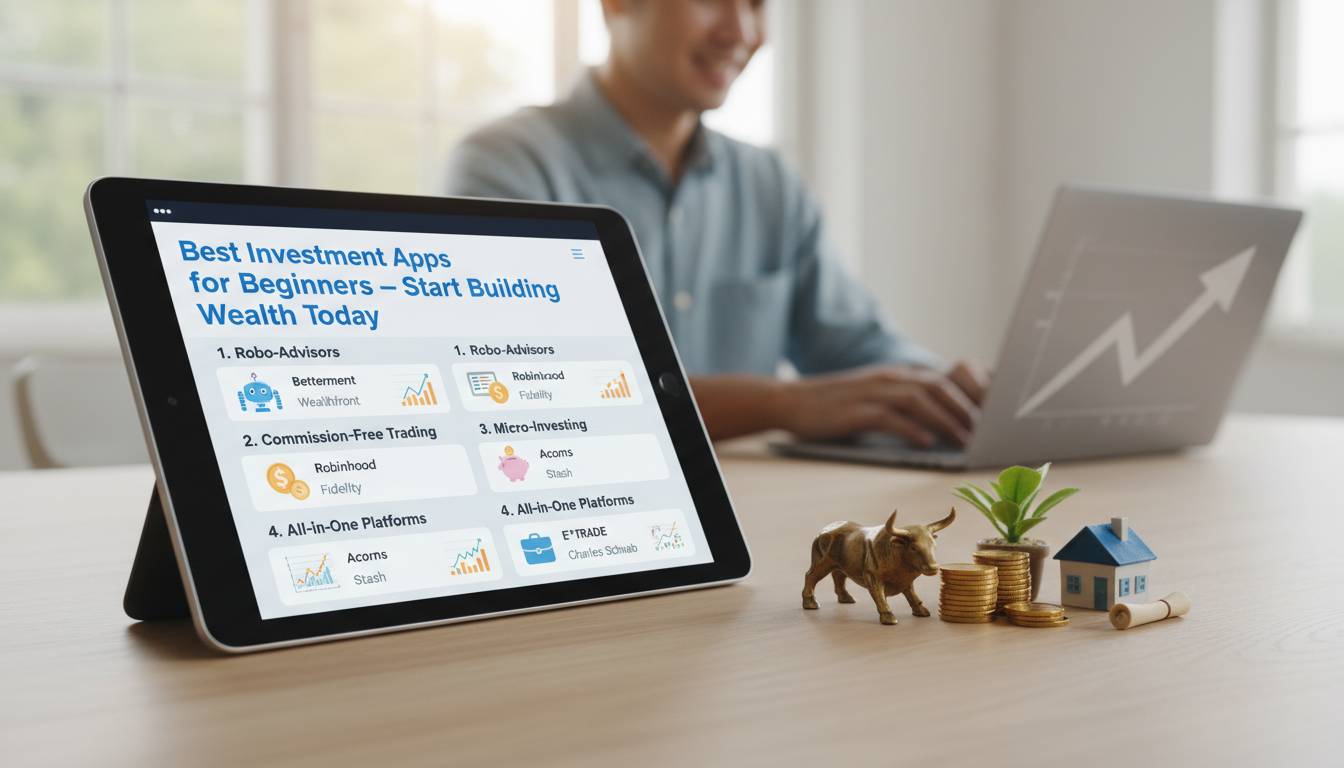
Best Investment Apps for Beginners – Start Building Wealth Today
Investment apps have made it easier than ever for Americans to put money into the stock market. What used to require a broker and significant capital now fits in your pocket. For beginners, this raises a practical question: which app should you actually use?
This guide breaks down the leading investment apps for people just starting out. I’ve looked at what matters most to new investors—how much you need to get started, what you’ll pay in fees, and how easy the platform is to use.
Quick Comparison: Top Investment Apps for Beginners
| App | Minimum Investment | Trading Fees | Best For |
|---|---|---|---|
| Robinhood | $0 | $0 | Simple trading interface |
| Fidelity | $0 | $0 | Low-cost index funds |
| Charles Schwab | $0 | $0 | Research and tools |
| Betterment | $10 | $0 | Automated investing |
| Acorns | $5 | $3-$12/year | Micro-investing |
| E*TRADE | $0 | $0 | Educational resources |
How I Picked These Apps
I focused on what actually matters for beginners. Account minimums matter—some apps let you start with nothing, while others require hundreds. Fees eat into returns over time, so I prioritized platforms with no commission fees and low expense ratios on funds.
I also looked at how hard each app is to figure out. A platform with great features means nothing if you can’t navigate it. Educational content and customer support matter too, especially when you’re learning the basics. All information reflects features available in early 2024.
Robinhood
Robinhood made waves by eliminating commission fees, and that’s still its main selling point. The interface is clean and simple—you won’t get overwhelmed with options when you’re just starting out.
You can trade stocks, ETFs, options, and cryptocurrency through the app. Fractional shares let you buy pieces of expensive stocks with just a few dollars. If you have $10 and want exposure to Apple or Amazon, you can do that here.
The trade-off is research tools. Robinhood keeps things simple, which means you won’t find the depth of analysis you’d get at a traditional broker. The platform makes money from interest on customer cash and its premium subscription, not from trading commissions. It has faced regulatory scrutiny around how it handles order flow and market volatility, which some users find concerning.
Fidelity Investments
Fidelity is a strong choice if you’re interested in index funds—a common strategy for building wealth over time. The platform offers thousands of mutual funds, including many index funds with no minimum investment.
The mobile app is easy to use but doesn’t skimp on features. You can set up automatic contributions to IRAs and other retirement accounts. Research tools are solid, and the educational content covers everything from basic concepts to advanced retirement planning.
One real advantage for beginners: Fidelity has physical branches. If you prefer face-to-face help, you can visit an office. The platform also offers fractional shares for S&P 500 companies. Stocks and ETFs trade commission-free, though some specialized products carry fees—check the details before trading.
Charles Schwab
Schwab excels at research. The StreetSmart Edge desktop platform offers advanced charting tools, while the mobile app gives you access to market data, news, and analyst ratings. If you want to understand why you’re buying something, Schwab provides the information.
New investors can buy fractional shares starting at $5. Schwab Intelligent Portfolios offers automated investing without advisory fees if you meet the minimum balance. The educational content includes webinars, articles, and videos covering basics and more advanced strategies.
The platform also offers banking services, which is convenient if you want everything in one place. Customer support is available 24/7 by phone, and Schwab has an extensive branch network.
Betterment
Betterment takes a hands-off approach. You answer questions about your goals, timeline, and risk tolerance, then the platform builds and rebalances a portfolio automatically using low-cost ETFs.
The minimum is $10 to start. Betterment handles rebalancing when markets shift, so you don’t have to monitor your allocations constantly. This appeals to beginners who find decision-making stressful.
Betterment charges an annual advisory fee of 0.25% to 0.40%, depending on your plan. The service also offers tax-loss harvesting and retirement planning tools. For those who want professional management without high fees, this works.
Acorns
Acorns rounds up purchases to the nearest dollar and invests the difference. Link your debit or credit card, and spare change accumulates until it hits $5, then gets invested in a diversified portfolio based on your risk preferences.
The platform also offers recurring investments and Found Money, which invests cash back from participating retailers. It’s designed for people who want to invest without thinking about it.
Annual subscription fees range from $3 to $12. For small accounts, these fees represent a proportionally higher cost. But many users appreciate the automatic savings feature—it builds investing habits without requiring conscious effort.
E*TRADE
ETRADE has invested heavily in educational content. Courses cover stocks, options, bonds, and retirement planning. The mobile app balances simplicity with functionality, and Power ETRADE provides more advanced tools as you grow.
The platform charges no commissions for stocks and ETFs, matching industry standards. Beginners can access market news, analyst research, and webinars. Fractional shares are available, making diversification possible with limited capital.
How to Get Started
Start by clarifying your goals. Are you saving for retirement, a house, or something else? Your objectives determine your risk tolerance and timeline.
Keep three to six months of expenses in savings before investing. You don’t want an emergency to force you to sell investments at a loss. Most apps let you link bank accounts for transfers—initial funding typically takes a few days.
Start small. Contributing a fixed amount monthly, regardless of market conditions, builds discipline and reduces the stress of timing the market. As you learn, you can increase contributions and explore more options.
Understanding Fees
Commission-free trading is standard now, but other costs matter. Expense ratios on funds add up over time—low-cost index funds typically beat expensive ones long term.
Some platforms profit from payment for order flow, directing trades to specific market makers. This has drawn regulatory attention, though it usually doesn’t hurt retail investors. Premium subscriptions add features but increase costs.
Watch for inactivity fees, transfer fees, and withdrawal fees. Read the fee schedule before opening an account.
Frequently Asked Questions
What is the best investment app for beginners with no money?
Robinhood and Fidelity both allow $0 minimums. Fractional shares at Robinhood, Fidelity, and Schwab let you invest small amounts in major stocks.
How much money do I need to start investing?
Many platforms let you start with $0, though $100-$500 gives you more diversification options. Acorns needs just $5; Betterment needs $10. Consistent small contributions often work better than waiting for a large sum.
Are investment apps safe and regulated?
SEC regulates these platforms, and SIPC protection covers securities up to $500,000 if the broker fails. Major platforms are SIPC members. Still, investing carries risk—you can lose money.
Can I lose money on investment apps?
Yes. Market fluctuations cause account values to rise and fall. Only invest money you won’t need for several years, and understand your risk tolerance first.
Do I need to pay taxes on investment app earnings?
Selling investments at a profit triggers capital gains taxes. Dividends and interest are taxable income. IRAs and 401(k)s offer tax advantages but have specific rules.
What is the difference between a robo-advisor and a traditional broker?
Robo-advisors like Betterment manage portfolios automatically after you set preferences. Traditional brokers like Fidelity let you make your own trades. Robo-advisors suit hands-off investors; self-directed platforms suit those who want control.
Conclusion
Investment apps have genuinely made it easier for more people to start building wealth. The best apps for beginners share real strengths: low or no minimums, commission-free trading, decent interfaces, and learning resources that help you figure things out as you go.
Which one fits you depends on what you want. Robinhood keeps things simple. Fidelity and Schwab offer more tools and research. Betterment and Acorns handle the work for you if you’d rather not think about it.
The most important thing is starting. Even small amounts grow over time through compound returns. Pick a platform that matches your style, contribute regularly, and give yourself time to learn.