132Views 0Comments
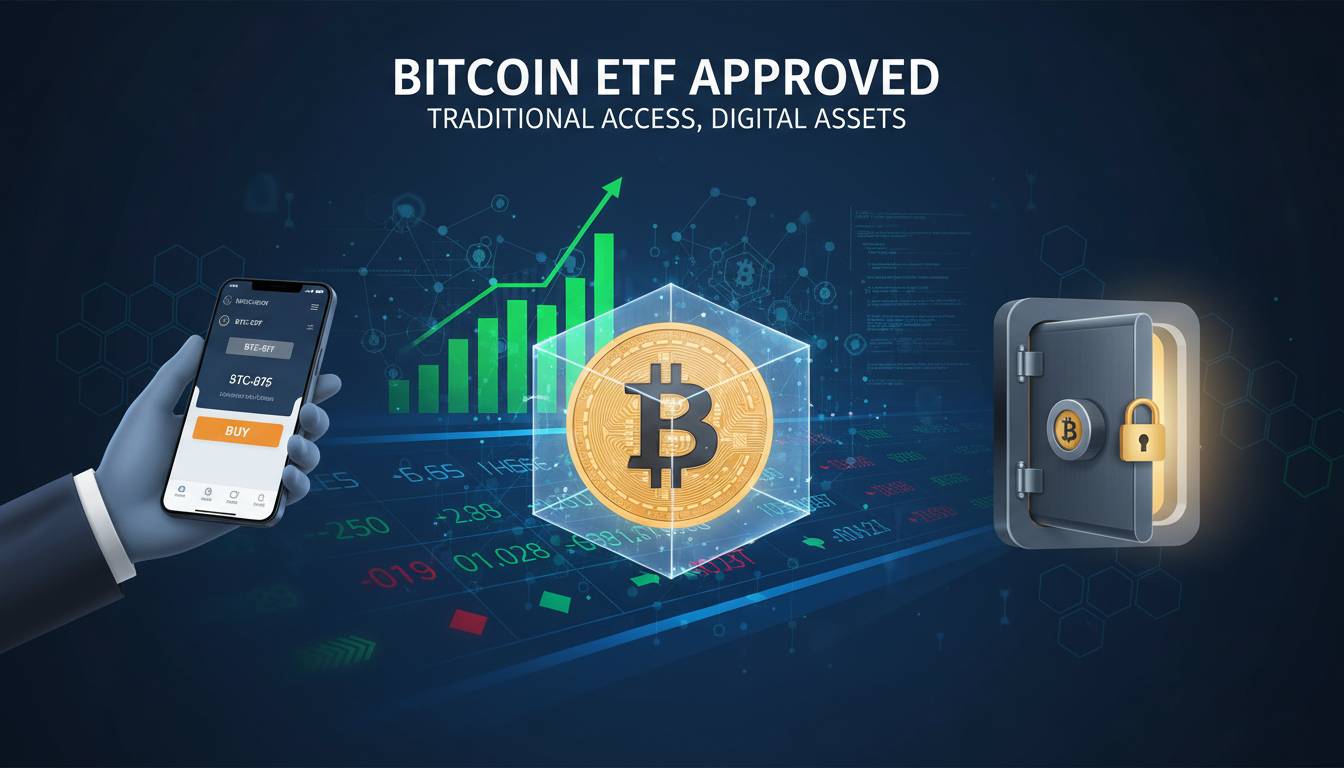
Bitcoin ETF Approval: What Investors Need to Know Now
The SEC approved the first spot Bitcoin ETFs on January 10, 2024. This opened a new way for mainstream investors to get exposure to Bitcoin without dealing with cryptocurrency exchanges or managing digital wallets themselves. The products launched with huge trading volumes—billions flowed in within days.
What Is a Bitcoin ETF and Why Does It Matter?
A Bitcoin ETF is an exchange-traded fund that tracks the spot price of Bitcoin. Investors can buy shares that represent ownership of the underlying cryptocurrency without actually holding the digital asset themselves. The fund sponsor keeps the actual Bitcoin in cold storage, while investors trade ETF shares on regular stock exchanges.
This matters because regular investors can now access Bitcoin through their existing brokerage accounts, 401(k) plans, and retirement vehicles. No need to set up crypto wallets or navigate unfamiliar exchanges. Financial advisors can recommend Bitcoin to clients who were previously blocked from the asset class.
Spot Bitcoin ETFs hold real Bitcoin reserves, unlike Bitcoin futures ETFs, which derive value from derivative contracts. This direct ownership means the ETF price tracks the actual market price of Bitcoin more precisely.
The Historic SEC Bitcoin ETF Approval
The SEC’s decision on January 10, 2024, reversed its previous stance. For over a decade, the SEC had rejected applications from major financial institutions, citing concerns about market manipulation and investor protection. SEC Chair Gary Gensler had expressed skepticism about crypto markets, and the agency had only approved Bitcoin futures ETFs.
The approval came after years of legal battles. Grayscale Investments challenged the SEC in federal court, arguing the agency’s refusal to approve a spot Bitcoin ETF was inconsistent with its approval of Bitcoin futures ETFs. This legal pressure, combined with growing institutional demand, led to approval. The SEC approved applications from multiple issuers simultaneously, including BlackRock, Fidelity, Grayscale, Bitwise, and others.
On the first day of trading, Bitcoin ETFs recorded over $4 billion in volume, making it one of the most successful ETF launches ever. BlackRock’s iShares Bitcoin Trust and Fidelity’s Wise Origin Bitcoin Fund quickly became dominant, attracting billions in assets.
How Bitcoin ETFs Work After Approval
Spot Bitcoin ETFs use a creation and redemption mechanism that keeps their market price aligned with the underlying Bitcoin price. Authorized participants—typically large financial institutions—can create new ETF shares by depositing Bitcoin with the fund custodian or redeem shares for Bitcoin. This arbitrage process keeps ETF prices tied to actual Bitcoin values.
Custodians use cold storage, keeping most Bitcoin offline in secure facilities. Multiple layers of insurance cover theft or loss. This addressed a major concern that had blocked previous approvals.
Fees range from 0.25% to 1.5% annually. Some issuers launched with zero or low fees to attract assets, but these promotional periods have expiration dates.
Market Impact and Investment Implications
Billions flowed into Bitcoin after approval, pushing the cryptocurrency to new highs. More investors could access regulated products, expanding the pool of potential buyers. Increased demand and better liquidity reduced price volatility somewhat.
Institutional investors could now allocate to Bitcoin through familiar vehicles. Pension funds, endowments, and wealth managers could consider Bitcoin as part of diversified portfolios within existing compliance frameworks. Several major financial institutions updated their investment policies to permit Bitcoin ETF allocations.
Individual investors can buy Bitcoin ETFs through existing brokerage accounts, including tax-advantaged retirement accounts. This eliminates complexity while maintaining exposure. Holding Bitcoin ETFs in IRAs and 401(k)s provides tax advantages that direct ownership can’t match.
Bitcoin ETF vs. Direct Bitcoin Investment
Direct Bitcoin ownership gives you full control through private keys, but losing those keys means permanent loss with no recovery options. Bitcoin ETFs transfer custody to professional institutions with sophisticated security.
Tax implications differ. Direct ownership requires tracking cost basis for every transaction and detailed record-keeping. Bitcoin ETFs traded on traditional exchanges get simpler tax treatment, with opportunities for tax-advantaged accounts.
ETFs trade throughout regular market hours with instant execution. Direct Bitcoin purchases can experience delays during high-volume periods, and selling quickly at desired prices can be difficult during market stress.
Future Outlook for Bitcoin ETFs
Ethereum ETF approvals followed Bitcoin ETF launches, suggesting a pathway for other digital assets. The SEC’s evolving approach indicates broader acceptance of digital assets within traditional finance.
Competition among issuers intensifies, which benefits investors through lower costs and improved services. New entrants may offer features like tax-loss harvesting or enhanced transparency.
Growth in Bitcoin ETF assets will likely continue as more financial advisors incorporate these products. The long-term trajectory depends on Bitcoin’s performance, regulatory clarity, and institutional adoption. Volatility remains a defining characteristic, but regulated ETF products have created a more stable framework for institutional participation.
Frequently Asked Questions
When was the Bitcoin ETF approved?
The SEC approved spot Bitcoin ETFs on January 10, 2024.
How do I buy a Bitcoin ETF?
Purchase through any brokerage account that supports ETF trading. Most major online brokers offer these products, and they can often be held in IRAs and 401(k)s.
What is the difference between a Bitcoin ETF and Bitcoin futures ETF?
Spot Bitcoin ETFs hold actual Bitcoin reserves and track the current spot price. Bitcoin futures ETFs hold derivative contracts that speculate on future prices. Spot ETFs provide more direct price exposure.
Are Bitcoin ETFs safe investments?
Bitcoin ETFs carry significant risk due to cryptocurrency volatility. The ETF structure provides secure custody and regulatory oversight, but Bitcoin prices can swing dramatically. Only invest money you can afford to lose.
What fees do Bitcoin ETFs charge?
Management fees typically range from 0.25% to 1.5% annually. Some issuers offer promotional waivers for initial periods.
Can I hold Bitcoin ETFs in my retirement account?
Yes, Bitcoin ETFs can typically be held in self-directed IRAs, 401(k) plans, and other tax-advantaged accounts.
Bitcoin ETF approval reshaped cryptocurrency investment for American investors. These products provide unprecedented accessibility and regulatory clarity, but investors must weigh the risks and benefits based on their individual financial circumstances.