187Views 0Comments
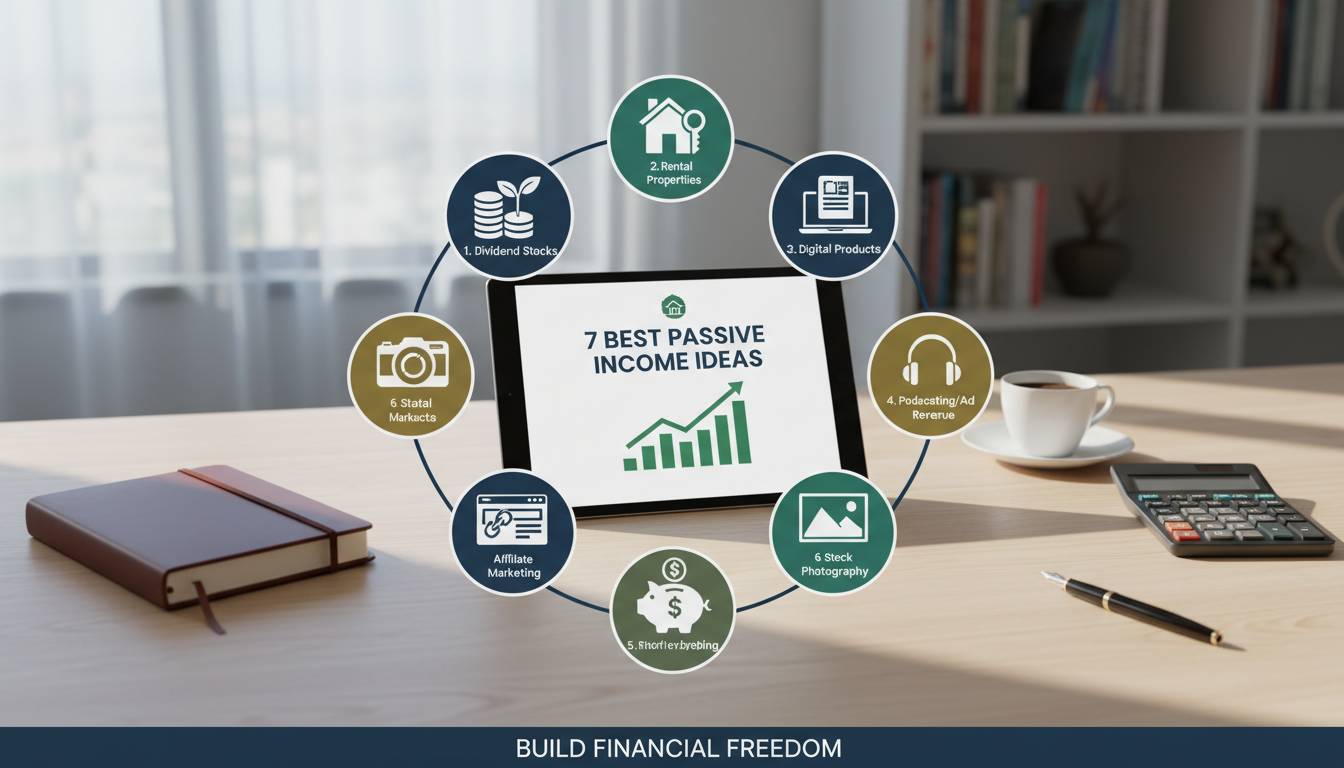
7 Best Passive Income Ideas to Build Financial Freedom
The dream of earning money without trading hours for dollars has become reality for millions of Americans. In 2025, economic shifts, new tech, and investment platforms have opened real opportunities for people wanting passive income. Whether you want to supplement your main income, speed up retirement savings, or completely change your financial situation, knowing the most effective strategies matters. This guide covers seven solid passive income ideas for 2025, with their potential returns, risks, and how to actually get started.
Understanding Passive Income in 2025
Passive income means money earned with minimal ongoing effort after the initial setup. Unlike active income, which needs your direct participation, passive income keeps coming in whether you’re working, sleeping, or with family. The financial independence movement has grown fast. Nearly 40% of working adults now look into passive income opportunities—that’s a real shift in how people think about earning and building wealth.
The passive income landscape has changed with technology. Digital platforms gave regular people access to investment opportunities that used to require serious money or institutional status. Changing interest rates, housing markets, and the creator economy all created new ways to earn passive money. Keeping up with current market conditions and trends helps you understand these opportunities.
Here’s the honest truth: passive income rarely means zero effort. Most real passive income streams need significant upfront work, capital, or both. “Passive” means less ongoing maintenance after you set things up—not the absence of any effort. This distinction matters because unrealistic expectations lead to disappointment and can make people fall for scams promising easy money. Going in with realistic expectations and a long-term view gives you a much better chance of success.
Dividend Investing: The Foundation of Passive Wealth
Dividend investing stays one of the most reliable passive income strategies—it gives regular cash flow and potential for growth. You buy stocks in companies that share profits with shareholders quarterly. The best dividend stocks come from established companies with strong financials, steady earnings, and a history of increasing payouts. Many Fortune 500 companies have paid dividends for decades, giving investors reliable income that often beats inflation.
The beauty of dividend investing is compounding. When you reinvest dividends to buy more shares, your wealth grows faster through compound interest. Over time, this exponential growth can turn modest starting investments into serious passive income. Many dividend investors aim to build portfolios that generate enough quarterly payments to cover living expenses—true financial independence through a time-tested strategy.
For beginners, exchange-traded funds (ETFs) offer a good starting point. Funds like the Vanguard Dividend Appreciation ETF and SCHD give you exposure to hundreds of dividend-paying companies, reducing single-stock risk while keeping strong yield potential. Most financial advisors suggest starting diversified before picking individual stocks, since that lessens the impact of any one company’s performance on your whole portfolio. Building a substantial dividend portfolio takes patience and consistent contributions, but the long-term rewards make it one of the most popular passive income strategies.
Real Estate Crowdfunding: Accessible Property Investment
Real estate has long been a reliable wealth-builder, but traditional property investment needed serious capital and hands-on management. Real estate crowdfunding changed that—now regular investors can join commercial and residential property deals with as little as $500. Platforms like Fundrise, RealtyMogul, and CrowdStreet have connected thousands of investors with real estate opportunities that used to be only for the wealthy and institutions.
The passive nature of real estate crowdfunding appeals to busy professionals who want property exposure without landlord responsibilities. These platforms handle property acquisition, management, and tenant relations, while investors get their share of rental income and appreciation. Returns have historically ranged from 6% to 12% annually, depending on the investments and market conditions. Just know these investments usually need holding periods of five to seven years—they’re less liquid than stocks or savings accounts.
One big advantage: you can diversify across multiple properties and geographic regions without managing each one. This cuts risk while giving you exposure to different real estate markets that perform differently under various economic conditions. As regulations develop and more platforms appear, real estate crowdfunding is becoming an increasingly popular passive income option for Americans who want to diversify beyond traditional stocks and bonds.
High-Yield Savings and Money Market Accounts
High-yield savings accounts won’t give you dramatic returns like stocks or real estate, but they remain important in any passive income strategy, especially for conservative investors or those building capital. After years of near-zero rates, savers finally see better returns. As of 2025, many online banks offer high-yield savings accounts with annual yields over 4.5%—way better than traditional banks that often pay under 0.5%.
Money market accounts offer similar benefits with added features like check-writing and limited transaction flexibility. These accounts usually give slightly higher rates than standard savings while keeping Federal Deposit Insurance Corporation protection up to $250,000 per depositor. For people building an emergency fund or saving for near-term goals, these low-risk options give peace of mind alongside reasonable returns that beat inflation.
Savvy savers use high-yield accounts strategically beyond just parking money. Many use ladder strategies—opening multiple accounts with different maturity dates to maximize returns while keeping money accessible. And as rates change, they compare offerings across institutions to ensure they’re earning competitive rates. This strategy won’t generate substantial wealth on its own, but it forms a conservative foundation that complements higher-return passive income investments.
Creating and Selling Digital Products
The creator economy created real opportunities for people to earn passive income through digital products. E-books, online courses, templates, printables, and software can be created once and sold repeatedly without additional production costs. This scalability makes digital products attractive for those with specialized knowledge, creative skills, or technical abilities. Overhead costs stay low compared to physical product businesses, and profit margins can be very high once initial development costs are covered.
Online courses became especially lucrative—the global e-learning market keeps growing fast. Platforms like Teachable, Kajabi, and Skillshare make it easier to create and market educational content to global audiences. Successful course creators often earn five or six figures annually from courses that need initial development time followed by minimal ongoing maintenance. Success comes from identifying topics where demand exists and creating genuinely valuable content that solves specific problems for your audience.
The digital product market does need upfront effort and marketing skills to see significant returns. Unlike dividend investing or savings accounts, creating successful digital products requires active work during creation and ongoing promotion to keep sales going. But once established, these products can generate income for years with minimal additional time or resources. Many creators say their best products keep generating revenue long after launch—one of the most sustainable passive income models out there.
Affiliate Marketing: Leveraging Online Influence
Affiliate marketing is performance-based—you earn commissions by promoting products or services from other companies. This model grew a lot with e-commerce, as companies in nearly every industry offer affiliate programs to expand their reach. Bloggers, social media influencers, and content creators built entire businesses around affiliate marketing, earning recurring commissions that can continue for years after the original content posts.
The mechanics are straightforward. You share a unique affiliate link, someone buys through that link, and the merchant pays you a percentage of the sale. Many programs offer recurring commissions for subscription products—you keep earning as long as customers stay active subscribers. This recurring model created real wealth for affiliate marketers who built large audiences and strategically promoted relevant products.
Success in affiliate marketing requires building trust with an audience and picking products that genuinely fit their interests and needs. Promoting low-quality products or making exaggerated claims hurts credibility and reduces long-term earnings. The most successful affiliate marketers focus on specific niches where they can establish expertise and provide real value. While getting significant affiliate income usually needs a substantial audience or website traffic, the scalability and passive nature of established affiliate businesses make this attractive for those willing to invest in content creation and audience development.
Peer-to-Peer Lending: Earning Interest Directly
Peer-to-peer lending platforms transformed traditional banking by connecting borrowers directly with individual lenders, cutting out the middleman. As a lender, you can earn attractive interest rates funding loans for individuals or small businesses—often getting returns between 5% and 10% annually. Platforms like Prosper, LendingClub, and Upstart handle loan servicing, credit assessment, and collections, making the process relatively hands-off for investors.
The risk profile of peer-to-peer lending sits between high-yield savings and stock investments. Defaults happen, especially during economic downturns, but careful borrower selection and portfolio diversification substantially reduce this risk. Many experienced P2P investors report consistent returns above 7% by spreading capital across hundreds of loans and keeping conservative lending criteria. Most platforms offer automated investment features that make building diversified portfolios easy without spending excessive time on individual loan selection.
One thing to consider: the regulatory environment keeps evolving as authorities assess the risks and benefits of this relatively new investment category. Platform fees also impact overall returns, so understanding the full cost structure before committing capital matters. Despite these considerations, peer-to-peer lending remains a viable passive income option for investors seeking higher returns than traditional savings while maintaining more control than conventional lending products.
Automated Business Ventures
Automated business ventures need more initial effort but offer significant scalability for those willing to put in the work upfront. E-commerce businesses using dropshipping, print-on-demand services, or Amazon FBA can operate with minimal daily involvement once systems are in place. These business models leverage automation tools for order processing, customer service, and inventory management, reducing time needed to maintain operations.
Dropshipping became popular because it eliminates holding inventory or managing shipping logistics. When a customer orders, the supplier ships directly to them, and you keep the difference between wholesale and retail prices. While this model has low barriers to entry, competition is fierce and profit margins can be thin. Success usually requires finding profitable niches, building brand value, and establishing efficient supplier relationships.
Print-on-demand services let creators design custom products like t-shirts, mugs, and phone cases without investing in inventory. When customers order, the printing service produces and ships the items while you receive the profit margin. This model helped many designers build successful businesses with minimal upfront capital. Success comes from creating unique, marketable designs and effectively reaching target audiences through social media and e-commerce platforms.
Frequently Asked Questions
What’s the easiest passive income to start with no money?
Having no money limits options but doesn’t eliminate all possibilities. Creating and selling digital products like e-books or print-on-demand designs needs only time and creativity, not capital. Affiliate marketing can start without any investment using free content platforms and social media. These approaches need significant effort upfront, but they provide entry points for those without capital for more traditional passive income investments.
How much can you realistically make from passive income?
Realistic passive income varies wildly based on strategy, capital invested, and effort put in. High-yield savings might generate a few hundred dollars annually on $10,000, while a successful digital product or affiliate business could generate thousands monthly. Most financial advisors agree that building substantial passive income takes time—typically five to ten years of consistent effort and reinvestment before seeing meaningful returns that replace active income.
Is passive income really passive?
The term “passive income” can mislead because most income streams need substantial upfront work and ongoing maintenance. True passive income with zero ongoing effort basically doesn’t exist outside of inheritance or lucky investments. Think of passive income as replacing active labor with invested capital or upfront work. The goal is building systems that generate income with minimal daily involvement, not achieving zero involvement.
How do I start building passive income in 2025?
Start by assessing your current financial situation: available capital, risk tolerance, and skills that could be monetized. Many advisors suggest starting with high-yield savings while learning about other strategies. For those with specific expertise, creating digital products or online courses offers excellent scalability. Investing in dividend stocks or real estate crowdfunding provides more traditional paths with lower ongoing involvement requirements.
What are the tax implications of passive income?
Passive income is generally taxable, though specific rules vary by income type. Dividends get preferential tax treatment, while interest income and rental earnings are taxed as ordinary income. Using tax-advantaged accounts like an IRA or 401(k) before investing in passive income vehicles reduces your tax burden. Talking with a tax professional helps you understand the specific implications of your chosen strategies.
How long does it take to see returns from passive income investments?
Timeline varies by strategy. High-yield savings generates returns immediately upon deposit. Dividend portfolios typically need years of compounding before producing meaningful income. Real estate investments may take several years before property values appreciate enough for positive returns. Digital products and affiliate marketing can produce faster results but need substantial upfront content creation before seeing meaningful income.
Conclusion
Building passive income in 2025 requires understanding the diverse opportunities available and choosing strategies that fit your financial goals, risk tolerance, and resources. The seven approaches in this guide represent effective methods for generating passive revenue, from conservative options like high-yield savings to more ambitious ventures like digital products and automated businesses. Success requires patience, consistency, and realistic expectations about the upfront effort needed to establish sustainable revenue streams.
The most effective approach often combines multiple passive income strategies, creating diversified revenue streams that provide both stability and growth potential. Starting with lower-risk options while building toward more ambitious ventures allows gradual wealth accumulation without jeopardizing financial security. As economic conditions keep changing, staying informed about new platforms, regulatory changes, and emerging opportunities remains essential for maximizing passive income potential.
Whether your goal is supplementing primary income, achieving financial independence, or building generational wealth, the passive income strategies available in 2025 offer pathways that used to require wealth or connections. The key is taking action, staying committed to long-term goals, and consistently reinvesting returns to accelerate your financial transformation. The journey to meaningful passive income starts with a single step—and the compounding effects of time and consistency ultimately determine your level of success.