85Views 0Comments
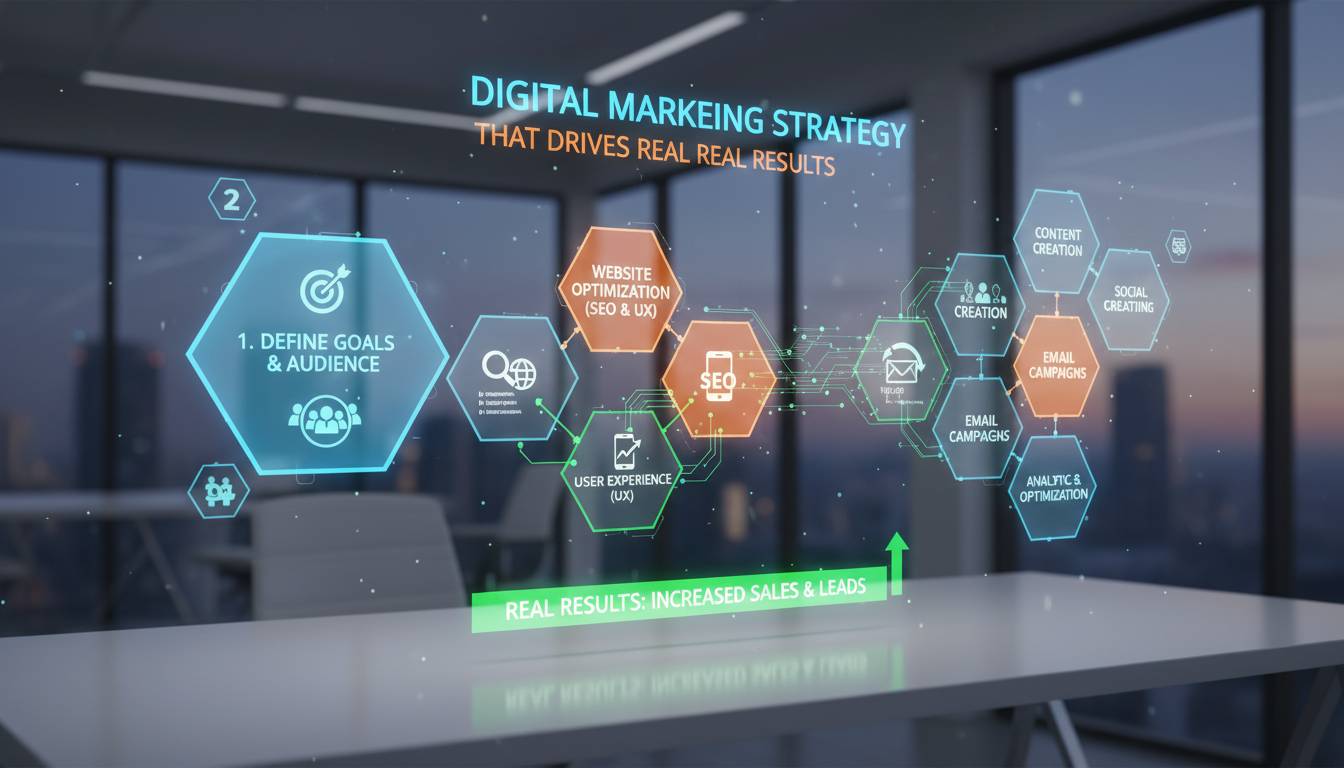
Digital Marketing Strategy That Drives Real Results
Consumers now spend an average of 7 hours online daily. Businesses without a coherent digital marketing strategy risk becoming invisible to their target audiences. With global digital ad spending projected to exceed $600 billion in 2024, the difference between thriving and struggling organizations often comes down to how effectively they execute their online marketing efforts. This guide covers the essential components, proven frameworks, and actionable steps that define successful digital marketing strategies in today’s competitive landscape.
What Is a Digital Marketing Strategy?
A digital marketing strategy is a plan that outlines how a business will achieve its marketing objectives through online channels. Unlike traditional marketing, this approach leverages the internet and electronic devices to connect with potential customers where they spend significant time: search engines, social media platforms, email inboxes, and mobile applications. The strategy is a roadmap, guiding organizations toward specific goals such as increasing brand awareness, generating qualified leads, boosting sales, or improving customer retention.
According to the Content Marketing Institute, companies with documented marketing strategies are 538% more likely to report success than those without formalized plans. This statistic underscores the importance of moving beyond vague intentions and creating structured, measurable approaches to digital engagement. A well-crafted strategy integrates multiple marketing channels while maintaining consistency in brand messaging and customer experience across all touchpoints.
The most effective digital marketing strategies align closely with overall business objectives, ensuring that every online initiative contributes meaningfully to organizational growth. This alignment requires marketers to understand their audience deeply, select appropriate channels, allocate resources wisely, and continuously optimize based on performance data.
Why Digital Marketing Strategy Matters in 2024
The digital landscape has transformed dramatically over the past decade, with consumer behavior evolving faster than many businesses can adapt. Mobile internet usage now accounts for over 60% of all web traffic, while voice search and artificial intelligence continue reshaping how people discover and engage with brands. Organizations that fail to develop coherent strategies risk wasting budget on disconnected tactics that produce minimal returns.
A strategic approach enables businesses to meet customers at the precise moment of purchase intent. Research from Google indicates that consumers conduct an average of 12 searches before making a buying decision, creating numerous opportunities for brands to influence consideration through search engine optimization and targeted advertising. Without a strategy guiding these efforts, companies miss critical windows to connect with potential buyers.
Furthermore, digital marketing offers measurability that traditional channels can’t match. Marketing professionals can track customer journeys from initial awareness through conversion, gaining insights that inform future budget allocations and creative decisions. This data-driven approach allows for continuous improvement, ensuring marketing investments deliver maximum impact over time.
Key Components of an Effective Digital Marketing Strategy
Successful digital marketing strategies incorporate multiple interconnected components, each serving distinct purposes within the overall customer acquisition funnel.
Search Engine Optimization (SEO) forms the foundation of organic visibility, helping businesses appear prominently in search results when potential customers seek related products or services. Effective SEO requires attention to technical website performance, content quality, keyword optimization, and backlink development. HubSpot’s research indicates that companies investing in SEO generate 14.6% more leads than those relying solely on traditional marketing channels.
Content Marketing provides value to audiences through informative blog posts, engaging videos, downloadable resources, and interactive experiences. Rather than directly promoting products, content marketing builds trust and establishes brands as industry authorities. The average B2B company publishes 13 blog posts monthly, recognizing content as essential for nurturing leads through lengthy sales cycles.
Social Media Marketing enables direct engagement with audiences on platforms where they spend considerable time. With over 4.9 billion social media users worldwide, businesses cannot afford to ignore these channels. Effective social strategies involve consistent posting, community management, influencer partnerships, and paid advertising tailored to specific platform demographics.
Email Marketing continues delivering the highest return on investment among digital channels, with studies showing an average ROI of $36 for every $1 spent. Personalized email campaigns nurture leads, maintain customer relationships, and drive repeat purchases when executed with segmentation and automation.
Pay-Per-Click Advertising provides immediate visibility through sponsored search results, display ads, and social media promotions. While requiring budget allocation, PPC campaigns offer precise targeting options and measurable results that complement organic efforts.
Analytics and Measurement tie all components together, providing insights into what works and what requires adjustment. Google Analytics, marketing automation platforms, and customer relationship management systems enable data-informed decision-making.
How to Create a Digital Marketing Strategy
Building an effective strategy requires systematic planning across several key phases. Follow these steps to develop a comprehensive plan tailored to your business objectives.
First, define clear goals using the SMART framework—objectives should be Specific, Measurable, Achievable, Relevant, and Time-bound. Rather than vague goals like “increase traffic,” specify targets such as “increase organic website traffic by 40% within twelve months.” This clarity enables focused efforts and accurate performance evaluation.
Second, identify your target audience through market research, customer surveys, and data analysis. Create detailed buyer personas representing your ideal customers, including demographic information, pain points, preferred communication channels, and purchasing behaviors. This understanding shapes all subsequent tactical decisions.
Third, conduct a comprehensive audit of your current digital presence. Evaluate website performance, existing content assets, social media following, email list health, and competitive positioning. This assessment reveals strengths to leverage and weaknesses requiring attention.
Fourth, select appropriate channels based on where your target audience spends time and where your business can realistically compete. Newer businesses should focus resources on two or three channels rather than spreading efforts thin across every platform.
Fifth, develop a content calendar outlining what content will be created, when it will be published, and who is responsible for production. Consistency proves more valuable than occasional bursts of high-volume content.
Sixth, establish key performance indicators (KPIs) for each initiative. Common metrics include website traffic, conversion rates, cost per acquisition, customer lifetime value, and return on ad spend. Define benchmarks based on industry standards and historical performance.
Common Digital Marketing Mistakes to Avoid
Even well-intentioned strategies fail when organizations fall into common traps. One prevalent mistake involves lacking patience, as many businesses abandon initiatives before giving them adequate time to produce results. SEO and content marketing typically require six to twelve months before yielding meaningful returns.
Another frequent error involves neglecting mobile users. With mobile traffic dominating internet usage, websites that fail to provide seamless mobile experiences lose potential customers to competitors with responsive designs. Google prioritizes mobile-friendly sites in search rankings, making optimization essential for visibility.
Additionally, many organizations fail to integrate their marketing efforts, treating SEO, social media, email, and paid advertising as separate silos rather than interconnected components. Customers experience a fragmented brand presence when messaging lacks consistency across channels.
Finally, measuring without acting on insights wastes the significant value of digital analytics. Regularly review performance data, identify patterns, and make informed adjustments to improve results continuously.
Conclusion
A well-executed digital marketing strategy provides the framework for sustainable business growth in an increasingly online world. By understanding core components, following systematic planning processes, and avoiding common pitfalls, organizations can create marketing approaches that resonate with target audiences and drive measurable results. The most successful businesses treat digital marketing as an ongoing investment requiring continuous refinement rather than a one-time project. As consumer behaviors evolve and new platforms emerge, adaptability and strategic thinking remain essential for long-term success.
Frequently Asked Questions
What is a digital marketing strategy?
A digital marketing strategy is a plan outlining how a business will use online channels—including search engines, social media, email, and websites—to achieve specific marketing objectives such as increasing brand awareness, generating leads, or driving sales.
How do you create a digital marketing strategy?
Creating a digital marketing strategy involves defining SMART goals, identifying target audiences through buyer personas, auditing current digital presence, selecting appropriate channels, developing a content calendar, and establishing KPIs to measure success.
What are the main types of digital marketing?
The primary types include search engine optimization (SEO), content marketing, social media marketing, email marketing, pay-per-click advertising, and affiliate marketing. Each channel serves distinct purposes within the overall customer journey.
How long does it take to see results from digital marketing?
Timeline varies by channel—PPC advertising can produce immediate results within days, while SEO and content marketing typically require six to twelve months to generate meaningful organic traffic and leads.
Why is mobile optimization important for digital marketing?
With over 60% of web traffic coming from mobile devices, businesses must provide seamless mobile experiences. Google prioritizes mobile-friendly websites in search rankings, making optimization essential for visibility and user experience.
How do you measure digital marketing success?
Success measurement involves tracking relevant KPIs such as website traffic, conversion rates, cost per acquisition, return on ad spend, email open rates, and social media engagement metrics. Regular analysis of these indicators informs strategy adjustments.