53Views 0Comments
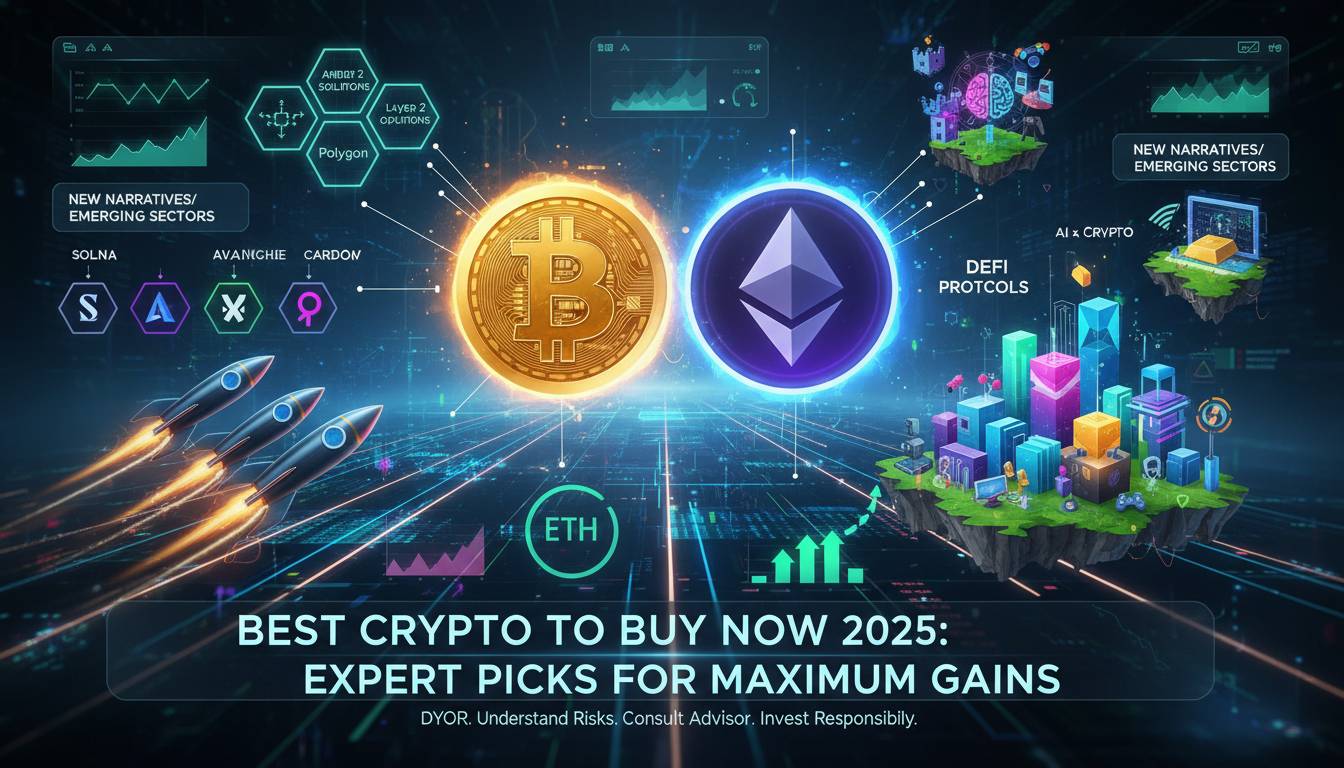
Best Crypto to Buy Now 2025: Expert Picks for Maximum Gains
The cryptocurrency market in 2025 moves fast—sometimes too fast for comfort. There are real opportunities here, but there are also plenty of ways to lose money if you’re not paying attention. Institutional money has poured in, regulators are finally paying attention, and the space looks very different from the Wild West days of even a few years ago.
This guide covers what we think are the most interesting cryptocurrencies for 2025, along with the risks you need to understand before putting any money in.
The 2025 Crypto Landscape
Entering 2025, the crypto market has changed substantially. Big financial institutions now offer crypto custody and trading—things that would have been unthinkable a decade ago. This has brought billions in new capital and made digital assets harder to ignore.
The total crypto market cap has reached new levels. Bitcoin remains dominant, but altcoins now command a much larger share than in previous cycles. The approval of spot crypto ETFs in the US gave traditional investors an easy way to get exposure without dealing with wallets or private keys.
Regulatory clarity has improved in some places. The EU’s MiCA framework set comprehensive rules for crypto operations. The US is still figuring things out, which creates uncertainty. This increased regulatory certainty has reduced some risks, but also created new compliance headaches.
Here’s what hasn’t changed: volatility. Double-digit price swings in a single day are still normal. If that makes you nervous, crypto might not be for you. Never invest money you can’t afford to lose—it’s not a platitude, it’s common sense in this market.
Bitcoin
Bitcoin remains the biggest name in crypto. It’s the original, the most recognized, and the easiest to buy and sell. For most people, Bitcoin is where they start.
The fixed supply of 21 million coins creates real scarcity. Big companies have added Bitcoin to their balance sheets. Some nations are building reserves. The network stays secure with mining operations spread across the globe.
Bitcoin in 2025 has shown staying power even when the market pulls back. It holds at higher price floors than in earlier cycles, which suggests real demand exists. Some analysts point out that Bitcoin’s correlation with stocks has decreased—that could make it more useful as a portfolio diversifier going forward.
The catch: Bitcoin is no longer a small bet. It trades at valuations that would require enormous new money flowing in to replicate the percentage gains of earlier cycles. That’s not a criticism—it’s just reality. Bitcoin offers liquidity and legitimacy that smaller coins can’t match.
Ethereum
Ethereum runs most of the decentralized apps and blockchain projects out there. It made the jump to proof-of-stake, cutting energy use dramatically while improving transaction speed and lowering fees for users.
The ecosystem keeps growing. DeFi, NFTs, enterprise blockchain solutions—it’s all built on Ethereum. Layer-2 solutions have helped with the throughput problems that used to frustrate users.
The EIP-1559 upgrade changed how Ethereum handles fees—it now burns a portion of transaction costs. Over time, this could make Ethereum deflationary, which is unusual for a cryptocurrency.
Smart contract platforms compete fiercely now. Solana, Avalanche, Polygon—all offer different tradeoffs. Ethereum’s advantage is its developer community and years of first-mover status. Whether that holds against faster or cheaper competitors remains to be seen.
Altcoins Worth Watching
Smaller cryptocurrencies can deliver bigger percentage gains—but bigger losses too. These are projects with real use cases, not just hype.
Solana processes transactions quickly with low fees. It has attracted developers and users, though past network outages raised reliability questions.
Chainlink provides the bridge between blockchain contracts and real-world data. DeFi can’t function without oracles, and Chainlink has become the standard. Partnerships with major corporations support this.
Polkadot lets different blockchains talk to each other. Its design allows specialized chains to connect and share information—a genuine need in a fragmented ecosystem.
Avalanche offers fast finality and low costs. Its consensus mechanism differs from competitors, which appeals to certain use cases.
Risk Factors
Let’s be direct about what can go wrong.
Volatility—you already know this. Prices move hard and fast. 10% swings in hours are normal. 50% drawdowns happen.
Regulation remains unpredictable. The US Congress can’t agree on anything, and other countries swing from friendly to hostile without warning. A bad regulatory announcement can crush specific tokens.
Technical risks include hacks, bugs, and network failures. Exchange collapses still occur. Smart contract exploits wipe out billions. Use reputable platforms and consider hardware wallets for anything significant.
Market manipulation runs rampant. Pump-and-dump schemes target smaller coins constantly. What looks like a breakout might be a coordinated dump about to happen.
Psychological toll—crypto trades 24 hours a day. Checking prices at 3am leads to bad decisions. The market never sleeps, but you need to.
Building a Portfolio
If you’re going to invest, approach it like you’d approach any other asset class.
Diversify. Don’t put everything in one coin. Spread across different types—maybe Bitcoin for stability, Ethereum for platform exposure, a smaller altcoin for upside.
Position sizing matters. A 10% allocation to crypto is aggressive. Many advisors recommend 1-5%. Figure out what you’re comfortable losing.
Dollar-cost averaging takes emotion out of the equation. Invest a fixed amount monthly regardless of price. You’re not timing the market—you’re buying over time.
Do your own research. Read the whitepapers. Understand the tokenomics. Check the team. Look at developer activity. If you can’t explain why a coin has value, don’t buy it.
Long-term holding has historically beaten trading. Patient investors who held through cycles generally did better than people trying to day trade volatility.
Frequently Asked Questions
Is crypto a good investment for beginners in 2025?
Start with Bitcoin or Ethereum. Invest only what you can afford to lose entirely. Learn the basics first—how wallets work, what private keys are, how exchanges function. Don’t rush.
How much should I invest?
A small percentage of your portfolio, typically 1-5%. This gives you exposure to potential gains while limiting downside if things go wrong.
Which crypto has the highest gains potential?
Smaller cap coins theoretically offer higher returns—but predicting which ones is nearly impossible. Many previously hyped projects failed completely. Research and diversification beat speculation.
Should I buy now or wait?
No one can time the market consistently. Dollar-cost averaging removes the stress of trying to pick entry points.
Are crypto gains taxable in the US?
Yes. The IRS treats crypto as property. Report capital gains and losses. Keep detailed records of every transaction.
How do I store crypto safely?
Hardware wallets offer the best security for significant holdings. Enable two-factor authentication everywhere. Never share your private keys or recovery phrases. If someone asks for them, they’re scamming you.