122Views 0Comments
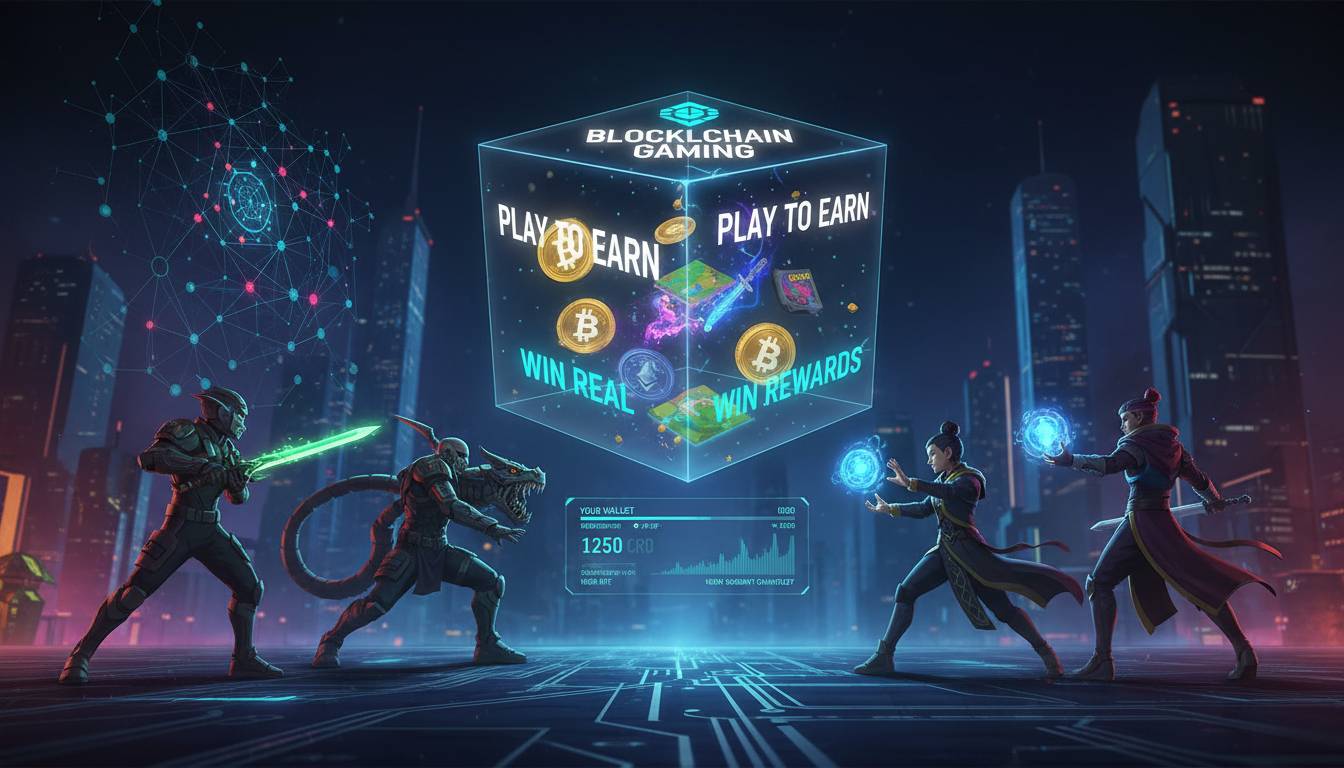
Blockchain Gaming: Play to Earn & Win Real Rewards
The gaming industry stands at a transformative crossroads as blockchain technology reshapes how players interact with virtual worlds. Blockchain gaming, a rapidly expanding sector that combines decentralized technology with interactive entertainment, has grown from a niche experiment into a multi-billion dollar phenomenon capturing mainstream attention. By enabling true digital ownership, play-to-earn economics, and verifiable scarcity, blockchain gaming promises to fundamentally alter the relationship between players and the games they love. This transformation raises critical questions about the future of interactive entertainment, the economic implications for millions of players worldwide, and how traditional gaming giants are responding to this technological disruption.
Understanding Blockchain Gaming Fundamentals
Blockchain gaming represents the integration of distributed ledger technology into video game ecosystems, creating new paradigms for ownership, trade, and value creation within virtual environments. Unlike traditional games where in-game items remain locked within proprietary servers controlled by publishers, blockchain-based games store assets on decentralized networks that players truly own. This fundamental shift means that when a player purchases a virtual sword, character, or piece of land, that digital asset exists as a unique token on the blockchain, transferable across platforms and marketplaces without developer permission.
The technical foundation rests on smart contracts—self-executing programs deployed on blockchain networks that automatically enforce rules and facilitate transactions. These contracts enable automatic reward distribution, verify ownership transfers, and ensure transparent rule enforcement without intermediaries. Major blockchain platforms supporting gaming applications include Ethereum, Solana, Polygon, and the BNB Smart Chain, each offering different trade-offs between transaction speed, cost, and security.
Non-fungible tokens, commonly known as NFTs, serve as the backbone for in-game assets in blockchain gaming. Each NFT represents a unique digital item with verifiable scarcity and ownership history recorded permanently on the blockchain. This stands in stark contrast to traditional games where items exist only as database entries that publishers can modify, delete, or reset at will. The implications extend beyond mere ownership—players can potentially sell their accumulated digital assets for real-world value, creating genuine economic stakes in gaming activities.
The Play-to-Earn Revolution
The play-to-earn model represents perhaps the most disruptive innovation in blockchain gaming, fundamentally challenging the established relationship between time investment and economic return in video games. In traditional gaming, players spend countless hours grinding through content, acquiring items, and building characters—efforts that yield no tangible economic value beyond entertainment. Blockchain gaming inverts this paradigm by allowing players to earn cryptocurrency tokens or valuable NFT assets through gameplay achievements.
Axie Infinity emerged as the pioneering success story demonstrating play-to-earn potential, enabling players in developing nations particularly in Southeast Asia to earn meaningful income by breeding, battling, and trading digital creatures called Axies. At its peak in early 2022, the game reportedly generated millions in daily transaction volume, with some players earning more through gameplay than they could in traditional employment. This phenomenon attracted global attention and sparked an explosion of similar blockchain gaming projects seeking to replicate its success.
The economic mechanics work through tokenomics—carefully designed economic systems that distribute rewards to players while maintaining sustainable inflation controls. Most play-to-earn games feature dual token systems: a governance token that provides holders with voting rights on game development decisions, and a in-game currency used for transactions, upgrades, and rewards. This structure creates feedback loops where increased player activity drives token demand, theoretically generating ongoing value for active participants.
However, the sustainability of play-to-earn economics has faced significant scrutiny. Critics point out that many early blockchain games functioned more like Ponzi schemes, requiring continuous new player recruitment to sustain token values paid to earlier participants. The market correction beginning in late 2022 saw numerous high-profile projects collapse, erasing billions in market capitalization and leaving many players with worthless tokens. This phase separated genuinely innovative projects from speculative opportunists, pushing the industry toward more sustainable economic models.
Major Industry Players and Market Dynamics
The blockchain gaming sector has attracted substantial investment from venture capital firms, traditional gaming companies, and technology giants seeking exposure to this evolving market. According to industry analyses, blockchain gaming investments exceeded $4 billion in 2022 alone, with major rounds including Animoca Brands, Dapper Labs (creator of NBA Top Shot), and Sky Mavis (developer of Axie Infinity) securing significant funding rounds.
Traditional gaming publishers have increasingly entered the space, though many approach blockchain integration cautiously following consumer backlash against perceived cash-grab mechanics. Electronic Arts, Ubisoft, and Square Enix have all experimented with blockchain-based items, though implementation details remain controversial among core gaming communities. Meanwhile, companies like Immutable X and Mythical Games focus exclusively on blockchain gaming infrastructure, providing tools for developers to integrate decentralized features without building from scratch.
The market landscape spans diverse gameplay genres, from collectible card games and turn-based strategy titles to massively multiplayer online experiences and virtual real estate simulations. Games like The Sandbox and Decentraland offer virtual world experiences where players purchase land parcels, build structures, and monetize creations through user-generated content. Other projects like Illuvium and Gods Unchained focus on traditional gameplay loops enhanced by blockchain ownership mechanics.
Market data indicates the blockchain gaming audience has grown substantially despite market volatility. Monthly active wallets connected to blockchain games reached several million by late 2023, with engagement metrics showing particular strength in emerging markets where play-to-earn opportunities provide economic alternatives. The average transaction value in blockchain gaming often exceeds traditional mobile gaming, suggesting engaged audiences willing to invest significantly in digital assets.
Digital Ownership and Player Empowerment
The concept of true digital ownership represents blockchain gaming’s most transformative promise for player rights and economic empowerment. In traditional gaming, players effectively license in-game items rather than owning them outright, with terms of service typically granting publishers broad authority to modify, remove, or restrict access to purchased content. This arrangement has generated numerous disputes over the years, including high-profile cases where players lost access to accumulated digital libraries worth thousands of dollars.
Blockchain technology addresses these concerns through cryptographic verification of ownership and permissionless transferability. When a player acquires an NFT in a blockchain game, that ownership is recorded immutably on the decentralized network, theoretically immune to arbitrary modification or revocation. Players can display their digital collections across different platforms, sell items on open marketplaces, or transfer assets between compatible games within the same blockchain ecosystem.
This ownership model enables novel economic possibilities previously impossible in gaming. Players can potentially earn money from their skill and time investment by trading valuable items on secondary markets. Game developers can implement revenue-sharing models where creators receive percentages of subsequent sales of items they originally sold. Guild systems allow investors to pool resources and loan valuable assets to players who cannot afford entry costs, creating new forms of economic cooperation.
The implications for game design remain subjects of ongoing experimentation. Some developers embrace full asset portability across game universes, while others prefer maintaining closed ecosystems that preserve design control. The optimal balance between player ownership and developer flexibility continues evolving as the industry matures and discovers what structures benefit all stakeholders.
Challenges and Regulatory Considerations
Despite rapid growth, blockchain gaming faces significant challenges that could shape its trajectory in coming years. Environmental concerns regarding blockchain energy consumption have prompted criticism from environmentally conscious consumers and regulators. While newer blockchain networks utilize more efficient consensus mechanisms like proof-of-stake, the broader cryptocurrency industry’s carbon footprint remains a reputational challenge for gaming applications.
Regulatory uncertainty poses perhaps the most substantial barrier to mainstream adoption. Securities regulations in the United States and other jurisdictions create compliance complexities for blockchain games that distribute tokens potentially qualifying as investment contracts. The Howey Test, used to determine whether transactions qualify as securities offerings, has created legal ambiguity that many blockchain gaming companies navigate cautiously. Some projects have restricted access to American users or ceased token distribution entirely to avoid regulatory enforcement actions.
Consumer protection concerns also merit attention. The combination of speculative investment incentives and gaming creates risks for vulnerable populations, particularly younger players who may not fully appreciate financial implications. Reports of addiction-like behaviors and significant financial losses in some blockchain gaming communities have prompted calls for responsible gaming features and age-gating mechanisms. The Federal Trade Commission has signaled increasing scrutiny of cryptocurrency applications targeting consumers, suggesting regulatory compliance requirements will intensify.
Technical limitations present additional obstacles. Blockchain transaction speeds and costs can create poor user experiences compared to traditional gaming, where actions execute instantly without fees. Scalability solutions continue developing, but mainstream gaming experiences require near-instant responsiveness that current blockchain infrastructure cannot always guarantee. User experience remains a significant barrier, as managing cryptocurrency wallets and understanding blockchain concepts intimidate average consumers.
The Future Outlook for Blockchain Gaming
The blockchain gaming industry appears positioned for continued evolution as technology matures and market structures stabilize. Industry analysts suggest the sector will likely consolidate around projects demonstrating genuine gameplay value rather than pure speculation, with sustainable economic models replacing unsustainable yield distribution schemes. The integration of artificial intelligence, virtual reality, and augmented reality with blockchain ownership could create immersive experiences currently difficult to envision.
Traditional gaming companies increasingly signal long-term commitment to blockchain technology despite public relations challenges. Major publishers recognize that digital ownership concepts align with player desires for meaningful investment in gaming activities. The success of any individual project remains uncertain, but the underlying technological innovations appear likely to persist in some form within the broader gaming ecosystem.
Emerging markets may prove particularly receptive to blockchain gaming’s economic opportunities. In regions with limited traditional employment opportunities, play-to-earn models offer potential income alternatives that attract motivated participants. This dynamic could drive continued growth in international markets while developed nations approach blockchain gaming more cautiously.
The ultimate trajectory depends heavily on regulatory developments, technological advancement, and the industry’s ability to deliver compelling entertainment experiences rather than speculative investment vehicles. Blockchain gaming’s potential to transform player relationships with virtual worlds remains substantial, though realizing that potential requires overcoming significant technical, economic, and regulatory challenges that will shape the sector for years to come.
Conclusion
Blockchain gaming represents a fundamental shift in how players interact with virtual worlds, offering unprecedented ownership rights, economic opportunities, and gameplay paradigms that challenge traditional gaming industry assumptions. The play-to-earn model has demonstrated both transformative potential and unsustainable excess, forcing the industry to mature and develop more responsible structures. While challenges including regulatory uncertainty, technical limitations, and environmental concerns persist, major investment and mainstream interest suggest blockchain gaming will remain a significant sector within the broader gaming landscape. Players, developers, and investors navigating this space should approach with careful consideration of risks while recognizing the genuine innovations emerging from this technological convergence. The future of gaming likely includes blockchain elements in some form, whether through full integration or hybrid approaches that balance decentralization benefits with traditional gaming accessibility.
Frequently Asked Questions
What is blockchain gaming?
Blockchain gaming integrates cryptocurrency technology into video games, enabling players to own digital assets as NFTs that can be traded, sold, or transferred across platforms without developer permission. These games use blockchain networks to verify ownership and facilitate transactions.
How does play-to-earn work?
Play-to-earn games reward players with cryptocurrency tokens or NFT assets for gameplay achievements, time investment, or skill demonstration. Players can then sell these rewards on cryptocurrency exchanges or NFT marketplaces for real money, creating actual economic value from gaming activities.
Is blockchain gaming safe?
Blockchain gaming carries risks including cryptocurrency volatility, potential scams, regulatory uncertainty, and technical vulnerabilities. Players should research projects thoroughly, understand the technologies involved, and only invest what they can afford to lose. Many jurisdictions lack clear regulatory frameworks protecting blockchain gaming participants.
Which blockchain games are most popular?
Popular blockchain games include Axie Infinity, The Sandbox, Decentraland, Gods Unchained, Illuvium, and Splinterlands. These span various genres from collectible card games to virtual world simulations, each offering different gameplay experiences and economic models.
Do I need cryptocurrency to play blockchain games?
Yes, most blockchain games require cryptocurrency wallets and some form of cryptocurrency to begin playing, whether for purchasing initial assets, paying transaction fees, or funding gameplay accounts. The specific requirements vary by game and blockchain network used.
Can you really earn money playing blockchain games?
Some players have earned significant income through blockchain gaming, particularly in play-to-earn titles. However, earnings vary dramatically based on game popularity, skill level, time investment, and market conditions. Many players lose money, and sustainable income is not guaranteed.