98Views 0Comments
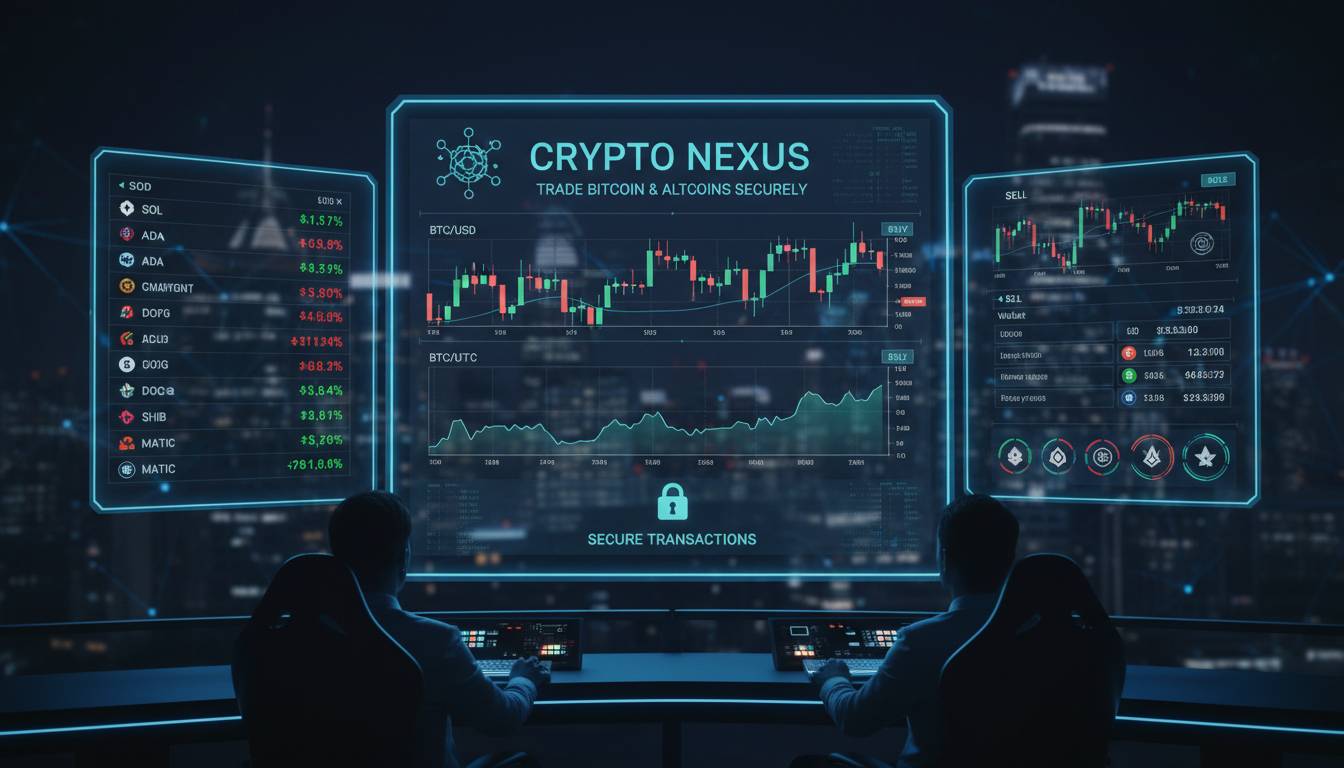
Crypto Trading Platform – Trade Bitcoin & Altcoins Securely
The global cryptocurrency market has grown to over $2 trillion in total market capitalization, with millions of Americans actively trading digital assets. A reliable crypto trading platform serves as your gateway to buying, selling, and managing Bitcoin, Ethereum, and hundreds of altcoins. Choosing the right platform impacts your trading success, security, and overall experience in the volatile cryptocurrency market.
📊 STATS
• $2.1 trillion in total crypto market cap
• 38 million Americans own cryptocurrency
• $14 billion in daily crypto trading volume in the US
Key Takeaways
• Regulation matters: Only use platforms registered with FinCEN or state regulators
• Security is paramount: 67% of traders prioritize security features when choosing exchanges
• Fee structures vary: Trading fees range from 0.1% to 1.5% per transaction
• Mobile vs. desktop: 68% of crypto trades now occur on mobile devices
• Altcoin access: Top platforms offer 100-500+ cryptocurrencies for trading
This guide covers everything you need to know about selecting a crypto trading platform that balances security, features, fees, and regulatory compliance for US investors.
What Is a Crypto Trading Platform
A crypto trading platform is a digital marketplace where users can buy, sell, and trade cryptocurrencies using fiat currency or other digital assets. These platforms function similarly to stock exchanges but operate 24/7, enabling continuous trading across global markets.
Types of Crypto Exchanges
Centralized Exchanges (CEXs)
Centralized exchanges operate as intermediaries, holding user funds and matching buy and sell orders. Examples include Coinbase, Kraken, and Binance US. These platforms offer high liquidity, advanced trading features, and customer support. However, they require users to trust the platform with their funds, creating a single point of failure.
Decentralized Exchanges (DEXs)
Decentralized exchanges like Uniswap and dYdX allow peer-to-peer trading without intermediaries. Users maintain control of their funds through wallet connections. While DEXs offer greater privacy and reduced counterparty risk, they typically have lower liquidity and more complex user interfaces.
Hybrid Exchanges
Hybrid platforms combine elements of both CEXs and DEXs, offering the security of non-custodial wallets with the liquidity of centralized order books. These newer platforms aim to provide the best of both worlds.
How Crypto Trading Platforms Work
Crypto exchanges match buyers and sellers through order books. When you place a buy order, the platform searches for a matching sell order at your specified price. Market orders execute immediately at the best available price, while limit orders execute only when the price reaches your target.
The platform generates revenue through trading fees, withdrawal fees, and sometimes premium features. Most US exchanges charge maker fees (for adding liquidity) and taker fees (for removing liquidity), typically ranging from 0.1% to 0.6% per trade.
Key Features of the Best Crypto Trading Platforms
| Feature | Impact | Consideration |
|---|---|---|
| Security | Prevents hacks and theft | Look for cold storage, 2FA, insurance |
| Fees | Affects profitability | Compare maker/taker fees |
| Liquidity | Enables fast execution | Higher volume = better prices |
| Crypto Selection | Trading opportunities | 100-500+ coins available |
| Fiat Support | Easy USD on/off ramps | ACH, wire, card deposits |
| Mobile App | Trading flexibility | iOS and Android quality |
| Customer Support | Issue resolution | Live chat, phone, email |
Security Features You Need
The best crypto trading platforms implement multiple security layers:
Cold Storage: Top exchanges store 95%+ of customer funds in offline cold wallets, inaccessible to hackers. Coinbase reports holding 98% of customer funds in cold storage.
Two-Factor Authentication (2FA): Mandatory 2FA using authenticator apps or hardware keys provides essential account protection. SMS 2FA is less secure but still better than none.
Insurance Coverage: Some platforms maintain insurance funds to protect users against breaches. Coinbase holds $320 million in insurance coverage for hot wallet funds.
Withdrawal Whitelists: Restricting withdrawals to pre-approved addresses prevents unauthorized transfers even if login credentials are compromised.
Address Verification: Transparent blockchain monitoring helps detect suspicious activity and flagged addresses.
Trading Tools and Features
Advanced traders require robust tools:
Charting and Analysis: TradingView integration or native charting with technical indicators, trend lines, and drawing tools help inform trading decisions.
Order Types: Beyond basic market and limit orders, advanced platforms offer stop-loss, take-profit, trailing stops, and conditional orders to manage risk.
API Access: Professional traders benefit from API keys for automated trading strategies and portfolio management.
Staking and Earn: Many platforms offer staking rewards, allowing users to earn passive income on holdings of proof-of-stake cryptocurrencies.
Top Crypto Trading Platforms in the US
Comparison of Leading Exchanges
| Platform | Best For | Fees | Cryptos | Rating |
|---|---|---|---|---|
| Coinbase | Beginners | 0.6%-2.5% | 240+ | ⭐⭐⭐⭐⭐ |
| Kraken | Advanced traders | 0%-0.4% | 350+ | ⭐⭐⭐⭐⭐ |
| Binance US | Low fees | 0.1%-0.5% | 150+ | ⭐⭐⭐⭐ |
| Gemini | Security focus | 0.35%-2.5% | 100+ | ⭐⭐⭐⭐ |
| Crypto.com | Mobile trading | 0.2%-0.5% | 350+ | ⭐⭐⭐⭐ |
Coinbase
Coinbase stands as the largest US-based cryptocurrency exchange, serving over 100 million users worldwide. The platform excels for beginners thanks to its intuitive interface, extensive educational resources, and robust regulatory compliance.
Pros:
• Extremely user-friendly interface perfect for beginners
• Strong regulatory compliance and insurance coverage
• Wide fiat on/off ramps with multiple payment methods
• Educational rewards program paying users to learn about crypto
Cons:
• Higher fees compared to advanced trading platforms
• Limited charting tools for technical analysis
Price: Free to download; trading fees 0.6% to 2.5% depending on transaction size
For: First-time crypto buyers, casual investors, those prioritizing ease of use
Kraken
Kraken offers one of the most advanced trading experiences among US exchanges, making it ideal for serious traders. The platform provides deep liquidity across numerous trading pairs and competitive fee structures.
Pros:
• Low fees with volume-based discounts (maker fees as low as 0%)
• Extensive cryptocurrency selection exceeding 350 coins
• Advanced trading features including margin trading
• Strong security track record with no major hacks since 2011
Cons:
• Interface can feel overwhelming for beginners
• Customer support response times can be slow during high volume
Price: Trading fees 0% to 0.4% depending on volume
For: Active traders, those trading large volumes, advanced users
Binance US
Binance US brings the global Binance ecosystem to American users with significantly lower fees than most competitors. The platform offers extensive trading pairs and advanced features.
Pros:
• Extremely competitive fee structure
• Wide selection of trading pairs and altcoins
• Advanced trading interface with professional tools
Cons:
• Limited fiat payment options compared to Coinbase
• Fewer educational resources for beginners
• Past regulatory scrutiny affecting user trust
Price: Trading fees 0.1% to 0.5%
For: Cost-conscious traders, altcoin enthusiasts, frequency traders
How to Choose the Right Crypto Trading Platform
Security Considerations
Security should be your primary concern when selecting any crypto trading platform. The cryptocurrency space has experienced numerous exchange hacks resulting in billions in losses.
Essential Security Checklist:
✅ Regulation and compliance: Check if the platform is registered with FinCEN and operates in your state
✅ Cold storage policy: Look for platforms storing majority of funds offline
✅ Insurance coverage: Understand what protection exists against breaches
✅ Two-factor authentication: Ensure 2FA is mandatory, not optional
✅ Withdrawal confirmations: Enable alerts for all account withdrawals
✅ Login monitoring: Review active sessions and login history regularly
Red Flags to Avoid:
• Unregulated platforms operating without US licensing
• Promises of guaranteed returns or “too good to be true” yields
• Poor security practices like storing user funds in hot wallets
• History of security breaches or hacks
Fees and Costs
Trading fees directly impact your profitability, especially for frequent traders. Understanding the fee structure helps you choose the most cost-effective platform.
Fee Types to Evaluate:
• Trading fees: Maker and taker fees charged on each trade
• Deposit fees: Costs for ACH, wire, or credit card deposits
• Withdrawal fees: Charges for moving crypto off-platform
• Spread differences: The gap between buy and sell prices
For example, if you trade $10,000 monthly, a platform charging 0.5% fees costs $600 annually, while one charging 0.1% costs just $120—a $480 difference.
Supported Cryptocurrencies
Your trading strategy may require access to specific coins. While Bitcoin and Ethereum are universally available, altcoin availability varies significantly:
• Maximum variety: Kraken, Binance US, and Crypto.com offer 150-350+ cryptocurrencies
• Essential altcoins: Most platforms support major tokens like SOL, ADA, XRP, DOT, and LINK
• DeFi tokens: Look for platforms supporting emerging DeFi and Web3 projects
• New listings: Consider whether the platform actively adds new tokens
How to Get Started with Crypto Trading
Prerequisites:
– [ ] Government-issued ID for identity verification
– [ ] Bank account for fiat deposits (ACH or wire)
– [ ] Secure password and 2FA authentication app
– [ ] Understanding of basic crypto concepts
Time: 15-30 minutes | Cost: $0-10 depending on deposit method
Steps
1. Research and Select Platform
Compare platforms based on your priorities—ease of use (Coinbase), low fees (Kraken, Binance US), or security (Gemini). Read reviews, check regulatory status, and verify fee schedules.
⏱ 1 hour | 💡 Tip: Start with small deposits to test the platform before funding fully
2. Create Account and Verify Identity
Sign up with your email, create a strong password, and complete identity verification (KYC). US regulations require all regulated exchanges to verify identity, which typically takes minutes to hours.
⚠️ Avoid: Using fake information → Fix: Provide accurate details to avoid account restrictions
3. Secure Your Account
Enable two-factor authentication immediately. Set up withdrawal whitelists and email alerts for account activity. Consider using a hardware wallet for large holdings.
⏱ 10 minutes | 💡 Tip: Write down 2FA backup codes and store them securely offline
4. Fund Your Account
Link a bank account via ACH for free deposits, or use wire transfers for larger amounts. Credit card purchases carry higher fees (3-5%) but offer instant transactions.
⚠️ Avoid: Large credit card deposits → Fix: Use ACH or wire for amounts over $500 to minimize fees
5. Make Your First Trade
Start with a small purchase of Bitcoin or Ethereum to understand the trading interface. Practice placing market and limit orders before trading actively.
⏱ 15 minutes | 💡 Tip: Use limit orders to control your entry price rather than market orders
Troubleshooting:
| Problem | Fix |
|———|—–|
| Identity verification pending | Upload clear ID documents; wait 24-48 hours for review |
| Bank deposit failed | Verify account numbers; contact bank for blocked transactions |
| Can’t withdraw funds | Complete full verification; check withdrawal limits |
| 2FA lost | Use backup codes or contact support with ID verification |
Common Mistakes to Avoid
| Mistake | Impact | Solution |
|---|---|---|
| Not enabling 2FA | 📉 Full account vulnerability | Enable authenticator-based 2FA immediately |
| Keeping all crypto on exchange | 📉 Risk of exchange hack | Transfer to personal hardware wallet |
| Ignoring fee structures | 📉 Reduced returns | Choose fee-appropriate platform for trading frequency |
| FOMO buying at peaks | 📉 Buying high, selling low | Use dollar-cost averaging instead |
| Not backing up 2FA | 📉 Permanent account loss | Store backup codes in secure location |
| Falling for phishing | 📉 Complete fund loss | Always verify URLs; never share login info |
⚠️ CRITICAL: The most devastating mistake is not securing your account properly. In 2023 alone, over $1 billion was stolen from crypto users through phishing, SIM swapping, and exchange breaches. Enable every security feature available, use hardware wallets for significant holdings, and never share your login credentials with anyone—exchange staff will never ask for your password or 2FA codes.
Future of Crypto Trading Platforms
The crypto trading landscape continues evolving rapidly. Several trends are shaping the future of how Americans trade digital assets.
Regulatory Clarity: The SEC and CFTC are establishing clearer frameworks for crypto asset classification. This regulatory clarity will reduce uncertainty and potentially attract institutional investors to the space.
Institutional Integration: Major financial institutions are launching crypto trading capabilities. Fidelity, BlackRock, and traditional banks increasingly offer cryptocurrency exposure, driving mainstream adoption.
Mobile-First Trading: With 68% of crypto trades occurring on mobile devices, platforms continue investing heavily in mobile experiences. Advanced trading tools previously exclusive to desktop are becoming standard on mobile apps.
DeFi Integration: Centralized exchanges are incorporating decentralized finance features like staking, yield farming, and governance token rewards, blurring the lines between CEX and DEX platforms.
Conclusion
Selecting the right crypto trading platform requires balancing security, fees, features, and regulatory compliance. For beginners, Coinbase offers the most accessible entry point with excellent security and ease of use. Active traders benefit from Kraken’s low fees and advanced tools. Cost-conscious users find value in Binance US’s competitive pricing structure.
Regardless of your choice, prioritize security above all else—enable two-factor authentication, use hardware wallets for significant holdings, and remain vigilant against phishing attempts. The cryptocurrency market operates 24/7, offering continuous opportunities, but only for those who approach it with proper knowledge and security practices.
Start small, learn continuously, and never invest more than you can afford to lose in this highly volatile asset class.
Frequently Asked Questions
Which crypto trading platform is best for beginners?
Coinbase is widely considered the best platform for beginners due to its intuitive interface, comprehensive educational resources, and robust regulatory compliance. The platform guides new users through buying their first cryptocurrency with clear instructions and minimal complexity.
Are crypto trading platforms safe?
Reputable US-based crypto trading platforms implement strong security measures including cold storage, two-factor authentication, and insurance coverage. However, no platform is completely immune to risk. The safest approach involves using hardware wallets for large holdings and only keeping trading funds on exchanges.
How much money do I need to start trading crypto?
You can start trading with as little as $1-5 on most platforms, as they support fractional cryptocurrency purchases. However, consider that transaction fees become proportionally significant with very small amounts. Starting with $50-100 allows you to learn the process while minimizing fee impact.
Do I have to pay taxes on crypto trades?
Yes, the IRS treats cryptocurrency as property in the US. Capital gains from selling crypto at a profit are subject to capital gains tax. Each trade is a taxable event, and you must report all transactions on your annual tax return. Consult a tax professional for specific guidance.
Can I trade crypto on weekends?
Yes, cryptocurrency markets operate 24/7, 365 days per year, including weekends and holidays. Unlike stock markets, crypto exchanges never close, allowing continuous trading. However, liquidity may be lower during weekend off-peak hours.
What is the difference between a crypto exchange and a crypto wallet?
A crypto exchange is a trading platform where you buy and sell cryptocurrencies. A crypto wallet stores your cryptocurrency keys, allowing you to send and receive funds. Exchanges may provide built-in wallets, but for maximum security, storing significant holdings in a personal hardware wallet is recommended.