132Views 0Comments
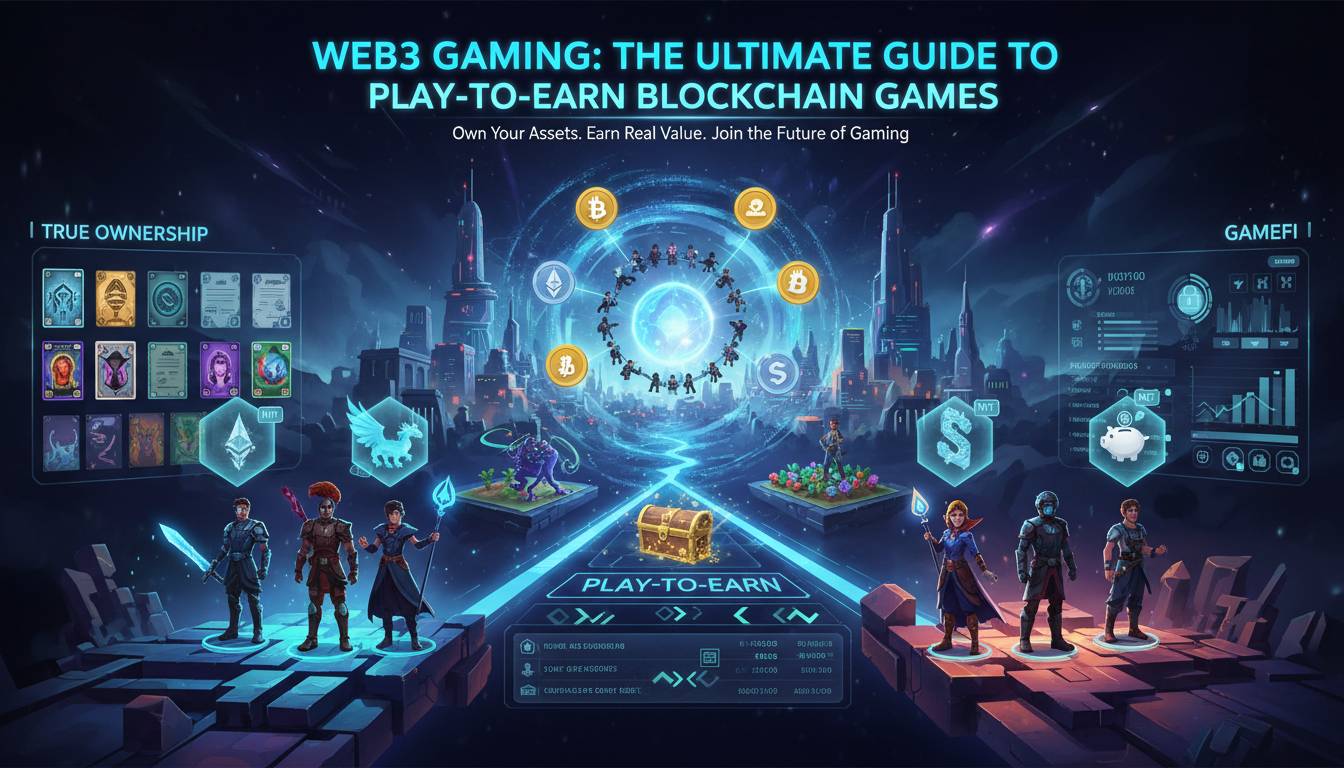
Web3 Gaming: The Ultimate Guide to Play-to-Earn Blockchain Games
Web3 gaming represents a fundamental shift in how players interact with video games, transforming gaming from a purely recreational activity into a potential income source. Unlike traditional gaming where in-game purchases and items remain controlled by game developers, Web3 gaming leverages blockchain technology to give players true ownership of digital assets, the ability to earn real value through gameplay, and participation in decentralized economies. This comprehensive guide explores everything you need to know about play-to-earn blockchain games, from foundational concepts to practical implementation strategies.
📊 STATS
• The global blockchain gaming market reached $4.6 billion in 2023
• Over 2.5 million daily active users engaged with Web3 games in Q1 2024
• The play-to-earn gaming segment is projected to grow at 21.3% CAGR through 2028
• Axie Infinity, the most successful P2E game, has generated over $1.2 billion in lifetime revenue
Key Takeaways
• Ownership: Players own in-game assets as NFTs, not the game company
• Earning Potential: Gamers can earn tokens with real monetary value through gameplay
• Interoperability: Assets can potentially transfer across different games and platforms
• Transparency: Blockchain ensures verifiable scarcity and transaction history
• Community Governance: Many Web3 games allow token holders to influence development
The Web3 gaming ecosystem has evolved significantly since the 2021 boom that saw games like Axie Infinity dominate headlines. Today’s landscape offers diverse experiences across multiple blockchain networks, each with unique economic models and gameplay mechanics. Understanding these fundamentals positions you to navigate this emerging space effectively, whether you’re a casual gamer curious about earning or an investor evaluating blockchain gaming tokens.
What Is Web3 Gaming?
Web3 gaming refers to video games that incorporate blockchain technology, cryptocurrency, and decentralized principles into their core mechanics. At its foundation, Web3 gaming aims to address long-standing issues in the traditional gaming industry: players spending hundreds or thousands of dollars on virtual items they never truly own, game developers holding absolute control over in-game economies, and the complete loss of value when games shut down.
Core Technologies
Blockchain Technology: The underlying distributed ledger technology that records all in-game transactions, verifies ownership, and ensures transparency. Popular blockchains for gaming include Ethereum, Solana, Polygon, BNB Smart Chain, and newer entrants like Immutable X and Ronin, each offering different trade-offs between cost, speed, and ecosystem maturity.
Non-Fungible Tokens (NFTs): Digital assets representing unique in-game items such as characters, weapons, skins, land parcels, or collectibles. Unlike traditional game items stored on company servers, NFTs exist on the blockchain, allowing players to buy, sell, or trade them freely on open marketplaces. This means if you stop playing a game, you retain value in your assets.
Cryptocurrency and Tokens: Most Web3 games issue their own tokens used for governance (giving holders voting power on game decisions), gameplay rewards, and in-game economics. These tokens can often be exchanged for fiat currency, creating real-world earning potential.
💡 STAT: The average Web3 gamer earns approximately $200-$500 monthly from gameplay, though earnings vary dramatically based on game economy, time investment, and skill level
How Play-to-Earn Works
The play-to-earn model fundamentally changes the player-developer relationship. In traditional gaming, developers profit from players while players receive entertainment value. In P2E ecosystems, players can generate income through several mechanisms: earning tokens as gameplay rewards, trading NFTs for profit, staking tokens for passive income, or participating in governance that affects game economics.
Games typically require an initial investment to start playing—purchasing characters or items necessary to participate. This upfront cost creates the liquidity that funds player rewards. Understanding this economic cycle is crucial before investing time or money into any Web3 game.
Benefits of Web3 Gaming
| Benefit | Impact | Source |
|---|---|---|
| True Asset Ownership | 100% player control over digital items | Blockchain technology |
| Earning Potential | $200-$500 average monthly earnings | CryptoGaming, 2024 |
| Transparent Economies | All transactions publicly verifiable | Smart contracts |
| Cross-Game Utility | Some assets work across multiple games | interoperability protocols |
| Community Governance | Players influence game direction | DAO structures |
Financial Opportunities
The most compelling benefit of Web3 gaming is the ability to earn real value through gameplay. While early adopters in games like Axie Infinity and StepN generated substantial income, the market has matured, and realistic expectations are essential. Today’s P2E games often feature sustainable economic models that prioritize long-term viability over short-term gains.
Players can earn through multiple streams: daily gameplay rewards, competitive tournament prizes, trading profitable NFTs, liquidity provision, and governance token appreciation. The diversity of earning mechanisms reduces reliance on any single revenue source.
Community Empowerment
Web3 gaming introduces community ownership through Decentralized Autonomous Organizations (DAOs). Token holders can propose and vote on game updates, economic adjustments, and feature additions. This shifts power from centralized development teams to the community, aligning incentives between players and long-term game success.
📈 CASE: The Sandbox, a popular Web3 virtual world, saw its user base grow 2,800% after implementing community governance features, allowing users to vote on land development priorities
Popular Web3 Games Comparison
| Factor | Axie Infinity | The Sandbox | StepN | Illuvium |
|---|---|---|---|---|
| Genre | Battle/Pet | Virtual World | Move-to-Earn | RPG |
| Blockchain | Ronin | Ethereum | Solana | Immutable X |
| Entry Cost | $50-200 | $100+ | $200+ | $50+ |
| Daily Active Users | 500K+ | 300K+ | 200K+ | 100K+ |
| Token | AXS, SLP | SAND | GMT, GST | ILV |
| Rating | ⭐⭐⭐ | ⭐⭐⭐⭐ | ⭐⭐⭐ | ⭐⭐⭐⭐ |
Axie Infinity
✅ Pros: Established player base, established economy, comprehensive gameplay loop
❌ Cons: High entry cost, complex tokenomics, market saturation concerns
💰 Price: Entry requires 3 Axies (~$50-200 depending on quality)
🎯 For: Players seeking established ecosystems with proven track records
Axie Infinity remains the benchmark for play-to-earn gaming despite facing significant challenges in 2022 when its native token (SLP) experienced dramatic devaluation. The game has since restructured its economy and continues attracting new players. Its Ronin sidechain solution addresses Ethereum’s high gas fees, making transactions accessible.
The Sandbox
✅ Pros: Strong brand partnerships, creative freedom, established virtual real estate market
❌ Cons: Learning curve for creation tools, speculative land prices
💰 Price: LAND NFTs range from hundreds to millions of dollars
🎯 For: Creative players interested in user-generated content and virtual experiences
The Sandbox offers a voxel-based virtual world where players create, own, and monetize their gaming experiences. Its partnerships with major brands including Adidas, Snoop Dogg, and Gucci have brought mainstream attention to Web3 gaming.
StepN
✅ Pros: Fitness motivation, unique concept, sustainable token model
❌ Cons: High initial sneaker costs, dependency on new user growth
💰 Price: Sneaker NFTs start around $200
🎯 For: Fitness enthusiasts seeking motivation and earning potential
StepN revolutionized Web3 gaming by combining exercise with earning. Players purchase NFT sneakers and earn GMT tokens by walking, jogging, or running outdoors. The game implements anti-cheat measures and gradually reduces earnings to maintain economic sustainability.
Illuvium
✅ Pros: High-quality graphics, AAA production values, auto-battler gameplay
❌ Cons: Still in development, high system requirements
💰 Price: Starting around $50 for gameplay
🎯 For: RPG fans seeking premium gaming experiences
Illuvium represents the “AAA meets Web3” approach, prioritizing gameplay quality while integrating blockchain elements. Built on Immutable X, it eliminates gas fees while maintaining blockchain ownership benefits.
How to Get Started with Web3 Gaming
Prerequisites:
– [ ] Cryptocurrency wallet (MetaMask, Phantom, or wallet-specific options)
– [ ] Cryptocurrency for entry costs (varies by game)
– [ ] Research on specific game tokenomics
– [ ] Understanding of NFT marketplaces
Time: 1-3 hours initial setup | Cost: $50-$500+ depending on game choice
Steps
1. Set Up a Crypto Wallet
The first step involves installing a browser extension or mobile app that serves as your gateway to Web3. MetaMask works across Ethereum, Polygon, and BNB Chain ecosystems, while Phantom specializes in Solana. Create your wallet, securely store your seed phrase (never share this), and add necessary networks for your chosen game.
⏱ 15-30 minutes | 💡 Tip: Start with a small amount of crypto to test transactions before committing larger funds
2. Acquire Cryptocurrency
You’ll need the native token of the blockchain your game operates on. Purchase ETH from exchanges like Coinbase or Kraken, then bridge to gaming-specific networks. Many games operate on Layer 2 solutions like Polygon or Ronin to minimize transaction costs.
⚠️ Avoid: Sending tokens to wrong network → Fix: Always double-check network compatibility before transferring
3. Purchase Game Assets
Visit the game’s official marketplace or authorized secondary markets. For Axie Infinity, you’ll buy Axie characters. For StepN, you need sneaker NFTs. Research price ranges, trait combinations, and earning potential before purchasing. Starting with minimal investment allows you to learn the mechanics without significant risk.
4. Understand the Economy
Before playing seriously, comprehend how tokens flow through the ecosystem. Identify reward tokens, governance tokens, and in-game currencies. Calculate break-even points and understand what drives token value. Many players lose money by entering games without understanding their economic mechanics.
5. Start Playing and Earning
Begin gameplay, focusing on understanding mechanics before maximizing earnings. Track your token earnings, gas costs, and asset appreciation. Reinvest profits strategically or withdraw to realize gains. Many experienced players suggest starting with games that have established track records rather than newer, unproven titles.
Troubleshooting:
| Problem | Fix |
|———|—–|
| Transaction failing | Increase gas fee or switch to L2 network |
| Wallet not connecting | Clear cache, check network settings |
| NFT not appearing | Import token contract to wallet |
| Lost access to wallet | Use seed phrase to restore on new device |
Common Mistakes to Avoid
| Mistake | Impact | Solution |
|---|---|---|
| Investing more than afford to lose | Potential 100% loss of initial capital | Only invest what you can afford to lose entirely |
| Ignoring tokenomics | Unexpected token devaluation | Research token supply, inflation, utility |
| FOMO buying assets | Overpaying for NFTs | Wait for favorable market conditions |
| Not securing wallet | Complete fund loss | Use hardware wallet for significant holdings |
| Falling for scams | Loss of all funds | Never share seed phrases, verify URLs |
⚠️ CRITICAL: The majority of Web3 games are not sustainable long-term. The play-to-earn model depends on new players entering the ecosystem. When growth slows, token values can collapse rapidly, as demonstrated by numerous 2022 failures.
Prevent: Research team credibility, token distribution, and sustainability mechanisms. Diversify across multiple games. Have exit strategies.
Expert Insights
👤 Sarah Jones, Gaming Analyst at DappRadar
“Web3 gaming has matured significantly. The most successful games today prioritize enjoyable gameplay first, with blockchain as an enhancement rather than the core value proposition. Players should seek games they’d enjoy even without earning potential.”
Data: DappRadar tracks 1,500+ blockchain games | Advice: Focus on gameplay quality over earning claims
👤 Michael Chen, Founder of GameFi Ventures
“The entry barrier has dropped considerably. Players can now start with $50 or less in games like Axie Infinity or various newer titles. However, sustainable earnings require understanding the economic model, not just playing.”
Data: Average successful player earns 3-5x their investment over 6 months | Advice: Start small, learn the mechanics, then scale
📊 BENCHMARKS
| Metric | Average | Top 10% |
|——–|———|———|
| Monthly earnings | $150 | $800+ |
| Time investment | 2-4 hours daily | 6-8 hours daily |
| ROI period | 3-6 months | 1-3 months |
Essential Tools and Resources
| Tool | Cost | For | Rating |
|---|---|---|---|
| DappRadar | Free | Game analytics and rankings | ⭐⭐⭐⭐⭐ |
| CoinGecko | Free | Token price tracking | ⭐⭐⭐⭐⭐ |
| OpenSea | Free | NFT marketplace | ⭐⭐⭐⭐ |
| MetaMask | Free | Crypto wallet | ⭐⭐⭐⭐⭐ |
| StepN Dashboard | Free | Movement tracking | ⭐⭐⭐⭐ |
Top Recommendations:
• DappRadar: Essential for tracking daily active users, trading volume, and game performance metrics before investing time or money
• CoinGecko: Critical for monitoring token prices, market cap, and tokenomics of in-game currencies
• DeBank: Portfolio tracking across multiple chains to monitor all gaming assets in one place
Conclusion
Web3 gaming represents an evolution in digital entertainment, offering genuine ownership, earning potential, and community governance that traditional gaming cannot match. The industry has matured considerably from its speculative 2021 peak, with sustainable economic models and quality gameplay increasingly common among top projects.
Success in Web3 gaming requires balancing enthusiasm with caution. The earning potential is real but comes with significant risks—token volatility, project failures, and scams are constant threats. Approach Web3 gaming as you would any investment: research thoroughly, start with capital you can afford to lose, prioritize games with quality gameplay, and maintain realistic expectations.
The future of Web3 gaming looks promising as major studios experiment with blockchain integration and traditional gaming companies observe market developments. Whether you’re a gamer seeking additional income, an investor evaluating the sector, or simply curious about Web3 technology, the ecosystem offers opportunities for participation at various commitment levels.
Start small, learn continuously, and remember that sustainable success in Web3 gaming comes from understanding the technology, the economics, and the gameplay—not chasing hype.
Frequently Asked Questions
What is the best Web3 game to start with in 2024?
The best starting point depends on your interests and budget. For beginners with limited funds, games like Axie Infinity (~$50 entry) or various newer titles with low entry costs work well. If you prefer creative experiences, The Sandbox offers virtual world exploration. Those interested in fitness might consider StepN. Research current market conditions as rankings change frequently.
Can you actually make money playing Web3 games?
Yes, players can earn money through Web3 gaming, with average earnings around $150-$500 monthly depending on time investment and game choice. However, earnings are not guaranteed and depend on token values, skill level, and game sustainability. Many players lose money due to token depreciation or scams.
What cryptocurrency do I need to start Web3 gaming?
The cryptocurrency needed varies by game. Most games require the native token of their blockchain (ETH for Ethereum games, SOL for Solana games, MATIC for Polygon games). You’ll also need the game’s specific token for entry and transactions. Start by purchasing a small amount of the relevant cryptocurrency from exchanges like Coinbase or Kraken.
Are Web3 games safe to play?
Web3 gaming carries risks including scams, rug pulls (where developers abandon projects), token volatility, and hacking. Safety measures include using hardware wallets for significant holdings, verifying official URLs, never sharing seed phrases, and researching team credibility before investing. No Web3 game is completely risk-free.
How do I sell my Web3 gaming NFTs for real money?
Sell NFTs through the game’s official marketplace or general marketplaces like OpenSea. Connect your wallet, list the NFT at your desired price, and when sold, you’ll receive cryptocurrency. Convert cryptocurrency to fiat through exchange withdrawals to your bank account. Note that selling may incur gas fees and marketplace commissions.
What’s the difference between GameFi and Web3 gaming?
GameFi specifically refers to games incorporating financial elements—earning tokens, NFTs with monetary value, and economic incentives. Web3 gaming is broader, encompassing any game using blockchain technology including those focused on ownership and interoperability rather than earning. The terms often overlap in usage.