144Views 0Comments
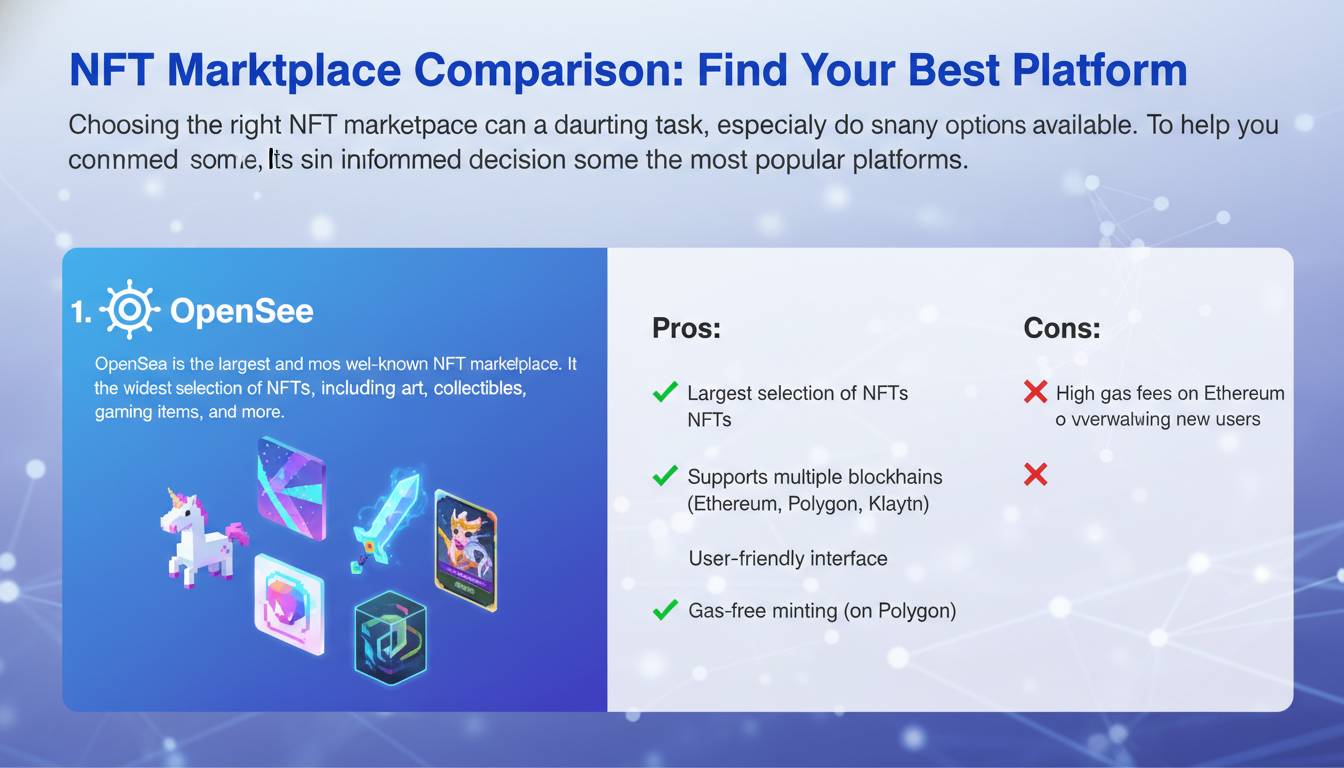
NFT Marketplace Comparison: Find Your Best Platform
The NFT marketplace landscape has undergone massive transformation since the 2021 boom, with platforms consolidating, pivoting, or disappearing entirely. For anyone looking to buy, sell, or create NFTs in 2024, choosing the right marketplace isn’t just about popularity—it’s about finding the platform that aligns with your specific goals, blockchain preferences, and fee tolerance. This comprehensive comparison breaks down the leading NFT marketplaces across the factors that actually matter: supported blockchains, fee structures, user experience, liquidity, and the types of collections that thrive on each platform.
Understanding the NFT Marketplace Landscape in 2024
The NFT market has matured significantly from its wild-west days. Transaction volumes on Ethereum-based marketplaces alone exceeded $8 billion in 2023, according to data from DappRadar, though this represents a substantial pullback from the 2021-2022 peak. This maturation has brought both challenges and improvements: competition has driven platforms to innovate on fee structures, creator tools, and user experience, while regulatory scrutiny has pushed legitimate platforms to enhance compliance and security measures.
NFT marketplaces are digital platforms where users can mint (create), buy, sell, and trade non-fungible tokens. Unlike traditional art marketplaces, these platforms leverage blockchain technology to verify ownership authenticity and enable secondary market transactions with automatic royalty distribution to original creators. Each marketplace operates on specific blockchain networks, supports particular file types, and imposes varying fee structures that impact both creators and collectors.
The key differentiators among marketplaces today boil down to five factors: which blockchains they support (determining transaction speeds and costs), their fee arrangements (platform fees plus gas costs), the curation and quality of listings, their user interface and mobile experience, and the specific community and use cases they serve. A marketplace optimized for digital art collectors operates very differently from one designed for gaming assets or real estate tokenization.
Top NFT Marketplaces Compared
OpenSea
OpenSea remains the largest general-purpose NFT marketplace by volume and user base, having processed over $40 billion in all-time trading volume since its 2017 founding. The platform supports Ethereum, Polygon, Solana, and Base, giving users exceptional flexibility in choosing their preferred blockchain for transactions.
The platform charges a 2.5% fee on all secondary sales, which sits in the middle range compared to competitors. Creators can set their own royalty rates between 0% and 10%, though the industry trend has moved toward lower creator fees due to competitive pressure. OpenSea’s strengths lie in its massive liquidity, extensive collection variety, and relatively mature user experience. However, gas fees on Ethereum can make small transactions prohibitively expensive, though the Polygon integration offers a lower-cost alternative.
Best for: Beginners and general collectors who want access to the widest variety of NFTs across categories.
Blur
Blur launched in 2022 with a trader-focused approach that disrupted the market through zero platform fees and aggressive incentives. The marketplace quickly captured significant market share among professional traders, particularly for blue-chip collections like Bored Ape Yacht Club and Pudgy Penguins.
The platform operates on Ethereum and offers advanced features like real-time floor price tracking, portfolio analytics, and batch listing tools. Blur charges 0% platform fees but generates revenue through its Blur DAO token and marketplace data services. For creators, Blur allows royalty enforcement but doesn’t require it, which has drawn criticism from some artists concerned about creator rights. The trade-off is exceptional liquidity for popular collections and tight bid-ask spreads.
Best for: Active traders and those focused on blue-chip collections who prioritize speed and analytics.
Magic Eden
Magic Eden emerged as the leading Solana NFT marketplace after OpenSea’s initial dominance on that blockchain faced challenges. The platform has expanded to support Ethereum, Polygon, and Base, positioning itself as a multi-chain solution with strong gaming and entertainment focus.
Magic Eden charges a 2% platform fee on primary sales and offers creator tools including drop calendars, allowlists, and minting infrastructure. The platform gained particular traction in the gaming NFT space through partnerships with major gaming studios and Web3-native game launches. Their mobile experience is notably polished, making them popular among users who prefer trading on phones.
Best for: Solana enthusiasts, gaming NFT collectors, and users who prioritize mobile trading.
Rarible
Rarible operates as a community-owned NFT marketplace with its RARI token governance model. The platform supports Ethereum, Flow, and Tezos, focusing on art and collectibles while maintaining a strong emphasis on creator-friendly features.
The platform charges a 2.5% platform fee and allows creators to set royalties up to 50%, though the industry standard hovers around 5-10%. Rarible’s aggregator feature lets users cross-list NFTs across multiple marketplaces, simplifying the management of listings. The platform has also developed composable NFTs (xNFTs) and continues to experiment with new NFT standards.
Best for: Artists seeking higher royalty percentages and community governance participation.
Foundation
Foundation has positioned itself as a curated, premium NFT marketplace focused on high-quality digital art. Unlike open marketplaces where anyone can mint and list, Foundation operates an invitation system where artists must receive community nominations or invitations to list work.
The platform charges a 5% platform fee on all sales, higher than most competitors, but attracts serious collectors willing to pay premium prices for curated art. Foundation has hosted several record-breaking digital art sales and maintains an active grants program supporting experimental digital art. The invite-only model creates natural scarcity and quality signals that appeal to serious art collectors.
Best for: Established and emerging digital artists seeking a prestigious platform and serious art collectors.
Blockchain Networks and Their NFT Ecosystems
The underlying blockchain significantly impacts your NFT experience through transaction speed, costs, environmental considerations, and which collections are available. Each chain represents different trade-offs that matter for different use cases.
Ethereum
Ethereum remains the dominant blockchain for NFTs, hosting the largest ecosystem of collections, marketplaces, and collectors. The network processes the highest transaction volumes but suffers from variable gas fees that can spike during network congestion. For high-value transactions, Ethereum’s security and brand recognition often justify the costs. Most blue-chip collections—Bored Ape Yacht Club, CryptoPunks, Azuki—operate primarily on Ethereum.
Solana
Solana offers dramatically lower transaction costs (often under $0.01 per transaction) and faster confirmation times compared to Ethereum. The blockchain has attracted significant gaming and entertainment-focused NFT projects, though it has experienced multiple network outages that raised reliability concerns. For casual collectors or creators just starting, Solana’s low barrier to entry makes it attractive.
Polygon
Polygon operates as an Ethereum scaling solution, offering much lower fees while maintaining Ethereum’s security. The network has become popular for free or low-cost NFT drops and gaming assets where high transaction volumes would make Ethereum prohibitively expensive. Major brands including Starbucks, Disney, and Instagram have launched NFT experiences on Polygon.
Base
Base, launched by Coinbase in 2023, has quickly gained traction as an Ethereum Layer 2 solution with extremely low fees and strong institutional backing. The chain has attracted new NFT projects and collections, particularly those with US-based founders seeking regulatory clarity. Its integration with Coinbase’s ecosystem makes it accessible to mainstream users.
Fee Structures: What You’ll Actually Pay
Understanding total costs requires looking beyond platform fees to encompass gas costs, withdrawal fees, and the hidden costs of illiquidity.
Platform Fees Comparison
| Marketplace | Platform Fee | Creator Royalty Range | Gas Costs (Ethereum) |
|---|---|---|---|
| OpenSea | 2.5% | 0-10% | Variable (high) |
| Blur | 0% | Optional | Variable (high) |
| Magic Eden | 2% | 0-10% | Low (Solana) |
| Rarible | 2.5% | 0-50% | Moderate |
| Foundation | 5% | 0-10% | Variable (high) |
| Coinbase NFT | 0% | 0-10% | Moderate |
The Hidden Cost of Gas
On Ethereum, gas fees represent the true cost of transactions and can exceed the actual purchase price for items under $100 during peak periods. A simple NFT transfer might cost $5-20, while purchasing an NFT during a popular mint could cost $50-200 or more in gas alone. This fundamentally changes the economics depending on your trading frequency and average transaction size.
For small transactions or frequent trading, Layer 2 solutions like Polygon and Base or alternative chains like Solana offer dramatically better economics. A trader executing ten transactions per day would find Ethereum prohibitively expensive without using scaling solutions.
Buyer Protection and Security Features
The NFT space has seen significant scams, fraudulent listings, and security incidents, making platform security features increasingly important for user protection.
Verification and Curation
Major marketplaces have implemented varying verification levels. OpenSea’s “Verified” badge indicates the collection has been reviewed but doesn’t guarantee legitimacy. Foundation’s invite-only model provides stronger curation. Blur emphasizes transparent data but leaves more verification responsibility to users. When purchasing, collectors should independently verify collection contract addresses, particularly for high-value transactions.
Storage Considerations
Most NFT marketplaces store metadata (images, descriptions) off-chain, with only the token ownership recorded on-chain. This creates dependency on the marketplace or IPFS storage remaining available. Platform-built marketplaces sometimes lose access to metadata if the platform shuts down, while decentralized storage solutions provide more permanent preservation.
Dispute Resolution
OpenSea and other major platforms offer limited dispute resolution for certain transaction types, though the process can be lengthy and uncertain. For high-value purchases, some collectors use escrow services or conduct transactions through platforms with stronger buyer protection programs, though these typically charge additional fees.
Finding the Right Marketplace for Your Goals
Your ideal marketplace depends heavily on whether you’re primarily collecting, trading, or creating.
For Digital Artists and Creators
Creators should prioritize platforms matching their target audience and fee preferences. Foundation offers prestige but requires invitation. Rarible provides high royalty flexibility. OpenSea provides maximum exposure but faces competition from every other seller. New creators often benefit from starting on platforms with lower fees to build initial sales history before expanding to higher-visibility marketplaces.
For Collectors
Collectors should consider which chains their preferred collections live on and prioritize platforms offering the best combination of liquidity and security. Those focused on blue-chip art should evaluate Blur and OpenSea. Gaming NFT enthusiasts might prefer Magic Eden. Users prioritizing security and ease of use might lean toward Coinbase NFT.
For Active Traders
Traders benefit most from Blur’s analytics tools and zero-fee structure for high-volume trading. The platform’s aggregation features and real-time data make it the preferred choice for those treating NFTs as financial instruments rather than collectibles. However, traders must accept the platform’s optional royalty model and potential liquidity risks for smaller collections.
Emerging Trends and Future Considerations
The NFT marketplace space continues evolving rapidly, with several trends shaping the 2024-2025 landscape.
Fractional Ownership and NFT Funds
Platforms like Fractional and NFT Perp are enabling fractional ownership of entire collections, allowing investors to own portions of expensive blue-chip NFTs without full purchase. This trend could democratize access to the most valuable collections while creating new financial instruments.
Real-World Asset Tokenization
Major marketplaces are expanding beyond digital art to support tokenized real-world assets including real estate, stocks, and commodities. This shift could dramatically expand the addressable market but introduces regulatory complexity that platforms must navigate carefully.
Cross-Chain Compatibility
Interoperability between blockchains remains a challenge, but aggregator services and cross-chain bridges are making multi-chain portfolio management increasingly seamless. Users can now list across multiple marketplaces simultaneously, improving liquidity and reducing the friction of chain-specific marketplaces.
Frequently Asked Questions
Which NFT marketplace has the lowest fees?
Blur currently offers the lowest platform fees at 0%, making it attractive for high-volume traders. However, gas fees on Ethereum can still be significant. For overall lowest costs, Solana-based marketplaces like Magic Eden typically offer the cheapest transactions, often under $0.01 per trade.
Can I sell the same NFT on multiple marketplaces?
Some platforms like Rarible offer cross-listing features, but this depends on the blockchain and specific collection. Generally, you cannot list the same token on multiple marketplaces simultaneously—the listing must be cancelled on one platform before appearing on another. Some aggregator tools help manage this process.
What happens if an NFT marketplace shuts down?
If a marketplace closes, your NFT ownership remains secure on the blockchain itself, but you may lose access to any metadata (images, videos) stored on the platform’s servers. Using IPFS or decentralized storage for metadata provides protection against this scenario. Always verify where metadata is stored before making significant purchases.
Are NFT marketplace fees tax-deductible?
NFT transaction fees may be deductible as capital gains or business expenses depending on your jurisdiction and whether you’re trading as an individual or business. Tax treatment varies significantly by country and individual circumstances. Consult a qualified tax professional for advice specific to your situation.
How do I verify an NFT collection is legitimate?
Look for verification badges on marketplaces (though these aren’t guarantees), check the collection’s contract address against official sources, review the project’s social media and website, verify the team behind the project, and examine transaction history on blockchain explorers. For significant purchases, consider using services that provide additional verification.
Which marketplace is best for beginners?
OpenSea offers the most accessible user experience for beginners with its intuitive interface, extensive help documentation, and integration with popular wallets like MetaMask. The platform’s massive user base also means more liquidity and easier transactions for most popular collections.
Conclusion
The NFT marketplace comparison landscape offers no single best platform—instead, the right choice depends on your specific priorities. OpenSea remains the default choice for beginners seeking variety and ease of use. Blur dominates for active traders prioritizing analytics and zero fees. Foundation serves premium art collectors. Solana-based platforms offer the lowest costs for casual users.
Before committing to any platform, clearly define your goals: Are you collecting for enjoyment, trading for profit, or creating to build an artistic career? Each path leads to different platform recommendations. Consider starting with one platform, understanding its fee structure and community, then expanding as your experience grows.
The NFT market continues maturing, with platform consolidation, improved regulatory compliance, and enhanced security features making the space more accessible while reducing some historical risks. By understanding the trade-offs outlined in this comparison, you can make informed decisions aligned with your specific needs and risk tolerance.