98Views 0Comments
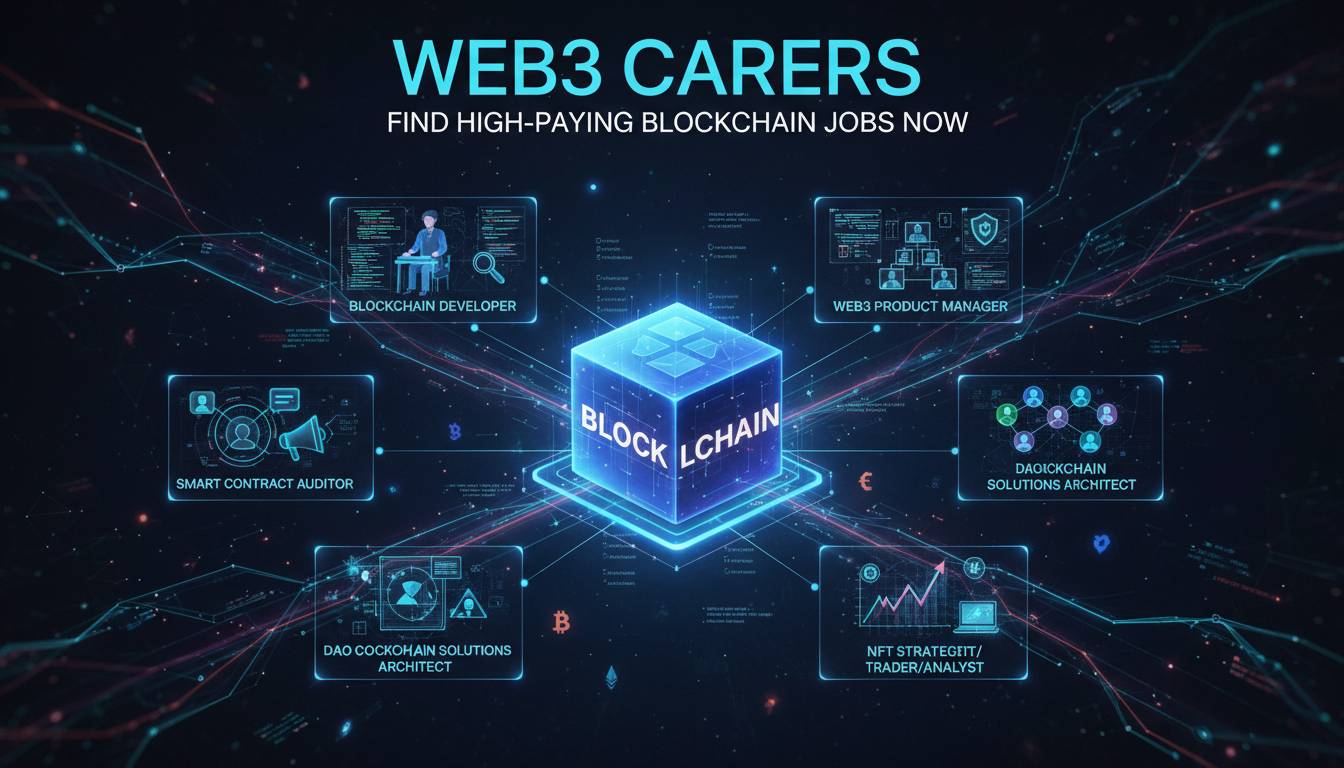
Web3 Careers: Find High-Paying Blockchain Jobs Now
The Web3 job market is experiencing unprecedented growth, with blockchain professionals earning 40-60% more than their traditional tech counterparts. As companies race to integrate decentralized technologies, demand for skilled Web3 talent has outpaced supply by nearly 3:1, creating one of the most lucrative career landscapes in technology today.
Key Insights
– Average Web3 developer salaries range from $120,000 to $350,000 annually
– Remote work is standard in the industry, with over 85% of positions offering full flexibility
– No formal degree required for many roles—portfolio and demonstrated skills matter most
– Smart contract developers and DeFi specialists command the highest premiums
Whether you’re a seasoned tech professional looking to pivot or a newcomer eager to enter the blockchain space, this comprehensive guide walks you through everything you need to land a high-paying Web3 career—from essential skills and certification paths to job search strategies and salary negotiation tactics.
Understanding the Web3 Job Market in 2024
Web3 represents the next evolution of the internet, built on blockchain technology, decentralized protocols, and token-based economics. Unlike Web2’s centralized platforms (think Facebook, Google, Amazon), Web3 aims to give users ownership of their data and digital assets through decentralization.
The Web3 job market encompasses several distinct sectors, each offering unique career trajectories. Decentralized finance (DeFi) leads in job volume, with protocols like Uniswap, Aave, and Compound constantly seeking developers, security auditors, and product managers. NFT platforms and gaming studios require talent across art, engineering, and community management. Infrastructure companies building the backbone of decentralized networks—blockchain nodes, scaling solutions, and interoperability protocols—offer some of the most technically challenging and well-compensated positions.
According to Electric Capital’s annual developer report, over 23,000 developers contributed to crypto and Web3 projects in 2023, with active developer count growing 6% year-over-year despite market downturns. This sustained growth contradicts media narratives of a “crypto winter” and indicates fundamental industry expansion.
The geographic distribution of Web3 talent reveals interesting patterns. While major tech hubs like San Francisco, New York, and London maintain significant concentrations, the industry’s remote-first culture means location matters less than skill level. Companies routinely hire across time zones, with fully distributed teams becoming the norm rather than the exception.
Highest-Paying Web3 Roles and Salary Benchmarks
Web3 compensation structures differ significantly from traditional tech, often combining base salary, token allocations, and protocol-specific rewards. Understanding this compensation mix is crucial for evaluating offers accurately.
Smart Contract Developer
Smart contract developers remain the most in-demand role, with average total compensation ranging from $150,000 to $350,000 for senior positions. These professionals write self-executing code that powers DeFi protocols, NFT marketplaces, and blockchain-based applications. The role requires mastery of languages like Solidity (Ethereum), Rust (Solana, Polygon), and Move (Aptos, Sui).
Protocol Engineer
Protocol engineers design and optimize blockchain consensus mechanisms, scaling solutions, and core infrastructure. Compensation typically falls between $180,000 and $400,000, with top engineers at major protocols commanding equity packages worth millions. This role demands deep computer science knowledge and understanding of cryptographic primitives.
Web3 Security Auditor
With hacks resulting in over $3.8 billion in losses during 2022 alone, security expertise commands premium compensation. Smart contract auditors earn $200,000 to $500,000+, working with firms like Trail of Bits, OpenZeppelin, or as independent consultants. The role combines software security knowledge with blockchain-specific vulnerabilities.
DeFi Product Manager
Product managers specializing in decentralized finance earn $150,000 to $300,000. This role bridges technical implementation with user experience, requiring understanding of tokenomics, yield mechanisms, and regulatory considerations.
Community Manager and Growth Roles
While technically demanding in different ways, community managers with technical literacy earn $80,000 to $180,000. The role involves developer relations, governance participation, and ecosystem growth—positions often serving as entry points into the industry.
| Role | Base Salary | Total Compensation | Experience Level |
|---|---|---|---|
| Smart Contract Developer | $120K-$200K | $150K-$350K | Mid to Senior |
| Protocol Engineer | $150K-$250K | $180K-$400K | Senior to Lead |
| Security Auditor | $150K-$300K | $200K-$500K | Senior to Expert |
| DeFi Product Manager | $120K-$180K | $150K-$300K | Mid to Senior |
| Community Manager | $60K-$100K | $80K-$180K | Entry to Mid |
Essential Skills for Blockchain Careers
Breaking into Web3 requires a strategic combination of technical abilities, industry knowledge, and networking capabilities. Here’s a comprehensive roadmap for developing your Web3 skill set.
Technical Foundations
Programming Languages: Solidity remains the most requested language, but multi-chain expertise increasingly differentiates candidates. Rust has become essential for high-performance protocols, while knowledge of Go, TypeScript, and Python provides flexibility across different project needs.
Blockchain Fundamentals: Understanding consensus mechanisms (Proof of Work, Proof of Stake, BFT variants), cryptographic primitives (hash functions, digital signatures, zero-knowledge proofs), and data structures (Merkle trees, tries) forms the foundation of blockchain expertise.
Development Tools: Proficiency with development environments like Hardhat, Foundry, and Truffle is expected. Understanding of IPFS for decentralized storage, The Graph for indexing, and wallet integration (MetaMask, WalletConnect) demonstrates practical capability.
Non-Technical Skills
Tokenomics Design: Familiarity with token economics, incentive structures, and governance mechanisms helps product managers and strategists contribute meaningfully to protocol development.
Regulatory Awareness: Understanding securities law implications, KYC/AML requirements, and jurisdictional considerations becomes increasingly important as the industry matures.
Open Source Contribution: The Web3 culture emphasizes open source participation. Contributing to well-known protocols, writing technical blog posts, and maintaining GitHub repositories demonstrating your work significantly strengthens applications.
Learning Resources
Platforms like Alchemy University offer free comprehensive courses spanning blockchain basics to advanced Solidity development. CryptoZombies provides gamified Solidity learning. For deeper technical study, formal courses from programs like Chainlink’s bootcamps or protocol-specific certifications carry weight with hiring managers.
Web3 vs Traditional Tech Careers: Making the Switch
Many developers wonder whether transitioning from Web2 to Web3 makes financial and professional sense. Understanding the key differences helps you make an informed decision.
Compensation Comparison
At comparable experience levels, Web3 roles typically offer 30-60% higher total compensation than traditional tech positions. However, this comes with additional risk factors. Token-based compensation fluctuates significantly with market conditions, and equity in early-stage protocols carries inherent risk of failure. Senior engineers at FAANG companies often earn more in guaranteed base salary, but Web3 total compensation packages frequently exceed these figures when tokens appreciate.
Work-Life Balance
Web3 operates globally, with teams spread across time zones. This creates irregular meeting schedules and sometimes demanding on-call responsibilities during protocol upgrades or security incidents. Conversely, many companies offer unlimited PTO, flexible schedules, and fully remote arrangements that traditional tech rarely matches.
Career Progression
The Web3 industry is younger, meaning fewer established career ladders. This creates both challenge and opportunity—you may need to define your own trajectory, but rapid advancement is possible for high performers who demonstrate capability. Many protocol founders are in their mid-twenties, illustrating the industry’s meritocratic nature.
Job Security Considerations
The crypto industry experiences more volatility than traditional tech. Market downturns lead to layoffs, though they typically affect business-side roles more than core engineering positions. However, skills developed in Web3 transfer readily back to traditional tech, providing a safety net that pure Web2 experience doesn’t offer.
How to Land Your First Web3 Job
Breaking into Web3 requires deliberate action beyond traditional job searching. Here’s a practical framework for launching your career.
Build Your Proof of Work
Before applying, create tangible evidence of your capabilities. Deploy a smart contract on a testnet—even a simple token or basic DeFi interaction demonstrates practical knowledge. Contribute to open-source projects; many protocols actively welcome external contributors and this often leads directly to job offers.
Navigate the Job Market
Specialized job boards serve the Web3 ecosystem more effectively than general platforms. CryptoJobs, Web3Jobs, and Remote3 list positions specifically in the space. Protocol Discord servers and Twitter accounts frequently announce openings before they reach mainstream boards.
LinkedIn remains valuable but requires strategic keyword optimization. Many recruiters search for “Solidity developer” or “Web3 engineer” directly. Ensure your profile highlights blockchain-related projects prominently.
The Application Process
Web3 hiring differs from traditional tech. Expect multiple technical assessments, often including live coding challenges or protocol audits. Many positions require take-home projects demonstrating your abilities. The process typically moves faster than tech industry norms—response times often measured in days rather than weeks.
Negotiation and Offers
Compensation discussions in Web3 require understanding equity structures, token vesting schedules, and market conditions. Research comparable salaries using resources like Glassdoor, Levels.fyi (which now includes crypto sections), and direct community询问. Don’t hesitate to negotiate, particularly around token allocation clarity and vesting terms.
Top Companies and Protocols Hiring Now
Understanding which types of organizations offer the best fit helps narrow your job search strategically.
Major Layer-1 Protocols
Foundation layer networks like Ethereum, Solana, Avalanche, Polygon, and Aptos hire continuously for core development, research, and ecosystem growth roles. These positions offer exposure to cutting-edge technology and significant equity upside but often require deep technical expertise.
DeFi Protocols
Decentralized exchanges (dYdX, Curve, Balancer), lending protocols (Aave, Compound, Euler), and derivatives platforms (GMX, Perps) need developers, risk managers, and operations talent. These roles provide direct experience with complex financial systems and often feature the highest compensation packages.
Infrastructure Providers
Companies building essential tools—Alchemy, Infura, Chainlink, The Graph—offer relatively more stable environments than early-stage protocols while remaining deeply engaged with cutting-edge development.
Venture-Backed Startups
The startup ecosystem includes numerous well-funded companies across NFT platforms, gaming, identity solutions, and DAOs. These positions offer the broadest role flexibility and fastest growth potential but carry higher risk profiles.
The Future of Web3 Careers: Trends and Predictions
The Web3 job market continues evolving rapidly, with several trends shaping career opportunities in the coming years.
Institutional Adoption Impact
As major financial institutions and corporations enter the space—BlackRock’s tokenized asset initiatives, PayPal’s stablecoin, large corporate blockchain implementations—demand for Web3 talent will expand beyond crypto-native companies. This mainstream adoption creates new job categories requiring hybrid traditional-tech plus Web3 expertise.
Regulatory Clarity Benefits
Clearer regulatory frameworks, particularly in the United States and European Union, will reduce uncertainty and enable more companies to build in the space confidently. This regulatory certainty typically correlates with increased hiring and career stability.
Specialized Roles Emerging
New position categories are emerging at the intersection of Web3 and traditional domains: DeFi compliance officers, DAO legal counsel, tokenomics specialists, and cross-chain bridge engineers represent specialized roles that didn’t exist two years ago.
Skills Evolution
The technical skills required for Web3 careers will continue shifting. Zero-knowledge proofs and privacy technologies are gaining prominence. Account abstraction and smart wallet development create new specializations. Interoperability protocols demand cross-chain expertise. Staying current requires continuous learning.
Conclusion
Web3 careers offer exceptional financial potential for developers willing to develop specialized skills and navigate the industry’s unique characteristics. The combination of high compensation, remote-first culture, and exposure to cutting-edge technology creates an compelling opportunity—particularly for those who position themselves strategically.
Success in Web3 requires more than technical ability. Understanding token economics, participating in community discussions, and building public proof of work distinguish candidates who land roles from those who struggle to break in. Start building today—even small contributions compound into career-changing opportunities.
The best time to enter Web3 was two years ago. The second-best time is now. Demand continues exceeding supply, compensation packages remain competitive, and the industry offers paths to ownership and advancement that traditional tech rarely matches.
Frequently Asked Questions
What qualifications do I need to get a Web3 job?
Most Web3 positions don’t require formal degrees. Employers prioritize demonstrated skills—deploying smart contracts, contributing to open-source projects, and understanding blockchain fundamentals. Build a portfolio of working code and participate in protocol communities to prove your capabilities.
Are Web3 jobs only for developers?
No. While developers are in highest demand, Web3 companies need product managers, designers, marketers, community managers, legal professionals, and operations specialists. Technical literacy helps all roles, but non-technical positions exist throughout the industry.
How much can I earn in Web3?
Senior developers typically earn $150,000-$350,000 in total compensation, with top performers at major protocols earning significantly more. Entry-level positions start around $80,000-$120,000, depending on location and specific role.
Is Web3 stable compared to traditional tech?
Web3 experiences more volatility than traditional tech careers. Market downturns can trigger layoffs, and compensation tied to tokens fluctuates with market conditions. However, skills transfer readily between Web3 and traditional tech, providing fallback options.
Do I need to already own cryptocurrency to work in Web3?
No. While having skin in the game demonstrates industry commitment, employers don’t require cryptocurrency holdings. Many professionals enter Web3 without prior crypto investments.
How do I start learning Web3 development?
Begin with free resources like Alchemy University’s blockchain developer bootcamp or CryptoZombies for Solidity fundamentals. Build simple projects (deploy a token, create a basic NFT), document your work on GitHub, and engage with protocol communities to learn and network.