117Views 0Comments
NFT Market Trends 2024 – Top Opportunities to Watch
The NFT market in 2024 represents a fundamentally transformed ecosystem compared to the frenzied speculation of 2021-2022. While the headline-grabbing million-dollar sales have become rare, the underlying technology and utility applications have matured significantly, creating genuine investment opportunities for those who understand where to look.
Key Insights
– NFT trading volumes stabilized at approximately $4.2 billion in 2023, with 2024 showing modest growth
– Utility and gaming NFTs now account for over 40% of total transaction volume, surpassing pure art collectibles
– Enterprise adoption has increased 280% since 2022, with major brands launching digital asset initiatives
– Blue chip collections have demonstrated resilience, with top-tier assets retaining 60-70% of peak valuations
This article examines the data-backed trends shaping the NFT landscape, identifies emerging opportunities, and provides actionable insights for navigating this evolving market in the second half of 2024.
Market Maturation: Beyond the Speculation Cycle
The NFT market has undergone a significant correction since the highs of late 2021 and early 2022, when monthly trading volumes exceeded $5 billion at peak periods. This decline was necessary for the ecosystem to mature beyond pure speculation.
According to data from various blockchain analytics platforms, the market has found its natural equilibrium point. Daily trading volumes now typically range between $50 million and $150 million, representing a more sustainable baseline compared to the parabolic spikes that characterized the earlier boom period.
This maturation manifests in several key ways. First, wash trading and artificial volume generation have decreased substantially as exchanges implemented better verification measures. Second, buyer behavior has shifted toward utility-focused acquisitions rather than purely speculative purchases. Third, the average hold period for NFTs has increased significantly, indicating a transition from day-trading culture toward genuine ownership and use cases.
The distinction between “jpg” NFTs (purely visual collectibles) and utility NFTs has become increasingly important. Collections that offer tangible benefits—such as access to exclusive content, governance rights, or real-world utility—have outperformed purely aesthetic collectibles by a significant margin throughout 2023 and into 2024.
Blue Chip Resilience and Portfolio Strategy
Despite broader market corrections, established blue chip collections have demonstrated remarkable resilience. CryptoPunks, Bored Ape Yacht Club, and other historically significant collections have maintained substantial value, though not without volatility.
The floor price dynamics tell an instructive story. While many collections from the 2021 era have lost 90% or more of their peak values, the top five collections by market capitalization have experienced more moderate declines of 40-60% from their all-time highs. This performance suggests that market participants increasingly differentiate between speculative projects and collections with genuine cultural significance and utility.
Building a blue chip-focused portfolio in 2024 requires careful consideration of several factors:
Authentication Metrics
– Historical trading volume consistency
– Community engagement and social media growth
– Development team track record and transparency
– Utility roadmap and execution history
The most successful investors in this segment have adopted a “quality over quantity” approach, concentrating capital in a smaller number of established collections rather than diversifying across numerous speculative projects. This strategy acknowledges that the network effects and cultural significance that drive blue chip value accumulate over time, making established collections relatively safer stores of value.
Utility NFTs: The Growth Engine
The most significant structural shift in the NFT market involves the rise of utility-focused tokens. These digital assets provide specific functional benefits rather than serving primarily as collectibles or speculative instruments.
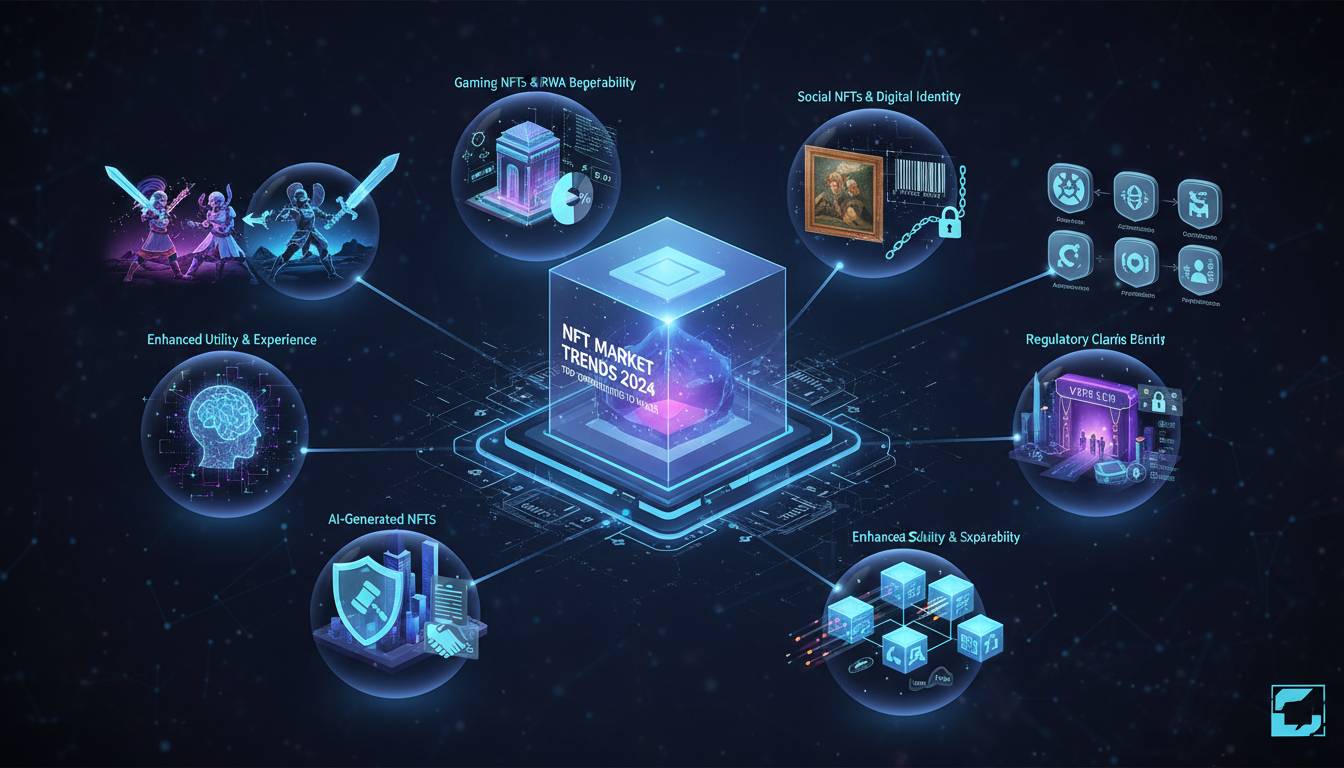
Gaming represents the largest utility NFT segment by transaction volume. Games like Axie Infinity, Illuvium, and newer entrants have built entire economies around blockchain-based assets. In 2024, this sector continues evolving with improved gameplay mechanics and more sustainable economic models that don’t rely purely on speculative investment.
Real-world asset tokenization represents an emerging opportunity that bridges digital collectibles with tangible value. This includes:
- Fractional ownership of real estate through NFT-based securities
- Luxury goods authentication and provenance tracking
- Event ticketing and access rights management
- Intellectual property and royalty rights tokenization
Major enterprises have taken notice. Several Fortune 500 companies have launched NFT-based loyalty programs, digital collectible campaigns, and customer engagement initiatives. These projects often generate substantial trading volume and provide legitimate utility beyond pure speculation.
The membership and access segment has also matured considerably. NFT-gated communities now offer tangible benefits including exclusive content, networking opportunities, and early access to products or services. Successful examples demonstrate that these communities can sustain value when they deliver consistent utility to holders.
Gaming and Virtual Worlds: Institutional Interest Grows
The intersection of NFTs and gaming continues attracting significant capital and attention. However, the landscape has evolved substantially from the “play-to-earn” paradigms that dominated 2021-2022.
The collapse of several high-profile play-to-earn economies—most notably Axie Infinity’s token economy—taught valuable lessons about unsustainable tokenomics. Current generation gaming NFT projects emphasize:
- Playable first, earn second gameplay mechanics
- Sustainable in-game economies that don’t require constant new player influx
- Genuine ownership of in-game assets with meaningful utility
- Integration with traditional gaming progression systems
Major gaming studios have adopted blockchain technology despite initial resistance from some segments of the gaming community. These companies bring professional development standards, marketing resources, and established player bases that could significantly expand NFT gaming adoption.
Virtual worlds and metaverse platforms represent another growth vector, though progress has been slower than some predictions suggested. The infrastructure for persistent virtual worlds with NFT-based land ownership, avatars, and assets continues developing, with several platforms reporting increased active users and transaction volumes in 2024.
Infrastructure Improvements and Accessibility
Technical infrastructure developments have made NFT participation more accessible than ever before. Layer 2 solutions have dramatically reduced transaction costs and improved confirmation times, addressing the two primary barriers to mainstream adoption.
Ethereum’s layer 2 ecosystem, including solutions like Arbitrum, Optimism, and Base, now processes the majority of NFT transactions. This shift has made it economically viable to trade lower-value NFTs without incurring prohibitive gas fees. Users can now list, buy, and transfer digital assets for a fraction of a dollar rather than the tens or hundreds of dollars that were common during network congestion periods.
Mobile-first platforms have emerged to serve users who prefer smartphone-based interactions. These applications have simplified the wallet creation, purchasing, and management processes to the point where technical knowledge is no longer a significant barrier to entry.
Cross-chain compatibility has improved substantially, enabling NFTs to move between different blockchain networks. This development increases liquidity and allows projects to leverage the strengths of different blockchain architectures without fragmenting their user base.
Regulatory Developments and Enterprise Adoption
The regulatory landscape for NFTs remains complex but increasingly defined. Several jurisdictions have provided clarity on how existing securities and commodities regulations apply to digital assets, though significant uncertainty persists in many areas.
Enterprise adoption has accelerated as companies seek to understand and implement NFT technology. According to industry surveys, over 60% of Fortune 500 companies have explored or actively developed NFT-related initiatives as of mid-2024. These projects span various applications including:
- Marketing and brand engagement campaigns
- Customer loyalty and rewards programs
- Digital identity and credential verification
- Supply chain authentication
- Intellectual property management
The distinction between NFTs as securities versus utility tokens has become a critical consideration for project developers and investors. Projects that can demonstrate genuine utility and avoid investment return expectations have generally faced fewer regulatory concerns than those marketed primarily as financial instruments.
Investment Frameworks for 2024
Navigating the NFT market successfully in 2024 requires a structured approach that accounts for the ecosystem’s complexity and continued evolution.
Risk Assessment Considerations
The NFT market remains highly volatile and carries substantial risks. Liquidity concerns mean that assets can be difficult to sell quickly at fair market prices, particularly for collections with limited trading activity. Smart contract vulnerabilities represent another risk category, as exploits have resulted in significant losses for investors in various projects.
Due diligence has become essential rather than optional. The abundance of projects in the space means that thorough evaluation of team backgrounds, technical architecture, economic models, and community health metrics can meaningfully reduce investment risk.
Diversification Strategies
Sophisticated investors typically allocate across several categories:
- Blue chip collections for stability
- Utility and gaming NFTs for growth potential
- Emerging projects with legitimate innovation for alpha generation
- Infrastructure tokens that benefit from overall market growth
This approach balances the reduced risk of established assets against the higher return potential of newer projects while maintaining infrastructure exposure.
Timing Considerations
The NFT market exhibits strong seasonal and cyc7 patterns. Historical data suggests increased activity during certain periods, potentially linked to broader crypto market cycles and macroeconomic factors. However, these patterns are not reliable enough to serve as primary investment decision drivers.
Long-term holding strategies have generally outperformed active trading for most participants, accounting for the substantial gas costs and friction involved in frequent transactions.
Emerging Opportunities and Future Outlook
Several trends point toward significant opportunities in the latter half of 2024 and beyond.
Real-world asset tokenization represents perhaps the most compelling growth vector. The ability to represent physical assets as NFTs enables fractional ownership, automated royalty distribution, and global liquidity pools for traditionally illiquid assets. This application brings substantial legitimate utility to blockchain technology while maintaining tangible underlying value.
Artificial intelligence integration with NFT technology is opening new creative and functional possibilities. AI-generated art collections, dynamic NFTs that evolve based on external data, and AI-powered marketplace analytics represent emerging categories that combine two of the most significant technological trends.
Cross-platform interoperability continues improving, potentially enabling NFT utility that spans multiple platforms, games, and applications. This development could dramatically increase the value proposition of digital asset ownership by reducing fragmentation in the ecosystem.
Institutional infrastructure continues developing, with regulated exchanges, custody solutions, and financial products specifically designed for NFT markets. This institutional-grade infrastructure could unlock significant capital from investors who require regulated participation pathways.
Frequently Asked Questions
Are NFTs still a good investment in 2024?
NFTs can represent a legitimate investment opportunity, but returns vary dramatically based on collection selection and timing. Blue chip collections with established utility have demonstrated relative stability, while speculative projects carry substantial risk. Success requires thorough due diligence, realistic expectations, and appropriate position sizing.
How do I safely purchase my first NFT?
Start by establishing a secure wallet (hardware wallets are recommended for significant holdings), acquiring cryptocurrency from reputable exchanges, and using established marketplaces like OpenSea, Blur, or platform-specific markets. Begin with small purchases to understand the mechanics before committing substantial capital. Always verify contract addresses and marketplace URLs to avoid phishing scams.
What makes utility NFTs different from collectible NFTs?
Utility NFTs provide specific functional benefits such as access rights, in-game advantages, governance voting power, or real-world benefits. Collectible NFTs derive value primarily from aesthetics, rarity, and cultural significance. The utility category has grown substantially in 2024 as market participants seek tangible applications beyond pure speculation.
Will NFT regulations affect my holdings?
Regulatory developments could impact certain NFT categories, particularly those marketed as investment instruments. Collections with genuine utility and transparent economics face lower regulatory risk. Staying informed about regulatory developments in your jurisdiction and favoring projects with clear use cases helps mitigate potential regulatory concerns.
Which blockchain is best for NFT purchases in 2024?
Ethereum remains the dominant blockchain for NFT activity, but layer 2 solutions like Arbitrum and Base offer significantly lower transaction costs. Solana has gained market share for certain use cases. The best choice depends on specific project availability, cost considerations, and personal preference for blockchain ecosystems.
How do I evaluate NFT project legitimacy?
Examine team backgrounds and real-world identity verification, review technical architecture and security audits, analyze community health through Discord activity and social media engagement, assess economic tokenomics for sustainability, and verify any claimed partnerships or affiliations. Projects that resist scrutiny or make unrealistic promises warrant caution.
The NFT market in 2024 presents a fundamentally different opportunity set than the speculative frenzy of previous years. While the potential for rapid gains has diminished, the ecosystem has developed genuine utility applications, improved infrastructure, and institutional interest that suggest sustainable long-term value creation.
Successful navigation requires moving beyond simple collectible speculation toward understanding the specific applications and utility that drive value in individual projects. The opportunities exist for informed participants who approach the market with appropriate risk management and realistic expectations.