146Views 0Comments
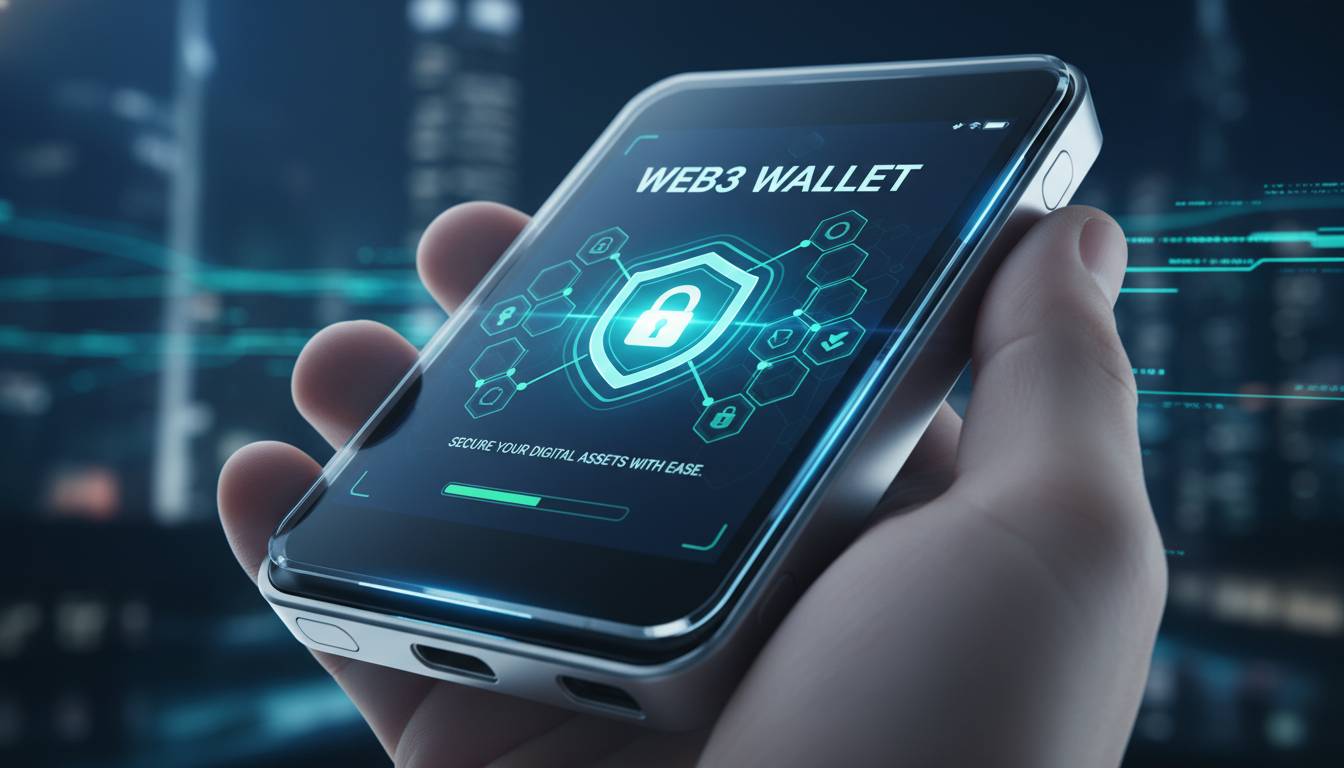
Web3 Wallet: Secure Your Digital Assets with Ease
A Web3 wallet is a digital tool that allows users to store, send, and receive cryptocurrencies, NFTs, and other blockchain-based assets while interacting with decentralized applications (dApps). Unlike traditional bank accounts, Web3 wallets give users complete control over their funds through private keys—a set of cryptographic codes that prove ownership of digital assets. Understanding how these wallets function is essential for anyone entering the Web3 space, as they serve as the primary gateway to decentralized finance, NFT marketplaces, and the broader blockchain ecosystem.
What Is a Web3 Wallet and How Does It Work
A Web3 wallet operates on a fundamentally different principle than conventional financial tools. When you create a Web3 wallet, the software generates a pair of cryptographic keys: a public key (similar to a bank account number) that others can use to send you assets, and a private key (similar to a PIN or password) that authorizes transactions. The critical distinction is that unlike bank accounts where the institution holds your money, your private key never leaves your possession—making you the sole custodian of your digital wealth.
The technology behind Web3 wallets relies on blockchain networks to verify and record transactions. When you sign a transaction with your private key, the network confirms your identity through cryptographic verification without exposing the key itself. This mathematical certainty ensures that only the wallet’s legitimate owner can move funds. Most modern Web3 wallets also generate a 12 or 24-word “seed phrase” that serves as a master key backup, allowing users to recover their wallets if devices are lost or damaged.
Web3 wallets connect users to the decentralized web through browser extensions, mobile apps, or hardware devices. These interfaces communicate with blockchain networks using standardized protocols, enabling interactions with smart contracts, decentralized exchanges, and blockchain-based applications. The wallet essentially acts as your identity and banking system combined, replacing the need for intermediaries in countless financial and digital interactions.
Types of Web3 Wallets: Finding the Right Fit
Web3 wallets generally fall into three primary categories, each offering distinct trade-offs between convenience, security, and functionality.
Custodial Wallets are services where a third party—such as cryptocurrency exchanges like Coinbase or Binance—holds your private keys on your behalf. These wallets provide the easiest user experience, as users don’t need to worry about losing seed phrases or managing complex security measures. However, this convenience comes with a significant trade-off: if the custodian experiences financial difficulties, security breaches, or regulatory issues, users may lose access to their funds. Custodial wallets represent the majority of crypto holdings globally because they lower the barrier to entry for mainstream users.
Non-custodial wallets give users full control over their private keys and seed phrases. Examples include MetaMask, Rainbow, and Phantom. These wallets provide true ownership of digital assets but require users to take responsibility for security. If a user loses their seed phrase, no customer support team can recover their funds—mathematical cryptography simply doesn’t allow for exceptions. Non-custodial wallets are preferred by experienced crypto users who prioritize self-sovereignty and intend to interact with DeFi protocols, NFT marketplaces, or Web3 applications regularly.
Hardware wallets represent the most secure option by storing private keys on specialized physical devices disconnected from the internet. Ledger and Trezor devices generate and store cryptographic keys offline, making them resistant to remote hacking attempts. While hardware wallets require a small upfront investment (typically $50-$200) and slightly more complex setup, they remain the gold standard for storing significant cryptocurrency holdings. Many users employ a “cold storage” strategy, using hardware wallets for long-term holdings while keeping smaller amounts in software wallets for daily transactions.
| Wallet Type | Security Level | Ease of Use | Best For | Typical Cost |
|---|---|---|---|---|
| Custodial | Medium | Very High | Beginners | Free |
| Non-custodial (Software) | Medium-High | High | Active DeFi users | Free |
| Hardware | Very High | Medium | Large holdings | $50-$200+ |
Key Features to Look for in a Web3 Wallet
Selecting the right Web3 wallet requires evaluating several critical features that impact security, usability, and functionality.
Multi-chain support has become increasingly important as the blockchain ecosystem expands beyond Ethereum. Modern users often need to manage assets across multiple networks—Ethereum, Solana, Polygon, Avalanche, and dozens of others. Wallets like Rabby, Keystone, and Frame have gained popularity specifically because they support numerous chains from a single interface, eliminating the need to manage multiple wallet installations.
Integration with decentralized exchanges (DEXs) allows users to swap tokens directly within the wallet interface without transferring funds to centralized exchanges. This feature, often called “in-wallet swapping,” leverages automated market makers like Uniswap or Raydium to execute trades instantly. For active traders and DeFi participants, this functionality significantly reduces friction and improves workflow efficiency.
NFT management capabilities have transitioned from optional luxury to essential feature as digital collectibles have grown into a multi-billion dollar market. Wallets with robust NFT support display visual previews of collectibles, support metadata standards across different blockchains, and enable one-click listing to marketplaces. Phantom and MetaMask have particularly strong NFT integration for Solana and Ethereum-based collections respectively.
Address book and labeling features help users manage numerous contacts and accounts, which becomes essential as users interact with multiple dApps, DeFi protocols, and personal wallets. Some wallets also offer addressEns resolution, converting lengthy hexadecimal addresses into human-readable names like “alice.eth.”
Transaction simulation and anti-phishing protection represent advanced security features that warn users before signing potentially malicious transactions. These tools analyze smart contract interactions and warn if a transaction would drain tokens or grant unusual permissions to unknown contracts—a critical safeguard against the increasing sophistication of phishing attacks in the Web3 space.
Setting Up Your First Web3 Wallet: A Step-by-Step Guide
For newcomers entering the Web3 space, setting up a non-custodial wallet involves several important steps that establish the foundation for secure digital asset management.
Step 1: Choose your wallet application. Research options based on your primary use case. MetaMask remains the most widely supported for Ethereum and EVM-compatible chains. Phantom excels for Solana ecosystem participants. For multi-chain users, Rabby or Keystone hardware wallet might suit your needs better. Download only from official sources—wallet websites, official app stores, or verified browser extension stores—to avoid malicious impersonation apps.
Step 2: Create your wallet and secure your seed phrase. When the application prompts you to create a new wallet, it will generate a 12 or 24-word recovery phrase. Write this down on paper—never digitally—and store it in a secure location. Multiple copies stored in separate secure locations (safe deposit boxes, home safes) provide redundancy against fire or theft. Never share this phrase with anyone; legitimate wallet providers will never ask for it.
Step 3: Verify your backup. Most wallets ask you to confirm your seed phrase by selecting words in order before proceeding. This step confirms you recorded the phrase correctly. Take this seriously—an incorrectly copied word renders your backup useless.
Step 4: Add network support. Configure additional blockchain networks if needed. Many wallets include popular chains by default, but you may need to add less common networks manually. Resources like chainlist.org provide community-maintained network configurations.
Step 5: Fund your wallet. Purchase cryptocurrency from a centralized exchange and withdraw to your wallet’s public address. Always double-check you’re sending to the correct network—sending Ethereum to a Solana address typically results in permanent loss. Start with small amounts while learning.
Security Best Practices for Web3 Wallets
The decentralized nature of Web3 brings unprecedented ownership but also places complete security responsibility on individual users. Following established security practices protects your digital assets from loss or theft.
Never share your seed phrase stands as the cardinal rule of Web3 security. No legitimate service, support representative, or smart contract will ever ask for your private keys or recovery phrase. Phishing attacks commonly attempt to trick users into entering seed phrases on fake websites or sharing them via “support” conversations. Assume any request for your seed phrase is an attempt to steal your funds.
Use hardware wallets for significant holdings. The security architecture of hardware wallets—storing keys offline and requiring physical button confirmation for transactions—provides substantial protection against remote attacks. Industry best practice suggests keeping only what you plan to trade in software wallets while storing long-term holdings in hardware devices.
Verify all transaction details before signing. Modern phishing attacks have evolved beyond fake websites to include malicious smart contracts that appear legitimate until closer inspection. Always verify the recipient address, token amounts, and token contracts before confirming any transaction. Transaction simulation tools built into wallets like Rabby or hardware wallet interfaces can highlight suspicious elements.
Separate your wallets by use case. Many experienced Web3 users maintain multiple wallets for different purposes: a “cold” wallet for long-term holdings rarely connected to the internet, a “hot” wallet for DeFi interactions, and a “burner” wallet for testing new dApps or transacting with unknown parties. This compartmentalization limits exposure if any single wallet is compromised.
Keep software updated. Wallet developers regularly release security patches addressing newly discovered vulnerabilities. Running outdated versions exposes you to known attack vectors that developers have already fixed.
Top Web3 Wallets in 2024: A Comparative Overview
The Web3 wallet landscape has matured significantly, with several options catering to different user needs and technical preferences.
MetaMask dominates as the most widely adopted non-custodial wallet, with estimates suggesting over 30 million monthly active users. Its browser extension and mobile app provide seamless integration with Ethereum and EVM-compatible networks, making it the default choice for most Web3 dApps. The wallet’s open-source nature and extensive documentation have created a robust ecosystem of third-party tools and integrations. MetaMask’s recent privacy upgrades and institutional custody solutions signal continued evolution.
Phantom has established itself as the premier wallet for the Solana ecosystem, expanding to support Ethereum and Polygon alongside its native Solana support. The wallet’s exceptional user interface and rapid transaction speeds have earned strong user loyalty. Phantom’s integration with Solana’s mobile Saga phone represents an ambitious attempt to create a unified Web3 hardware and software ecosystem.
Rabby has gained significant traction among DeFi power users through its distinctive approach to multi-chain management. Unlike wallets that require switching networks manually, Rabby automatically routes transactions to appropriate networks and provides transaction previews showing exactly what will happen when you sign. The wallet’s built-in address book, DeFi integration, and transaction simulation make it particularly well-suited for active traders.
Keystone combines hardware and software wallet elements through a unique air-gapped QR code signing mechanism. The device generates transaction data as QR codes that users scan with their phone camera, physically isolating the private key from internet-connected devices. This approach provides hardware wallet security with the convenience of mobile wallet accessibility.
| Wallet | Chains Supported | Hardware Option | Key Strength |
|---|---|---|---|
| MetaMask | 1000+ | No | Ecosystem dominance |
| Phantom | 3 major | No | User experience |
| Rabby | 100+ | No | DeFi optimization |
| Keystone | 100+ | Yes | Air-gapped security |
The Future of Web3 Wallets and Digital Asset Management
Web3 wallets are evolving beyond simple asset storage toward comprehensive digital identity and financial management platforms, driven by technological advancement and changing user expectations.
Account abstraction represents one of the most significant technical developments reshaping wallet architecture. This Ethereum Improvement Proposal enables smart contract wallets that can implement social recovery, multi-signature security, automatic transactions, and customized validation logic—all without changing the underlying blockchain. Wallets like Argent and Safe have pioneered this approach, and major wallet providers are rapidly implementing similar functionality.
Cross-chain interoperability is moving from promise to reality as bridge protocols and cross-chain messaging systems mature. Users increasingly expect to manage assets across multiple blockchains from a single interface without manual bridging or wrapping processes. Projects like LayerZero and Axelar are building the infrastructure that will make cross-chain wallet experiences seamless.
Identity integration is expanding Web3 wallets beyond financial functions. Wallet-based credentials, verifiable credentials, and decentralized identity (DID) standards are enabling wallets to serve as comprehensive digital identity tools. This evolution could see Web3 wallets eventually replace traditional username/password systems while providing greater user control over personal data.
Regulatory developments will continue influencing wallet architecture and features. Compliance requirements around know-your-customer (KYC) and anti-money laundering (AML) may increasingly affect how non-custodial wallets operate, particularly for fiat onramps and certain DeFi interactions. Users should stay informed about regulatory changes in their jurisdictions.
Frequently Asked Questions
What is the difference between a Web3 wallet and a cryptocurrency exchange?
A cryptocurrency exchange (like Coinbase or Binance) is a centralized platform that holds your crypto on your behalf, similar to a bank. A Web3 wallet gives you direct control of your private keys and funds. When you keep crypto on an exchange, you’re essentially trusting that company to safeguard your assets—while Web3 wallets put you in complete control but also place full security responsibility on you.
Can I recover my Web3 wallet if I lose my device?
Yes, but only if you have your seed phrase (recovery phrase). Your wallet doesn’t store funds on your device—it only stores the cryptographic keys that prove ownership of assets recorded on the blockchain. Your seed phrase can regenerate access to those assets from any compatible wallet application. Without the seed phrase, lost devices mean permanently lost access to your funds.
Are Web3 wallets anonymous?
Web3 wallets provide pseudonymity, not complete anonymity. Your wallet address is a random string of characters that doesn’t inherently reveal your identity. However, blockchain transactions are publicly visible, and sophisticated analysis can often link addresses to individuals, especially when addresses interact with regulated exchanges requiring identity verification.
What happens if I send cryptocurrency to the wrong address?
Cryptocurrency transactions are generally irreversible. If you send funds to an incorrect address—whether due to a typo or sending the wrong token to a compatible address—the funds typically cannot be recovered. Some blockchain explorers and analytics tools might help identify the receiving address, but there’s no “customer service” to reverse transactions on decentralized networks. Always double-check addresses and test with small amounts first.
Do I need to pay to use a Web3 wallet?
Most software Web3 wallets are free to download and use. However, you’ll pay network fees (called “gas” on Ethereum) whenever you transact on blockchain networks. These fees go to the network validators, not the wallet developer. Hardware wallets require an upfront purchase ($50-$200+) but don’t have ongoing costs beyond occasional transaction fees if you use them for signing.
Conclusion
Web3 wallets represent the foundational infrastructure for interacting with decentralized finance, NFT marketplaces, and the broader Web3 ecosystem. Understanding the differences between custodial and non-cumstodial options, evaluating security features, and implementing best practices protects your digital assets while enabling full participation in the evolving decentralized web.
Whether you’re a casual NFT collector, an active DeFi strategist, or simply exploring blockchain technology for the first time, selecting the right Web3 wallet aligns with your specific needs and risk tolerance. Beginners may benefit from starting with user-friendly non-custodial options like MetaMask or Phantom, while serious cryptocurrency holders should seriously consider hardware wallet security for significant holdings.
The wallet landscape continues evolving rapidly, with account abstraction, cross-chain interoperability, and identity integration promising more powerful and accessible experiences. By understanding fundamentals today, you’ll be well-positioned to leverage innovations as they emerge—securing your digital assets with confidence in an increasingly tokenized world.