149Views 0Comments
Ethereum Gas Fees: Minimize Costs & Maximize Savings
Ethereum gas fees represent one of the most significant transaction costs in the cryptocurrency ecosystem, often determining whether a transfer, DeFi transaction, or NFT purchase remains economically viable. For US-based users, these fees can range from a few dollars during network quiet periods to over $100 during peak demand, making fee optimization essential for anyone actively using the Ethereum network.
This comprehensive guide breaks down exactly how Ethereum gas fees work, why they fluctuate so dramatically, and—most importantly—the concrete strategies you can use to minimize your costs while maintaining transaction security and speed.
Understanding Ethereum Gas: The Foundation
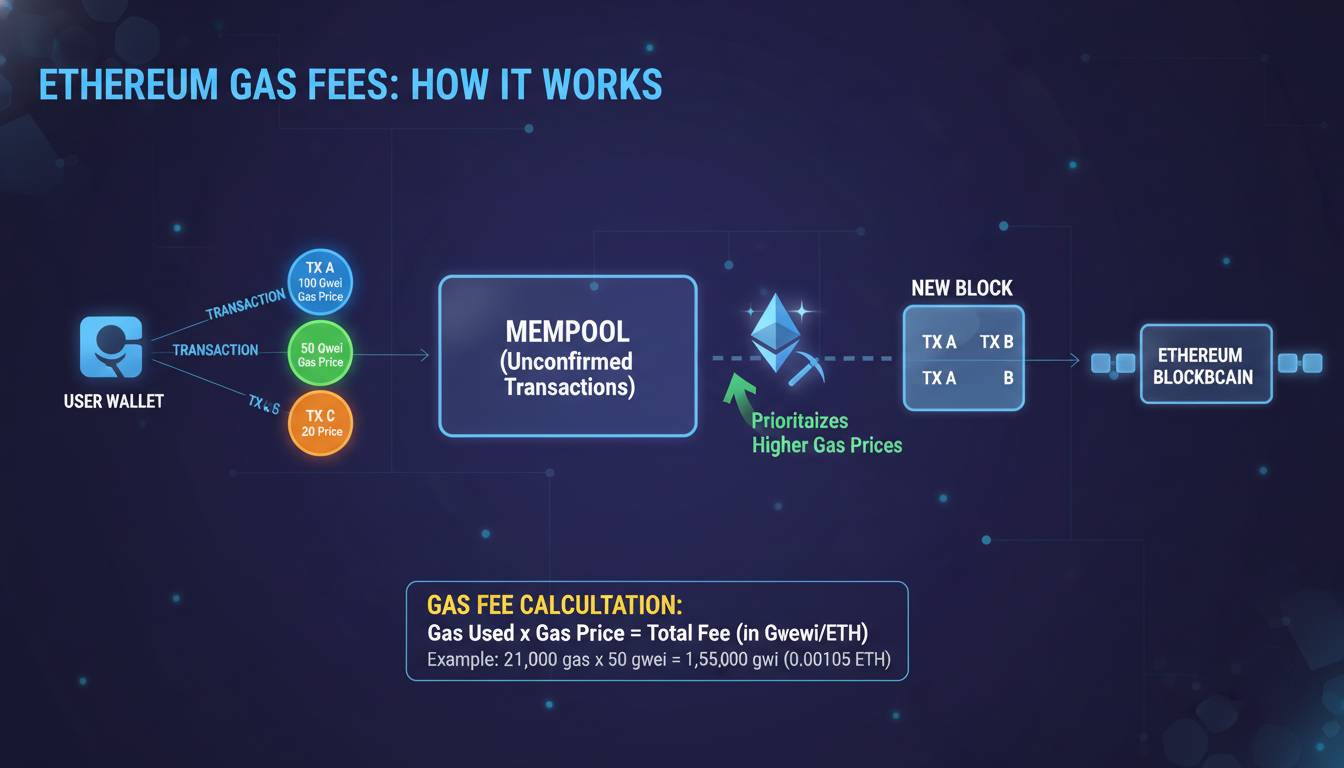
Gas on Ethereum serves as the fundamental unit measuring the computational work required to execute operations on the network. Every transaction—whether sending ETH, swapping tokens, or interacting with a smart contract—consumes a specific amount of gas based on its computational complexity.
The critical concept to understand: gas and ETH operate independently. Gas represents the work performed, while ETH represents the payment for that work. This distinction matters because it means gas prices (measured in Gwei, where 1 Gwei equals 0.000000001 ETH) can fluctuate wildly based on demand, regardless of ETH’s price in dollars.
Key Gas Metrics:
| Operation Type | Base Gas Unit | Typical Range |
|---|---|---|
| Simple ETH Transfer | 21,000 gas | $2-$50 |
| ERC-20 Token Transfer | 65,000 gas | $5-$150 |
| Uniswap Token Swap | 100,000-300,000 gas | $10-$300 |
| NFT Mint (Simple) | 150,000 gas | $15-$400 |
| DeFi Complex Interaction | 200,000+ gas | $20-$500+ |
The implementation of EIP-1559 in August 2021 fundamentally changed how Ethereum fees work. Instead of a single auction-style gas price, transactions now include a base fee (burned permanently, reducing ETH supply) and a priority fee (tips paid to validators for inclusion). This system creates more predictable pricing while making fees partially deflationary for the network.
Why Ethereum Gas Fees Fluctuate: Network Dynamics Explained
Understanding what drives gas prices transforms you from a passive payer into an informed optimizer. Three primary factors determine whether you pay $3 or $300 for the same transaction.
Network Demand and Block Space
Ethereum processes approximately 12-15 transactions per second in its current form, with each block containing roughly 30 million gas (recently increased from 15 million). When transaction demand exceeds this capacity, users must outbid each other for inclusion—the classic supply-demand dynamic that drives prices upward.
High-Demand Scenarios Typically Include:
- Major NFT drops (especially high-profile collections)
- Token launches and airdrops
- Significant market movements causing DeFi activity surges
- Morning hours in US time zones (9 AM – 5 PM EST typically shows highest activity)
Time-of-Day Patterns
Research from multiple blockchain analytics firms reveals consistent patterns in gas pricing throughout the day. US-based users generally encounter:
- Lowest fees: 12 AM – 6 AM EST (overnight and early morning)
- Moderate fees: 6 AM – 9 AM EST (Asian market hours)
- Highest fees: 9 AM – 9 PM EST (US and European overlap)
- Variable fees: 9 PM – 12 AM EST (US evening, European wind-down)
Weekend activity typically runs 20-40% lower than weekday levels, making Saturday and Sunday attractive for non-urgent transactions.
Transaction Complexity and Contract Interactions
Your transaction type fundamentally determines baseline gas costs. Simple ETH transfers require exactly 21,000 gas—the network minimum. However, interacting with decentralized exchanges or DeFi protocols introduces variable costs based on:
- Smart contract storage modifications
- Number of tokens involved in swaps
- Protocol-specific operations (liquidations, staking, borrowing)
- Contract efficiency (older protocols often cost more due to optimization improvements)
Strategic Gas Minimization: Practical Techniques
With the foundation established, let’s examine the actionable strategies that can reduce your Ethereum transaction costs by 30-70%.
Timing Transactions for Off-Peak Hours
The single most impactful change most users can make involves scheduling non-urgent transactions during low-demand periods. Using gas tracking tools to identify optimal windows delivers immediate savings without any protocol changes or technical knowledge.
The most effective approach involves checking current gas prices before initiating transactions and, when possible, waiting for prices to normalize. Many transactions—token transfers, staking deposits, NFT purchases that aren’t time-sensitive—can safely wait hours or days for better pricing.
Practical Implementation:
- Check gas trackers first (Etherscan Gas Tracker, Gas Now)
- If current prices exceed your threshold, set calendar reminders for 2-4 hours later
- Consider overnight transactions for maximum savings
- Weekend transactions often provide 25-45% lower fees than weekdays
Adjusting Transaction Parameters
Most wallet interfaces default to “Average” or “Fast” gas settings, padding prices unnecessarily. Learning to manually adjust gas parameters based on real-time network data puts control directly in your hands.
For non-urgent transactions, consider setting:
- Max Fee: Calculate based on typical low-period prices plus 10% buffer
- Max Priority Fee: 1-2 Gwei typically suffices for inclusion within a few blocks during low demand
- Gas Limit: Allow 20-30% above the estimated requirement for safety
The key insight: setting gas limits higher than necessary doesn’t increase what you pay—you’re only charged for gas actually consumed. However, setting the max fee too low causes transaction failure, wasting the gas spent attempting execution.
Leveraging Layer 2 Solutions
Layer 2 (L2) networks represent the most transformative cost-reduction strategy available. These scaling solutions—Arbitrum, Optimism, Base, and zkSync—process transactions on secondary networks while periodically settling to Ethereum mainnet, delivering 90-98% cost reductions.
Popular L2 Options:
| Network | Avg. Transaction Cost | Primary Use Cases |
|---|---|---|
| Arbitrum | $0.10 – $0.50 | DeFi, trading, NFTs |
| Optimism | $0.10 – $0.40 | DeFi, general use |
| Base | $0.05 – $0.30 | Social, gaming, NFTs |
| zkSync | $0.05 – $0.25 | Privacy, emerging DeFi |
The trade-off involves slightly longer withdrawal times (typically 7 days for Arbitrum and Optimism due to the fraud-proof challenge period) and ensuring your desired protocols operate on L2 networks. Most major DeFi protocols—including Uniswap, Aave, Compound, and popular NFT marketplaces—have deployed on major L2 networks.
Using RPC Endpoints for Better Fee Estimation
Default wallet RPC (Remote Procedure Call) endpoints often lag behind real-time network conditions. Switching to faster RPC providers can improve gas price estimation accuracy, helping you avoid overpaying during transitions between high and low demand periods.
Several free and premium RPC options exist, with many community-operated endpoints offering superior speed and accuracy compared to default settings. This technical optimization typically saves 5-15% by improving timing precision for gas-sensitive transactions.
Advanced Strategies for Power Users
For users conducting frequent transactions or managing significant DeFi positions, additional optimization strategies provide further savings.
Batch Transactions Strategically
When possible, combining multiple operations into single transactions reduces per-action costs. Several approaches apply:
- DEX aggregation: Using protocols that route through multiple liquidity sources in one transaction
- Token approval batching: Approving multiple tokens in single transactions when possible
- DeFi position management: Closing, adjusting, and reopening positions in single transactions rather than sequential operations
Exploring Alternative Fee Markets
EIP-1559’s base fee mechanism creates consistent pricing, but opportunities exist during periods of extreme demand. When network congestion drives prices unusually high, consider:
- Waiting for demand to ease (often 4-12 hours after initial spikes)
- Using gas tokens (CH4, GST2) during low prices to burn later during high-demand periods
- Breaking large transactions into smaller batches across lower-demand windows
Protocol-Specific Optimization
Different DeFi protocols implement gas differently. Uniswap V3, for example, often costs more per swap than V2 due to increased computational complexity, but may provide better pricing that offsets the gas difference. Understanding protocol trade-offs helps optimize across your entire DeFi strategy.
Common Mistakes Costing You Money
Avoiding these frequent errors immediately improves your gas efficiency.
Mistake 1: Always Using Default Wallet Settings
Default settings prioritize transaction speed over cost efficiency, typically setting gas prices 20-40% higher than necessary during normal network conditions. Always check current conditions and adjust accordingly.
Mistake 2: Rushing During NFT Drops
NFT minting often triggers extreme gas wars, with fees spiking 5-10x normal levels. Unless you’re specifically chasing limited-edition drops with significant upside potential, waiting to purchase on secondary markets after initial minting often proves more economical—even accounting for royalties.
Mistake 3: Ignoring Layer 2 Networks
Many users continue transacting on Ethereum mainnet out of habit, completely overlooking L2 alternatives that could reduce their costs by 90%+. If your transaction isn’t time-sensitive or doesn’t require mainnet’s immediate finality, L2 networks almost always provide superior economics.
Mistake 4: Setting Gas Limits Too Low
Attempting to save on fees by setting gas limits below requirements causes transaction failure while still consuming gas—the worst possible outcome. Always allow 20-30% buffer above estimated requirements.
Tools for Gas Optimization
Effective gas management requires reliable data. These tools provide real-time insights:
Gas Trackers:
- Etherscan Gas Tracker: Historical and current gas prices
- Gas Now: Real-time gas pricing with predictions
- Ultrasound.money: Advanced gas analytics and ETH burn tracking
Wallet Solutions:
- MetaMask: Manual gas adjustment capabilities
- Rabby Wallet: Built-in gas optimization features
- Frame: Advanced gas management for power users
L2 Bridges:
- Across Protocol: Fast cross-layer transfers
- Synapse Protocol: Multi-chain bridging
- Stargate: Unified liquidity layer
Frequently Asked Questions
What is the cheapest time to send Ethereum transactions?
The cheapest time typically falls between 12 AM and 6 AM EST (overnight hours in the US). Weekend transactions also tend to be 20-40% cheaper than weekday transactions due to reduced overall network activity.
Does changing the gas limit affect how much I pay?
No, the gas limit only sets the maximum you’re willing to pay. You’re charged only for gas actually consumed. However, setting the limit too low causes transaction failure, wasting the gas used in the failed attempt.
Are Layer 2 networks safe for storing significant funds?
Yes, major Layer 2 networks like Arbitrum and Optimism inherit Ethereum’s security through their bridge mechanisms. Funds on L2 are secured by Ethereum’s consensus mechanism. However, be aware of the 7-day withdrawal period required when moving funds back to mainnet.
Why did my transaction fail even though I paid high gas fees?
Transaction failures typically occur when gas limits are set too low for the complexity of the operation, or when gas prices spike between estimation and execution during rapidly changing network conditions. Ensure adequate gas limits and consider setting higher max fees for important transactions.
Can I get refunded unused gas from a failed transaction?
No, failed transactions still consume gas for the computational work performed attempting execution. The network doesn’t refund gas spent on attempted computations, even if they fail.
Is EIP-1559 making gas fees lower or just more predictable?
EIP-1559 primarily improved fee predictability rather than reducing overall costs. The base fee mechanism prevents the extreme spikes and drops of the previous auction system, but fees still fluctuate based on demand. The main economic change was making fees partially deflationary by burning the base fee.
Conclusion: Taking Control of Your Ethereum Costs
Ethereum gas fees don’t have to be a frustrating mystery that drains your crypto portfolio. By understanding how gas pricing works, recognizing the factors driving cost fluctuations, and implementing the practical strategies outlined in this guide—timing transactions wisely, leveraging Layer 2 solutions, and using available tools—you can dramatically reduce your transaction costs.
The most impactful first steps involve checking gas prices before transacting, considering L2 networks for non-urgent transactions, and breaking the habit of accepting default wallet settings. These simple changes typically yield 30-50% immediate savings.
For power users and DeFi participants, the advanced strategies—batching transactions, exploring protocol-specific optimizations, and utilizing RPC improvements—provide additional efficiency gains. As the Ethereum ecosystem continues evolving with new scaling solutions and protocol upgrades, staying informed about optimization opportunities ensures you maximize the value of every transaction.
The difference between paying $50 and $5 for the same transaction often comes down to timing, tool selection, and awareness of alternatives—knowledge you now possess.