236Views 0Comments
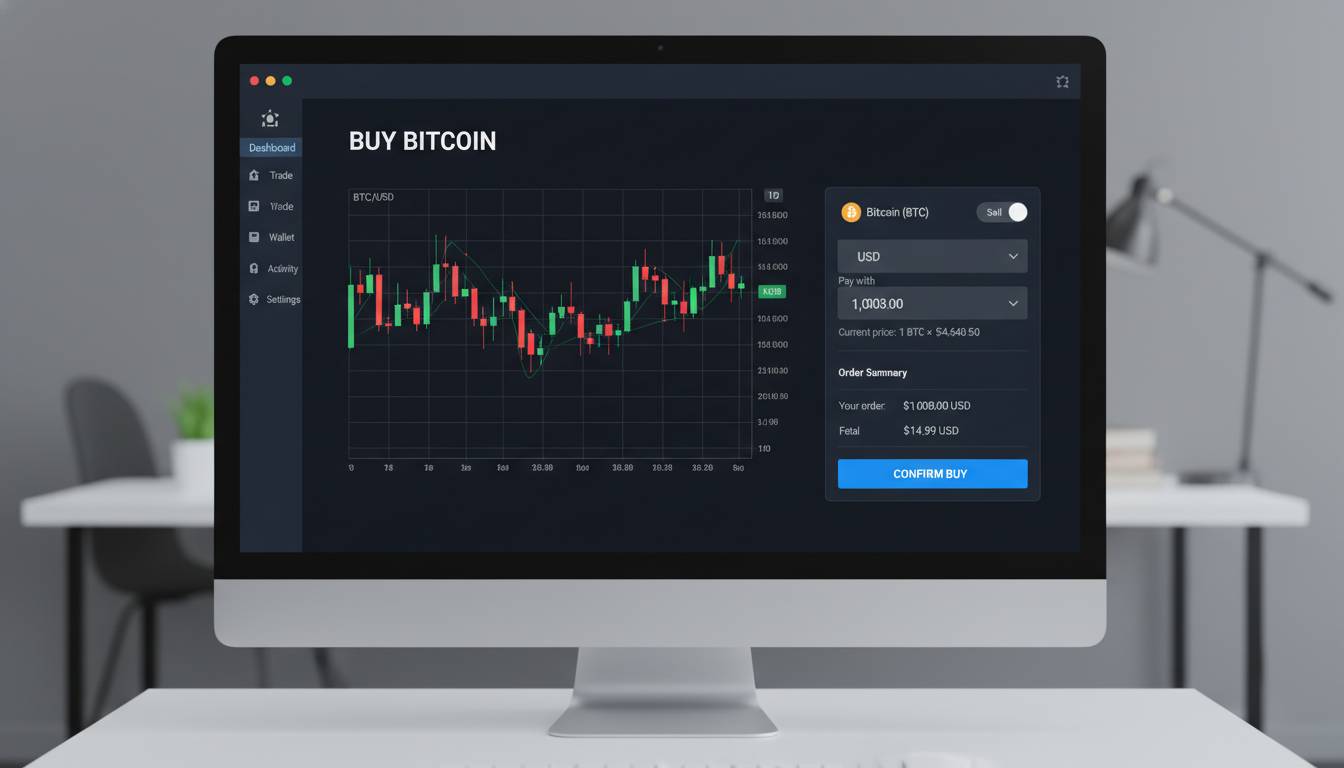
How to Buy Cryptocurrency: Complete Beginner’s Step-by-Step Guide
Buying cryptocurrency has evolved from a niche activity into a mainstream financial option, with millions of Americans now holding digital assets. Whether you’re interested in Bitcoin, Ethereum, or exploring other cryptocurrencies, understanding the process thoroughly helps you make informed decisions and avoid common pitfalls that catch new investors.
This guide walks you through every step of purchasing cryptocurrency in the United States, from selecting the right platform to securing your first assets. We’ll cover the essential concepts, compare your options, and provide practical guidance to help you navigate the crypto market with confidence.
Understanding Cryptocurrency Basics
Cryptocurrency is a digital or virtual currency that uses cryptography for security and operates on decentralized networks, typically blockchain technology. Unlike traditional currencies issued by governments (fiat currencies), cryptocurrencies are not controlled by any central authority like a bank or government.
The most well-known cryptocurrency is Bitcoin (BTC), created in 2009. Since then, thousands of alternative cryptocurrencies (altcoins) have emerged, including Ethereum (ETH), Solana (SOL), Cardano (ADA), and many others. Each cryptocurrency operates on its own network with different features, use cases, and price dynamics.
Before buying, understand that cryptocurrency investments are highly volatile. Prices can fluctuate dramatically within hours or days, and there’s no guarantee of returns. Only invest money you can afford to lose entirely. The cryptocurrency market operates 24/7, unlike traditional stock markets, meaning prices can change at any time, including weekends and holidays.
Choosing the Right Cryptocurrency Exchange
The first major decision you’ll face is selecting a cryptocurrency exchange where you’ll buy and sell digital assets. In the United States, several reputable exchanges operate under regulatory compliance, offering different features, fee structures, and supported cryptocurrencies.
Major US-Based Exchanges
| Exchange | Best For | Trading Fees | Minimum Purchase |
|---|---|---|---|
| Coinbase | Beginners, US users | 0.99%-$2.99% | $2 |
| Kraken | Advanced trading | 0%-0.26% | $10 |
| Gemini | Security-focused | 0.35%-$2.49% | $0.99 |
| Binance.US | Low fees | 0.1%-0.6% | $10 |
Coinbase stands out for beginners due to its intuitive interface, robust educational resources, and status as a publicly traded company (NASDAQ: COIN) subject to US securities regulations. It offers a simplified “Buy/Sell” feature that makes first purchases straightforward, though its trading fees tend to be higher than some alternatives.
Kraken appeals to those wanting lower fees and more advanced trading features, including futures and margin trading. It offers competitive fee structures that decrease with higher trading volumes.
Gemini, founded by the Winklevoss twins, emphasizes security and regulatory compliance, making it attractive to users prioritizing safety. It offers both a simple platform (Gemini Exchange) and an active trading platform (Gemini ActiveTrader).
Binance.US offers some of the lowest fees in the market but has a more limited selection of available cryptocurrencies compared to its international counterpart. The platform has faced regulatory scrutiny, so staying informed about its current status is important.
When choosing an exchange, consider factors beyond just fees: security features, customer support quality, the number of supported cryptocurrencies, ease of use, and whether it supports the specific coins you want to purchase.
Setting Up Your Account
Once you’ve chosen an exchange, you’ll need to create an account. This process involves several verification steps required by US regulations, specifically Know Your Customer (KYC) and Anti-Money Laundering (AML) requirements.
Step 1: Account Creation
Visit your chosen exchange’s website or download their mobile app (available on both iOS and Android). Click “Sign Up” or “Create Account” and provide your email address and a strong password. Most exchanges require passwords containing uppercase letters, lowercase letters, numbers, and special characters.
Step 2: Identity Verification
You’ll need to provide personal information including your full legal name, date of birth, Social Security Number (SSN), and address. US exchanges require this information for tax reporting and regulatory compliance. This step typically takes minutes to hours to verify, though some cases may require additional documentation.
Step 3: Document Upload
Be prepared to upload a government-issued ID (driver’s license, passport, or state ID) and possibly a secondary document like a utility bill or bank statement proving your address. The verification process uses automated systems but may include manual review.
Step 4: Two-Factor Authentication (2FA)
Enable two-factor authentication immediately. This adds a critical layer of security by requiring a second form of verification (typically a code sent to your phone or generated by an authenticator app) when logging in or withdrawing funds. Avoid SMS-based 2FA alone, as SIM-swapping attacks can compromise phone numbers. Use authenticator apps like Google Authenticator or hardware keys like YubiKey for better protection.
Step 5: Bank Account Linking
Connect a US bank account to enable deposits and withdrawals. This typically involves providing your bank routing number and account number, or linking through Plaid (a secure banking connection service). Some exchanges also allow linking debit cards for instant purchases, though this often comes with higher fees.
Funding Your Account
With your account verified, you need to deposit funds before purchasing cryptocurrency. US exchanges offer several funding options, each with different processing times and fees.
Bank Transfer (ACH)
Automated Clearing House (ACH) transfers are the most common method for US users. Deposits are typically free, though they take 1-5 business days to complete. Some exchanges like Coinbase offer instant ACH transfers with small fees, allowing you to access funds within hours rather than days.
Wire Transfer
Wire transfers process faster (often same-day or next-business day) but usually incur fees from both your bank and the exchange. This method suits larger deposits where the fees represent a smaller percentage of the transferred amount.
Debit/Credit Card
Linking a debit or credit card allows instant purchases but typically carries higher fees (3-5% or more). Credit card purchases may also be treated as cash advances by card issuers, incurring additional fees and interest. This method works for small initial purchases but becomes expensive for larger transactions.
Cryptocurrency Deposits
If you already hold cryptocurrency in another wallet or exchange, you can transfer it directly to your new account. This avoids fiat currency fees but requires understanding blockchain addresses and network fees (gas fees for Ethereum, network fees for Bitcoin, etc.).
For beginners, ACH bank transfers offer the best balance of low cost and simplicity. Start with a small deposit to test the process before moving larger amounts.
Making Your First Cryptocurrency Purchase
With funds available in your account, you’re ready to buy cryptocurrency. We’ll walk through the process using Coinbase as an example, though other exchanges follow similar patterns.
Step 1: Navigate to Buy
Find the “Buy” button prominently displayed on the exchange interface. This typically opens a purchase form where you’ll select the cryptocurrency and payment method.
Step 2: Select Cryptocurrency
Choose which cryptocurrency you want to buy. Bitcoin (BTC) and Ethereum (ETH) are the most established options with the highest liquidity, meaning you can easily sell them later. Research different cryptocurrencies to understand their purposes, volatility, and long-term potential before investing.
Step 3: Enter Amount
Specify how much you want to spend. You can enter either a dollar amount (e.g., $100) or a specific quantity of coins (e.g., 0.005 BTC). The exchange will automatically calculate the equivalent value based on current market prices.
Step 4: Review Order Details
Before confirming, carefully review:
– Total cost including fees
– Current market price
– Estimated cryptocurrency amount you’ll receive
– Payment method
Step 5: Confirm Purchase
Click “Buy Now” or “Confirm Order.” The cryptocurrency will appear in your exchange wallet, typically within seconds to minutes depending on network conditions.
Important Considerations
Start with small amounts while learning. Consider purchasing fractions of cryptocurrencies—you don’t need to buy a whole Bitcoin, which costs tens of thousands of dollars. You can buy $10 worth of Bitcoin and own 0.0003 BTC.
Understand the fee structure. Exchanges charge various fees including spread (the difference between buy and sell prices), trading fees, and network fees. These can significantly impact your returns, especially for small purchases.
Be aware of price volatility during purchase. Cryptocurrency prices can change between when you initiate and complete a purchase. Market orders execute immediately at the current price, while limit orders execute only when the price reaches your specified level.
Understanding Storage Options
Where you store your cryptocurrency matters significantly for security and accessibility. Your exchange provides a hosted wallet, but you have other options offering different tradeoffs.
Exchange Wallets (Hosted)
Your cryptocurrency sits on the exchange, similar to money in a bank account. This offers convenience—you can buy, sell, and trade instantly. However, you don’t control the private keys (the cryptographic keys that prove ownership). If the exchange is hacked, goes bankrupt, or freezes your account, you could lose access to your funds. Exchange wallets suit small amounts you’re actively trading.
Software Wallets
Software wallets are applications you download to your computer or phone. You control your private keys while maintaining convenient access. Popular options include MetaMask (for Ethereum and tokens), Exodus, and Trust Wallet. These provide better security than exchange wallets but remain vulnerable to malware and phishing attacks if your device is compromised.
Hardware Wallets
Hardware wallets are physical devices (like Ledger or Trezor) that store your private keys offline. They’re considered the gold standard for security, protecting your cryptocurrency even if your computer is compromised with malware. The tradeoff is convenience—you must connect the device to make transactions. Hardware wallets cost $50-$250 but provide peace of mind for significant holdings.
General Storage Guidelines
– Keep small amounts (1-2 months of spending money) in exchange wallets for convenience
– Store larger holdings in software or hardware wallets you control
– Never share your private keys or seed phrase with anyone
– Write down your seed phrase (recovery phrase) and store it securely offline—never digitally
– Consider the “not your keys, not your crypto” principle: if you don’t hold your private keys, you don’t truly own the cryptocurrency
Tax Implications and Record Keeping
The IRS treats cryptocurrency as property, not currency, meaning buying and selling triggers tax obligations. This applies to every transaction including trades, sales, and even purchases made with cryptocurrency.
Key Tax Considerations
– Capital Gains/Losses: When you sell cryptocurrency for more than you paid, you realize capital gains subject to capital gains tax. Losses can offset gains or up to $3,000 of ordinary income annually.
– Trading: Each time you trade one cryptocurrency for another (e.g., Bitcoin for Ethereum), that’s a taxable event even if you don’t convert to dollars.
– Mining and Staking: Income from mining or staking is taxable as ordinary income at its fair market value when received.
– Reporting: US taxpayers must report cryptocurrency transactions on Form 8949 and Schedule D of their tax return. The IRS also asks about cryptocurrency holdings on Form 1040.
Best Practices
– Keep detailed records of every transaction including date, amount, price, and purpose
– Use cryptocurrency tax software (like CoinTracker, CryptoTaxCalculator, or TokenTax) to track transactions across exchanges
– Consult a tax professional familiar with cryptocurrency
– Hold investments for more than one year to qualify for lower long-term capital gains rates
Security Best Practices
Cryptocurrency security requires vigilance and good habits. Follow these practices to protect your investment from theft and loss.
Account Security
– Use unique, strong passwords for every exchange and wallet
– Enable two-factor authentication on all accounts
– Use a hardware wallet for significant holdings
– Regularly review account activity for unauthorized access
Avoiding Scams
– Never send cryptocurrency to addresses provided by unsolicited callers or emails
– Be wary of “giveaway” scams promising to double your cryptocurrency
– Verify website URLs carefully—scammers create convincing phishing sites
– Don’t share your screen while logged into exchange accounts
– Be skeptical of investment advice in social media comments or direct messages
Backup and Recovery
– Write down your seed phrase on paper and store it in multiple secure locations (safe deposit box, fireproof safe)
– Never store seed phrases digitally (not in email, cloud storage, or phone notes)
– Test your backup by restoring to a different wallet before relying on it
– Consider giving a trusted family member instructions for accessing your cryptocurrency in case of emergency
Common Mistakes to Avoid
New cryptocurrency buyers frequently make several predictable errors. Learning about these pitfalls helps you avoid them.
Mistake 1: Investing More Than You Can Afford to Lose
The crypto market’s volatility means prices can drop 50% or more in weeks. Only invest money you genuinely won’t need for essential expenses.
Mistake 2: Buying Based on FOMO
Fear Of Missing Out (FOMO) leads to buying at market peaks when prices are highest. Research before investing, not after seeing prices surge.
Mistake 3: Ignoring Fees
Small purchases incur proportionally high fees. Buying $10 of cryptocurrency with a 3% fee costs $0.30 per transaction—significant over multiple purchases.
Mistake 4: Not Securing Your Private Keys
Leaving cryptocurrency on exchanges puts your assets at risk. For holdings exceeding a few hundred dollars, move them to a wallet you control.
Mistake 5: Falling for Scams
Phishing emails, fake websites, and social media scams target newcomers. Always verify URLs, never share credentials, and be skeptical of unsolicited offers.
Mistake 6: Neglecting Tax Obligations
Failing to report cryptocurrency transactions can trigger audits and penalties. Track everything from day one.
Frequently Asked Questions
What is the minimum amount of cryptocurrency I can buy?
Most US exchanges allow purchases starting at $1-10, making cryptocurrency accessible regardless of budget. However, transaction fees become proportionally expensive for very small purchases, so $25-$50 is a practical minimum for your first buy.
Is it legal to buy cryptocurrency in the United States?
Yes, cryptocurrency is legal in the United States. You can buy, sell, hold, and use cryptocurrency for transactions. However, exchanges must comply with federal regulations including KYC/AML requirements, and certain activities (like operating unregistered exchanges) may violate securities laws.
How do I choose which cryptocurrency to buy first?
Bitcoin and Ethereum are the most established options with the largest user bases and liquidity. They’re considered relatively lower-risk among cryptocurrencies. Before buying any altcoin, research its use case, development team, market capitalization, and community to understand what you’re investing in.
Can I lose all my money buying cryptocurrency?
Yes, cryptocurrency investments can become worthless. Prices are extremely volatile, projects can fail, and scams exist. Never invest more than you can afford to lose entirely. Diversification across different asset classes reduces overall portfolio risk.
Do I need to pay taxes on cryptocurrency gains?
Yes, in the United States, the IRS treats cryptocurrency as property. Selling, trading, or using cryptocurrency to make purchases triggers capital gains tax. Even failing to report holdings can trigger penalties. Keep detailed records of all transactions and consult a tax professional.
What’s the safest way to store cryptocurrency?
Hardware wallets (like Ledger or Trezor devices) offer the strongest security by keeping private keys offline. They protect against online threats while giving you complete control. For amounts you trade frequently, a reputable exchange with strong security features provides a reasonable balance of security and convenience.