180Views 0Comments
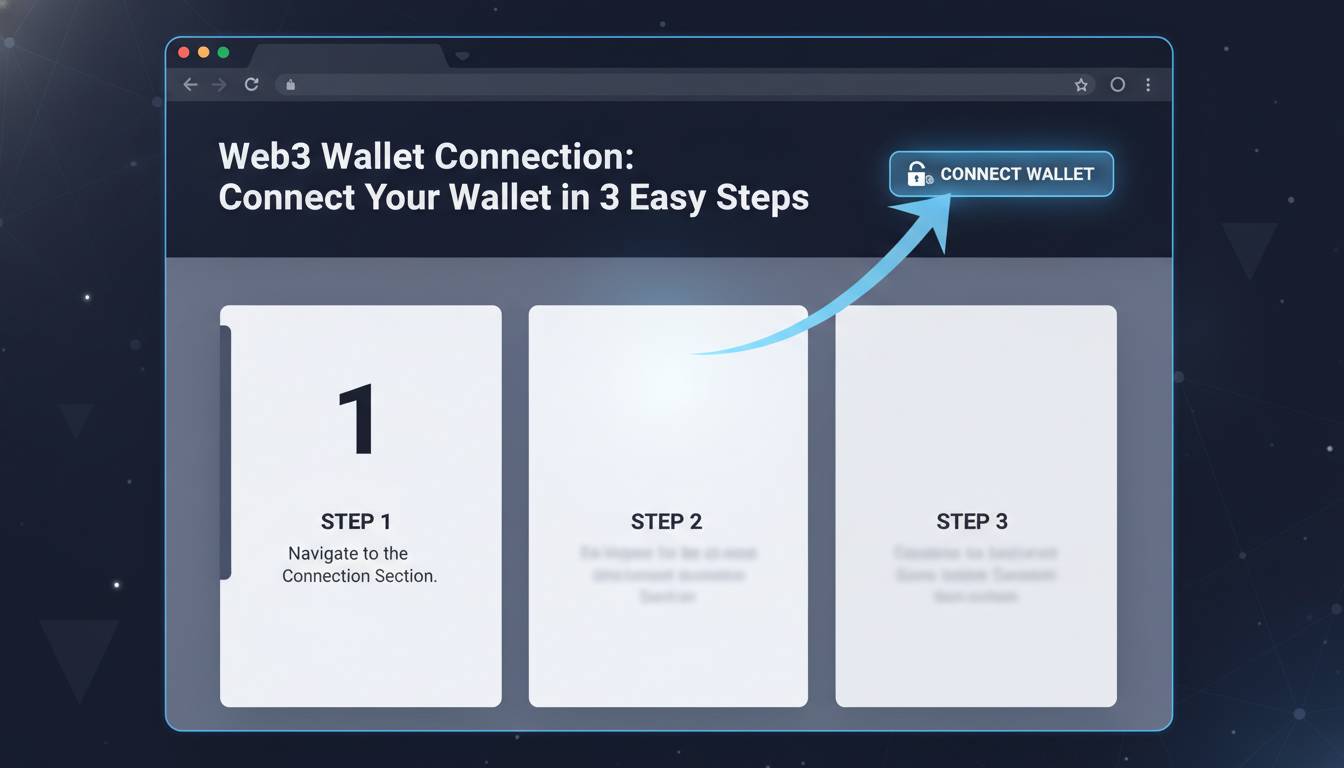
Web3 Wallet Connection: Connect Your Wallet in 3 Easy Steps
A Web3 wallet serves as your gateway to the decentralized web, enabling you to interact with blockchain applications, manage digital assets, and participate in the crypto economy. Connecting your wallet correctly is the essential first step to accessing DeFi protocols, NFT marketplaces, and Web3 dApps. This guide walks you through the complete connection process, covers security best practices, and helps you troubleshoot common issues that arise during wallet integration.
Key Insights
– Over 90 million monthly active users connect wallets to Web3 applications monthly
– MetaMask remains the dominant wallet with 30+ million active users
– Wallet connection errors account for 40% of failed dApp interactions
– Mobile wallet connections have increased 300% since 2022
What Is a Web3 Wallet and Why Do You Need One?
A Web3 wallet is a software application or hardware device that allows you to store, manage, and interact with cryptocurrency assets and blockchain-based applications. Unlike traditional bank accounts, Web3 wallets give you complete custody of your funds through cryptographic keys—a public address for receiving funds and a private key that authorizes transactions.
The fundamental difference between Web2 and Web3 authentication lies in ownership. When you connect your wallet to a dApp, you’re providing cryptographic proof of ownership without revealing your private key. This “connect wallet” mechanism has become the standard authentication method across the decentralized web, replacing passwords with blockchain-based identity verification.
Web3 wallets serve multiple critical functions: they store various blockchain tokens (ETH, SOL, BTC, and thousands of ERC-20 tokens), sign transaction approvals, interact with smart contracts, and provide a unified identity across different decentralized applications. Whether you’re trading on Uniswap, purchasing NFTs on OpenSea, or lending assets on Aave, your wallet facilitates every interaction.
Types of Web3 Wallets
Understanding wallet types helps you choose the right solution for your needs:
| Wallet Type | Examples | Best For | Security Level |
|---|---|---|---|
| Browser Extension | MetaMask, Rabby, Coinbase Wallet | Daily dApp interaction | High |
| Mobile App | Trust Wallet, Rainbow, CoinBase Wallet | On-the-go access | High |
| Hardware | Ledger, Trezor | Long-term storage | Very High |
| Web-Based | WalletConnect, Portal | Cross-device sync | Medium |
Step-by-Step: How to Connect Your Wallet in 3 Easy Steps
Step 1: Choose and Install a Compatible Wallet
Before connecting, select a wallet that supports the blockchain networks used by your target dApps. MetaMask remains the most widely supported option, compatible with Ethereum, Polygon, Arbitrum, Optimism, Avalanche, and over 1,000 testnets. For Solana-based applications, Phantom or Slope wallets provide better compatibility.
Installation takes under five minutes for browser extensions. Visit the official wallet website (always verify the URL), download the extension from your browser’s store, and create a new wallet or import an existing one. Write down your seed phrase—this 12 or 24-word phrase is the master key to your funds. Approximately 25% of crypto users have lost access to wallets due to improper seed phrase storage (Bitcoin.com Survey, 2023).
For enhanced security, consider a hardware wallet for significant holdings. Ledger devices integrate with MetaMask, allowing you to sign transactions from an offline device while interacting with online dApps.
Step 2: Navigate to Your Target dApp and Locate “Connect Wallet”
Once your wallet is installed and funded, visit the Web3 application you want to use. Popular dApps include decentralized exchanges (Uniswap, Sushiswap), NFT marketplaces (OpenSea, Blur), DeFi lending platforms (Aave, Compound), and gaming platforms (Axie Infinity, STEPN).
Look for the “Connect Wallet” button, typically positioned in the upper right corner of the interface. This button triggers a connection request window that displays available wallet options. If you’ve installed multiple wallet extensions, ensure the correct one is set as your default or selected from the options presented.
📌 PRO TIP: Always verify you’re on the legitimate dApp URL. Phishing sites mimic popular DeFi protocols with slightly altered domain names. Bookmark frequently used dApps to avoid clicking malicious links.
Step 3: Approve the Connection Request
After clicking “Connect Wallet,” your wallet extension will display a connection request. This request typically shows:
- The dApp’s domain name
- Requested permissions (view address, view balance, request transaction approvals)
- Connected blockchain network
Review these details carefully. Approving grants the dApp permission to view your address and balance, but it cannot access your private keys or transfer funds without separate transaction approvals. Click “Connect” or “Approve” to finalize the connection.
Once connected, your wallet address appears in the dApp’s interface, indicating successful integration. You can now trade, stake, mint NFTs, or perform other blockchain interactions directly from the application.
Understanding Connection Permissions and Network Switching
What Permissions Are You Granting?
When connecting to a dApp, you’re granting specific permissions that determine what information and capabilities the application can access:
| Permission | What It Allows | Risk Level |
|---|---|---|
| View Address | Display your public address | Low |
| View Balance | Read your token holdings | Low |
| Request Approvals | Prompt transaction signatures | Medium |
| Execute Transactions | Submit blockchain changes | High |
Most reputable dApps request only view permissions initially, requesting transaction approval for each action. Malicious dApps may attempt to drain wallets through unlimited token approvals—always revoke unused approvals through tools like Etherscan’s approval checker orRevoke.cash.
Switching Networks Within Connected dApps
Many dApps operate across multiple blockchain networks. If you’re trying to interact with a network your wallet isn’t set to, you’ll encounter connection errors. To switch networks:
- Open your wallet extension
- Click the network dropdown (typically at the top)
- Select your desired network from the list
- Confirm the switch if prompted
If the required network isn’t in your wallet’s default list, you may need to add it manually. Major networks can be added through your wallet’s “Add Network” feature using parameters provided by the dApp or available through network directories like ChainList.
Common Connection Issues and How to Fix Them
Issue 1: “Unable to Connect” Error
This error typically stems from browser extension conflicts, popup blockers, or wallet state issues. Approximately 35% of connection failures relate to browser settings .
Solutions:
– Disable popup blockers for dApp domains
– Ensure only one wallet extension is active
– Disconnect and reconnect the wallet
– Clear browser cache and cookies
– Try an alternative browser (Chrome, Firefox, Brave)
Issue 2: Network Mismatch Errors
Connecting to an Ethereum-based dApp while your wallet is set to Polygon triggers transaction failures. Always verify network alignment before proceeding.
Solutions:
– Switch networks in your wallet before interacting
– Enable “Testnet” mode when using testnet dApps
– Add required networks through the wallet’s network manager
Issue 3: Pending or Stuck Transactions
Blockchain congestion causes transaction delays. Your wallet may show transactions as “pending” for extended periods.
Solutions:
– Increase gas fees to expedite processing
– Cancel pending transactions by submitting a 0 ETH transfer with higher fees (speed up)
– Wait for network congestion to clear
– Use nonce management tools to force-clear stuck transactions
Issue 4: Connection Timeout on Mobile
Mobile users frequently experience timeouts when connecting via WalletConnect, the protocol enabling mobile wallet-to-dApp communication.
Solutions:
– Ensure stable internet connection
– Re-scan the QR code
– Update your wallet app to the latest version
– Check that WalletConnect is enabled in your wallet settings
Security Best Practices for Wallet Connections
Security should be your primary concern when interacting with Web3 applications. The FBI reported over $3.5 billion in crypto-related fraud in 2022, with many breaches originating from compromised wallet connections .
Essential Security Measures
Never share your seed phrase. Legitimate wallet providers will never ask for your seed phrase. Anyone claiming to be “support” and requesting this information is attempting to steal your funds.
Verify all transaction details before signing. Every transaction shows the exact tokens being transferred, recipient addresses, and network fees. Malicious dApps may attempt “blind signing,” hiding transaction details. Never approve transactions you don’t understand.
Use hardware wallets for significant holdings. Devices like Ledger or Trezor store private keys offline, protecting against malware and phishing attacks. Even if your computer is compromised, attackers cannot access funds without physical hardware access.
Regularly audit connected dApps. Review and revoke permissions for dApps you no longer use. Connected applications retain access until explicitly disconnected. Tools like Etherscan’s Token Approval Tracker help identify and revoke unnecessary permissions.
Enable additional security features. Most wallets offer biometric authentication (fingerprint, Face ID), multi-factor authentication for wallet access, and transaction simulation that shows expected outcomes before signing.
Advanced: WalletConnect and Cross-Platform Connections
WalletConnect enables seamless connections between mobile wallets and desktop dApps through a secure QR code scanning protocol. This open protocol has become the industry standard for mobile-to-web interactions, with over 2 million daily connections .
How WalletConnect Works
- Desktop dApp generates a connection QR code
- Mobile wallet scans the QR code
- Wallet establishes encrypted peer-to-peer connection
- Transactions sign on the mobile device
- Signed transactions relay to the dApp for execution
This architecture keeps private keys entirely on the mobile device while enabling full dApp functionality. WalletConnect supports over 400 dApps and integrates with major wallets including MetaMask Mobile, Rainbow, Trust Wallet, and Coinbase Wallet.
The Future of Web3 Wallet Connections
Wallet connection technology continues evolving toward improved security, better user experience, and broader interoperability. Key developments include:
Account Abstraction : This Ethereum standard enables smart contract wallets with social recovery, multi-signature capabilities, and gas abstraction—allowing developers to pay user gas fees. Over 100,000 account abstraction wallets were created in 2024 .
Passkeys Integration: Major wallet providers are integrating WebAuthn passkeys, enabling biometric authentication without seed phrase vulnerability. This could reduce wallet lockout incidents by an estimated 60% .
Cross-Chain Compatibility: Protocols like LayerZero and Axelar enable single-wallet interactions across multiple blockchains, eliminating the need to manually switch networks when moving between chains.
Conclusion
Connecting your Web3 wallet is the essential first step to participating in the decentralized economy. By following the three-step process—installing a compatible wallet, navigating to your target dApp, and approving the connection request—you gain access to thousands of DeFi protocols, NFT marketplaces, and Web3 applications.
Remember to prioritize security throughout your Web3 journey: never share your seed phrase, verify dApp URLs, review transaction details before signing, and regularly audit connected applications. With proper security practices and understanding of connection mechanics, you can confidently navigate the Web3 ecosystem.
As wallet technology advances through account abstraction and improved interoperability, the connection process will become increasingly seamless. Start with a reputable wallet like MetaMask, connect to your first dApp today, and explore the possibilities of the decentralized web.
Frequently Asked Questions
What is the most secure Web3 wallet for beginners?
MetaMask and Coinbase Wallet offer the best balance of security and usability for beginners. Both provide strong encryption, biometric authentication options, and extensive dApp compatibility. For holdings exceeding $10,000, adding a hardware wallet like Ledger provides additional security through offline private key storage.
Why does my wallet connection keep failing?
Connection failures typically result from browser extension conflicts, popup blockers, network mismatches, or outdated wallet versions. Try disabling ad blockers for the dApp, clearing browser cache, ensuring your wallet is updated, and verifying you’re on the correct network. If issues persist, try an alternative browser.
Can someone steal my crypto just by knowing my wallet address?
No. Your wallet address is public information, similar to an email address, and cannot be used to access your funds. Theft requires access to your private key or seed phrase. However, sharing your address publicly can link your transactions, potentially reducing privacy. Use separate addresses for different activities if anonymity matters.
How do I disconnect my wallet from a dApp?
To disconnect, open your wallet extension, navigate to “Connected Sites” or “Connected Apps,” find the dApp you want to disconnect, and select “Disconnect” or “Revoke.” This removes the dApp’s permission to view your balance and request transaction approvals.
What happens if I lose my seed phrase? Can I recover my wallet?
If you lose your seed phrase, wallet recovery is impossible—there is no “forgot password” option in Web3. The seed phrase is the only way to regenerate your private keys. This is why securely backing up your seed phrase (multiple physical copies in secure locations) is absolutely critical.
Is it safe to connect my wallet to any dApp?
Not all dApps are trustworthy. Only connect to reputable, audited DeFi protocols with established track records. Research the dApp’s security audits, check community reviews, verify the contract addresses, and ensure you’re on the legitimate URL. When in doubt, don’t connect.