222Views 0Comments
What is DeFi? Simple Explanation for Beginners
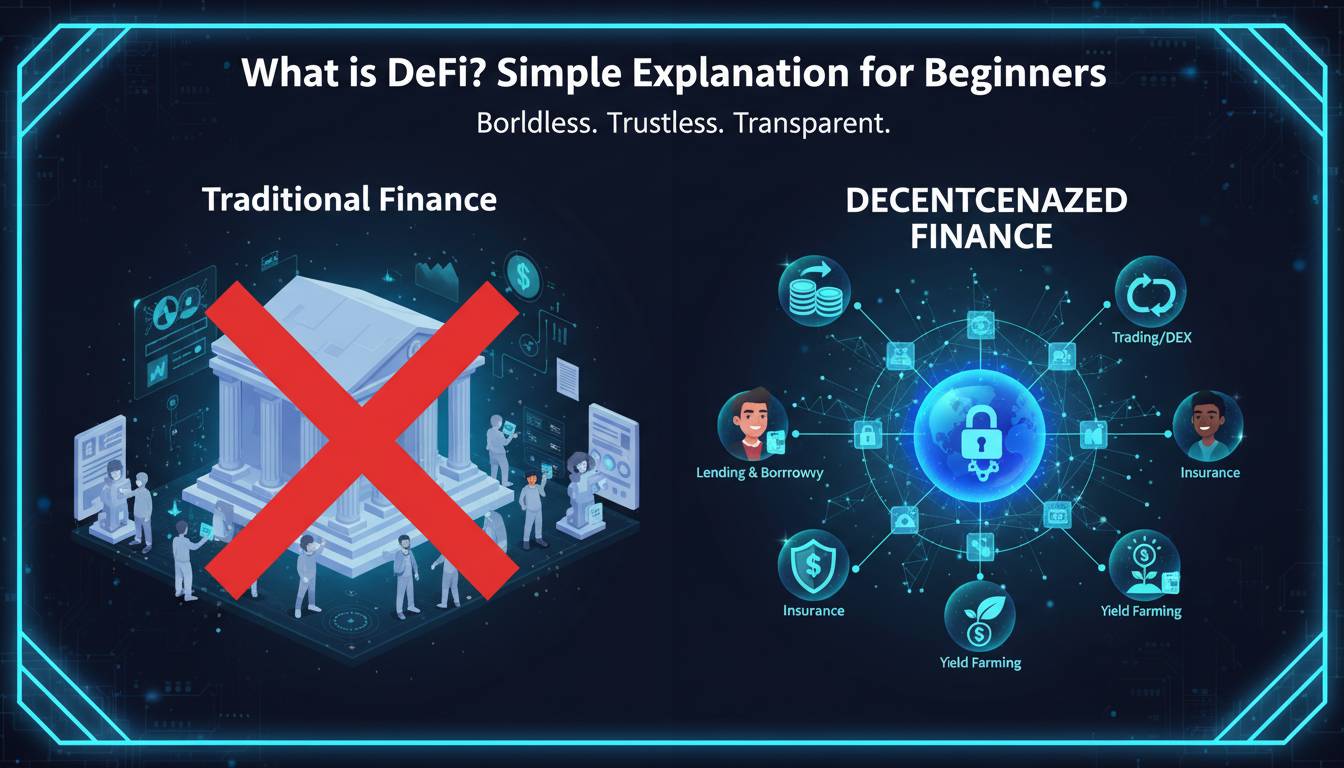
Decentralized Finance, or DeFi, refers to a financial system built on blockchain technology that operates without traditional intermediaries like banks, brokerages, or payment processors. In simple terms, DeFi allows people to lend, borrow, trade, and earn interest on their money directly through software applications, cutting out the middlemen that have historically controlled financial services.
Key Insights
– DeFi eliminates the need for banks and other financial institutions as intermediaries
– All transactions are recorded on a public blockchain, making them transparent and verifiable
– Users maintain full control of their funds through cryptographic keys
– DeFi platforms operate 24/7, unlike traditional banking hours
– The total value locked in DeFi protocols has grown from virtually zero in 2019 to over $50 billion by 2024
This article breaks down everything you need to understand about DeFi, from how it works to the risks involved, in plain language that anyone can understand.
How DeFi Works: The Basic Concept
Traditional finance relies on trusted institutions to facilitate transactions. When you deposit money in a bank, the bank holds your funds and lends them to others, paying you interest while charging borrowers more. When you transfer money, banks verify the transaction and keep records. These institutions charge fees for their services and control who can access financial products.
DeFi replaces these institutional intermediaries with software code running on blockchain networks. This code, often called “smart contracts,” automatically executes transactions when predetermined conditions are met. There’s no bank manager approving your loan application—instead, an algorithm assesses your collateral and issues funds automatically.
Here’s a practical example: Suppose you want to lend your cryptocurrency to earn interest. In traditional finance, you’d deposit money in a savings account. In DeFi, you send your crypto to a lending protocol, where borrowers can access it by providing other cryptocurrency as collateral. The smart contract automatically calculates interest, distributes it to lenders, and manages the collateral to protect lenders from defaults.
The Ethereum blockchain hosts most DeFi applications because its smart contract functionality allows developers to build complex financial instruments. Other blockchains like Solana, Avalanche, and Binance Smart Chain have also developed their own DeFi ecosystems.
Key Features That Make DeFi Different
Understanding DeFi becomes easier when you recognize its core characteristics that set it apart from traditional finance.
Decentralization means no single entity controls the network. Instead, blockchain validators across the world maintain the network collectively. This eliminates single points of failure and reduces censorship risk—meaning no government or corporation can easily shut down DeFi services.
Transparency is built into the system. Every transaction and smart contract on a public blockchain is visible to anyone. Developers and users can audit the code to verify that it works as advertised. This transparency reduces fraud opportunities that exist in opaque traditional financial systems.
Censorship resistance ensures that transactions cannot be blocked based on geography, identity, or political pressure. While this has legitimate uses, it also creates regulatory challenges that we’ll discuss later.
Programmability allows developers to create sophisticated financial products by combining different DeFi building blocks. Just as you can combine Lego pieces to build complex structures, DeFi developers can stack different protocols to create new financial instruments.
Financial inclusion represents perhaps DeFi’s most promising feature. Anyone with an internet connection and a smartphone can access DeFi services, regardless of their location or banking status. This opens financial services to the approximately 1.4 billion unbanked adults worldwide.
Major DeFi Use Cases
DeFi applications have expanded to cover most financial activities that traditional institutions perform. Understanding these use cases helps illustrate how decentralized finance impacts everyday financial decisions.
Lending and Borrowing
DeFi lending platforms like Aave, Compound, and MakerDAO allow users to supply cryptocurrency and earn interest or borrow against their crypto holdings. Borrowers typically must overcollateralize their loans, meaning they deposit more value than they borrow—this protects lenders from losses.
The interest rates on DeFi lending often exceed traditional savings accounts dramatically. While traditional banks might offer 0.01% to 4% annually on savings, DeFi protocols have historically offered 3% to 15% on certain cryptocurrencies, though rates fluctuate based on market demand.
Decentralized Exchanges (DEXs)
Uniswap, SushiSwap, and PancakeSwap are decentralized exchanges that allow users to trade cryptocurrencies directly from their wallets without depositing funds on a centralized exchange. These platforms use automated market makers (AMMs) that price trades algorithmically based on supply and demand.
DEXs eliminate the need to trust a centralized entity with your funds during trades. Your assets remain in your wallet until the moment of the swap, reducing exchange hack risks that have cost users billions over the years.
Stablecoins
Stablecoins like USDC, DAI, and USDT are cryptocurrencies designed to maintain a fixed value, typically $1. They achieve this through different mechanisms—some hold dollar reserves, others use algorithmic controls, and some use crypto collateral. Stablecoins enable users to transact in cryptocurrency without the extreme volatility that makes Bitcoin or Ethereum impractical for everyday use.
Yield Farming and Staking
Yield farming involves moving cryptocurrency between different DeFi protocols to maximize returns. Users chase the highest yields, moving tokens as rates change. Staking involves locking cryptocurrency to support blockchain network operations, earning rewards in return. Both activities represent ways to generate passive income on crypto holdings.
Advantages and Disadvantages of DeFi
Weighing the benefits against the risks helps determine whether DeFi suits your financial situation.
Benefits
| Advantage | Impact | Details |
|---|---|---|
| Higher yields | +300-400% vs traditional savings | DeFi rates often exceed inflation |
| 24/7 access | Always available | No banking hours, no holidays |
| Lower fees | Reduced transaction costs | Eliminates intermediary markups |
| Financial inclusion | Global access | No identification requirements |
| Transparency | Audit-ready | All transactions publicly verifiable |
| Privacy | Optional anonymity | No personal data required |
Risks
Smart contract vulnerabilities represent one of DeFi’s most significant risks. Code bugs can lead to massive losses—the Ronin bridge hack in 2022 resulted in $620 million in stolen funds. While security practices improve, vulnerabilities remain.
Impermanent loss affects liquidity providers on AMMs. When the price of tokens in a liquidity pool changes significantly, providers may lose money compared to simply holding the tokens.
Regulatory uncertainty creates risks for DeFi users. Governments worldwide are still determining how to regulate decentralized financial services, and future laws could restrict access or impose restrictions.
Complexity and user error cause more losses than hacks in some years. Users who don’t understand what they’re doing sometimes send funds to wrong addresses or fall for phishing scams.
Volatility exposure means the cryptocurrency collateral backing loans can lose value rapidly, potentially triggering liquidation of assets.
Getting Started with DeFi Safely
If you’re interested in exploring DeFi, approaching it cautiously helps minimize risks while you learn.
Start small with amounts you can afford to lose entirely. DeFi remains experimental, and even experienced users encounter losses. Never invest your rent money or emergency savings.
Do your research before using any protocol. Look for security audits from reputable firms like Trail of Bits or OpenZeppelin. Check how long the protocol has operated and whether any security incidents occurred.
Use hardware wallets for significant holdings. These devices store your private keys offline, protecting them from malware and phishing attacks.
Never share your seed phrase with anyone. This 12 or 24-word phrase gives complete access to your funds. Legitimate DeFi services will never ask for it.
Understand what you’re using before committing funds. If you can’t explain how a protocol generates yields, you probably shouldn’t invest in it. Unusually high returns often indicate unsustainable models or fraud.
The Future of DeFi
The DeFi ecosystem continues evolving rapidly as developers address current limitations and build new capabilities.
Cross-chain bridges are improving, allowing users to move assets between different blockchain networks more easily. This addresses one of DeFi’s current fragmentation challenges.
Institutional adoption brings traditional financial players into DeFi. Companies like BlackRock and Fidelity have shown interest in blockchain technology, potentially bridging DeFi with conventional finance.
Regulatory clarity is developing as governments establish frameworks for digital assets. While some restrictions seem likely, clear rules will help legitimate DeFi projects operate more confidently.
User experience improvements are making DeFi more accessible. Wallet designs are simplifying, and transaction fees on some networks are decreasing, making small transactions more practical.
Real-world asset tokenization is expanding DeFi beyond pure cryptocurrency. Projects are bringing real estate, stocks, and commodities onto blockchain networks, potentially transforming how people invest in traditional assets.
Frequently Asked Questions
Is DeFi legal in the United States?
DeFi operates in a gray area in the United States. While using DeFi protocols isn’t explicitly illegal, some activities may violate securities or banking regulations. The regulatory landscape remains uncertain, and users should consult with legal professionals if they’re concerned about compliance.
Do I need a lot of money to start using DeFi?
No, you can start with very small amounts. Some DeFi platforms allow you to participate with just a few dollars worth of cryptocurrency. However, transaction fees on networks like Ethereum can be significant relative to small balances, so starting with at least a few hundred dollars typically makes more economic sense.
Can I lose all my money in DeFi?
Yes, DeFi involves substantial risk. You can lose money through hacks, smart contract failures, scams, or simple user error. The value of cryptocurrency collateral can also drop dramatically, triggering forced liquidation of your assets. Only invest money you can afford to lose completely.
How is DeFi different from cryptocurrency?
Cryptocurrency refers to digital currencies like Bitcoin and Ethereum. DeFi is the application of blockchain technology to create financial services—lending, borrowing, trading, and earning interest. All DeFi transactions happen using cryptocurrencies, but DeFi describes the broader ecosystem of financial applications.
What is the biggest risk in DeFi?
Smart contract risk represents the largest technical threat, as bugs in code can lead to catastrophic losses. However, user error and scams probably cause more losses overall. Phishing attacks, where criminals trick users into revealing their private keys, have stolen billions from DeFi users.
Do I need to pay taxes on DeFi earnings?
In the United States, the IRS treats cryptocurrency transactions as taxable events. This includes interest earned from DeFi lending, profits from trading, and yield farming rewards. You should maintain records of all your DeFi transactions and consult a tax professional for guidance specific to your situation.