125Views 0Comments
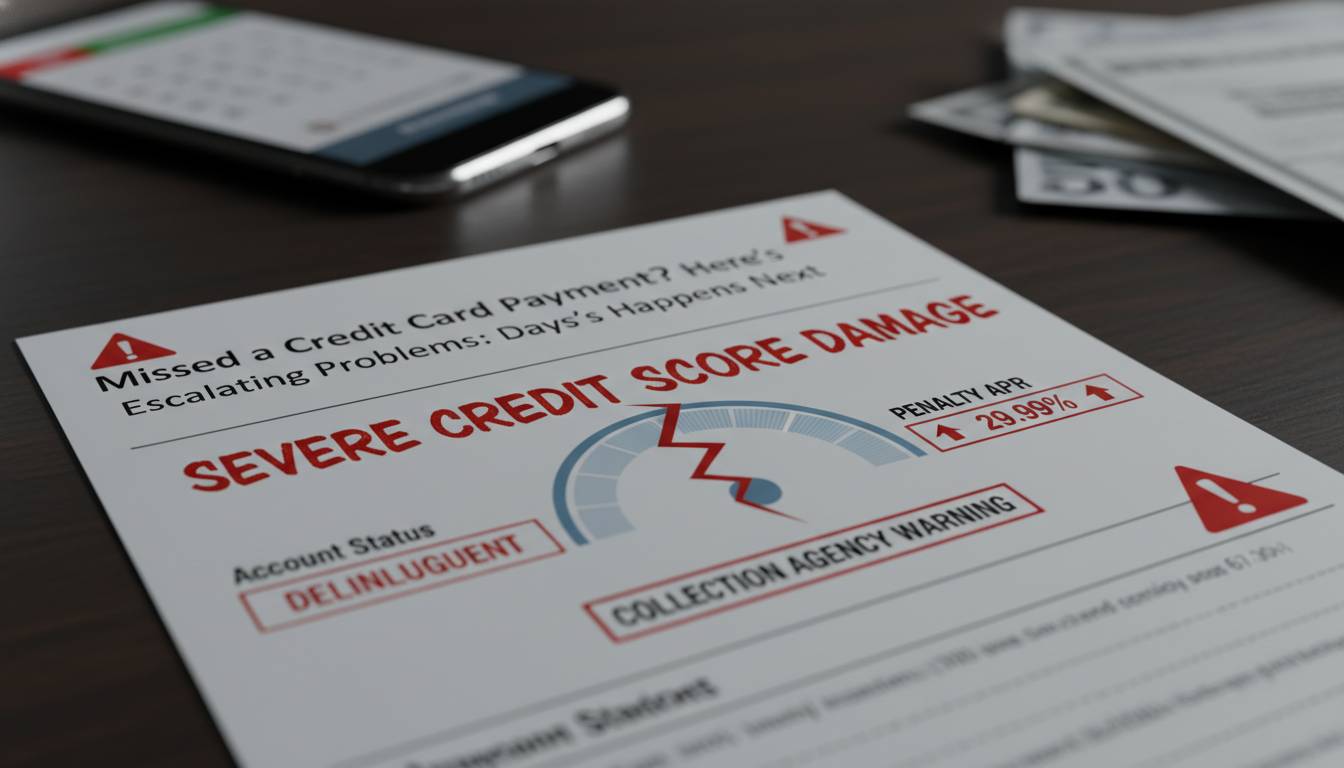
Missed a Credit Card Payment? Here’s What Happens Next
Missing a credit card payment can feel like a minor oversight, but the consequences can ripple through your financial life faster than most people realize. Within days of a missed payment, you could face late fees, interest rate hikes, and damage to your credit score—even if you have an otherwise spotless payment history. Understanding exactly what triggers these consequences and when they kick in empowers you to act quickly, minimize the damage, and avoid future missteps.
Key Insights
- Late fees typically range from $25 to $35 for first-time missed payments
- Your credit score can drop 50 to 100 points within 30 days of a missed payment
- Most issuers offer a 15 to 29-day grace period before reporting to credit bureaus
- Multiple consecutive missed payments can result in default and account closure
- Certain state laws provide additional consumer protections against aggressive collection tactics
The Immediate Aftermath: What Happens in the First Few Days
When you miss a credit card payment, the timeline of consequences begins almost immediately, though issuers vary in their exact policies. Most credit card issuers do not report a missed payment to the major credit bureaus—Equifax, Experian, and TransUnion—until it becomes delinquent, which typically occurs after 30 days past the due date. This gives you a critical window to catch up before lasting damage occurs.
Within the first one to 14 days after your due date, the issuer will typically apply a late fee to your account. The Consumer Financial Protection Bureau (CFPB) reports that the average first-time late fee ranges from $25 to $35, though some premium cards may charge higher amounts. If your account was already carrying a balance, the issuer will also begin charging interest on that existing balance, effectively compounding your debt.
Most issuers send payment reminder notifications via email, text message, or mobile app alerts several days before the due date. If you’ve missed these reminders, contacting your issuer immediately demonstrates good faith and may help you access assistance programs. Many major issuers, including Chase, Bank of America, and Citibank, offer hardship programs for customers experiencing temporary financial difficulties that can include fee waivers or temporary payment arrangements.
The 30-Day Window: Why This Period Matters Most
The 30-day mark represents the most consequential threshold in the missed payment timeline. This is the point at which most issuers report the delinquency to the three major credit bureaus, and the impact on your credit score becomes official and lasting.
How Your Credit Score Gets Affected
Your payment history accounts for approximately 35% of your FICO credit score, making it the single most influential factor. When a missed payment hits your credit report, the damage depends on several factors:
| Factor | Impact Range |
|---|---|
| Score drop (first missed payment) | 50 to 100 points |
| Subsequent missed payments | Additional 20 to 50 points each |
| Recovery time (with consistent payments) | 6 to 12 months for mild impact |
| Severe delinquency (90+ days) | 100+ point drop, 7-year footprint |
The exact drop varies based on your starting credit score. Someone with an excellent score of 780 or above will typically experience a steeper percentage drop than someone with a fair score in the 600s, simply because there’s more room to fall. However, the impact on someone with a lower score can be more damaging because it may push them into poor credit territory, qualifying them for less favorable loan terms.
The Grace Period Illusion
Many consumers mistakenly believe they have a full month to make a payment without consequence. In reality, the grace period—the time during which you can pay your full balance without incurring interest—only applies if you paid your previous statement in full. Once you’ve missed a payment, the grace period typically disappears, and interest begins accruing immediately on new purchases from the transaction date, not just from the statement date.
Interest Rate Penalties and Fee Escalation
Beyond the initial late fee, missing a credit card payment can trigger penalty interest rates, also known as default or teaser rate escalation. The Credit CARD Act of 2009 provides some protections, but issuers still have significant flexibility.
Penalty APR Implementation
If your account becomes 60 days delinquent, issuers are permitted to impose a penalty APR that can jump to 29.99% or higher—far above the typical 15% to 25% standard rate. This penalty rate applies to both existing balances and new transactions, making it exponentially more expensive to carry a balance on the card.
The good news is that the CARD Act requires issuers to review your account after six months of on-time payments and revert you to your original interest rate if you’ve demonstrated responsible behavior. However, during those six months, you’re paying significantly more in interest on any balance you carry.
Multiple Missed Payments: The Escalation
If you continue to miss payments, the financial consequences compound:
- Second missed payment: Additional late fees (often $35 to $40), continued penalty interest, potential increase to your minimum payment
- Third missed payment: Issuer may escalate collections internally, continued negative reporting, possible restriction of account privileges like cash advances
- Fourth+ missed payment: Account may be charged off (declared as uncollectible), debt may be sold to a third-party collection agency, lawsuit potential increases
Long-Term Consequences: Beyond the Immediate Impact
A single 30-day late payment remains on your credit report for seven years, though its impact on your score diminishes over time. The more recent the delinquency, the more heavily it weighs on your credit score. After two years, most consumers can recover a significant portion of the lost ground with consistent on-time payments.
Effects on Other Financial Products
The ramifications extend far beyond the credit card itself. When lenders pull your credit report for a mortgage, auto loan, or personal loan, they see the full history of your delinquencies. A single 30-day late payment may not disqualify you from approval, but it will likely result in less favorable terms:
- Mortgages: Conventional lenders typically require no delinquencies in the past 12 months. A recent late payment could require documentation of the circumstances or result in higher interest rates.
- Auto loans: Subprime lenders exist for those with credit challenges, but rates can exceed 15% or 20% for borrowers with recent delinquencies.
- Rental applications: Landlords routinely check credit, and a recent missed payment could result in denial or require a larger security deposit.
- Utility accounts: Some utility companies require deposits for customers with poor credit histories.
How to Minimize Damage After Missing a Payment
Acting quickly after realizing you’ve missed a payment can significantly reduce the long-term consequences. The steps you take in the first 30 days matter most.
Immediate Actions
1. Pay as soon as you realize the mistake. Even if you can’t pay the full amount, paying something demonstrates good faith and may reduce the late fee.
2. Call your issuer immediately. Explain your situation honestly. Many issuers have discretion to waive the first late fee as a courtesy, especially if you have a long history of on-time payments.
3. Set up automatic payments. This prevents future oversights, though you should still monitor your accounts regularly to ensure sufficient funds.
4. Request a goodwill adjustment. If this is an isolated incident and you’ve been a reliable customer, write to the issuer requesting removal of the late payment from your credit report. They are not obligated to comply, but it works roughly 30% of the time according to consumer surveys.
If You’re Facing Financial Hardship
If you genuinely cannot make your payment due to job loss, medical emergency, or other crisis, proactive communication is essential:
- Contact the issuer before the due date if possible—calling after you know you’ll miss a payment is far better than ignoring the problem
- Ask about hardship programs—most major issuers have formal programs that can reduce or eliminate fees and lower your interest rate temporarily
- Seek credit counseling from a nonprofit organization like the National Foundation for Credit Counseling (NFCC) to develop a debt management plan
- Prioritize essential expenses—housing, utilities, food, and medical care come before credit card payments
Common Mistakes That Make Things Worse
Many consumers inadvertently worsen their situation through well-intentioned but counterproductive actions. Avoiding these pitfalls protects your financial health.
Ignoring the problem. The worst thing you can do is avoid opening bills, ignoring calls from collectors, or hoping the issue will disappear. The earlier you address a missed payment, the more options you have.
Closing the account. Some people believe closing a credit card with a missed payment will remove it from their record. This doesn’t work—in fact, closing an account can lower your credit utilization ratio and damage your score further.
Making only minimum payments indefinitely. While making the minimum payment keeps your account current, consistently paying only the minimum on a high-interest card means most of your payment goes to interest rather than principal, extending your debt significantly.
Taking cash advances to cover payments. Cash advances typically carry even higher interest rates than regular purchases and begin accruing interest immediately with no grace period—creating a more expensive problem.
Protecting Yourself Going Forward
Building systems that prevent missed payments is far easier than repairing the damage after the fact. Consider implementing multiple safeguards.
Set up multiple payment reminders. Use your issuer’s alerts, calendar reminders, phone notifications, and even physical reminders like notes on your refrigerator. The redundancy protects against any single system failing.
Automate at least the minimum payment. Setting up automatic minimum payments ensures you never face a late fee even if you forget on a particular month. You can still pay more manually when able.
Align due dates with your cash flow. Most issuers allow you to change your due date. Setting it a few days after your pay date reduces the chance of insufficient funds.
Maintain a small buffer. Keeping $50 to $100 above your typical balance creates a cushion that absorbs timing mismatches without triggering missed payments.
Frequently Asked Questions
How long can you go without paying a credit card before it’s reported?
Most issuers report a missed payment to credit bureaus after 30 days of delinquency. However, late fees typically apply immediately, and interest continues accumulating from the transaction date. You should treat any missed payment as urgent and address it within the first two weeks to avoid the most severe consequences.
Can a single missed payment be removed from my credit report?
Yes, under certain circumstances. You can dispute inaccurate information with the credit bureaus, request a goodwill adjustment from the issuer (asking them to remove a legitimate but isolated late payment), or wait for the seven-year period for it to fall off automatically. Successful goodwill adjustments are most common with long-time customers who have otherwise excellent payment histories.
Will missing one payment ruin my credit forever?
No. A single 30-day late payment will impact your credit score significantly for the first 12 to 24 months but becomes progressively less important over time. With consistent on-time payments going forward, you can recover most or all of the lost ground within one to two years. The key is addressing the issue promptly and establishing reliable payment habits.
What happens if I miss a payment on a new credit card with no prior history?
New credit card holders have the same responsibilities as established cardholders—late fees apply, interest accrues, and delinquency gets reported after 30 days. However, because you have no payment history to buffer the impact, a missed payment may represent a larger percentage of your thin credit file, potentially causing a more significant score drop initially.
Can I negotiate with my credit card company after missing a payment?
Absolutely. Credit card issuers have significant discretion and frequently negotiate with customers, especially those reaching out proactively. You can negotiate waiver of late fees, reduction or temporary suspension of interest, a payment plan, or enrollment in a hardship program. The outcome depends on your history with the issuer, the circumstances of the missed payment, and how you present your case.
Does paying a missed payment restore my grace period?
Typically, yes. Once you become current on your account—paying all past-due amounts plus any applicable fees—your grace period for new purchases generally resumes. However, any existing balance from before the missed payment will continue accruing interest until paid in full. The grace period applies specifically to new purchases made after your account returns to good standing.
Moving Forward
Missing a credit card payment is stressful, but it doesn’t have to define your financial future. The most important factors in recovery are speed of action and consistency going forward. Within the first 30 days, you have the greatest opportunity to minimize damage—contact your issuer, pay what you can, and request fee waivers or hardship assistance if needed.
Your credit score reflects your financial behavior over time, and a single misstep, while costly, is recoverable. The lessons learned from a missed payment—building safeguards, aligning payment timing with income, maintaining emergency funds—ultimately strengthen your financial resilience. Most consumers who address the issue promptly and maintain disciplined payment habits recover their credit standing within one to two years, emerging with better systems in place to prevent recurrence.