209Views 0Comments

What is Cryptocurrency and How It Works | Beginner’s Guide
Cryptocurrency is a digital or virtual currency that uses cryptography for security and operates on decentralized networks, typically based on blockchain technology. Unlike traditional currencies issued by governments (fiat currencies), cryptocurrencies are decentralized—meaning they aren’t controlled by any single entity like a bank or government. As of 2024, the global cryptocurrency market capitalization exceeds $2 trillion, with over 300 million users worldwide participating in this digital economy.
Key Insights
– The first cryptocurrency, Bitcoin, was created in 2009 and remains the largest by market cap
– There are more than 10,000 different cryptocurrencies in existence as of 2024
– Blockchain technology, which powers cryptocurrencies, is being adopted by major financial institutions
– Understanding cryptocurrency requires grasping concepts like decentralization, mining, and wallets
This guide will walk you through everything you need to understand cryptocurrency from the ground up—how it works, the technology behind it, different types, and how you can get started safely.
Understanding Cryptocurrency: Definition and Basics
At its core, cryptocurrency is a medium of exchange that exists digitally and uses encryption techniques to regulate the creation of new units and verify transactions. The word “crypto” comes from the Greek word for “hidden” or “secret,” referring to the cryptographic encryption that secures these digital assets.
What Makes Cryptocurrency Different from Traditional Money?
Traditional currencies (dollars, euros, yen) are issued by central banks and can be printed or minted as needed. They rely on centralized authorities—banks and governments—to process transactions and maintain records. When you transfer money through a bank, that institution acts as an intermediary, verifying the transaction and updating its records.
Cryptocurrency eliminates these intermediaries. Instead of relying on banks or governments, cryptocurrency transactions are verified through a distributed network of computers (called nodes) that all maintain copies of the transaction ledger. This decentralized approach offers several fundamental differences:
| Feature | Traditional Currency | Cryptocurrency |
|---|---|---|
| Control | Central banks/governments | Decentralized network |
| Supply | Can be expanded arbitrarily | Fixed supply (for most) |
| Transaction Speed | Hours to days | Minutes to seconds |
| Hours of Operation | Business hours | 24/7/365 |
| Identity | Requires identification | Pseudonymous |
| Reversibility | Chargebacks possible | Generally irreversible |
The Birth of Cryptocurrency: Bitcoin’s Origin
The first cryptocurrency, Bitcoin, was introduced in a 2008 whitepaper titled “Bitcoin: A Peer-to-Peer Electronic Cash System” by an unknown person or group using the pseudonym Satoshi Nakamoto. The Bitcoin network went live on January 3, 2009, with the mining of the genesis block—the first block on the Bitcoin blockchain.
According to Chainalysis (2024), Bitcoin was originally designed as a response to the 2008 financial crisis, with the goal of creating a decentralized currency free from banking system failures. The total supply of Bitcoin is capped at 21 million coins, making it deflationary by design—a stark contrast to governments that can print unlimited currency.
The Technology Behind Cryptocurrency
Blockchain Explained
Blockchain is the foundational technology that makes cryptocurrency possible. Think of a blockchain as a digital ledger that records transactions across many computers simultaneously. Once information is recorded, it’s extremely difficult to change—making the system transparent and tamper-resistant.
A blockchain consists of blocks of data chained together cryptographically. Each block contains three elements: data (transaction information), a hash (a unique digital fingerprint), and the previous block’s hash (creating the “chain”). When a block is created, its contents are “hashed”—transformed into a fixed string of characters. If anyone tries to change the data in a block, its hash changes immediately, breaking the chain and alerting the network to tampering.
How Decentralization Works
Decentralization is what distinguishes cryptocurrency from digital payment systems like PayPal or Venmo. Rather than one company maintaining a single database, cryptocurrency networks spread copies of the ledger across thousands of computers worldwide. These computers (nodes) must reach consensus before any transaction is added to the blockchain.
This distributed architecture provides several advantages:
- Security: No single point of failure—attacking the network requires controlling majority of nodes
- Transparency: Anyone can verify transactions on public blockchains
- Censorship resistance: No central authority can reverse or block transactions
- Global access: Anyone with internet connection can participate
Proof of Work vs. Proof of Stake
Cryptocurrency networks use different consensus mechanisms to verify transactions. The two most common are Proof of Work (PoW) and Proof of Stake (PoS):
Proof of Work requires miners to solve complex mathematical puzzles to validate transactions and create new blocks. This process is energy-intensive but highly secure. Bitcoin uses PoW. The Bitcoin network’s hash rate (computing power) exceeds 500 exahashes per second as of 2024, representing billions of dollars in specialized mining equipment.
Proof of Stake requires validators to “stake” (lock up) their cryptocurrency as collateral to verify transactions. This method is much more energy-efficient—Ethereum’s transition to PoS reduced its energy consumption by approximately 99.95%, according to the Ethereum Foundation (2024).
How Cryptocurrency Transactions Work
The Transaction Process
When you send cryptocurrency, the transaction follows a specific process:
- Initiation: You create a transaction using your wallet, specifying the recipient’s address and amount
- Broadcasting: Your wallet signs the transaction with your private key and broadcasts it to the network
- Verification: Nodes validate the transaction—checking that you have sufficient balance and proper authorization
- Inclusion: Valid transactions are grouped into a “mempool” (waiting area) until a miner or validator includes them in a block
- Confirmation: Once added to the blockchain and confirmed by subsequent blocks, the transaction becomes permanent
Understanding Wallets and Keys
To use cryptocurrency, you need a wallet—but unlike a traditional wallet that holds cash, a crypto wallet stores your keys. These keys come in pairs:
- Public key: Like your bank account number—you can share this to receive funds
- Private key: Like your PIN or password—never share this, as it gives access to your funds
There are two main types of wallets:
| Wallet Type | Description | Security Level | Best For |
|---|---|---|---|
| Hot Wallet | Connected to internet | Lower | Frequent trading, small amounts |
| Cold Wallet | Offline storage | Higher | Long-term holding, large amounts |
Hardware wallets (like Ledger or Trezor) are physical devices that store your private keys offline, offering the highest security for substantial holdings. Software wallets (mobile, desktop, web) are more convenient but potentially vulnerable to hacks.
Mining and Transaction Fees
When you send cryptocurrency, you typically pay a transaction fee. These fees serve two purposes: incentivizing miners/validators to include your transaction and preventing network spam.
Transaction fees vary based on network congestion. During periods of high demand (like market rallies), fees can spike significantly. According to YCharts (2024), Bitcoin transaction fees have ranged from under $1 during quiet periods to over $60 during peak congestion. Ethereum’s fees (called “gas”) fluctuate even more dramatically.
Types of Cryptocurrencies: Beyond Bitcoin
Bitcoin (BTC)
Bitcoin remains the dominant cryptocurrency, accounting for approximately 50% of total crypto market capitalization as of 2024. Created by Satoshi Nakamoto, Bitcoin is often called “digital gold” due to its fixed supply and store-of-value properties. It uses Proof of Work consensus and remains the most widely accepted cryptocurrency for payments.
Ethereum (ETH)
Ethereum introduced a revolutionary concept: a platform for decentralized applications (dApps). While Bitcoin focuses on peer-to-peer money, Ethereum allows developers to build applications on its blockchain—from decentralized finance (DeFi) protocols to non-fungible tokens (NFTs). Ethereum’s native currency, Ether, serves as “gas” to power these applications.
Ethereum completed its major upgrade to Proof of Stake (called “The Merge”) in September 2022, dramatically reducing energy consumption and laying groundwork for future scalability improvements.
Stablecoins
Stablecoins are cryptocurrencies designed to maintain a stable value by being pegged to assets like the US dollar. Tether (USDT), USD Coin (USDC), and Dai are popular examples. They offer the speed and security of crypto with the stability of fiat currency—making them essential for trading and as a bridge between traditional finance and crypto.
According to the Federal Reserve Bank of Boston (2024), stablecoins facilitate approximately $150 billion in weekly transaction volume, serving as the primary liquidity mechanism in crypto markets.
Alternative Cryptocurrencies (Altcoins)
Beyond Bitcoin and Ethereum, thousands of cryptocurrencies exist, each with unique features:
- Solana: High-speed blockchain capable of 65,000 transactions per second
- Cardano: Research-driven blockchain with academic peer-review
- Polkadot: Enables interoperability between different blockchains
- Ripple (XRP): Focuses on cross-border payments for banks
- Dogecoin: Originally a meme coin, now used for tipping and payments
The altcoin market is highly volatile. While some offer innovative features, many fail or become worthless. Investors should thoroughly research any cryptocurrency before purchasing.
Benefits and Risks of Cryptocurrency
Advantages of Cryptocurrency
Cryptocurrency offers unique benefits that traditional finance cannot match:
Financial Inclusion: According to the World Bank (2024), approximately 1.4 billion adults lack access to traditional banking services. Cryptocurrency requires only an internet connection, potentially providing financial services to the unbanked.
Lower Transaction Costs: Cross-border remittances traditionally cost 6-7% on average . Cryptocurrency transfers can cost a fraction of this, particularly for international transactions.
Speed: Traditional international transfers take 2-5 business days. Cryptocurrency transactions typically confirm within minutes, regardless of geographic boundaries.
Transparency: Public blockchains allow anyone to verify transactions, reducing potential for fraud in certain contexts.
Programmability: Smart contracts automate complex agreements without intermediaries—disbursing funds automatically when conditions are met.
Risks and Challenges
Despite its benefits, cryptocurrency carries significant risks:
Volatility: Cryptocurrency prices can swing dramatically. Bitcoin has experienced single-day drops exceeding 30% multiple times. The crypto market lost approximately $2 trillion in value during 2022’s downturn.
Regulatory Uncertainty: Governments worldwide are still determining how to regulate cryptocurrency. Bans, restrictions, or unfavorable regulations could impact value and usability.
Security Threats: While blockchain itself is secure, exchanges and wallets remain vulnerable to hacks. According to Chainalysis (2024), cryptocurrency hacks and fraud resulted in over $1.8 billion in losses in 2023 alone.
Irreversibility: Unlike credit card chargebacks, cryptocurrency transactions are generally irreversible. Sending funds to the wrong address means permanent loss.
Environmental Concerns: Proof of Work cryptocurrencies like Bitcoin consume substantial energy, though this is improving with renewable energy adoption and network transitions to Proof of Stake.
How to Get Started with Cryptocurrency
Step 1: Educate Yourself
Before investing, understand what you’re buying. Learn how blockchain works, what makes each cryptocurrency unique, and how to secure your assets. The investment principle “only put in what you can afford to lose” is especially relevant for crypto.
Step 2: Choose a Reputable Exchange
To buy cryptocurrency, you’ll typically use a cryptocurrency exchange—a platform that lets you buy, sell, and trade crypto. Major US-based exchanges include:
| Exchange | Founded | Features |
|---|---|---|
| Coinbase | 2012 | User-friendly, publicly traded |
| Kraken | 2011 | Lower fees, advanced features |
| Gemini | 2014 | Strong security, regulated |
| Robinhood | 2013 | Commission-free, simple interface |
When choosing an exchange, consider: security reputation, regulatory compliance (look for state money transmitter licenses), insurance coverage, and fee structures.
Step 3: Secure Your Investments
After purchasing cryptocurrency, transfer significant holdings to a personal wallet rather than keeping them on exchanges. Exchange failures (like FTX in 2022) have resulted in billions in losses for users who left funds on platform.
For beginners, a hardware wallet offers the best balance of security and usability. Companies like Ledger and Trezor provide devices that store your private keys offline.
Step 4: Start Small and Diversify
Begin with a small amount you can afford to lose entirely. Consider dollar-cost averaging—investing fixed amounts at regular intervals rather than lump sums—to reduce timing risk. Diversification across different asset types (Bitcoin, Ethereum, stablecoins) can help manage volatility.
The Future of Cryptocurrency
Institutional Adoption
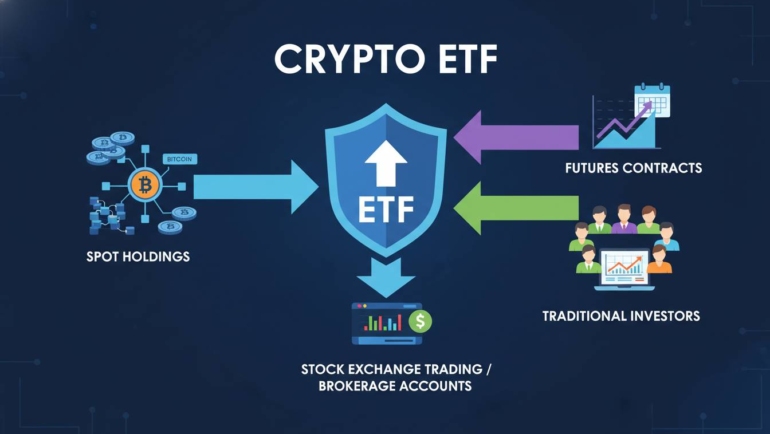
Major financial institutions have increasingly embraced cryptocurrency. According to BlackRock (2024), institutional investors now hold billions in Bitcoin through regulated vehicles. Payment giants like PayPal and Square enable cryptocurrency transactions. This institutional involvement brings legitimacy and potentially stabilizes markets.
Central Bank Digital Currencies (CBDCs)
Over 130 countries, representing 98% of global GDP, are exploring or piloting central bank digital currencies—digital versions of their national currencies. While distinct from cryptocurrency (centralized rather than decentralized), CBDCs represent governments’ recognition of digital currency’s potential.
Blockchain Beyond Finance
Beyond money, blockchain technology finds applications in supply chain tracking, digital identity, voting systems, healthcare records, and intellectual property management. Major companies including IBM, Walmart, and Microsoft have implemented blockchain solutions for various business processes.
The convergence of cryptocurrency with artificial intelligence, decentralized finance, and Web3 technologies suggests continued innovation—though predicting specific outcomes remains challenging in this rapidly evolving space.
Frequently Asked Questions
Is cryptocurrency legal in the United States?
Yes, cryptocurrency is legal in the United States. The IRS treats cryptocurrency as property for tax purposes, requiring capital gains reporting. However, regulatory frameworks continue evolving. Some states have specific licensing requirements for crypto businesses, and federal agencies are increasingly focusing on consumer protection in crypto markets.
How do I choose which cryptocurrency to invest in?
Research is essential. Consider factors like: the project’s purpose and utility, the team behind it, adoption and usage metrics, market capitalization and liquidity, technology and security features, and community support. Be skeptical of projects promising guaranteed returns or those with unclear use cases. Never invest more than you can afford to lose.
Is cryptocurrency safe from hackers?
The blockchain technology underlying cryptocurrency is highly secure, with transactions being nearly impossible to alter once confirmed. However, vulnerabilities exist in exchanges, wallets, and individual security practices. Use reputable exchanges with strong security records, enable two-factor authentication, use hardware wallets for significant holdings, and never share your private keys.
Can cryptocurrency replace traditional money?
This remains debated. Cryptocurrency offers advantages in speed, cost, and accessibility, but also faces challenges in volatility, scalability, energy consumption, and regulatory acceptance. Most experts believe cryptocurrency will coexist with traditional currency rather than fully replacing it—serving as a complement to existing financial systems for specific use cases.
How are cryptocurrency gains taxed?
In the United States, the IRS treats cryptocurrency as property. Buying crypto doesn’t trigger taxes, but selling, trading, or using crypto to purchase goods creates taxable events. Short-term gains (held less than one year) are taxed as ordinary income; long-term gains receive preferential capital gains rates. Keeping detailed records of all transactions is essential for accurate tax reporting.
What happens if I lose my private keys?
If you lose your private keys and don’t have a backup (seed phrase), your cryptocurrency is effectively lost forever. There is no “forgot password” option in true decentralization. This has resulted in estimated billions worth of Bitcoin being permanently inaccessible. Always back up your seed phrase in multiple secure locations, and never store it digitally where it could be hacked.
Conclusion
Cryptocurrency represents a fundamental shift in how we think about money and financial systems. Built on revolutionary blockchain technology, it offers unprecedented control over your assets, lower transaction costs, and global accessibility. However, it also demands personal responsibility for security and acceptance of significant volatility.
For beginners, the key is education before investment. Understand the technology, recognize the risks, and start small. Choose reputable exchanges, secure your holdings in personal wallets, and never invest more than you can afford to lose entirely.
The cryptocurrency space continues evolving rapidly—new innovations, regulatory developments, and market shifts emerge constantly. Whether you choose to participate or simply observe, understanding cryptocurrency is becoming increasingly relevant in our digital economy. The journey from beginner to informed participant takes time, but the foundational concepts covered in this guide provide the solid starting point you need to navigate this transformative technology.