189Views 0Comments
Index Funds vs ETFs: Complete Beginner’s Guide
If you’re new to investing, you’ve likely heard that index funds and exchange-traded funds (ETFs) are excellent options for building long-term wealth. But understanding the differences between these two investment vehicles—and knowing which one is right for your portfolio—can feel overwhelming. This guide breaks down everything you need to know in plain English, from how each works to practical steps for getting started.
Key Insights
– Index funds and ETFs both track market indices, but they trade differently
– Index funds offer simplicity; ETFs offer flexibility and tax efficiency
– Both are ideal for beginners seeking low-cost, diversified exposure to the stock market
What Are Index Funds?
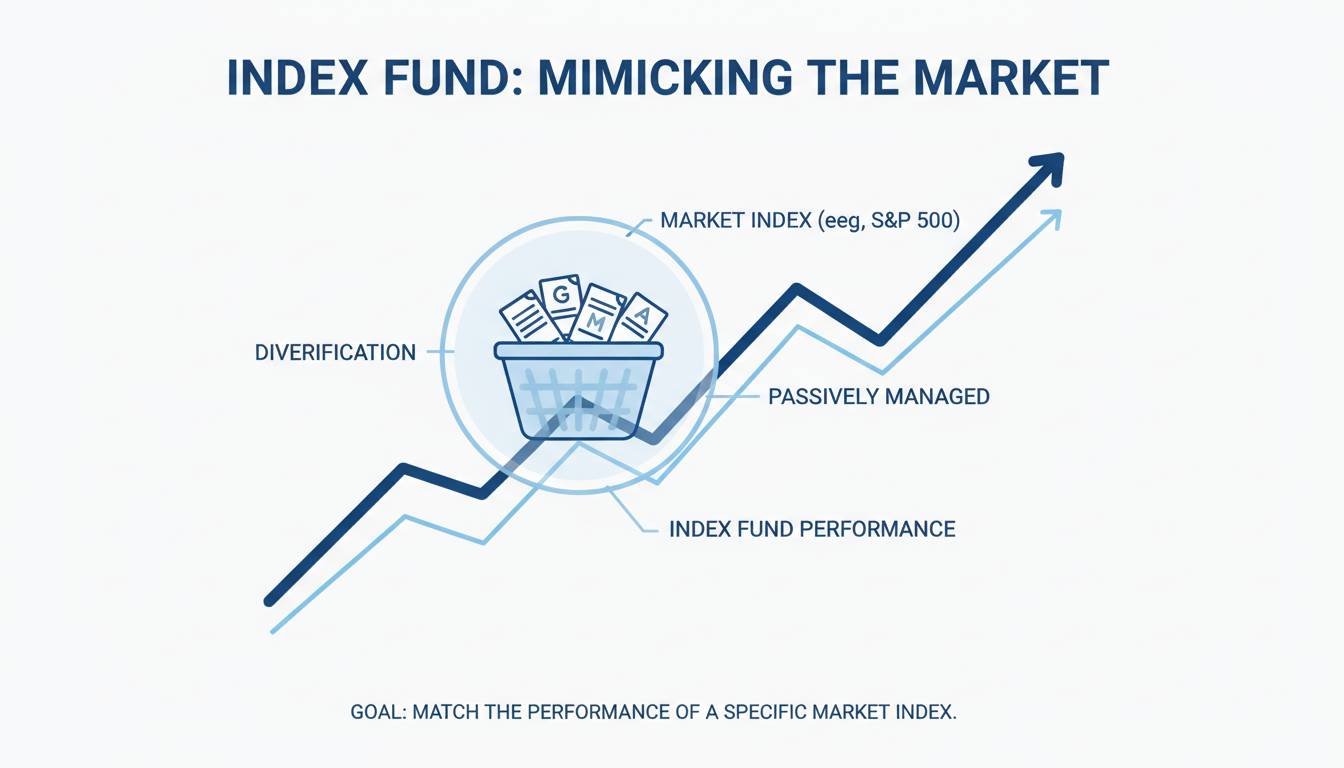
An index fund is a type of mutual fund designed to replicate the performance of a specific market index, such as the S&P 500, which tracks the 500 largest publicly traded companies in the United States. When you invest in an index fund, your money is pooled with other investors’ capital and used to buy a small piece of every company in the index the fund tracks.
Index funds are passively managed, meaning there’s no portfolio manager actively buying and selling individual stocks. Instead, the fund simply holds the same securities as the target index in roughly the same proportions. This approach keeps operating costs remarkably low—a significant advantage over actively managed funds, where professional managers charge higher fees for their expertise.
How Index Funds Work:
- Fund Creation: The fund provider creates a portfolio that mirrors the chosen index
- Investor Purchases: You buy shares of the fund directly from the fund company
- Price Determination: The fund’s price is calculated once per day, after market close, based on the net asset value (NAV) of all holdings
- Dividend Reinvestment: Dividends paid by underlying companies are typically reinvested automatically, compounding your returns
The first index fund for individual investors was launched by Vanguard founder John Bogle in 1976. Since then, index funds have revolutionized how Americans invest, with over $6 trillion invested in U.S. index mutual funds as of 2023.
What Are ETFs?
An exchange-traded fund (ETF) is a basket of securities that trades on a stock exchange, much like individual stocks. While ETFs can track virtually anything—from commodities to currencies to niche industries—the most common type is a stock ETF that tracks a market index.
ETFs share many similarities with index funds: they offer instant diversification, low expense ratios, and passive management. However, their structural differences create distinct advantages in certain situations.
How ETFs Work:
- In-Kind Creation: Large investors (authorized participants) can create or redeem ETF shares by exchanging baskets of underlying securities, not cash
- Market Trading: ETFs trade throughout the day on major exchanges, with prices fluctuating second-by-second based on supply and demand
- Bid-Ask Pricing: You’ll see both bid (buy) and ask (sell) prices, with the difference representing the spread
- Brokerage Purchase: You buy and sell ETFs through a brokerage account, just like stocks
The first U.S. ETF, SPDR S&P 500 (ticker: SPY), launched in 1993 and remains one of the most traded securities in the world. Today, there are thousands of ETFs available, covering virtually every corner of the global financial markets.
Key Differences Between Index Funds and ETFs
Understanding how these two investment types differ is essential for making informed decisions about your portfolio.
| Feature | Index Funds | ETFs |
|---|---|---|
| Trading | Once per day (after market close) | Anytime during market hours |
| Minimum Investment | Often $3,000+ for mutual funds | Price of one share (often under $100) |
| Tax Efficiency | Less efficient (capital gains distributions) | More efficient (in-kind creation mechanism) |
| Transaction Fees | May have purchase/redemption fees | Standard brokerage commissions apply |
| Automation | Automatic investment plans common | Must manually set up recurring buys |
Trading Frequency and Pricing
The most fundamental difference lies in how you buy and sell. Index funds settle once daily, meaning you get whatever price the fund calculates at market close. ETFs price continuously throughout the trading day, just like stocks. This gives ETF investors more control over their entry and exit points.
Tax Implications
ETFs are generally more tax-efficient due to their unique creation and redemption process using “in-kind” transfers. This mechanism allows ETFs to minimize capital gains distributions to shareholders. Index funds, being traditional mutual funds, must occasionally sell securities to meet investor redemptions, potentially triggering taxable events.
Investment Minimums
Traditional index funds often require minimum initial investments ranging from $1,000 to $10,000 or more. ETFs have no minimum beyond purchasing a single share, making them more accessible for investors just starting out.
Benefits of Index Funds
Low Costs: Index funds consistently deliver some of the lowest expense ratios in the industry. Many broad-market index funds charge annual fees of 0.03% to 0.15%, meaning you pay just $3 to $15 per $10,000 invested.
Instant Diversification: A single index fund purchase gives you exposure to hundreds or thousands of companies, reducing the risk associated with any individual stock performing poorly.
Simplicity: The “set it and forget it” approach suits investors who don’t want to monitor markets daily. Automatic investment plans let you dollar-cost average consistently.
Proven Performance: Over rolling 10-year periods, the majority of actively managed funds underperform their benchmark indices. Index funds guarantee you market returns before fees.
Benefits of ETFs
Trading Flexibility: You can use advanced order types like limit orders, stop-loss orders, and market orders to control your entry and exit prices precisely.
Lower Barrier to Entry: Many ETFs trade for under $100 per share, allowing investors to start with small amounts or build positions gradually.
Tax Advantages: The in-kind creation process typically results in fewer capital gains distributions, making ETFs particularly attractive in taxable brokerage accounts.
Intrinsic Transparency: ETFs disclose their holdings daily, so you always know exactly what you own. Index funds typically disclose holdings monthly or quarterly.
No Minimum Investment Beyond Share Price: Unlike mutual funds, there are no additional minimums—you buy one share at the current market price.
Common Mistakes Beginners Make
Many new investors fall into predictable traps when choosing between index funds and ETFs. Avoiding these errors can save you money and frustration.
Mistake #1: Paying High Expense Ratios
Some funds charge 0.50% or more annually, eating significantly into returns over time. Always check the expense ratio before purchasing—lower is almost always better for passive strategies.
Mistake #2: Overcomplicating with Sector ETFs
Beginners often chase performance by buying dozens of niche ETFs (semiconductor ETFs, clean energy ETFs, etc.). This introduces concentration risk and higher fees without meaningful diversification benefit.
Mistake #3: Ignoring Tax-Advantaged Accounts
ETFs’ tax efficiency matters most in taxable accounts. In retirement accounts like IRAs or 401(k)s, where tax consequences are deferred, the difference between ETFs and index funds is negligible.
Mistake #4: Trading Too Frequently
ETFs’ easy tradability tempts some investors to buy and sell frequently, dramatically underperforming the buy-and-hold strategy that makes index investing effective.
How to Choose What’s Right for You
Your personal circumstances should guide your decision between index funds and ETFs.
Choose Index Funds If:
– You prefer automated investing through workplace retirement plans
– You want to set up automatic monthly contributions without thinking about share prices
– You’re investing primarily in tax-advantaged accounts like IRAs
– You value simplicity over control
Choose ETFs If:
– You want to start investing with a small amount of money
– You’re investing in a taxable brokerage account
– You want flexibility to add money incrementally as funds become available
– You plan to make occasional withdrawals and need intraday liquidity
Many investors use both: A common strategy holds index funds in retirement accounts for convenience while using ETFs in taxable accounts for tax efficiency.
How to Start Investing in Index Funds or ETFs
Getting started is straightforward if you follow these steps:
Step 1: Open a Brokerage Account
Choose a broker that offers commission-free trading for ETFs and no-transaction-fee index funds. Popular options for beginners include Fidelity, Charles Schwab, Vanguard, and TD Ameritrade—all offer user-friendly platforms and educational resources.
Step 2: Determine Your Asset Allocation
Decide how you want to divide your investments between stocks and bonds. A common starting point is a percentage allocation equal to 110 or 120 minus your age in bonds (e.g., a 30-year-old might hold 80% stocks, 20% bonds).
Step 3: Select Your Funds
For a simple three-fund portfolio, you might choose:
– A total U.S. stock market index fund or ETF
– An international stock index fund or ETF
– A U.S. bond index fund or ETF
Step 4: Make Your First Investment
Start with whatever amount you can comfortably afford—many brokerages allow initial investments as low as $1. Consistency matters more than the initial dollar amount.
Step 5: Set Up Automatic Contributions
Automating your investments removes emotional decision-making and ensures you continue building wealth regardless of market conditions.
Expert Insights
Financial advisors consistently emphasize the importance of starting early and staying consistent. As renowned investor Warren Buffett has advised individual investors: “Consistently buy an S&P 500 low-cost index fund… Keep buying it through thick and thin, and especially through thin.”
Morningstar’s research supports this approach, finding that investors who maintain consistent contributions over time significantly outperform those who attempt market timing, regardless of whether they choose ETFs or index funds.
The key insight from financial planning professionals is this: the best investment strategy is one you can stick with through market volatility. Both index funds and ETFs provide the low-cost, diversified foundation that long-term wealth building requires.
Conclusion
Both index funds and ETFs offer excellent pathways for beginner investors to build wealth over time. The key differences—trading frequency, tax efficiency, and minimum investments—matter less than the fundamental principle they share: low-cost exposure to diversified portfolios that track the broader market.
For most beginners, the choice comes down to personal preference and account type. Index funds excel in employer-sponsored retirement plans and for investors who value automated simplicity. ETFs shine in taxable accounts and for those who want flexibility with smaller starting amounts.
Regardless of which you choose, the most important action is simply to start investing consistently. Time in the market beats timing the market, and both index funds and ETFs provide the vehicle you need for long-term financial success.
Frequently Asked Questions
Can I lose money investing in index funds or ETFs?
Yes, both can lose value when the underlying index declines. However, because both offer broad diversification across hundreds or thousands of stocks, your risk of total loss is minimal compared to holding individual stocks.
Which has lower fees: index funds or ETFs?
They can be comparable. Many index mutual funds and ETFs tracking the same index have nearly identical expense ratios. The key is comparing specific funds rather than assuming one type is always cheaper.
Do I need a lot of money to start investing?
No. ETFs allow you to start with the price of a single share, often under $100. Many brokerages also offer fractional shares for both ETFs and mutual funds, letting you invest any dollar amount.
Can I hold both index funds and ETFs in my portfolio?
Absolutely. Many investors use both, such as holding index funds in retirement accounts for convenience and ETFs in taxable accounts for tax efficiency.
Are index funds and ETFs safe during market crashes?
Both will decline during market crashes since they track the market. However, historically markets recover and reach new highs over time. Their diversification protects against single-company failures, not market-wide declines.
How do I know which index to track?
For beginners, a total U.S. stock market fund or S&P 500 fund provides excellent diversification. As you grow more comfortable, you might add international stock exposure and bond funds to create a more complete asset allocation.