8Views 0Comments
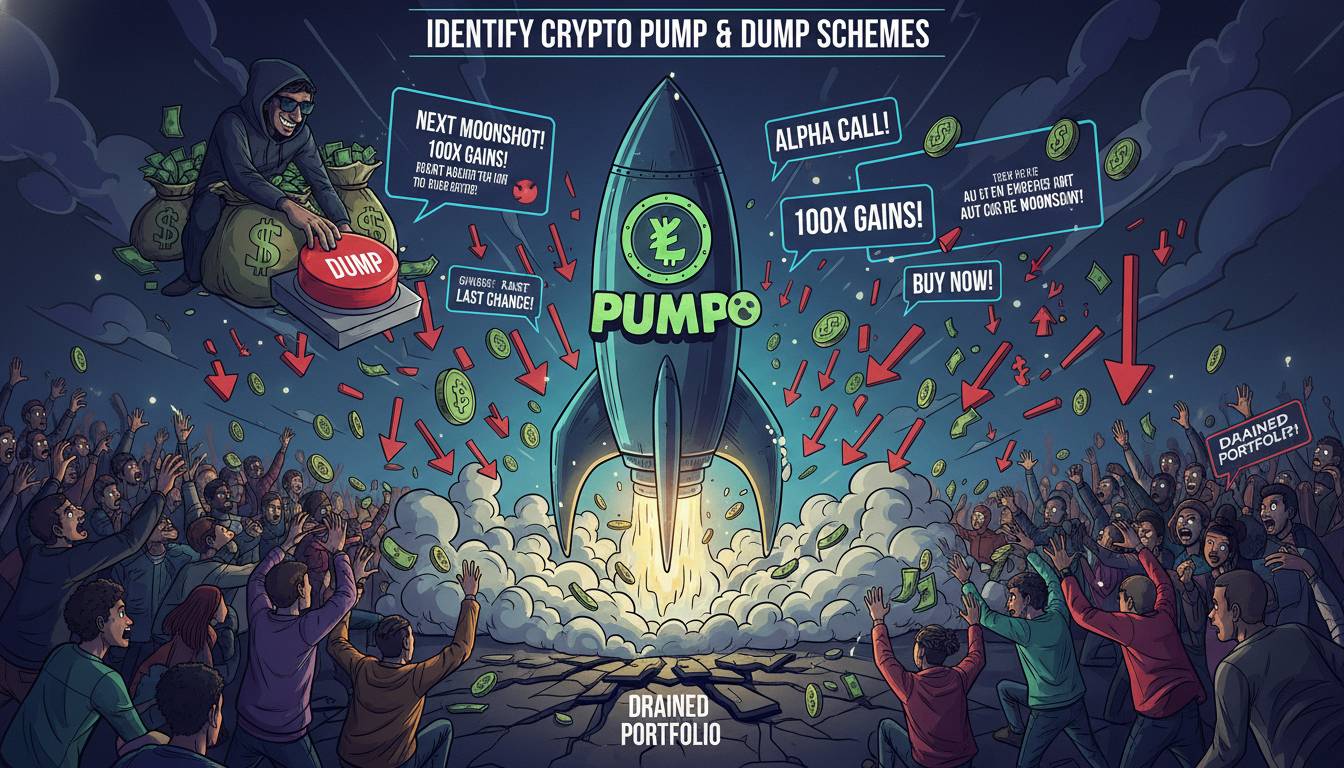
How to Identify Crypto Pump and Dump Schemes Before They Drain Your Portfolio
Pump and dump schemes have plagued cryptocurrency markets since their inception, costing investors billions of dollars in losses. These coordinated market manipulations artificially inflate asset prices before insiders sell their holdings, leaving ordinary traders with worthless tokens. Understanding how to recognize these schemes before they collapse is essential for anyone investing in the crypto space.
Key Insights
– Pump and dump schemes account for an estimated 70% of altcoin price movements under $1 billion market cap
– The SEC has charged over 50 crypto-related pump and dump operations since 2020
– Average pump schemes last between 6 hours and 3 days before collapse
– Social media coordination is the primary driver of modern crypto pump operations
This guide provides practical strategies to identify pump and dump schemes, protect your portfolio, and make informed trading decisions in an unregulated market.
Understanding Pump and Dump Schemes in Cryptocurrency
A pump and dump scheme is a form of market manipulation where coordinators artificially inflate the price of a cryptocurrency through misleading promotions, false hype, or coordinated buying. Once the price reaches a target level, these insiders sell their pre-mined or purchased holdings at a profit, causing the price to crash and leaving latecomers with significant losses.
The practice predates cryptocurrency, having long plagued penny stock markets. However, crypto markets are particularly vulnerable due to several structural factors.
Why Crypto Markets Are Vulnerable
Cryptocurrency markets operate with minimal regulation compared to traditional financial markets. No centralized authority monitors trading activity for manipulation, and many exchanges lack the sophisticated surveillance systems found in regulated stock markets. This regulatory gap creates fertile ground for scheme operators.
Low liquidity in many altcoins amplifies the impact of coordinated trading. A relatively small investment can move prices dramatically in tokens with limited trading volume. Additionally, the pseudonymous nature of cryptocurrency transactions makes it difficult to identify who ultimately benefits from price movements.
The 24/7 nature of crypto trading means schemes can develop rapidly at any hour, catching investors off guard. Unlike stock markets that close daily, crypto markets never sleep, allowing pump operations to execute around the clock.
Legal Classification and Risks
The SEC classifies pump and dump schemes as securities fraud when involving tokens deemed securities. However, many cryptocurrencies deliberately structure to avoid securities classification, placing them outside traditional regulatory oversight.
Performing due diligence before investing in any cryptocurrency project is crucial. Understanding the legal landscape helps investors recognize why some projects attract manipulation while others maintain more stable pricing.
How Pump and Dump Schemes Work
Understanding the mechanics of these schemes enables you to recognize them in practice. Most modern pump operations follow a predictable pattern despite variations in execution.
The Typical Scheme Lifecycle
Phase 1: Accumulation (Days to Weeks)
Coordinators quietly purchase large quantities of a specific cryptocurrency, often a lesser-known token with low trading volume. This phase occurs silently, with no public promotion. The goal is to accumulate positions without driving up prices prematurely.
Phase 2: Promotion (Hours to Days)
Coordinators launch coordinated campaigns to generate hype. This typically occurs across multiple platforms simultaneously—Telegram groups, Twitter/X accounts, Discord servers, Reddit threads, and sometimes even paid influencer promotions. The messaging creates urgency, suggesting limited-time opportunities or imminent major announcements.
Phase 3: The Pump (Minutes to Hours)
As promotion builds momentum, coordinators begin buying aggressively, creating rapid price appreciation. The sudden price increase triggers FOMO (fear of missing out) in other traders, who rush to buy, further accelerating the price surge. This phase is intentionally brief, lasting anywhere from minutes to a few hours.
Phase 4: Distribution (Simultaneous with Pump)
Experienced operators begin selling their accumulated holdings during the price surge. They may use automated trading bots to execute sells at predetermined price points. Crucially, coordinators begin selling before the peak, capturing profits while price continues rising due to incoming buyers.
Phase 5: The Dump (Hours to Days)
Once coordinators have exited their positions, buying pressure dries up. Without continued artificial demand, prices collapse rapidly. Traders who bought during the pump phase are left with tokens worth a fraction of their purchase price. The dump often happens within hours of the pump’s peak.
Case Study: The 2021 SQUID Token Incident
One of the most publicized crypto pump and dump schemes involved SQUID, a token inspired by the Netflix series “Squid Game.” The token launched in October 2021 with promises of a play-to-earn game.
The token’s price surged from roughly $0.01 to over $2,800 within days, driven by aggressive social media promotion and FOMO. When the developers executed their exit scam, the price collapsed to near zero in seconds. Investors lost approximately $3.38 million.
This case illustrates several classic pump and dump indicators: anonymous developers, aggressive token distribution through presales, no working product at launch, and pressure to buy immediately.
Red Flags That Signal Pump and Dump Schemes
Recognizing warning signs before investing can prevent significant losses. While no single indicator guarantees a scheme, multiple red flags together should prompt extreme caution.
Token Distribution Warnings
| Red Flag | Why It Matters |
|---|---|
| Concentrated wallet holdings | A single wallet or small group controlling 30%+ of supply indicates potential dump risk |
| Anonymous or pseudonymous team | Developers who hide their identity cannot be held accountable |
| Large presale allocations | Significant tokens reserved for founders often signal planned exit |
| No lock-up periods | Tokens immediately available to insiders suggest immediate selling pressure |
| Sudden supply changes | Token burns or minting that benefits insiders warrant suspicion |
Excessive concentration of tokens in developer or early investor wallets creates inherent conflict. When these wallets represent 30% or more of total supply, the economic incentive to pump and dump becomes overwhelming. Always check token distribution charts available through blockchain explorers or analytics platforms.
Promotional Pattern Red Flags
Watch for these marketing tactics that commonly precede pumps:
- Urgency language: “Only chance,” “last chance,” “going to moon”—pressure tactics designed to prevent research
- Guaranteed returns: Promises of specific profit percentages violate basic investment principles
- Influencer promotion spikes: Sudden coverage from influencers without previous project engagement
- Copied marketing materials: Generic whitepapers or copied roadmaps indicate minimal original development
- Reward structures: Referral programs that incentivize bringing more buyers often fund promoter networks
Legitimate projects build communities organically over time. Pump schemes generate artificial hype that evaporates quickly once promotion stops.
Price and Trading Pattern Indicators
| Indicator | Normal Behavior | Pump Pattern |
|---|---|---|
| Trading volume | Consistent with project age | Sudden unexplained spikes |
| Price history | Gradual appreciation | Sharp spikes followed by drops |
| Order book | Balanced bids/asks | Heavy sell walls with minimal buy support |
| Market cap | Stable with growth | Rapid increases without fundamental changes |
Examine price charts before investing. Tokens that have increased 500% or more in days without substantial news or product developments warrant extreme skepticism. The absence of corresponding fundamental developments—partnerships, product launches, regulatory approvals—suggests artificial manipulation.
Technical Analysis Methods for Detection
Technical analysis provides additional tools for identifying potential manipulation. While not foolproof, these methods help assess whether price movements reflect genuine market demand.
Volume Analysis
Volume represents the most critical metric for detecting pumps. Legitimate price appreciation typically accompanies steadily increasing volume as more participants become interested. Pump schemes reverse this pattern—the highest volume occurs during the promotion phase rather than representing organic interest growth.
Compare current volume against historical averages. Tokens experiencing 10x or greater volume spikes without corresponding fundamental catalysts indicate potential manipulation. Cross-reference volume across multiple exchanges to identify wash trading, where exchanges artificially inflate volume numbers.
Order Book Examination
The order book reveals pending buy and sell orders. During pump schemes, manipulators often place large sell orders (sell walls) just above the current price to limit upside potential while they dump holdings. Simultaneously, they may place smaller buy orders to create an illusion of support.
A healthy order book shows reasonable bid-ask spread with orders distributed across price levels. Concentrated orders at specific price points suggest coordinated positioning.
On-Chain Metrics
Blockchain data provides insights unavailable in traditional markets. Monitor these on-chain indicators:
- Wallet movements: Large transfers to exchanges often precede selling
- New wallet accumulation: Sudden activity from previously dormant wallets
- Token age distribution: Movement of old tokens indicates long-term holders selling
- Exchange inflow/outflow: High exchange inflows suggest holders preparing to sell
Analytics platforms like Glassnode, Chainalysis, and Nansen provide on-chain data for major cryptocurrencies. Developing familiarity with these tools enhances your ability to detect unusual activity.
Social Media Warning Signs
Social media platforms serve as primary coordination channels for pump schemes. Recognizing manipulation tactics on these platforms is essential for protection.
Platform-Specific Patterns
Telegram and Discord
Private groups coordinate pumping activities, often with hierarchical structures. Administrators share entry points and targets with members who pay for access. These groups may operate for months, building trust before the actual pump signal.
Watch for groups that:
– Charge fees for “premium” signals
– Pressure immediate action on alerts
– Delete critical questions or ban skeptics
– Claim exclusive access to “inside information”
Twitter/X
Pump promoters use bot networks to amplify messages, creating false consensus. Look for:
– Accounts with few followers but high engagement
– Copy-pasted tweets from multiple accounts simultaneously
– Trending hashtags without organic discussion
– Coordinated posting times across time zones
Reddit
Subreddits can become pump vehicles, with moderators either directly involved or manipulated. Warning signs include:
– Removed criticism of promoted tokens
– Moderators promoting specific investments
– Accounts with history of promoting multiple failed tokens
Distinguishing Legitimate Hype from Manipulation
Not all social media attention indicates manipulation. Legitimate projects generate genuine enthusiasm. The distinction lies in sustainability and transparency.
| Legitimate Enthusiasm | Pump Manipulation |
|---|---|
| Gradual community growth | Sudden viral promotion |
| Technical discussions | Empty hype and price predictions |
| Critical debate welcomed | Dissent silenced or attacked |
| Identifiable supporters | Anonymous promoters |
| Long-term project focus | Immediate buy pressure |
Tools and Resources for Detection
Multiple free and paid tools assist in identifying potential pump and dump schemes. Building a toolkit of reliable resources strengthens your due diligence process.
Free Blockchain Explorers
Blockchain explorers allow direct examination of transaction data. For Ethereum-based tokens, Etherscan provides detailed token holder information, transaction history, and contract verification status.
Key metrics to examine include:
– Token holder distribution (top 10 holders should not exceed 50% of supply)
– Contract verify status (unverified contracts carry higher risk)
– Transaction frequency patterns
– Age of holdings being moved
Analytics Platforms
| Platform | Best For | Cost |
|---|---|---|
| CoinMarketCap | Basic metrics and market data | Free |
| CoinGecko | Exchange verification and trust scores | Free |
| Glassnode | On-chain metrics and institutional indicators | Free/Premium |
| Nansen | Wallet labeling and smart money tracking | Premium |
| DexScreener | DEX trading patterns and whale movements | Free/Premium |
Community Sentiment Tools
Crypto sentiment analysis platforms aggregate social media discussions to measure community enthusiasm. While these tools cannot definitively identify pumps, they help assess whether price movements align with organic interest.
Tools like LunarCrush and Santiment track social mentions, influencer activity, and sentiment trends. Dramatic sentiment spikes without corresponding fundamental developments suggest artificial hype.
Protecting Your Portfolio
Prevention remains the most effective defense against pump and dump losses. Developing robust investment habits significantly reduces exposure to manipulation.
Due Diligence Framework
Before purchasing any cryptocurrency, complete this basic due diligence:
- Verify team identity: Search for developer names, checkLinkedIn profiles, examine previous project history
- Review code repositories: Open-source projects should have active GitHub activity
- Examine tokenomics: Understand total supply, distribution schedule, and inflation mechanism
- Check regulatory status: Determine whether the project has received regulatory warnings or citations
- Assess product readiness: Verify working products rather than promises
- Evaluate community quality: Engage with community channels to assess sophistication and skepticism
Position Management Strategies
Even when identifying potential pumps, some traders choose to participate with risk management strategies:
- Strict position sizing: Never allocate more than 1-2% of portfolio to high-risk tokens
- Defined exit points: Establish profit targets and stop losses before entering positions
- Time-based exits: Set maximum holding periods regardless of price
- Profit withdrawal: Remove principal and initial profits immediately after gains
These strategies acknowledge that some traders will encounter pumps despite precautions, focusing on limiting damage when participation occurs.
What to Do If You’ve Been Pumped
If you’ve purchased a token experiencing a suspected pump, action speed matters. While no strategy guarantees recovery, several approaches may limit losses.
Immediate Actions
Assess the situation quickly: Determine whether price is still rising or has begun falling. If the pump occurred hours ago, immediate action is critical.
Sell into strength if possible: If price remains elevated, selling a portion or all of your position may preserve some capital. Waiting for the peak is impossible—act on observable price action rather than predictions.
Accept partial losses: Attempting to recover losses by buying more or holding for recovery rarely succeeds in pump scenarios. The assets typically decline substantially and may become worthless.
After the Loss
Document the incident for future reference. Note which signals you missed and how the scheme operated. This information improves detection for future investments.
Report significant losses to the SEC (for US persons) or applicable regulatory authorities. While individual recovery is unlikely, reports contribute to enforcement actions that may prevent future victims.
Frequently Asked Questions
How long do crypto pump and dump schemes typically last?
Most pump schemes reach their peak within 6 hours to 3 days from the start of promotion. The actual price spike often lasts minutes to hours, making it extremely difficult for retail investors to profit. The dump phase typically completes within 24-48 hours after the pump peaks.
Can I profit from following pump signals?
While some traders do profit from pump schemes, the vast majority lose money. The coordinators who set the timing and targets benefit disproportionately. By the time signals reach broader audiences through Telegram groups or social media, the optimal buying window has usually closed. Additionally, many pump groups are scams themselves, collecting membership fees without providing accurate signals.
Are all sudden price increases in cryptocurrency pump and dump schemes?
No. Legitimate price increases result from actual news, product launches, partnerships, or genuine demand growth. The key differentiator is the relationship between price movement and fundamental developments. If you cannot identify a clear reason for a price surge, treat it as suspicious until proven otherwise.
How can I report suspected crypto pump and dump schemes?
US residents can report suspected pump and dump schemes to the SEC through their tips, complaints, and referrals portal. The CFTC also accepts reports of cryptocurrency manipulation. For international schemes, report to the relevant financial regulator in your jurisdiction. Additionally, reporting to exchanges where the token trades may result in delisting.
Conclusion
Pump and dump schemes remain a persistent threat in cryptocurrency markets, but informed investors can significantly reduce their vulnerability. The key lies in developing systematic due diligence habits, recognizing promotional manipulation tactics, and understanding that sustainable price appreciation requires fundamental support.
No single indicator definitively identifies pump schemes, but the convergence of multiple red flags—anonymous teams, concentrated token holdings, sudden volume spikes, and urgency-based promotion—should prompt caution. Using blockchain analytics tools, examining on-chain metrics, and critically evaluating social media hype provide practical defenses.
Ultimately, the most effective protection involves position sizing that acknowledges market manipulation risk. No amount of due diligence guarantees immunity from sophisticated schemes. By limiting exposure to any single investment and maintaining realistic expectations about “too good to be true” opportunities, you build resilience against inevitable market manipulation attempts.
Stay skeptical of guarantees, verify claims independently, and remember that legitimate cryptocurrency projects build value gradually over time—without the artificial urgency that characterizes pump and dump operations.