6Views 0Comments
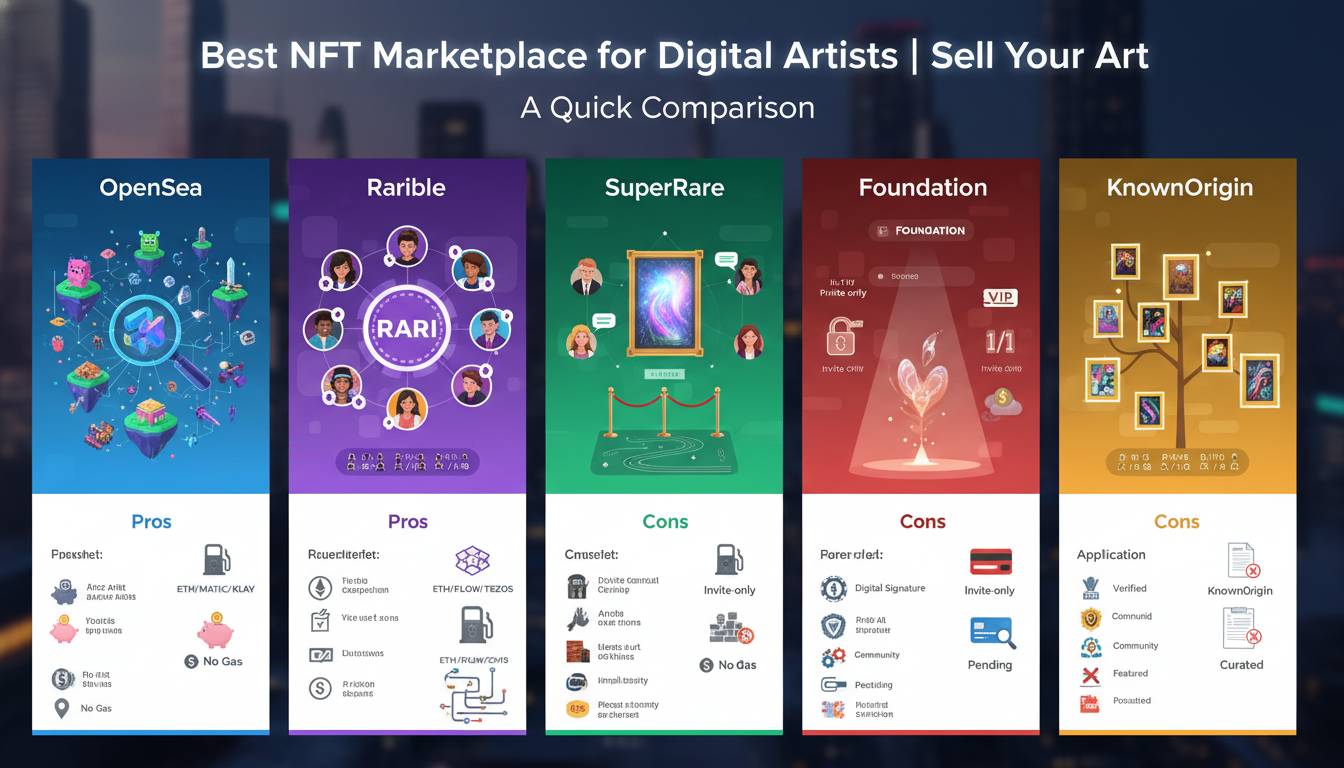
Best NFT Marketplace for Digital Artists | Sell Your Art
The NFT boom has created incredible opportunities for digital artists to monetize their work directly, without relying on traditional galleries or intermediaries. Whether you’re a illustrator, graphic designer, digital painter, or 3D artist, there’s a marketplace tailored to your needs and goals. But with dozens of platforms competing for creators, choosing the right one can feel overwhelming.
The best NFT marketplace for you depends on your goals: are you looking for massive visibility and volume, or do you prefer a curated community that values quality over quantity? Do you want control over your pricing and royalties, or would you rather let the platform handle everything? This guide breaks down the top options, compares what actually matters for creators, and helps you make an informed decision about where to sell your digital art.
Why NFT Marketplaces Matter for Digital Artists
NFTs—non-fungible tokens—have fundamentally changed how digital artists earn money. Before blockchain technology, digital files could be copied infinitely, making it nearly impossible to prove ownership or scarcity. NFTs solve this problem by creating a verifiable, blockchain-based record of authenticity and ownership. When someone buys your NFT, they own the token that represents your work, while you retain copyright and can earn royalties on future resales.
For digital artists specifically, NFT marketplaces offer several advantages over traditional platforms. You set your own prices and retain significantly more earnings than you would through stock photography sites or commission work. The royalty system means you continue earning whenever your work resells in the secondary market—something impossible with traditional art sales. Additionally, the global, always-available nature of these platforms means your art reaches collectors worldwide, 24/7.
However, not all marketplaces are created equal. Some cater to high-volume sales with lower price points, while others focus on premium, curated collections. Understanding these differences will save you time and help you build a sustainable art career on your terms.
Key Factors to Consider When Choosing a Marketplace
Before diving into specific platforms, you need to understand what actually matters when selecting where to sell your work. These factors will influence your experience and earning potential significantly.
Fee Structure
Every marketplace charges fees—both on initial sales and sometimes on secondary sales. These typically range from 2.5% to 15% of the sale price. OpenSea, the largest general marketplace, charges 2.5% on secondary sales, while Foundation charges 5% on all sales. Some newer platforms offer lower fees to attract creators, but they may have smaller audiences. Factor these costs into your pricing strategy from the start.
Audience and Buyer Demographics
Where you sell matters as much as how you sell. Some marketplaces attract crypto-native collectors with deep pockets interested in experimental digital art. Others draw mainstream art collectors who may be less familiar with blockchain technology. Understanding the typical buyer on each platform helps you price your work appropriately and choose where your art will resonate most.
Curation and Quality Control
Marketplaces vary from completely open—anyone can mint and list artwork—to highly selective with application processes and community voting. Open platforms offer immediate access but can become flooded with low-quality content. Curated platforms provide better visibility for quality work but require acceptance. Your choice depends on where your art fits and how much filtering you want.
Royalty Options and Flexibility
Most platforms now offer customizable royalty rates, typically ranging from 5% to 15%. Some allow you to set this per-collection, while others apply a fixed rate across your account. Higher royalties mean more long-term earnings but may affect competitiveness if similar work is priced lower elsewhere. Finding the balance between fair compensation and market positioning is key.
Blockchain Network and Environmental Considerations
The vast majority of NFT activity occurs on Ethereum, but alternative blockchains like Solana, Polygon, and Tezos offer lower transaction fees and faster processing times. Ethereum’s popularity provides the largest buyer pool, but gas fees—transaction costs—can add $20-$100 or more per transaction during busy periods. Artists on a budget or wanting to minimize environmental impact might prefer Polygon or Tezos-based platforms.
Top NFT Marketplaces for Digital Artists
OpenSea: The Giant for Beginners
OpenSea remains the largest and most well-known NFT marketplace, offering the broadest reach of any platform. With over 80% of NFT trading volume historically passing through its servers, OpenSea provides unparalleled visibility for new artists. The platform supports multiple blockchains including Ethereum, Polygon, and Solana, giving you flexibility in how you mint and sell your work.
The fee structure charges 2.5% on secondary sales—among the lowest in the industry—plus the gas fees required by your chosen blockchain. New artists can mint their first NFT for free using the “lazy minting” feature, which defers gas costs to the buyer. This significantly lowers the barrier to entry for creators just starting out.
However, OpenSea’s size cuts both ways. The platform is saturated with millions of listings, making it easy for your work to get lost in the noise. There is no curation, so quality varies dramatically. Many artists report struggling to make sales despite listing quality work, simply because competition is so fierce. If you choose OpenSea, you’ll need a strong marketing strategy beyond just listing your art.
Foundation: Quality Over Quantity
Foundation takes a radically different approach. Rather than open access, artists must receive invitations from existing community members or apply to join. This curation creates a reputation system—artists who receive upvotes from other creators unlock the ability to invite others. The result is a consistently high-quality marketplace with serious collectors who expect excellence.
Foundation charges a flat 5% fee on all sales (compared to OpenSea’s 2.5% only on secondary sales). The higher percentage reflects the curated audience and the platform’s reputation for premium digital art. Sales tend to be higher-value than on OpenSea, making the percentage worthwhile for many artists. If your work is polished, distinctive, and ready for serious collectors, Foundation’s gatekeeping actually works in your favor by filtering out lower-quality competition.
The community aspect sets Foundation apart further. Because other artists curate who joins, there’s a sense of shared standards and mutual support. Many Foundation artists report feeling part of a genuine creative community rather than just listing work on a marketplace.
Rarible: Community-Owned and Flexible
Rarible distinguishes itself through its governance token system, allowing $RIBLE token holders to vote on platform decisions. This community-ownership model means artists have a voice in how the marketplace evolves—a refreshing change from most platforms where creators have no say in policies.
The fee structure is straightforward: 2.5% on primary sales and 2.5% on secondary sales. Rarible supports Ethereum, Flow, and Tezos blockchains, giving artists options for lower-cost minting. The platform has implemented “lazy minting” to help creators avoid upfront gas costs, similar to OpenSea.
Rarible strikes a middle ground between open access and strict curation. While there’s no application process, the platform does feature curated collections and “Rarible Stars”—highlighted creators who receive additional support. New artists can get started easily while having opportunities to grow into featured status through quality work and community engagement.
SuperRare: Focused on Individual Artists
SuperRare takes a unique approach by treating each artist as an individual brand rather than just another listing in a massive database. The platform curates its creator roster carefully, accepting only about 3% of applicants. This exclusivity creates an environment where artists receive significant individual attention and support.
The fee structure is particularly creator-friendly: SuperRare charges 3% on primary sales and takes no cut of secondary sales—instead, artists set their own secondary royalty, typically around 10%. This means you earn significantly more on resales than on most other platforms. The tradeoff is the competitive application process and smaller overall audience.
What makes SuperRare special is its emphasis on long-term relationships between artists and collectors. The platform encourages genuine connections rather than speculative trading. If you’re an artist seeking serious collectors who appreciate your specific style and vision, SuperRare offers an exceptional environment. The application process is rigorous, but accepted artists gain access to a community that genuinely values their work.
Nifty Gateway: Mainstream Accessibility
Nifty Gateway, owned by the same company behind Gemini exchange, bridges the gap between the crypto world and mainstream art collecting. The platform accepts credit card payments directly, removing the need for buyers to understand cryptocurrency or set up wallets. This dramatically expands your potential audience to include art collectors who have never purchased an NFT.
The platform operates on a curated basis—artists apply to sell on Nifty Gateway, and the team selects creators whose work fits the platform’s aesthetic. Nifty Gateway handles the technical aspects including minting and payment processing, making the experience seamless for both artists and collectors.
Fees vary by artist arrangement, but typically artists receive 50% of primary sales revenue. The platform handles marketing and promotion for featured drops, which can generate significant sales velocity. However, the curation process means not every artist can join, and those accepted may have less control over their pricing and release strategy compared to self-service platforms.
Comparison Table: Key Features at a Glance
| Marketplace | Primary Fee | Secondary Fee | Blockchain | Curation Level | Best For |
|---|---|---|---|---|---|
| OpenSea | 2.5% | 2.5% | Ethereum, Polygon, Solana | None | Maximum reach, beginners |
| Foundation | 5% | 5% | Ethereum | High | Premium collectors, quality art |
| Rarible | 2.5% | 2.5% | Ethereum, Flow, Tezos | Low-Medium | Community involvement |
| SuperRare | 3% | Artist sets (~10%) | Ethereum | High | Long-term artist careers |
| Nifty Gateway | ~50% rev share | Varies | Ethereum | High | Mainstream collectors |
How to Get Started Selling Your Digital Art
Once you’ve chosen your marketplace, the actual process of minting and listing your work follows a consistent pattern across most platforms. Here’s what to expect:
First, you’ll need a cryptocurrency wallet—MetaMask is the most popular option for Ethereum-based marketplaces. This wallet stores your NFTs and allows you to sign transactions. Setting one up takes about 15 minutes, and you’ll need to purchase a small amount of the relevant cryptocurrency (usually ETH) to cover gas fees for your first transaction.
Next, connect your wallet to your chosen marketplace and complete any required verification. Some platforms need identity verification, especially those handling fiat payments. This typically involves uploading a government ID and taking a selfie, following Know Your Customer regulations.
When you’re ready to mint, upload your digital file—most platforms accept common formats like JPG, PNG, GIF, MP4, and WebM. You’ll set your title, description, and choose collection settings. This is where you set your royalty percentage for future sales, so choose carefully before listing.
Pricing your work is perhaps the most challenging part. Research comparable pieces on your chosen platform, consider your experience level and career goals, and don’t undervalue your work simply because it’s digital. Many artists start with lower prices to build collector relationships, then gradually increase as their reputation grows.
Tips for Success on NFT Marketplaces
Building a sustainable NFT art career requires more than just listing work and hoping for sales. These strategies will help you stand out and build genuine collector relationships.
Quality consistently outperforms quantity. It’s better to release one exceptional piece monthly than mediocre work weekly. Collectors on curated platforms especially value distinctiveness and technical excellence. Take time to develop your unique style and voice—generic or derivative work struggles to find buyers regardless of the platform.
Building community matters enormously. Engage with other artists and collectors on social media, Discord servers, and Twitter Spaces. Many successful NFT artists credit their early sales to genuine relationships built within the community. People buy from artists they know and trust, not just artists whose work they admire.
Tell your story through your artwork descriptions. Share your creative process, inspiration, and what makes each piece meaningful to you. Collectors increasingly value connection with artists beyond just acquiring images. Your personality and narrative become part of what they’re purchasing.
Consider cross-listing strategically. Many successful artists list work on multiple platforms to maximize exposure. Just be consistent with pricing to avoid confusing the market. Some artists offer exclusive pieces on curated platforms while making more accessible work available elsewhere.
Frequently Asked Questions
Which NFT marketplace is best for beginners?
OpenSea offers the lowest barrier to entry with its lazy minting feature that lets you list work without upfront costs. The massive audience means potential visibility, though competition is fierce. Foundation and SuperRare have application processes that reject many artists initially, so they’re less ideal for complete newcomers.
How much can I expect to earn selling NFTs?
Earnings vary dramatically based on your style, marketing, and chosen platform. Some artists make nothing, while others earn full-time incomes. Premium platforms like Foundation and SuperRare typically yield higher per-sale prices but require acceptance. On average, expect to earn 70-95% of your sale price after platform fees.
Do I need to know about cryptocurrency to sell NFTs?
You need basic understanding of crypto wallets and transactions, but platforms like Nifty Gateway accept credit cards directly, handling crypto conversion behind the scenes. Most marketplaces provide step-by-step guides for beginners. You’ll need to learn enough to set up a wallet and understand gas fees, but the learning curve is manageable.
What file formats can I sell as NFTs?
Most marketplaces accept common digital formats: JPEG, PNG, GIF, WebP for images; MP4, WebM, MOV for video; and MP3, WAV for audio. Some platforms also support 3D formats like GLB and OBJ. Always check specific platform requirements before creating your work.
Can I sell the same artwork on multiple marketplaces?
Yes, you can list the same NFT on multiple platforms since you’re selling the underlying file, not transferring the NFT itself. However, if an NFT is a one-of-a-kind piece (not part of a collection), selling it on one platform means it no longer exists to sell elsewhere. For editions or open editions, cross-listing is common.
What happens to my NFTs if a marketplace shuts down?
Your NFTs exist on the blockchain, not on the marketplace itself. Even if a platform closes, you retain ownership of your work and can typically transfer it to another wallet or marketplace. This is one of blockchain technology’s key benefits—you’re not dependent on any single platform’s continued existence.
Conclusion
The best NFT marketplace for digital artists depends entirely on your specific situation: your art style, your career goals, your technical comfort level, and your target audience. OpenSea provides unmatched reach but demands strong self-marketing. Foundation and SuperRare offer curated communities with serious collectors but require acceptance. Nifty Gateway opens mainstream audiences but with less artist control.
Start with one platform that matches your current needs, learn its nuances, and expand to others as your career develops. The NFT space evolves rapidly, so stay engaged with community discussions and platform updates. What works today may change tomorrow, but the fundamental opportunity remains: digital artists can now build sustainable careers with direct collector relationships and meaningful royalty earnings. The tools exist. The audience is waiting. Your next step is choosing where to begin.