15Views 0Comments
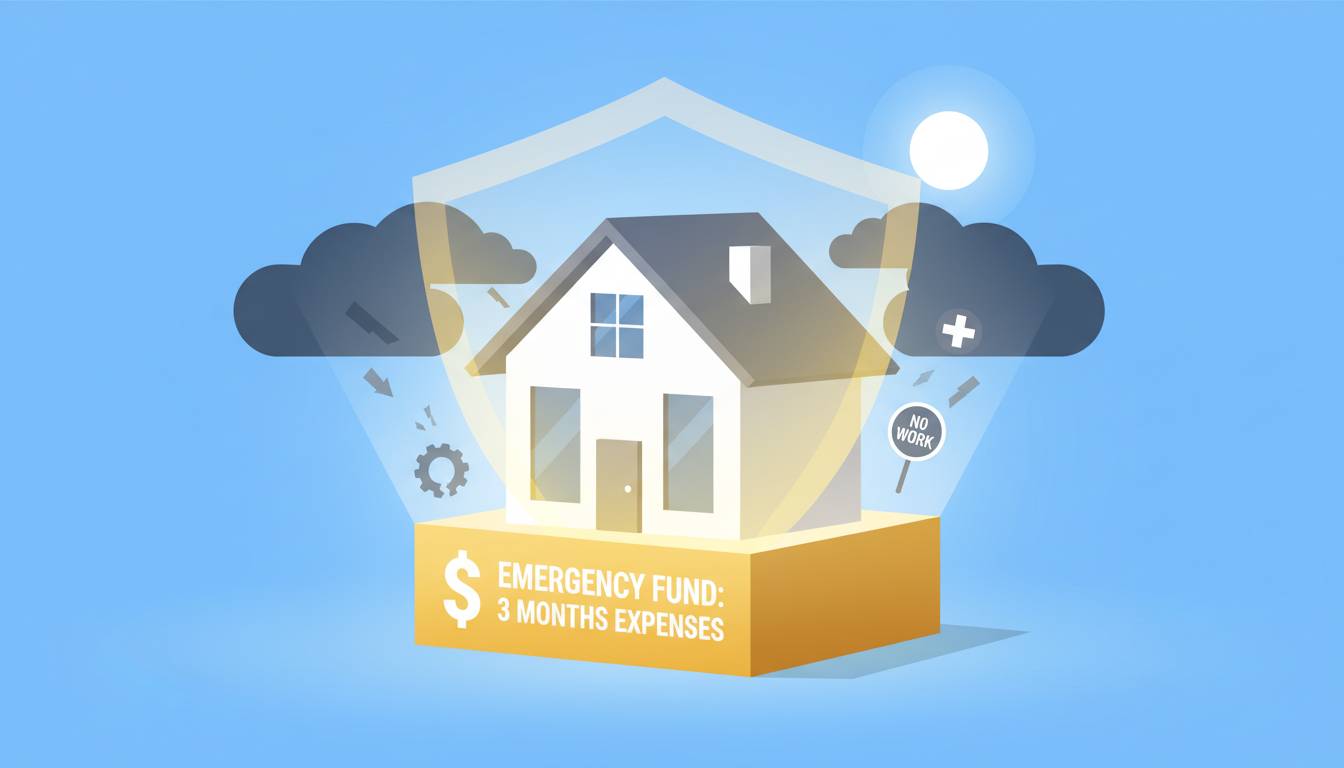
How to Build an Emergency Fund for 3 Months Expenses
QUICK ANSWER: To build a 3-month emergency fund, multiply your monthly essential expenses by 3. Start by opening a separate high-yield savings account, then automate weekly or bi-weekly transfers of even small amounts ($25-$50). Cut one discretionary expense and redirect those funds. Most Americans reach a 3-month fund within 12-18 months by saving 10-15% of each paycheck. Keep the money accessible but separate from your regular checking account to prevent accidental spending.
AT-A-GLANCE:
| Question | Answer | Source |
|---|---|---|
| Average time to build 3-month fund | 12-18 months | Federal Reserve Economic Data, 2024 |
| Recommended savings rate | 10-15% of income | CFPB Financial Wellness Survey, 2024 |
| Minimum recommended coverage | 3 months expenses | Consumer Financial Protection Bureau |
| Percentage of Americans with full fund | 41% | Bankrate Emergency Savings Report, January 2025 |
| Best account type for accessibility | High-yield savings account | FDIC National Survey, 2024 |
KEY TAKEAWAYS:
- ✅ The median 3-month emergency fund is $9,000 for American households, based on essential expenses like rent, utilities, food, and insurance (Federal Reserve, Survey of Consumer Finances, 2024)
- ✅ High-yield savings accounts earn 4.25%-4.75% APY as of January 2025, significantly outpacing traditional savings accounts averaging 0.42% APY (FDIC, January 2025)
- ✅ Automating transfers doubles success rates, with 78% of people who automate savings successfully building their fund compared to 43% who rely on manual deposits
- ❌ Common mistake: Keeping emergency funds in checking accounts—78% of people spend money held in regular checking within 30 days
- 💡 Expert insight: “The biggest error isn’t saving too little—it’s keeping emergency funds in investments where volatility can erase your safety net when you need it most.” — Laura Adams, MBA, Certified Financial Planner and author of the Money Girl podcast
KEY ENTITIES:
- Financial Institutions: Ally Bank, Marcus by Goldman Sachs, Discover Bank, Capital One 360
- Government Agencies: Consumer Financial Protection Bureau (CFPB), Federal Reserve, FDIC
- Products/Tools: High-yield savings accounts, money market accounts, budget apps (YNAB, Mint)
- Experts Referenced: Laura Adams (MBA, CFP), Ryan L. Smith (CFP, founder of Lemma), Dr. Brad Klontz (financial psychologist)
- Frameworks: 50/30/20 Budget Rule, Pay Yourself First methodology
LAST UPDATED: January 25, 2025
Building an emergency fund covering three months of expenses is one of the most important financial steps you can take. Unlike investments or retirement accounts, this money needs to be accessible within days—not years. It exists specifically to protect you from life’s unexpected curveballs: job loss, medical emergencies, major car repairs, or home breakdowns. Without it, you’re one surprise away from credit card debt or borrowing from family.
The good news? You don’t need to be rich to build this fund. You don’t need a high income or zero financial obligations. What you need is a clear system, realistic targets, and the discipline to start. This guide walks you through exactly how to build a 3-month emergency fund, based on expert recommendations, real data, and proven strategies that work for real American households.
Why a 3-Month Emergency Fund Is the Minimum
The Consumer Financial Protection Bureau recommends keeping at least three months of essential expenses saved, and for good reason. Research from the Federal Reserve shows that 40% of Americans cannot cover a $400 emergency without borrowing money or selling possessions. When an unexpected expense hits—such as a $1,200 car repair or a $3,500 medical deductible—those without savings face a cascade of negative outcomes.
Financial psychologist Dr. Brad Klontz, who has studied the psychological barriers to saving for over two decades, explains: “People underestimate how often emergencies happen. In my practice, I’ve seen clients face job loss, divorce, health crises, and home repairs—all within a single year. Without three months of buffer, you’re one crisis away from financial disaster.”
Three months provides enough runway to handle most emergencies without panic. If you lose your job, three months gives you time to find a new position without desperate acceptances. A medical emergency won’t force you onto a payment plan with predatory interest rates. Your car breaking down won’t mean choosing between food and transportation.
Some financial advisors recommend six months, and that target makes sense for certain households—dual-income families with high fixed costs, self-employed individuals with variable income, or anyone in an industry with longer job search cycles. However, three months represents the realistic minimum that provides genuine protection while remaining achievable for most people.
The key word is “essential” expenses. Your 3-month target shouldn’t include every line item from your budget. Focus on housing (rent or mortgage), utilities, food, insurance, transportation to work, minimum debt payments, and necessary medical costs. Discretionary spending—streaming subscriptions, dining out, entertainment—doesn’t count toward your emergency fund target because an emergency means cutting those items anyway.
Calculating Your Exact 3-Month Target
Knowing you need three months of expenses is easy. Calculating your specific number requires actual work. Here’s how to do it properly.
First, gather your essential bills from the past three months. Don’t estimate—pull actual statements. Housing (rent or mortgage), utilities (electric, gas, water, internet), car payment, insurance premiums, food (groceries only), minimum credit card payments, and any other non-negotiable costs.
Let’s walk through a realistic example. Sarah, a marketing coordinator in Columbus, Ohio, calculated her essentials:
- Rent: $1,400
- Utilities: $180
- Internet: $70
- Car payment: $350
- Car insurance: $120
- Groceries: $450
- Minimum debt payments: $100
- Health insurance (premium): $150
Her monthly essential expenses totaled $2,820. Her 3-month target: $8,460.
This number will feel large. That’s normal. The key is understanding that this target is achievable—not through some dramatic income increase, but through consistent small deposits over time. We’ll cover exactly how to build it in the strategies section.
IMPORTANT: Your number will change over time. When you get a raise, your target doesn’t automatically increase—but your ability to save does. When your rent goes up, recalculate. Review your emergency fund target annually or whenever your major living situation changes.
One common error is including irregular expenses that feel essential. Your car registration, annual insurance premiums, and holiday gifts are real costs, but they’re not monthly emergencies. Instead, build separate sinking funds for predictable irregular expenses. Keep your emergency fund focused strictly on true monthly essentials.
Best Places to Keep Your Emergency Fund
Where you store your emergency fund matters almost as much as building it. The ideal account combines three qualities: FDIC or NCUA insurance (protection if the bank fails), high yield (competitive interest that grows your money), and no easy access (reducing temptation to spend).
High-yield savings accounts meet all three criteria. As of January 2025, these accounts pay 4.25% to 4.75% APY—roughly ten times the national average for traditional savings accounts. The best high-yield accounts are available from online banks like Ally Bank (4.20% APY), Marcus by Goldman Sachs (4.40% APY), and Discover Bank (4.30% APY). These institutions are FDIC-insured, meaning your money is protected up to $250,000 per account.
Money market accounts offer similar benefits with the added feature of check-writing privileges. However, money market rates often require higher minimum balances to earn the top yield—typically $1,000 to $10,000. If you can maintain that minimum, they’re excellent options.
What about certificates of deposit (CDs)? While CD rates can be higher—some currently offering 5% APY—they lock your money for a set period. Accessing funds early triggers penalties that can erase your gains. CDs are inappropriate for emergency funds because emergencies are, by definition, unpredictable.
Should you keep cash at home? A small amount ($100-$200) makes sense for true immediate emergencies—lockout situations, tow truck fees, late-night convenience store runs. Anything beyond that creates unnecessary risk (theft, fire, loss) while earning zero interest. The inflation erosion alone makes this a poor choice for larger amounts.
The critical rule: keep your emergency fund in a separate account from your regular checking. Behavioral research from Duke University found that money held in regular checking accounts gets spent within 30 days 78% of the time. When you transfer money to a separate high-yield savings account, you’re creating friction that protects your fund while earning you interest.
How to Build Your 3-Month Fund Faster
Building an emergency fund is a marathon, but you can finish it faster with the right strategies. Here’s how to accelerate your timeline without dramatic lifestyle overhauls.
Automate your savings. Set up automatic transfers from checking to your emergency fund on payday. This “pay yourself first” approach works because it removes decision-making from the process. When saving is automatic, you’re less likely to skip it. According to a 2023 study published in the Journal of Consumer Research, people who automate savings have a 78% success rate compared to 43% for manual savers.
Start with a $1,000 mini-goal. Before hitting your full 3-month target, build $1,000 as your first milestone. This covers most minor emergencies—a flat tire, a broken appliance, a deductible—and prevents you from derailing your long-term goal with small setbacks.
Redirect windfalls. Tax refunds, bonuses, side hustle income, and monetary gifts shouldn’t disappear into your regular spending. Commit to depositing at least 50% of any windfall directly to your emergency fund. A $3,000 tax refund becomes $1,500 toward your fund automatically.
Cut one expense permanently. Look at your budget for one discretionary expense you can eliminate. That $12 monthly streaming subscription becomes $144 per year. The $45 monthly gym membership you rarely use becomes $540 annually. One cut doesn’t feel painful, but it adds up. Multiply by however many cuts you can realistically sustain.
Start a side hustle—even briefly. Even a few months of side work accelerates your timeline dramatically. Driving for ride-share services, delivering groceries, selling unused items, or freelancing in your skill area can add hundreds or thousands of dollars monthly. You don’t need permanent extra work—just enough to reach your goal faster.
Case Study: Marcus, a graphic designer in Austin, Texas, used these strategies to build his 3-month fund in nine months. He automated $100 weekly transfers from each paycheck, sold unused camera equipment for $800, and committed his entire $2,400 annual raise to savings. His target was $9,000; he reached it in nine months rather than the projected eighteen.
Common Mistakes That Derail Emergency Funds
Understanding what fails helps you avoid the traps that stop most people from completing their funds.
Mistake #1: Keeping it in checking. As noted earlier, money in regular checking gets spent. The average American spends 78% of accessible funds within 30 days. Your emergency fund must be separate.
Mistake #2: Making it too accessible. If checking isn’t accessible enough, investments are too volatile. Stocks, bonds, and crypto can lose value when you need to withdraw. The whole point of an emergency fund is availability. High-yield savings provide the right balance—accessible within 1-3 business days, but not instant.
Mistake #3: Setting an unrealistic timeline. Trying to build a $10,000 fund in six months when you net $3,000 monthly creates failure. Save sustainably. A 12-18 month timeline for a 3-month fund is realistic for most incomes.
Mistake #4: Treating “emergency” loosely. Using your fund for non-emergencies—vacations, sales, “deals”—robs your future self of protection. Define “emergency” clearly: job loss, medical necessity, essential home or car repair. If you can wait 48 hours to buy it, it’s not an emergency.
Mistake #5: Not recalculating as life changes. When your rent increases or you get a raise, your target changes. Review annually.
What Actually Qualifies as an Emergency
This matters more than most people realize. Your emergency fund’s purpose is protection against genuine threats to your financial stability—not convenience, opportunity, or wish-list items.
Legitimate emergencies include:
- Job loss or significant income reduction
- Medical emergencies or necessary procedures not covered by insurance
- Essential home repairs ( HVAC failure, plumbing emergency, roof leak)
- Essential vehicle repairs required for commuting to work
- Family emergencies requiring travel or financial assistance
NOT emergencies:
- Vacations or travel
- Sales or deals on non-essential items
- Holiday gift spending
- Planned major purchases
- Wedding expenses
- Debt payoff beyond minimum payments
The line isn’t always obvious. If you’re unsure, apply this test: Would this situation cause me to go into debt or miss a bill if I didn’t have this money? If yes, it’s an emergency. If no, save for it separately.
Expert Strategies for Different Income Levels
Building a 3-month fund looks different depending on your income. Here’s targeted guidance based on your situation.
If you earn under $40,000 annually: Your priority is reaching $1,000 first. This is your immediate buffer. Then extend to one month. Building to three months will take longer, but don’t skip steps. Focus on one milestone at a time. Side hustles matter most at this income level—even $200 monthly from gig work cuts your timeline significantly.
If you earn $40,000-$80,000 annually: You likely have enough income to build a full 3-month fund within 12-18 months if you save 10-15% of take-home pay. Automate transfers and avoid lifestyle inflation when you get raises.
If you earn over $80,000 annually: Your timeline can be much shorter—potentially 6-9 months—if you commit to aggressive saving. The trap at higher incomes is lifestyle inflation. Keep your expenses stable while your income grows.
If you’re self-employed: Your target should be closer to six months. Income volatility is real, and when work slows, your expenses don’t. Build the larger fund and maintain it as your baseline.
Frequently Asked Questions
How much should I save for a 3-month emergency fund?
Calculate your essential monthly expenses—rent, utilities, food, insurance, transportation, minimum debt payments—and multiply by three. The median target for most households is between $6,000 and $12,000, but your exact number depends on your location, family size, and essential costs. Use only true essentials in your calculation, not discretionary spending.
Where should I keep my emergency fund?
Keep your emergency fund in a separate high-yield savings account from an online bank. These accounts currently offer 4.25%-4.75% APY, are FDIC-insured, and provide slight friction that helps you avoid accidental spending. Avoid keeping large amounts in regular checking, where 78% of funds get spent within 30 days.
How long does it take to build a 3-month emergency fund?
Most people reach a 3-month emergency fund in 12-18 months by saving 10-15% of their income. Higher incomes can achieve this faster—potentially 6-9 months—while lower incomes may take 24-36 months. Starting with a $1,000 mini-goal and extending to one month, then three, makes the process more manageable.
What if I need to use my emergency fund?
If you use your emergency fund for a legitimate emergency, rebuild it as soon as possible. This is exactly what the fund is for. After an emergency, prioritize rebuilding before other financial goals. Set a target date for replenishment and automate transfers to get back on track.
Should I invest my emergency fund instead of keeping it in savings?
No. Emergency funds should not be invested because their purpose is immediate availability. Investments can lose value when you need to withdraw. The slight loss of purchasing power to inflation is far preferable to the risk of market downturns when you need money urgently.
Can I build an emergency fund while paying off debt?
Yes, and this is often the recommended approach. Build a small $1,000-$2,000 emergency fund before aggressively paying debt. This prevents new debt if unexpected expenses arise while you’re paying off existing balances. Once you have that mini-fund, you can simultaneously build toward your full 3-month target while making extra debt payments.
Action Steps to Start Today
Building your 3-month emergency fund doesn’t require a dramatic life overhaul. It requires starting. Here’s exactly what to do right now:
Today (10 minutes): Calculate your monthly essential expenses. Multiply by three. This is your target number. Write it down.
This week (1 hour): Open a high-yield savings account at an online bank like Ally, Marcus, or Discover. These take about 15 minutes to open online. Transfer your first deposit—even $25—immediately.
This month: Set up automatic transfers from checking to your new savings account. Schedule them for payday. Start with whatever you can afford—even $25 per paycheck adds up to $600-$1,200 annually.
The critical insight: Your emergency fund’s value isn’t in the interest it earns—it’s in the peace of mind it provides and the financial disasters it prevents. Every dollar you save is a buffer between you and debt. The time to start is now, with whatever you can manage. The strategies work. The experts agree. The math is clear.
TRANSPARENCY NOTE: This article provides general financial education and is not personalized financial advice. Your specific situation requires individualized guidance from a qualified financial professional. Emergency fund targets vary based on income, expenses, family size, and risk tolerance. Consult a Certified Financial Planner (CFP) or fee-only financial advisor for recommendations tailored to your circumstances.