13Views 0Comments
Best Decentralized Exchanges for Beginners 2024 – Start Trading Crypto
The cryptocurrency landscape has shifted dramatically toward decentralization, and decentralized exchanges—commonly known as DEXs—have emerged as the preferred trading venue for millions of users worldwide. Unlike traditional centralized exchanges that hold your funds, DEXs allow you to trade directly from your wallet, maintaining full control of your assets while avoiding the need to complete extensive identity verification processes. For beginners entering the crypto space in 2024, selecting the right DEX can mean the difference between a smooth onboarding experience and a frustrating introduction to blockchain technology.
This guide examines the best decentralized exchanges tailored specifically for newcomers, evaluating each platform on user experience, security, supported assets, fee structures, and educational resources. Whether you’re looking to swap your first tokens or explore yield farming opportunities, these platforms offer accessible entry points into the decentralized finance ecosystem.
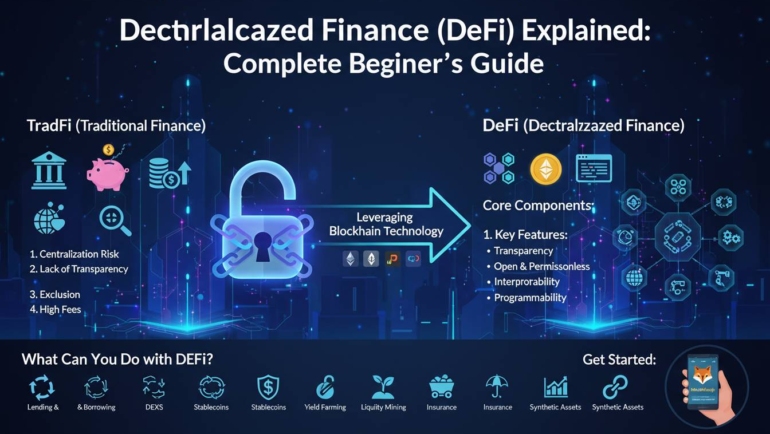
What Is a Decentralized Exchange?
A decentralized exchange is a cryptocurrency trading platform that operates without a central authority managing user funds or facilitating transactions. Instead, DEXs utilize smart contracts—self-executing programs deployed on blockchain networks—to automatically match buyers with sellers and execute trades. When you trade on a DEX, your assets move directly from your wallet to the trading pool, eliminating the counterparty risk associated with centralized platforms that hold billions in user deposits.
The most prevalent DEX model uses automated market makers (AMMs), which replace traditional order books with liquidity pools. These pools contain pairs of tokens that traders can swap between, with prices determined by mathematical formulas rather than bid-ask spreads. This innovation enables anyone to become a liquidity provider by depositing tokens into pools, earning a share of the trading fees generated.
Key distinction: When you use a DEX, you never surrender custody of your private keys. Your funds remain in your wallet until you explicitly approve a transaction, and you can disconnect at any time. This fundamental difference from centralized exchanges represents both an advantage—greater security from exchange hacks—and a responsibility: if you lose access to your wallet, no customer support team can recover your assets.
Why Beginners Should Consider DEXs in 2024
The case for starting your crypto journey on a DEX has strengthened considerably as the technology has matured. Several factors make decentralized exchanges particularly suitable for newcomers in the current market environment.
Reduced verification burden stands as the most immediate advantage. Centralized exchanges typically require extensive identity documentation,漫长的等待时间才能完成账户验证。DEXs generally require nothing more than a compatible wallet, allowing you to begin trading within minutes of installation.
Lower fees for small trades represent another significant benefit. While centralized platforms often charge flat fees or percentage rates that penalize smaller transactions, many DEXs offer more granular fee structures. Additionally, you avoid the deposit and withdrawal fees that centralized exchanges routinely impose.
Access to newer tokens becomes considerably easier on DEXs. Emerging projects frequently launch on decentralized platforms before or instead of listing on centralized exchanges, giving you earlier access to potential opportunities. The ability to trade any ERC-20 or BEP-20 token directly from your wallet means you’re not limited to whatever assets a centralized platform has decided to support.
Privacy considerations matter to many users. DEXs don’t require you to submit personal information, offering a degree of financial privacy that centralized platforms cannot match due to regulatory compliance requirements.
Key Features to Look for as a Beginner
Before examining specific platforms, understanding which features matter most for new users helps frame your decision-making process.
User interface complexity directly impacts how quickly you can execute basic operations. The best beginner-friendly DEXs present clear, uncluttered interfaces with obvious buttons for swapping tokens, viewing your portfolio, and connecting your wallet. Excessive complexity often indicates a platform designed for advanced traders rather than newcomers.
Network compatibility determines which blockchains you can trade on. Most beginners benefit from platforms supporting Ethereum, Binance Smart Chain, and increasingly, layer-2 networks that offer faster transactions and lower fees. Starting with a DEX that supports multiple networks provides flexibility as your needs evolve.
Gas fee management deserves serious attention. Network transaction fees—commonly called “gas” on Ethereum—can fluctuate significantly based on network congestion. Platforms that display clear fee estimates before transaction confirmation help you avoid unpleasant surprises. Some DEXs also offer ways to minimize fees through layer-2 integrations or fee bypass options.
Educational resources distinguish platforms genuinely committed to onboarding new users. Look for DEXs that provide tutorials, explainer content, or integrated guides that help you understand what you’re actually doing when you execute a trade.
Customer support accessibility matters more than many beginners anticipate until something goes wrong. Decentralized platforms vary widely in support quality, with some offering comprehensive help centers and community channels while others provide minimal assistance.
Top Decentralized Exchanges for Beginners
Uniswap: The Industry Standard
Uniswap has established itself as the most widely used decentralized exchange, processing billions in daily trading volume across its Ethereum and Optimism deployments. The platform’s popularity stems from its straightforward swap interface, extensive token support, and robust security track record.
For beginners, Uniswap V3 introduced concentrated liquidity—a feature allowing liquidity providers to allocate their funds within specific price ranges to maximize efficiency. While this sophistication appeals to advanced users, the basic swapping functionality remains intuitive. You simply connect your wallet, select the token pair you want to trade, review the exchange rate and estimated fees, and confirm the transaction.
The platform recently introduced Monkey, an AI-powered feature that helps users understand token contracts before trading, adding a layer of protection against scams that frequently target newcomers. Uniswap’s mobile app provides a reasonably complete trading experience, though some users report the desktop interface offers better functionality.
Fees: Uniswap charges a 0.3% swap fee, with the protocol taking 0.25% and 0.05% going to the liquidity provider treasury. Network fees (gas) apply on top of these amounts.
PancakeSwap: Low-Cost Alternative
PancakeSwap operates as the dominant DEX on Binance Smart Chain, offering substantially lower transaction costs than Ethereum-based alternatives. For beginners sensitive to gas fees—a significant concern during periods of network congestion—PancakeSwap presents an attractive entry point.
The platform supports a remarkably wide range of trading pairs and has expanded to include features like prediction markets, NFT collections, and staking opportunities. The interface, while colorful and initially busy, becomes manageable after brief familiarization. PancakeSwap also offers a dedicated tutorial section explaining core concepts like yield farming and liquidity provision.
One notable consideration: PancakeSwap requires using the Binance Smart Chain, which means obtaining BNB (Binance Coin) to pay for transaction fees. This adds a small step compared to platforms operating on networks where you might already hold tokens.
Fees: PancakeSwap charges a 0.25% swap fee, slightly lower than Uniswap. Network fees on BSC typically run $0.20-$1.00 per transaction, compared to $3-$50+ on Ethereum during busy periods.
Curve Finance: Stablecoin Specialist
Curve Finance specializes in trading between stablecoins and wrapped assets—tokens designed to maintain a peg to fiat currencies like the US dollar. If your primary interest lies in trading between USDC, USDT, DAI, and similar assets, Curve offers the best rates in the DeFi space with minimal slippage.
The platform’s focused design means fewer options to confuse beginners. You won’t find thousands of obscure tokens here, which actually simplifies decision-making for newcomers. Curve’s crvUSD stablecoin, launched in 2023, provides an additional option for users interested in decentralized borrowing.
The platform operates primarily on Ethereum but has expanded to other networks including Arbitrum, Avalanche, and Polygon. This multi-chain presence allows you to benefit from lower fees on alternative networks while maintaining access to Curve’s superior stablecoin liquidity.
Fees: Curve charges between 0.04% and 0.4% depending on the pool, generally falling well below what other DEXs charge for comparable trades.
MetaMask: Your Gateway to Decentralized Trading
While not a DEX itself, MetaMask serves as the essential bridge connecting users to decentralized exchanges. This browser extension and mobile wallet provides the wallet functionality required to interact with any Ethereum-based DEX, making it the de facto standard for DeFi participation.
MetaMask has invested heavily in improving the beginner experience, with features like simplified token lists that reduce the likelihood of encountering scam tokens, clear transaction previews that explain what you’re approving, and integration with hardware wallets for enhanced security. The portfolio view lets you track your holdings across multiple networks without manually adding token addresses.
For complete newcomers, MetaMask’s built-in swap feature aggregates pricing across multiple DEXs, sometimes finding better rates than you’d secure by visiting individual platforms directly. This aggregation simplifies the process while ensuring reasonable execution quality.
Fees: MetaMask itself doesn’t charge for swaps but adds a 0.875% markup on rates obtained through its aggregation service. Network fees apply as they would on any DEX.
Comparison Table: Key Features at a Glance
| Feature | Uniswap | PancakeSwap | Curve Finance |
|---|---|---|---|
| Best For | General trading, token variety | Low fees, BNB Chain ecosystem | Stablecoin swaps |
| Networks | Ethereum, Optimism, Base | Binance Smart Chain | Multi-chain |
| Swap Fee | 0.30% | 0.25% | 0.04%-0.40% |
| Gas Costs | High ($5-$50+) | Low ($0.20-$1) | Variable by network |
| Mobile App | Yes | Yes | Limited |
| Token Support | Extensive | Very Extensive | Focused (stablecoins) |
| Beginner Score | 8/10 | 7/10 | 8/10 |
How to Get Started: Step-by-Step
Beginning your DEX journey requires several preparatory steps that ensure a smooth experience.
Install a wallet: MetaMask remains the most beginner-accessible option, available as both a browser extension and iOS/Android app. Download from the official website to avoid phishing sites—bookmark the official URL after verification.
Secure your recovery phrase: Write down your 12 or 24-word seed phrase on paper and store it securely. Never store this digitally, never share it with anyone, and never input it into websites claiming to “verify” your wallet. Anyone with this phrase controls your funds entirely.
Acquire network tokens: To trade on Ethereum, you’ll need ETH for gas fees. For PancakeSwap, you need BNB. Purchase a small amount of the native token from a centralized exchange, then send it to your wallet address. Start with a small test amount—sending $20-50 gives you enough to learn without risking significant capital.
Connect to your chosen DEX: Visit the DEX website (always verify the URL), click “Connect Wallet,” and approve the connection request in MetaMask. The interface should now display your wallet balance.
Execute your first swap: Select the token you hold and the token you want to receive. Review the estimated output and confirm the exchange rate. Ensure you have sufficient native tokens remaining to cover network fees. Approve the transaction in MetaMask and wait for confirmation—Ethereum typically takes 15-60 seconds, though periods of high demand can extend this.
Security Considerations for New Users
The decentralized nature of these platforms places security responsibility squarely on your shoulders. Several practices help protect your assets.
Verify every transaction before confirming it in your wallet. Scammers frequently use approval requests that give them access to drain your entire balance. If a transaction requests access to “unlimited” tokens, decline it and investigate.
Use hardware wallets for significant holdings. Devices like Ledger or Trezor keep your private keys isolated from your computer or phone, providing substantial protection against malware and phishing attacks. MetaMask integrates with these devices seamlessly.
Research tokens before trading: The ease of listing new tokens on DEXs unfortunately enables scammers to create fake tokens designed to drain wallets when traded. Verify contract addresses through official project channels before swapping unfamiliar tokens.
Start with small amounts: Test every new platform and every new token with minimal value first. This practice limits potential losses while you learn the mechanics.
Conclusion
The decentralized exchange ecosystem in 2024 offers beginners more accessible, affordable, and secure options than ever before. Uniswap remains the best starting point for most users due to its excellent mobile experience, extensive token support, and strong security record across years of operation. The recent introduction of AI-powered safety features provides meaningful protection against scams that disproportionately target newcomers.
For users particularly sensitive to transaction costs, PancakeSwap on Binance Smart Chain delivers a viable alternative with fees often under $1 compared to the $10-30+ costs sometimes seen on Ethereum during busy periods. Meanwhile, Curve Finance offers superior execution for anyone primarily trading stablecoins.
Regardless of which platform you choose, the fundamental principle remains: you are your own bank. The freedom this provides comes with responsibility. Secure your recovery phrase, verify every transaction, start with small amounts, and never invest more than you can afford to lose.
Frequently Asked Questions
Q: Do I need to complete identity verification (KYC) to use a DEX?
No, decentralized exchanges do not require identity verification. You only need a compatible cryptocurrency wallet like MetaMask. However, this means you have full responsibility for your security—if you lose access to your wallet, no institution can recover your funds.
Q: Are DEXs safer than centralized exchanges?
Safety depends on your threat model. Centralized exchanges hold your funds, making them targets for hackers (see the Mt. Gox collapse or FTX implosion). DEXs eliminate this counterparty risk since you maintain custody. However, DEXs expose you to different risks including smart contract vulnerabilities, phishing attacks, and trading scam tokens. Both require different security practices.
Q: Why did my transaction fail or take so long?
Network congestion and insufficient gas fees cause most transaction failures and delays. When many people use a blockchain simultaneously, transactions queue up and users who pay higher fees get processed first. Check current gas prices on tools like Etherscan’s gas tracker before sending transactions during busy periods.
Q: Can I lose money providing liquidity to DEX pools?
Yes, liquidity provision carries impermanent loss risk. When you add tokens to a liquidity pool and the price of one token changes significantly compared to the other, you may end up with less value than simply holding those tokens. Pools containing stablecoins or tokens with correlated prices minimize this risk. Research impermanent loss thoroughly before providing liquidity.
Q: What happens if I send tokens to the wrong network?
Your tokens will be effectively lost unless you can access them through a bridge service that supports recovery. Sending ETH on Ethereum to a Binance Smart Chain address, for example, results in lost funds. Always double-check you’re sending tokens on the correct network and that your wallet is set to that network when receiving.