6Views 0Comments
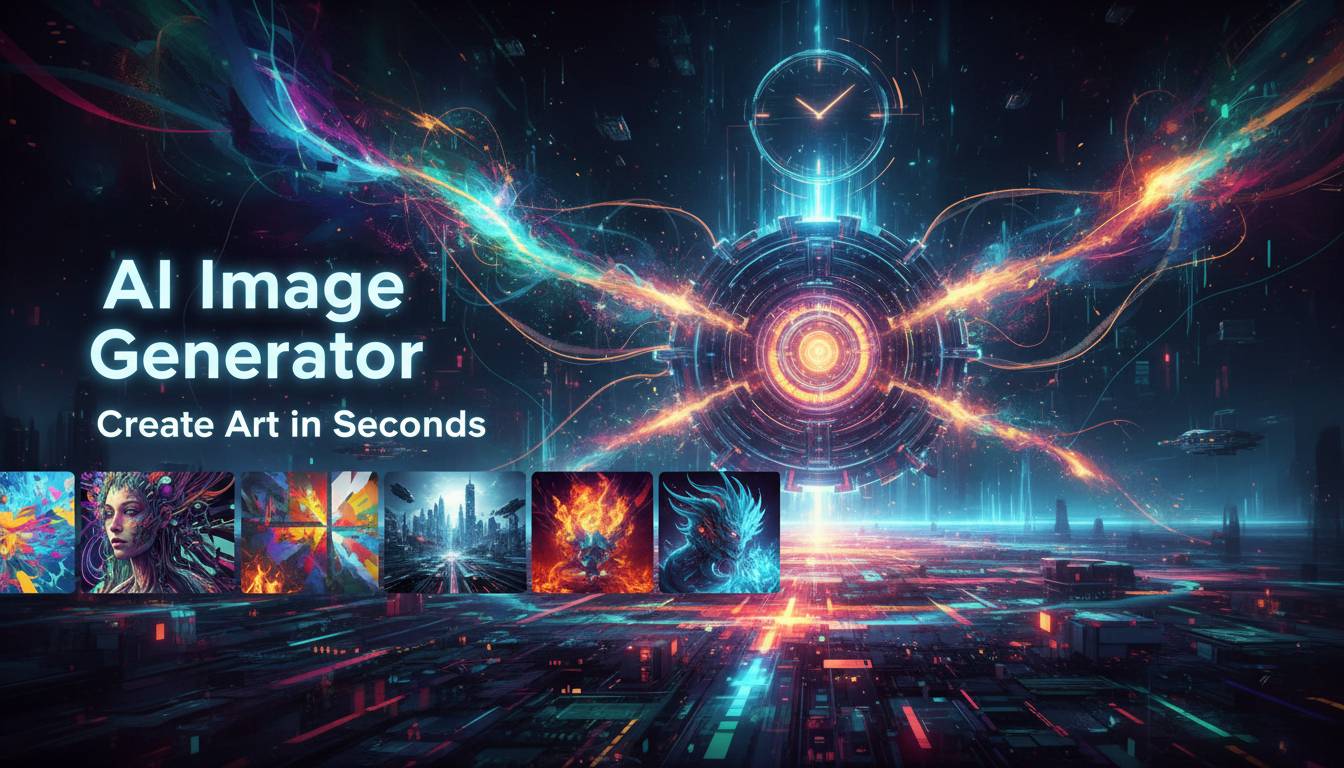
AI Image Generator: Create Stunning Art in Seconds
AI image generators have changed how we create visuals. You type a description—”a sunset over mountains with orange clouds”—and the system turns it into an image. This technology went mainstream in 2022 with tools like DALL-E 2 and Midjourney, and now there are dozens of options available.
This guide covers what these tools can do, which platforms are worth trying, and how to pick one that fits your needs.
What Is an AI Image Generator?
An AI image generator is software that creates images from text descriptions. You enter a prompt, and the system generates something matching your words—anything from a realistic photo to an abstract painting.
Most modern systems use diffusion models or GANs (generative adversarial networks). These models learned from millions of existing images, picking up patterns in shapes, colors, textures, and compositions.
Here’s how it works: you submit a prompt, and the generator starts with random noise. Through multiple iterations, it gradually adds structure and detail until a recognizable image emerges. You can usually adjust settings like aspect ratio, style, lighting, and more.
How They Actually Work
The technical side matters if you want better results. Most systems use diffusion models, which work through a denoising process.
During training, the AI examines millions of image-text pairs. It learns which visual features correspond to which words. This knowledge lets it interpret new prompts and create original outputs.
When you submit a prompt, the system starts with visual noise and refines it through dozens of passes. Each pass through the neural network adds more detail. You can control this with parameters like inference steps and guidance scale—the higher the guidance, the closer the output matches your prompt.
Some platforms offer extra features: inpainting (replacing parts of an image), outpainting (extending images beyond their borders), and style consistency (keeping visuals coherent across multiple generations).
Popular Platforms Worth Trying
Several platforms have established themselves as strong options:
Midjourney runs through Discord and appeals to digital artists who want distinctive, stylized outputs. The latest versions produce detailed images with good composition. Text rendering is still a weakness.
OpenAI’s DALL-E integrates with ChatGPT and offers the easiest interface for beginners. Version 3 improved significantly in text rendering and prompt adherence. OpenAI’s safety policies make it a conservative choice for businesses.
Adobe Firefly works directly inside Photoshop and other Creative Cloud apps. Adobe’s big selling point: outputs can be used commercially without copyright worries, since Firefly was trained on licensed Adobe stock.
Stable Diffusion is open-source, meaning you can run it locally or modify it. This requires technical know-how, but gives you flexibility. The community has built various interfaces and custom models.
Leonardo AI balances accessibility with advanced features. It has tools specifically for game developers—character design assets, environment concepts, and similar resources.
What to Look For
When comparing platforms, consider these factors:
Image quality varies. Some excel at photorealism, others at artistic styles. Test with the same prompt across platforms to see differences.
Prompt adherence measures how well the output matches your description. DALL-E 3 and Midjourney handle detailed prompts well.
Text rendering remains a problem for most systems. If you need readable text in images, test this specifically first.
Customization options range from simple style buttons to full parameter controls. Advanced users want granular control over lighting, composition, and color.
Generation speed affects workflow, especially for professional work. Most cloud platforms take seconds to a few minutes per image.
API access matters if you want to build automated workflows. Check availability and costs before committing.
Pricing and Costs
Pricing models differ, but most follow a similar pattern: free tiers with limits, paid plans for heavier use.
Many platforms let you try before buying. Midjourney now requires a subscription. Stable Diffusion runs free locally if you have suitable hardware. DALL-E gives monthly free credits. Firefly comes with Creative Cloud.
Plans typically run $10-30 monthly for individuals. Commercial rights matter—review the terms. Adobe positions Firefly as the safest bet for commercial use given its training data approach.
Where These Tools Actually Get Used
These generators have found real applications across industries:
Marketing teams create campaign visuals and social media content quickly. The ability to produce multiple variations fast enables testing that would otherwise need photoshoots.
Game developers use them for concept art and character design. The rapid iteration helps artists explore directions before settling on final designs.
Authors and publishers generate book covers and article illustrations. Independent creators especially benefit from accessing visuals without licensing fees.
Product designers visualize concepts early in development. AI-generated images work well for internal brainstorming and stakeholder presentations.
Educators incorporate these tools into digital arts programs and creative curriculum.
Real Limitations
These tools aren’t perfect. Here’s what you need to know:
Copyright issues remain unclear. Questions about training data, output ownership, and potential infringement are still being worked out legally. Stay updated on platform policies and evolving regulations.
Bias shows up in outputs. AI reflects patterns in its training data, which can mean underrepresentation or stereotyping. Human oversight helps ensure appropriate diversity.
Quality varies. Even on the same platform, similar prompts can produce very different results. Professional work requires sorting through many outputs.
Uncanny valley problems appear in realistic human faces and certain subjects. Subtle imperfections can make results unsettling rather than convincing.
Content restrictions exist on most platforms. Developers have implemented policies limiting certain output categories.
Picking the Right One
Your best platform depends on what you need:
Start by identifying your primary use case. Professional design work, content creation, hobby projects, and technical integration each favor different tools. Test several platforms with real prompts rather than trusting marketing materials.
Consider total cost, not just subscriptions. Integration effort, learning time, and commercial usage terms add up. The cheapest option can become expensive if it requires workarounds.
Be honest about technical skills. Browser-based tools need no installation; local Stable Diffusion requires compatible hardware and setup knowledge.
Community support matters. Active forums, good documentation, and responsive help accelerate learning.
Where Things Are Heading
The technology keeps advancing:
Video generation is emerging. Some platforms already offer limited motion capabilities. Maintaining consistency across frames remains challenging but improving.
Real-time generation is getting faster, which could enable interactive applications where images change based on user input.
3D generation is advancing, with implications for gaming, virtual reality, and architecture. Generating 3D assets from text would open major new possibilities.
Regulations are developing worldwide. Various governments are considering laws about AI content, disclosure requirements, and intellectual property. Watch for changes that might affect how you use these tools.
Bottom Line
AI image generators are genuinely useful tools for visual content creation. Whether you’re a professional designer looking for efficiency or a hobbyist exploring digital creativity, these platforms offer real value.
The technology keeps improving. Leading platforms update regularly with better quality and new features. Challenges around copyright, bias, and ethics need ongoing attention, but the overall direction is toward more capable tools.
Success comes from understanding what these systems can and can’t do, choosing platforms that match your actual needs, and keeping human judgment in the loop. Getting comfortable with these tools now positions you well as they continue to evolve.
Common Questions
Which platform should I start with?
It depends on what you need. Midjourney for artistic quality, DALL-E for ease of use, Adobe Firefly for commercial safety, Stable Diffusion for customization. Try a few with the same prompt to see what fits.
Is there a free option?
Yes, most platforms have free tiers or trials. DALL-E gives monthly credits. Stable Diffusion runs free locally. Midjourney now needs a subscription.
Can I use generated images for business?
Usually yes, but check each platform’s terms. Adobe explicitly clears Firefly outputs for commercial use. Legal frameworks are still evolving, so stay informed.
Which is most realistic?
DALL-E 3 and Midjourney both produce convincing photorealistic images, especially landscapes and objects. Human faces and hands remain difficult for all systems—test your specific needs.
Will the AI understand any prompt I write?
Better than before, but still struggles with complex, multi-element requests or abstract concepts. Clear, simple prompts work best. Learning to write effective prompts—specifying style, lighting, composition—significantly improves results.
What about copyright?
The legal situation is complicated and changing. Current thinking suggests AI images may lack copyright protection in many places, though human modification can establish ownership. For commercial work, get current legal advice and review platform policies.