15Views 0Comments
Best Crypto Exchanges for US Users — Expert Guide
The US cryptocurrency market has matured significantly, with exchanges now competing on security, fee transparency, and regulatory compliance rather than just coin selection. Choosing the right platform can mean the difference between seamless trading and frustrating limitations—whether you’re dealing with state restrictions, unexpected fees, or inadequate customer support.
This guide evaluates the top crypto exchanges serving US customers based on state availability, fee structures, security practices, and feature sets. Whether you’re a first-time buyer or an active trader, you’ll find actionable insights to match your needs.
Understanding What US Crypto Exchanges Must Offer
American cryptocurrency traders face unique challenges that users in other countries rarely consider. The fragmented regulatory landscape means exchanges must navigate state-by-state licensing requirements, creating significant disparities in what’s available depending on your location.
State-by-state availability remains the primary constraint for US users. While some exchanges operate in all 50 states, others limit service to fewer than 40. Before creating an account, verifying that your state is served prevents wasted time and potential account closure later.
Regulatory compliance has become a differentiator rather than a baseline expectation. Exchanges with strong compliance records—including Know Your Customer (KYC) procedures, Anti-Money Laundering (AML) programs, and registrations with FinCEN—offer greater long-term stability. The collapse of FTX in 2022 underscored why regulatory standing matters.
Fee structures deserve careful examination. Many exchanges advertise low trading fees but bury withdrawal fees, spread markups, or conversion costs in less obvious places. Understanding the complete fee picture—deposit fees, trading commissions, withdrawal charges, and spread costs—directly impacts your returns.
Security features have evolved beyond two-factor authentication. Leading exchanges now offer hardware wallet integration, address whitelisting, withdrawal confirmation emails, and biometric login options. Some provide insurance coverage for custodial assets, though this protection varies significantly between platforms.
Coinbase — The Industry Standard for Accessibility
Coinbase operates as the largest US-based cryptocurrency exchange by trading volume, serving over 100 million users globally. Its public company status (NASDAQ: COIN) provides transparency that private competitors cannot match, with regular financial disclosures and institutional oversight.
The platform supports trading in over 200 cryptocurrencies, spanning major assets like Bitcoin and Ethereum to smaller altcoins. State availability covers all 50 states, making Coinbase the default choice for users in states where competitors don’t operate.
Fee structure represents Coinbase’s primary weakness. The straightforward tiered pricing—0.60% for assets under $10,000—exceeds what advanced traders pay on competing platforms. However, the Coinbase One subscription ($29.99 monthly) eliminates trading fees for users who trade more than $200 monthly, potentially offering value for active participants.
Security implementation includes 2FA through authenticator apps or SMS, biometric mobile login, cold storage for 98% of customer funds, and FDIC insurance for USD balances up to $250,000 through partner banks. The 2021 data breach exposed customer information but no funds, highlighting both vulnerabilities and protective measures.
The Coinbase Wallet extension and mobile app provide self-custody options for users wanting to hold assets outside the exchange, though the exchange itself operates primarily as a custodial service.
Kraken — Strong Balance of Features and Value
Kraken has built a reputation among serious traders through competitive fee structures and extensive cryptocurrency support. The platform lists over 200 cryptocurrencies and maintains operations in 47 US states, with notable absences including Washington State and Montana.
Trading fees rank among the lowest in the industry. Maker fees start at 0.16% and taker fees at 0.26% for standard accounts, with volume discounts that bring costs lower for active traders. The fee structure rewards participation rather than penalizing it, a stark contrast to platforms that rely on higher commissions.
Security practices at Kraken include proof of reserves verification, which allows users to independently confirm the exchange maintains sufficient assets. The platform has never experienced a successful hack resulting in customer fund loss—a distinction earned through rigorous security protocols and cold storage emphasis.
The staking feature deserves particular attention. Users can stake assets including Ethereum, Polkadot, and Solana directly through the platform, earning yields that frequently exceed 5% APY. This functionality appeals to holders seeking passive income without managing external wallets.
State availability limitations affect approximately three states, so prospective users should verify service before account creation. The verification process is thorough, requiring identity documentation but providing access to higher withdrawal limits once completed.
Gemini — Regulatory Emphasis and New York Focus
Gemini positions itself explicitly as the compliant alternative in American cryptocurrency trading. Founded in 2014 by Cameron and Tyler Winklevoss, the exchange operates under heavy regulatory oversight as a New York-trust company, subject to banking regulations that exceed federal minimums.
This regulatory positioning means Gemini maintains robust capital reserves, undergoes regular audits, and implements strict compliance procedures. For users prioritizing stability over features, this emphasis provides peace of mind that competitors’ aggressive growth strategies cannot match.
Available cryptocurrencies number approximately 100—fewer than some competitors but covering all major assets and popular altcoins. The more curated selection reflects Gemini’s conservative approach to listing new assets, reducing exposure to pump-and-dump schemes or projects with questionable fundamentals.
The Gemini Earn program provides yields on held cryptocurrencies, though terms have become less competitive following market-wide yield compression. Interest rates vary by asset, with stablecoins typically offering the highest returns.
Fee structures follow a volume-based tier system similar to Coinbase, though pricing sits slightly lower at comparable tiers. The ActiveTrader platform offers more sophisticated charting and order types for experienced users, competing directly with professional trading platforms.
New York users benefit most from Gemini’s availability—state coverage includes all 50 states, though regulatory rigor means some features roll out more slowly than at less-compliant competitors.
Binance.US — Maximum Coin Selection, Geographic Limitations
Binance.US provides access to the broader Binance ecosystem with American regulatory adaptations. The platform offers the widest cryptocurrency selection among US-compliant exchanges, listing over 150 assets including numerous coins unavailable elsewhere.
Trading fees start at 0.10% for both makers and takers—among the lowest available anywhere. Volume discounts bring these already-competitive rates even lower, making Binance.US particularly attractive for traders working with significant capital.
The primary concern involves state availability restrictions. Binance.US does not serve users in Connecticut, Hawaii, Idaho, Louisiana, New York, Texas, Vermont, or Washington. This limitation eliminates approximately 20% of the US population from accessing the platform’s advantages.
Security implementations include 2FA, address whitelisting, and device management. However, the platform has experienced regulatory scrutiny, including a 2023 lawsuit from the SEC alleging securities law violations. While the case continues, users should weigh the selection advantages against ongoing legal uncertainty.
For users in permitted states seeking maximum coin diversity, Binance.US fills a niche that no other US platform matches. The combination of low fees and extensive listings appeals to traders seeking exposure to emerging projects before they reach larger exchanges.
Robinhood — Commission-Free Simplicity
Robinhood revolutionized retail investing through commission-free trading, extending this model to cryptocurrency in 2018. The platform’s strength lies in simplicity—users familiar with Robinhood’s stock trading experience find cryptocurrency trading immediately accessible.
Zero commission applies to all cryptocurrency trades, removing fee calculations from trading decisions. This approach benefits casual traders and those experimenting with small positions, though active traders should note that payment for order flow may create execution quality differences.
Cryptocurrency selection remains limited compared to specialized exchanges. Approximately 15 cryptocurrencies are available, covering major assets but excluding most altcoins. Users seeking diverse token portfolios will need additional platforms.
The regulatory situation requires attention. Robinhood operates as a cryptocurrency broker but has faced state-level regulatory challenges, including orders to cease operations in California and other states during 2023. The company has since restored service in most affected states, though the incidents highlight regulatory vulnerability.
For first-time cryptocurrency buyers wanting a familiar interface and minimal commitment, Robinhood provides the lowest barrier to entry. Advanced traders or those seeking portfolio diversity will quickly encounter its limitations.
Crypto.com — Feature-Rich Platform with Growing Presence
Crypto.com has expanded aggressively into the US market, offering an extensive feature set that competes with multiple specialized platforms. Beyond standard exchange functionality, Crypto.com provides a Visa card program that rewards spending with cryptocurrency cashback, staking rewards, and an NFT marketplace.
The platform serves users in approximately 44 states, with ongoing expansion efforts. The broader international presence— Crypto.com processes significant global volume—provides infrastructure investment that benefits US users through improved liquidity and feature development.
Fee structures follow a tiered model based on trading volume, with competitive rates for active traders. The Crypto.com Visa card program introduces additional complexity, with rewards varying by card tier and stake amounts. Understanding the complete ecosystem requires more research than simpler platforms demand.
Security implementations include cold storage, multi-signature wallets, and the Titan secure enclave for key protection. The platform maintains SOC 2 Type II certification, demonstrating compliance with rigorous security standards.
Users interested in the broader cryptocurrency ecosystem—defi features, NFT trading, card payments—find Crypto.com provides integrated solutions that would otherwise require multiple platforms.
Comparing Fee Structures Across Major Platforms
Understanding total costs requires examining multiple fee types beyond simple trading commissions.
| Exchange | Trading Fees (Base) | Withdrawal Fees | Deposit Fees | Best For |
|---|---|---|---|---|
| Coinbase | 0.60% | $0.99-$25+ | Free | Beginners, all-state availability |
| Kraken | 0.26% taker | $4-$40+ | Free | Active traders, security focus |
| Gemini | 0.35% | $0.99-$25+ | Free | Regulatory priority users |
| Binance.US | 0.10% | $3-$15 | Free | Coin diversity, low fees |
| Robinhood | Free | Free | Free | Simple, commission-free trading |
| Crypto.com | 0.40% | $3.50+ | Free | Feature ecosystem users |
These base rates apply to standard accounts; volume discounts significantly reduce costs for active traders across all platforms.
Common Mistakes When Choosing a Crypto Exchange
Ignoring state availability creates immediate problems. Users who register without verifying state compatibility risk account suspension after funding their accounts—a particularly frustrating outcome when funds become temporarily inaccessible during resolution.
Focusing only on trading fees hides true costs. Withdrawal fees at some platforms exceed trading commissions for smaller transactions. A user moving Bitcoin off-exchange might pay more in withdrawal fees than trading costs saved from lower commissions.
Overlooking security features invites unnecessary risk. The convenience of instant withdrawals or simplified verification comes with trade-offs. Users holding significant cryptocurrency value should prioritize platforms offering withdrawal whitelisting, hardware wallet support, and comprehensive 2FA options.
Choosing platforms based solely on coin selection exposes users to unnecessary risk. While diversification matters, listing every possible token includes projects that will fail. Conservative platforms like Gemini provide curated selections that filter questionable projects.
Neglecting tax reporting features creates headaches during tax season. Most major exchanges provide transaction history and cost basis reporting, though accuracy varies. Users with complex portfolios should verify reporting capabilities before committing to a platform.
How to Choose the Right Exchange for Your Needs
Selecting an exchange requires honest assessment of your trading style, security requirements, and state of residence.
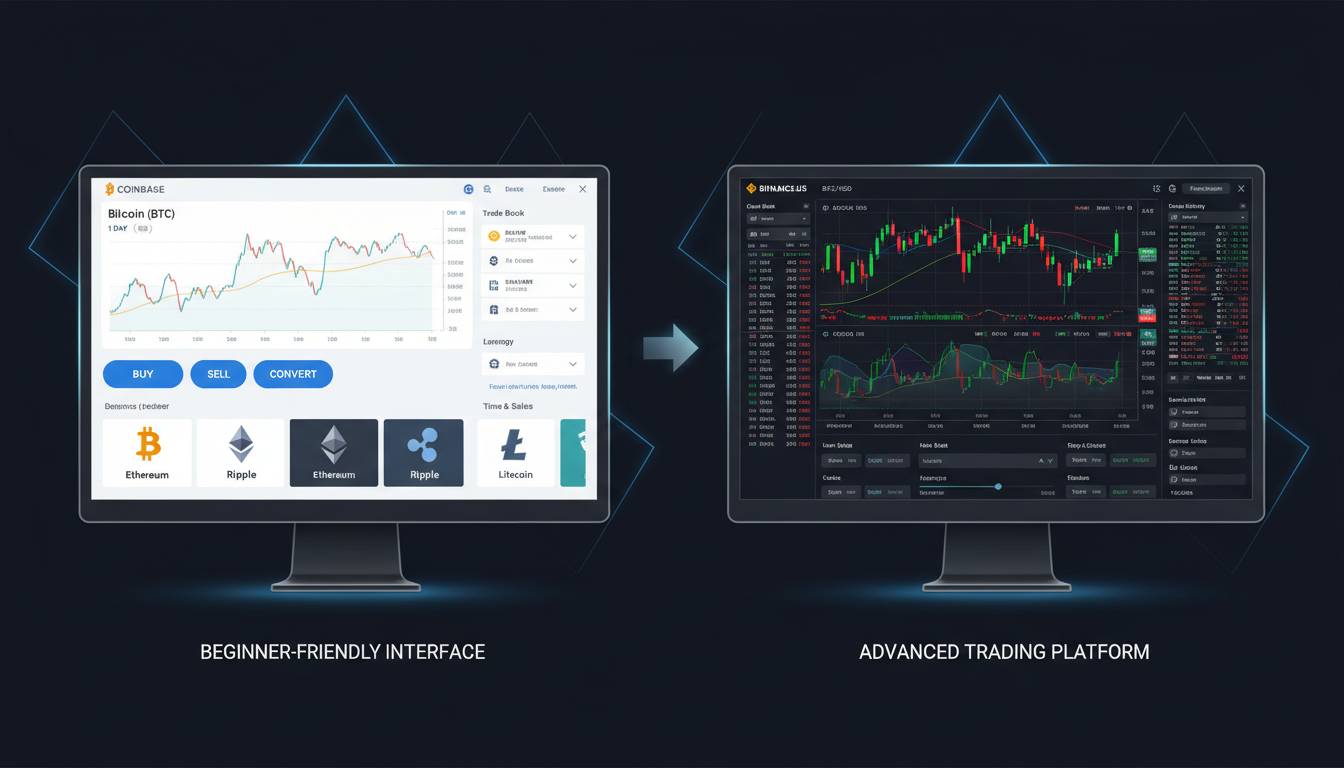
Beginners prioritizing simplicity should start with Coinbase or Robinhood. These platforms offer familiar interfaces, educational resources, and straightforward purchasing processes. The higher trading fees justify the simplicity for users learning fundamental concepts.
Active traders prioritizing costs benefit from Kraken or Binance.US. The lower trading fees compound significantly with frequent trading, while advanced charting and order types support sophisticated strategies. These users should verify state availability first.
Security-conscious users might accept higher fees in exchange for regulatory compliance. Gemini’s New York trust charter provides oversight that most competitors lack, while Kraken’s security record speaks for itself.
Users seeking maximum coin access in permitted states find Binance.US provides unmatched diversity. This advantage must be weighed against the ongoing regulatory uncertainty.
Users wanting integrated ecosystems should evaluate Crypto.com’s full feature set, particularly if Visa card rewards or NFT trading align with broader cryptocurrency interests.
The Future of US Crypto Exchange Landscape
Regulatory clarity remains the defining uncertainty for American cryptocurrency traders. The Securities and Exchange Commission continues pursuing enforcement actions against exchanges and tokens, creating an environment where compliance investment becomes a competitive advantage.
Exchange-traded funds (ETFs) for Bitcoin and Ethereum have created new pathways for traditional investors, indirectly affecting exchange competition. Platforms that integrate ETF capabilities or provide similar exposure may capture users preferring simplified tax reporting.
Central Bank Digital Currency (CBDC) development could reshape the landscape entirely, though implementation timelines remain unclear. Exchanges adapting to potential regulatory frameworks will maintain positions regardless of specific outcomes.
Mobile-first platforms continue gaining share, particularly among younger users. Robinhood and Cash App dominate this segment, though established exchanges have improved mobile experiences significantly.
Conclusion
The best crypto exchange for US users ultimately depends on individual circumstances—trading volume, state residence, security priorities, and desired features. Coinbase offers unmatched accessibility across all states, Kraken provides the strongest balance of cost and security, Gemini prioritizes regulatory compliance, and Binance.US serves users in permitted states seeking maximum coin diversity.
The fragmented regulatory landscape means no single platform serves everyone optimally. Verification of state availability should precede account creation, while understanding complete fee structures prevents unpleasant surprises.
For most beginners, Coinbase’s simplicity and universal availability provide the lowest-risk starting point. As experience grows and priorities clarify, migrating to platforms with better fee structures or expanded features becomes feasible. The US cryptocurrency market offers viable options at every experience level—success comes from matching platform capabilities to actual needs rather than chasing advertised advantages.
Frequently Asked Questions
Which crypto exchange works in all 50 US states?
Coinbase, Gemini, and Robinhood currently operate in all 50 states. Kraken is unavailable in Washington State and Montana, while Binance.US excludes Connecticut, Hawaii, Idaho, Louisiana, New York, Texas, Vermont, and Washington. Always verify current state availability before creating an account.
What is the safest crypto exchange for US users?
Kraken has maintained an unbroken security record with no successful hacks resulting in customer losses. Gemini’s New York trust company status subjects it to banking-level regulations exceeding federal requirements. Both platforms offer superior security compared to less-regulated alternatives.
Which US crypto exchange has the lowest fees?
Binance.US offers the lowest trading fees at 0.10% for both makers and takers. Kraken follows closely at 0.26% for takers with volume discounts. Robinhood offers zero trading commissions but limits cryptocurrency selection to approximately 15 assets.
Do US crypto exchanges report to the IRS?
Yes, all reputable US exchanges report transactions to the IRS through Form 1099 for users meeting reporting thresholds. Exchanges like Coinbase, Kraken, and Gemini provide transaction history and cost basis reporting to assist with tax compliance.
Can I use Binance if I live in New York?
No, Binance.US does not serve New York residents. New York users should consider Coinbase, Kraken, or Gemini, which all maintain New York BitLicense and full state compliance.