12Views 0Comments
Best Decentralized Exchange for New Users | Start Trading Safely
Decentralized exchanges (DEXs) have transformed cryptocurrency trading by allowing users to swap tokens directly from their wallets without trusting a centralized intermediary. For new users in the United States, choosing the right DEX can feel overwhelming—thousands of platforms exist, each with different fee structures, supported blockchains, and security features. The best decentralized exchange for new users prioritizes intuitive interfaces, robust security, educational resources, and transparent fee structures over complex trading features. This guide examines the top DEXs that balance accessibility with functionality, helping you start your decentralized trading journey safely and confidently.
What Is a Decentralized Exchange?
A decentralized exchange is a platform that facilitates peer-to-peer cryptocurrency trades directly between users through automated smart contracts. Unlike centralized exchanges like Coinbase or Binance, DEXs do not hold your funds—instead, you connect your wallet (such as MetaMask or Coinbase Wallet) and trade directly from your own address. This architecture means there’s no single point of failure that hackers can target to steal user funds en masse.
The technology behind most DEXs is automated market maker (AMM) mechanics, introduced by Uniswap in 2018. Instead of matching buyers with sellers, AMM pools use liquidity—funds provided by users—to enable instant trades at prices determined by mathematical formulas. When you trade on a DEX, you’re actually swapping with the liquidity pool, not another person. This innovation removed the bottleneck of order book matching and enabled anyone with crypto to become a liquidity provider and earn trading fees.
For new users, DEXs offer several advantages over centralized alternatives: you maintain full control of your assets, you don’t need to complete extensive KYC verification in most cases, and you can access thousands of tokens including new projects before they list on major centralized exchanges. However, DEXs also carry unique risks, including smart contract vulnerabilities, impermanent loss for liquidity providers, and the responsibility of securing your own wallet seed phrases.
Key Features New Users Should Look For
Before examining specific platforms, new users should understand which features matter most when selecting a DEX. The learning curve varies dramatically between platforms, and choosing one aligned with your experience level prevents costly mistakes.
User Interface Complexity matters enormously for beginners. Some DEXs offer streamlined interfaces showing only essential information, while others display advanced data that overwhelms new users. The best DEX for beginners presents clear confirmation screens showing exactly what you’re swapping, what you’ll receive, and what the transaction will cost before you approve it.
Supported Blockchains determine which tokens you can trade. Most major DEXs operate on Ethereum, the largest smart contract platform, but Ethereum’s gas fees can exceed $10-50 per transaction during busy periods. Alternative networks like Polygon, Arbitrum, and BNB Smart Chain offer significantly cheaper fees, though with smaller trading volumes. New users should consider whether they’ll trade primarily on Ethereum or prefer lower-cost alternatives.
Fee Transparency deserves careful examination. DEXs charge two types of fees: network fees (gas) paid to the blockchain, and protocol fees retained by the DEX. Some platforms like Uniswap charge a flat 0.30% trading fee, while others vary. Additionally, MEV (Maximal Extractable Value) bots can sandwich trade your transactions on certain DEXs, costing you money without obvious indication.
Security Features vary significantly. Look for DEXs that have undergone multiple security audits, maintain bug bounty programs, and have operated without major exploits. The best platforms also provide clear warnings about slippage settings and gas estimation before transactions.
Top Decentralized Exchanges for New Users
Uniswap: The Industry Standard
Uniswap, launched in November 2018 on Ethereum and later expanded to Polygon, Arbitrum, and Optimism, remains the most widely used decentralized exchange globally. The platform processes billions in daily trading volume and hosts the deepest liquidity pools for thousands of token pairs.
For new users, Uniswap offers significant advantages. The interface underwent substantial revisions to improve accessibility, now displaying clear token prices, historical charts via TradingView integration, and straightforward swap flows. The mobile app (available on iOS and Android) mirrors the web experience, enabling trading from smartphones. Uniswap also provides in-platform educational content explaining DeFi concepts, helping beginners understand what they’re actually doing when they swap tokens.
The protocol charges a 0.30% trading fee on all swaps, with 0.25% going to liquidity providers and 0.05% going to the Uniswap DAO treasury. Network fees (gas) on Ethereum remain the primary cost consideration—during peak periods, swapping small amounts becomes economically impractical. However, Uniswap’s expansion to layer-2 networks like Arbitrum and Polygon offers cheaper alternatives with the same interface and security guarantees.
Security-wise, Uniswap underwent over 15 security audits from firms including Trail of Bits and OpenZeppelin, maintains an active bug bounty program, and has a track record of no major user fund losses from smart contract failures. The team operates transparently with a documented governance process.
Best for: New users who want the most widely adopted, battle-tested DEX with the largest selection of tokens and strongest security record.
dYdX: Advanced Trading Made Accessible
dYdX originally launched as a decentralized margin trading protocol but evolved into a full-featured exchange operating on Ethereum layer-2 scaling solution StarkWare. The platform offers spot trading, perpetual futures, and margin trading with a professional-grade interface previously found only on centralized exchanges.
What makes dYdX suitable for new users is its hybrid approach—the interface feels like a centralized exchange while maintaining non-custodial principles. You create an account with an email and password, but your funds remain in your wallet. The platform supports limit orders, stop losses, and market orders—features beginners may expect from traditional trading experiences but struggle to find on other DEXs.
Trading fees on dYdX range from 0.02% to 0.05% for makers and 0.05% to 0.10% for takers depending on token holdings, making it competitive with centralized alternatives. The StarkEx layer-2 implementation reduces network fees substantially compared to mainnet Ethereum.
However, new users should note that dYdX requires identity verification (KYC) for certain features and to achieve lower fees, which may conflict with preferences for fully pseudonymous trading. The platform also experienced a security incident in September 2022 involving a hack of its liquidity mining rewards—though user funds remained secure, this demonstrates that even audited platforms carry residual risk.
Best for: New users who want a centralized-exchange feel with non-custodial security, and who plan to trade frequently enough to benefit from dYdX’s fee structure.
PancakeSwap: Low-Cost Alternative
PancakeSwap operates on BNB Smart Chain (formerly Binance Smart Chain), offering significantly lower transaction costs than Ethereum-based alternatives. The platform dominates trading volume on BNB Chain and hosts hundreds of token pairs with substantial liquidity.
For new users concerned about transaction costs, PancakeSwap’s appeal is immediately apparent—typical swap fees cost less than $0.50 even during busy periods, compared to $10-50+ on Ethereum mainnet. The interface closely resembles Uniswap’s design, making the transition straightforward if you start on PancakeSwap and later migrate to other platforms.
The exchange launched in 2020 and has accumulated significant trading volume, though users should note it’s operated by a centralized team (rather than decentralized governance like Uniswap), and it experienced several security incidents in early 2022 where exploiters stole approximately $3 million through flash loan attacks. The team compensated affected users, but this history warrants awareness.
PancakeSwap’s token (CAKE) provides additional utility through staking and lottery features, potentially offering yields that exceed what other DEXs provide. However, new users should approach these yield-generating activities with caution—they carry additional smart contract risk and often involve lock-up periods.
Best for: New users prioritizing low transaction costs, those in regions where Ethereum gas fees make DeFi impractical, and users seeking access to BNB Chain ecosystem projects.
1inch: Aggregation Excellence
1inch Network serves a different role in the DeFi ecosystem—it aggregates liquidity from dozens of DEXs to find users the best possible trade execution. When you swap on 1inch, the protocol splits your order across multiple exchanges to minimize slippage and find optimal pricing.
For new users, 1inch offers a straightforward swap interface that handles the complexity of finding best execution behind the scenes. You simply select the tokens you want to swap, enter an amount, and 1inch handles the rest—showing you exactly how much you’ll receive and how much you’re saving compared to a single DEX trade.
The platform operates across multiple blockchains including Ethereum, Polygon, Arbitrum, BNB Chain, and others, providing broad token coverage. Transaction fees vary depending on which DEXs are used in the aggregation, typically ranging from 0.1% to 1% depending on the path optimization required.
1inch maintains a strong security posture with multiple audits, a verification program, and a history of responsible disclosure when vulnerabilities are found. The MoonPay integration within 1inch also allows new users to purchase crypto directly with fiat, simplifying the initial funding process.
Best for: New users who want assurance they’re getting the best price without manually comparing across DEXs, and those seeking a unified interface for multi-chain trading.
Raydium: Solana Ecosystem Gateway
Raydium operates as the primary DEX on Solana, offering near-instant transactions at fractions of a cent compared to Ethereum’s higher costs and slower finality. For users willing to explore beyond Ethereum, Raydium provides access to the Solana ecosystem’s growing DeFi landscape.
The platform combines centralized exchange features (order books for certain trading pairs) with AMM liquidity pools, offering users flexibility in how they trade. Raydium’s integration with Serum’s order book provides lower slippage for large trades while maintaining AMM accessibility for smaller transactions.
Transaction costs on Solana typically amount to fractions of a penny, making it practical to trade even tiny amounts without worrying about fees consuming your gains. The ecosystem hosts numerous emerging projects and NFT platforms, though new users should research thoroughly before investing in early-stage Solana tokens.
The primary consideration for new users is managing Solana wallets correctly—Solana’s address format differs from Ethereum, and the ecosystem has experienced several high-profile wallet drain incidents stemming from browser extension vulnerabilities rather than protocol flaws. Using a hardware wallet and carefully verifying transaction details before approval mitigates these risks.
Best for: New users interested in exploring the Solana ecosystem, those frustrated by Ethereum’s high fees, and users seeking fast, cheap transactions.
Comparison: Which DEX Should You Choose?
Selecting the right DEX depends on your priorities, technical knowledge, and trading goals. The following comparison highlights key differences across the primary factors new users should consider.
| Feature | Uniswap | dYdX | PancakeSwap | 1inch | Raydium |
|---|---|---|---|---|---|
| Network | Ethereum, Polygon, Arbitrum, Optimism | Ethereum (StarkEx) | BNB Chain | Multi-chain | Solana |
| Trading Fee | 0.30% | 0.02%-0.10% | 0.20%-0.25% | 0.1%-1% | 0.25% |
| Avg. Network Cost | $5-50 | $0.50-5 | $0.20-1 | Varies | $0.01-0.10 |
| KYC Required | No | Partial | No | No | No |
| Mobile App | Yes | Yes | Yes | Yes | Yes |
| Supported Tokens | 10,000+ | 40+ | 300+ | 10,000+ | 200+ |
| Security Audits | 15+ | Multiple | Multiple | Multiple | Multiple |
| Ease of Use | High | High | High | High | Medium |
For most new US users, Uniswap remains the default recommendation due to its unmatched liquidity, extensive token selection, and proven security track record. If transaction costs prove prohibitive, migrating to Uniswap on Arbitrum or Polygon provides the same functionality at dramatically reduced fees. dYdX suits users who want professional trading features without centralized exchange custody, while PancakeSwap serves those who prioritize minimal costs above all else.
Security Best Practices for DEX Users
Trading on decentralized exchanges requires personal responsibility for security that centralized platforms typically manage for you. Understanding these risks and implementing protective measures is essential before making your first swap.
Wallet Security forms your primary defense. Never share your seed phrase with anyone—legitimate platforms will never ask for it. Store your seed phrase offline in multiple secure locations (not on your computer or phone). Consider using hardware wallets like Ledger or Trezor for significant holdings, as these keep your private keys isolated from internet-connected devices.
Transaction Verification prevents malicious transactions. Before approving any swap, verify: the token addresses are correct (scammers create tokens with identical names to popular projects), the amounts match your intent, and the slippage settings are appropriate. Use block explorers like Etherscan to verify transactions after execution.
Phishing Prevention requires constant vigilance. Bookmark your preferred DEX and only access it through that bookmark—never click links in emails or messages claiming to be from exchanges. Verify URLs carefully; scammers create convincing lookalikes with slight spelling variations.
Start Small minimizes potential losses while learning. Execute test transactions with amounts you can afford to lose completely. This approach lets you understand the flow, confirm you can recover from mistakes, and build confidence before committing larger portfolios.
Getting Started: Your First DEX Trade
Beginning your decentralized exchange journey requires several preparatory steps. First, set up a compatible wallet like MetaMask (browser extension and mobile), Coinbase Wallet, or Rabby. These wallets generate your cryptographic identity on the blockchain and store your private keys locally.
Next, fund your wallet with the cryptocurrency required for trading. Ethereum (ETH) is necessary for gas fees on Ethereum mainnet, while other networks require their native tokens (BNB for BNB Chain, SOL for Solana). Acquire these through centralized exchanges like Coinbase, Kraken, or Binance US, then withdraw to your wallet address.
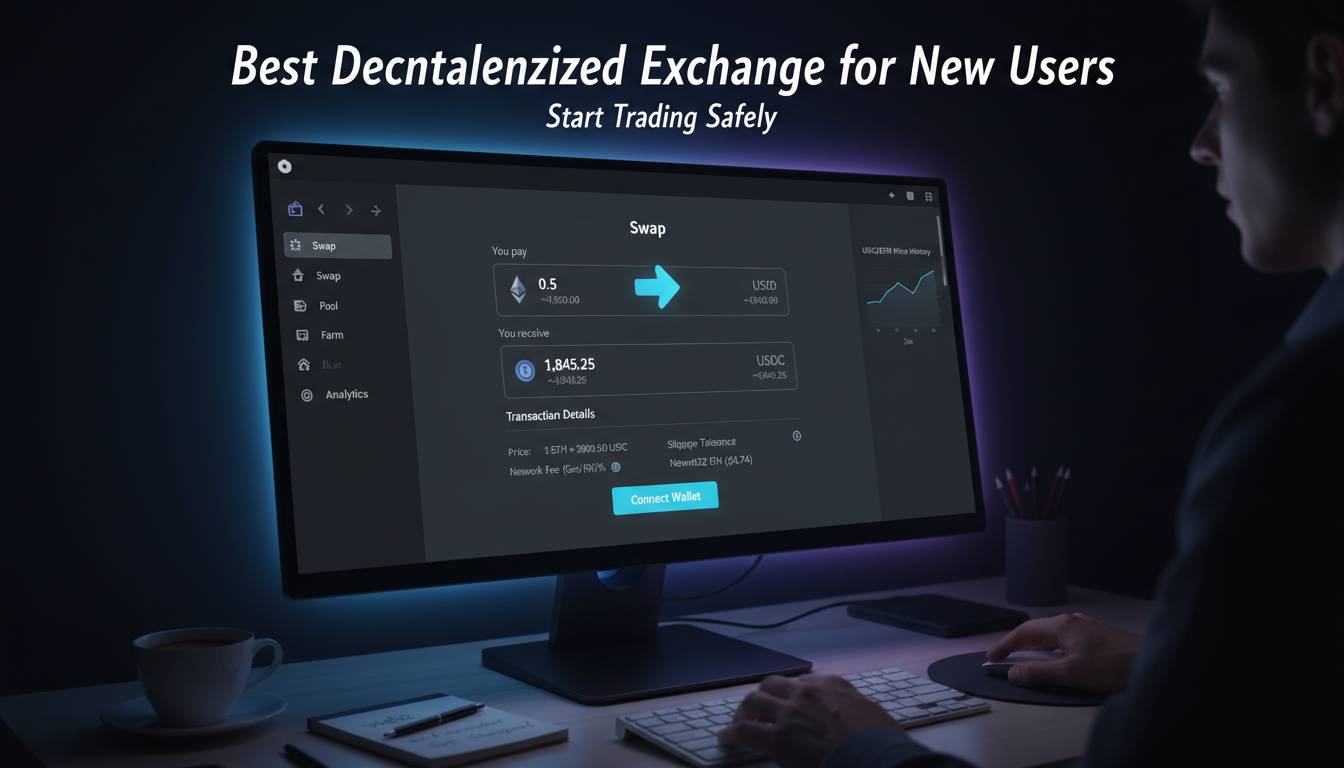
Once funded, navigate to your chosen DEX and click “Connect Wallet” to link your wallet. The interface will prompt you to approve the connection—this is a read-only permission allowing the DEX to view your balances without moving funds.
To execute a swap, select the token you want to sell (the “Pay” field) and the token you want to receive (the “Get” field). The interface displays the expected exchange rate and calculates total costs including network fees. Adjust slippage tolerance only if necessary—default settings (0.5% to 1%) work for most conditions.
Review all details carefully, then click “Swap” or “Confirm.” Your wallet will prompt you to approve the transaction—this is where you pay network fees. Once confirmed, the blockchain processes the swap, typically completing within seconds to minutes depending on network congestion.
After execution, verify the transaction on a block explorer and confirm your new token balance in your wallet. If the token doesn’t appear, you may need to add the token contract address to your wallet manually.
Common Mistakes New Users Should Avoid
Entering the DEX space without awareness of common pitfalls leads to unnecessary losses. Learning from others’ mistakes protects your capital while you develop expertise.
Ignoring Slippage causes unexpected losses during volatile periods. Slippage represents the difference between the expected price and actual execution price. During fast-moving markets, your trade may execute at a significantly worse rate than anticipated. Setting appropriate slippage tolerance (typically 0.5%-1% for stable pairs, 5% or higher for illiquid altcoins) ensures your trade executes while preventing excessive price impact.
Sending Tokens to Wrong Networks results in permanent loss. If you hold USDT on Ethereum and send it to a PancakeSwap address expecting BNB Chain’s version, your funds become irretrievable. Always double-check you’re withdrawing to the correct network and that your wallet supports that network.
Chasing Newly Announced Tokens exposes you to scams. The DEX environment enables anyone to create trading pairs for any token, including countless scams and honeypots designed to steal funds. Research thoroughly before buying obscure tokens—verify the contract address through official channels, check if the team is doxxed, and understand token distribution.
Ignoring Tax Implications creates legal risk. The IRS treats cryptocurrency trades as taxable events—swapping one token for another triggers capital gains reporting. Maintain records of all transactions or use crypto tax software to track your trading activity.
Frequently Asked Questions
Do I need to complete KYC to use a decentralized exchange?
Most decentralized exchanges do not require KYC (Know Your Customer) verification because they don’t hold user funds or operate as traditional financial institutions. Uniswap, PancakeSwap, and 1inch allow completely anonymous trading. However, dYdX requires partial identity verification for certain features, and some DEXs may implement KYC if regulatory pressure increases. Some aggregators like 1inch integrate with MoonPay for fiat on-ramps, which does require verification.
Which DEX has the lowest fees?
PancakeSwap and Raydium typically offer the lowest fees due to their operation on BNB Chain and Solana respectively, where network transaction costs are fractions of a cent. However, “lowest fees” depends on what you’re trading—Uniswap’s larger liquidity pools may provide better pricing that outweighs the higher network costs for larger trades. 1inch often finds the most cost-effective route by splitting orders across multiple DEXs.
Are my funds safe on decentralized exchanges?
Decentralized exchanges don’t hold your funds, meaning there’s no central point of failure that could lead to mass fund theft. However, this also means you’re solely responsible for your security. If your wallet is compromised or you approve a malicious transaction, your funds can be stolen instantly. The DEX protocols themselves have strong security track records, but user error remains the primary cause of losses. Using hardware wallets, verifying all transactions, and starting with small amounts significantly reduces risk.
Can I use decentralized exchanges from the United States?
US users can access most DEXs without legal prohibition—the technology is decentralized and accessible globally. However, some DEXs restrict access to certain features or tokens for US users due to regulatory uncertainty. Additionally, using DEXs doesn’t exempt you from US tax obligations or securities regulations. You remain responsible for understanding which tokens may constitute securities and reporting your trading activity to the IRS.
What wallet should beginners use?
MetaMask remains the most recommended wallet for DEX beginners due to its widespread support, user-friendly interface, and extensive integration across most DEXs. Coinbase Wallet offers a simpler experience for users already familiar with the Coinbase ecosystem. Rabby provides advanced features and better transaction previewing for users wanting more control. Avoid keeping significant funds in wallet browser extensions—consider hardware wallets like Ledger for holdings exceeding amounts you’re willing to lose.
How do I know if a token is safe to trade?
No token is completely “safe” in the sense of guaranteed value, but you can reduce scam risk by verifying: the contract address through official sources (not social media links), whether the token has been audited, if the team is publicly identified, the token’s liquidity depth, and how the token’s distribution works. Be extremely cautious with newly launched tokens with low liquidity—these can be rug pulls where developers drain liquidity and disappear. Use tools like DexScreener to analyze token age, holder distribution, and trading history before buying.
Conclusion
Starting your decentralized exchange journey represents entering a powerful financial ecosystem where you maintain complete control over your assets. For new users in the United States, Uniswap offers the best balance of security, liquidity, and accessibility—its interface has been refined across years of development, its security record stands among the strongest in DeFi, and its expansion to layer-2 networks addresses the primary complaint of high Ethereum fees.
However, the “best” DEX ultimately depends on your specific situation. If you’re primarily trading small amounts and cost sensitivity matters most, PancakeSwap on BNB Chain provides the lowest friction. If you want professional trading features while maintaining non-custodial principles, dYdX delivers that experience. Raydium opens the Solana ecosystem’s fast, cheap transactions. 1inch ensures you’re getting optimal execution across sources.
Whatever platform you choose, remember that DEX trading places security responsibility squarely on your shoulders. Start with small test transactions, double-check every approval, never share your seed phrase, and treat your crypto holdings with the same caution you’d use for significant cash. The decentralized finance ecosystem offers remarkable opportunities—but only for those who approach it with appropriate caution and continuous learning.
Begin with the platform that feels most intuitive, execute a small test trade, and expand from there. Your first swap doesn’t need to be perfect—it just needs to teach you something.