18Views 0Comments
Best DeFi Platforms – Compare Top Decentralized Finance Apps
Decentralized finance (DeFi) has transformed how individuals access financial services, removing intermediaries and enabling peer-to-peer transactions across the globe. As of early 2025, the DeFi ecosystem holds over $180 billion in total value locked (TVL), with millions of users participating in lending, borrowing, trading, and yield farming through decentralized platforms. Whether you’re a crypto native looking to earn yield on idle assets or a newcomer exploring decentralized alternatives to traditional banking, understanding the landscape of DeFi platforms is essential for navigating this rapidly evolving space.
This comprehensive guide examines the leading DeFi platforms, compares their features, security measures, and fee structures, and provides actionable insights to help you choose the right protocols for your financial goals.
Understanding DeFi Platforms and Their Architecture
DeFi platforms are blockchain-based applications that replicate traditional financial services—such as lending, borrowing, trading, and earning interest—without relying on centralized intermediaries like banks, brokers, or payment processors. These protocols operate through smart contracts, which are self-executing programs that automatically enforce the terms of financial agreements when predetermined conditions are met.
The architecture of DeFi rests on several foundational layers. At the base layer, blockchain networks like Ethereum, Solana, and Arbitrum provide the infrastructure for transaction settlement and smart contract execution. On top of these chains, layer-2 scaling solutions enhance transaction throughput and reduce fees, making DeFi more accessible for everyday users. The application layer comprises the user-facing interfaces and protocol-specific smart contracts that enable specific financial functions.
Key Components of DeFi Infrastructure
| Component | Function | Example Platforms |
|---|---|---|
| Lending Protocols | Enable earning interest on deposits and borrowing assets | Aave, Compound |
| Decentralized Exchanges (DEXs) | Facilitate token swaps without intermediaries | Uniswap, Curve |
| Stablecoins | Provide price-stable assets for trading and yield | USDC, DAI |
| Bridge Protocols | Enable cross-chain asset transfers | Wormhole, Axelar |
| Yield Aggregators | Optimize returns across multiple strategies | Yearn Finance, Convex |
The composability of DeFi—meaning that different protocols can integrate and build upon each other—creates a powerful ecosystem where value can flow seamlessly between applications. This interoperability has driven significant innovation, with new use cases emerging continuously as developers combine existing building blocks in novel ways.
Top DeFi Lending Platforms
Lending protocols represent one of the most accessible entry points into DeFi, allowing users to deposit cryptocurrencies and earn interest or leverage their holdings as collateral for loans.
Aave
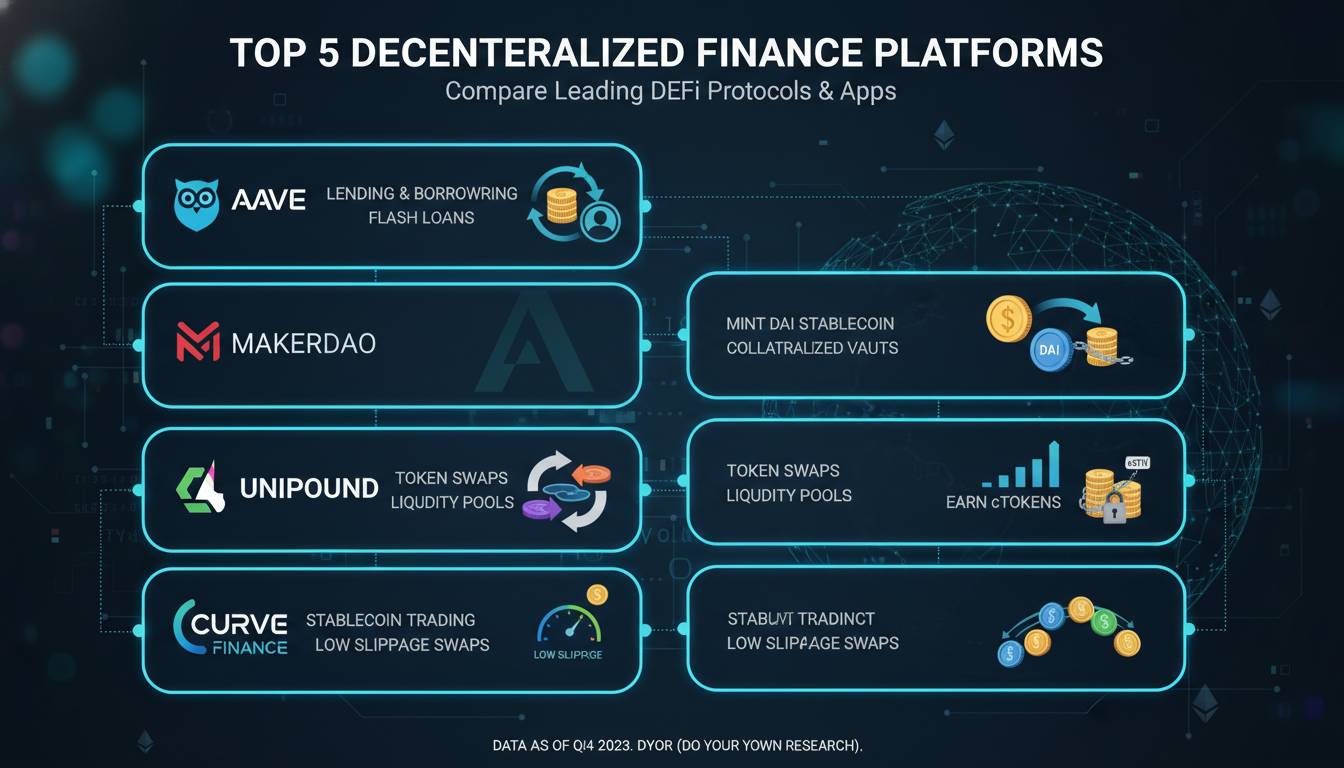
Aave stands as the largest decentralized lending protocol, with over $35 billion in total value locked as of early 2025. The platform supports lending and borrowing across more than 30 blockchain networks, making it one of the most interoperable options available. Users can earn passive income by supplying assets to liquidity pools while borrowers access instant loans without credit checks or traditional documentation.
What distinguishes Aave is its innovative feature set, including flash loans—uncollateralized loans that must be repaid within a single blockchain transaction—and a unique stability mechanism that adjusts interest rates dynamically based on supply and demand. The protocol has maintained a strong security track record with no major exploits since its launch in 2017, supported by comprehensive insurance through Aave Cover.
Pros:
– Extensive multi-chain support
– High liquidity across asset pairs
– Institutional-grade security audits
– Active governance community
Cons:
– Complex interface for beginners
– Smart contract risk remains present
– Variable interest rates can fluctuate significantly
Compound
Compound pioneered the algorithmic interest rate model that many DeFi lending platforms now employ. The protocol has facilitated over $30 billion in cumulative borrowing volume and maintains approximately $5 billion in TVL. Compound’s simplified approach makes it particularly attractive for users seeking straightforward lending and borrowing functionality.
The platform’s governance token, COMP, distributes voting rights to users, creating a decentralized decision-making structure that has successfully guided protocol development and parameter adjustments. Compound’s recent V3 upgrade introduced isolated collateral positions, allowing users to borrow specific assets against designated collateral types—a feature that enhances risk management for sophisticated users.
Pros:
– User-friendly interface
– Proven track record since 2018
– Robust governance ecosystem
– Reliable yield on stablecoin deposits
Cons:
– Limited to Ethereum and several L2 networks
– Fewer supported assets compared to Aave
– Past exploit in 2021 required protocol intervention
Leading Decentralized Exchanges
Decentralized exchanges eliminate the need for order books and centralized order matching by using automated market makers (AMMs) that price assets based on liquidity pool ratios.
Uniswap
Uniswap has processed more than $1.5 trillion in cumulative trading volume since its inception, establishing itself as the dominant DEX on Ethereum and multiple layer-2 networks. The protocol’s V4 iteration introduced hook functionality, enabling developers to create customized pool types with unique fee structures and trading mechanisms.
The platform’s concentrated liquidity feature allows providers to concentrate their capital within specific price ranges, dramatically improving capital efficiency compared to traditional full-range liquidity provision. This innovation has attracted significant institutional participation, with several major market makers now operating dedicated Uniswap V4 strategies.
Best For: Token swaps, liquidity provision, DeFi arbitrage
Fee Structure: 0.3% standard swap fee (0.15% for V4 hooks in some configurations)
Curve Finance
Curve specializes in stablecoin and wrapped asset trading, offering minimal slippage for pegged assets that represent the same or similar values. The platform dominates the stablecoin swapping market, with over $3 billion in TVL dedicated to its liquidity pools.
What makes Curve unique is its implementation of the StableSwap invariant, which maintains tighter price bounds between similar assets compared to standard AMM models. This design makes Curve the preferred venue for large stablecoin transactions, wrapping assets between chains, and LP strategies focused on stable yield generation.
Pros:
– Extremely low slippage for stablecoin trades
– Strong yield opportunities through CRV token rewards
– Integrated with Convex for boosted returns
– Critical infrastructure for wrapped assets and stablecoins
Cons:
– Limited utility for volatile token trading
– Complex reward claiming process
– Impermanent loss risk for non-stable pairs
DeFi Yield Optimization and Staking
Beyond basic lending and trading, advanced DeFi strategies enable users to maximize returns through yield optimization protocols and staking mechanisms.
Yearn Finance
Yearn Finance automates yield farming strategies across multiple DeFi protocols, moving user funds between lending pools, liquidity positions, and strategy vaults to capture the highest available yields. The platform manages over $600 million in assets across its various vaults, serving as a passive income solution for users who lack the time or expertise to manage active positions.
Yearn’s vault system automatically compounds returns, harvests rewards, and rebalances positions, reducing gas costs and operational complexity for participants. The strategy team continuously monitors the DeFi landscape to identify and implement new yield opportunities, though users should understand that higher returns typically correlate with increased risk exposure.
Lido Finance
Lido simplifies Ethereum staking by allowing users to stake any amount of ETH while receiving stETH—a liquid staking token that represents their staked position plus accumulated rewards. This approach overcomes the traditional requirement of 32 ETH minimum and locked staking periods, providing immediate liquidity for staked assets.
As the largest liquid staking solution, Lido accounts for approximately 30% of all staked ETH, with over $30 billion in total value locked. Users can utilize stETH as collateral in DeFi lending protocols, enabling yield stacking strategies that earn both staking rewards and additional DeFi yields.
Key Advantages:
– No minimum stake requirement
– Daily reward distribution (compounded automatically)
– Full liquidity through stETH token
– Integration with major lending protocols
Considerations:
– Smart contract risk concentrated in single protocol
– Validator slashing risk (though historically minimal)
– Early withdrawal feature carries 10-day delay
Security Considerations and Risk Management
DeFi platforms operate in an adversarial environment where smart contract vulnerabilities and market manipulations can result in significant financial losses. Understanding these risks is essential for responsible participation.
Common DeFi Risks:
| Risk Type | Description | Mitigation |
|---|---|---|
| Smart Contract Risk | Potential bugs or exploits in protocol code | Use audited protocols with track records |
| Impermanent Loss | Temporary loss of value for liquidity providers | Understand LP mechanics before providing liquidity |
| Rug Pulls | Malicious developers draining protocol liquidity | Research team identity, token distribution, and audit history |
| Oracle Failures | Incorrect price data leading to liquidations | Use protocols with multiple oracle sources |
| Regulatory Risk | Potential future restrictions on DeFi | Maintain local compliance awareness |
Diversification across protocols, careful monitoring of positions, and avoiding over-leveraging represent fundamental risk management practices. Many experienced DeFi users limit exposure to any single protocol to less than 10% of their total portfolio and maintain sufficient liquidity buffers for market volatility.
How to Get Started with DeFi Platforms
Entering the DeFi ecosystem requires several preparatory steps to ensure a secure and successful experience.
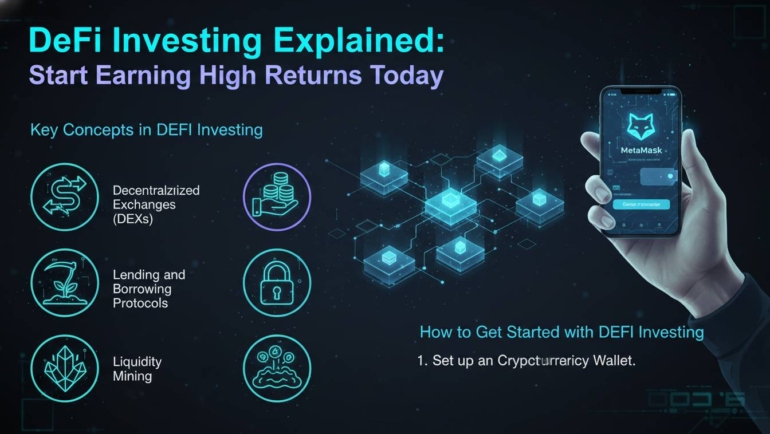
Step 1: Set Up a Compatible Wallet
MetaMask remains the most widely supported wallet for Ethereum and EVM-compatible networks, though hardware wallets like Ledger and Trezor provide enhanced security for significant holdings. Install your chosen wallet as a browser extension or mobile application, and securely back up your seed phrase—this is the only recovery mechanism if you lose access to your wallet.
Step 2: Acquire Base Assets
You’ll need ETH (for Ethereum-based DeFi) or native tokens for whichever chain you choose. Purchasing from reputable centralized exchanges like Coinbase or Kraken and transferring to your wallet provides the cleanest starting point. Start with amounts you’re comfortable experimenting with, as the learning curve involves genuine financial risk.
Step 3: Connect to DeFi Applications
Most DeFi platforms integrate directly with wallet connections through their websites. Navigate to the official platform interface, click “Connect Wallet,” and approve the connection request in your wallet application. Always verify you’re on the correct URL—phishing sites representing popular DeFi protocols represent a persistent threat.
Step 4: Start Small and Learn
Begin with straightforward transactions like stablecoin lending or token swaps before attempting complex strategies. Document your positions, track gas costs, and build understanding before scaling up participation. Many platforms offer testnet versions where you can practice without real capital at risk.
Comparing Platform Fees and Accessibility
Fee structures vary significantly across DeFi platforms and represent an important consideration for frequent users or those with smaller portfolios.
Typical Fee Comparison:
| Activity | Estimated Cost | Platforms |
|---|---|---|
| ETH Mainnet Swap | $3-15 | Uniswap, Curve |
| L2 Swap (Arbitrum/Optimism) | $0.10-0.50 | Uniswap, Curve |
| Lending Deposit | $5-20 | Aave, Compound |
| Cross-Chain Bridge | $5-50 | Wormhole, Axelar |
Layer-2 networks have dramatically reduced transaction costs, making micro-transactions and frequent trading economically viable. For US users specifically, Arbitrum and Optimism offer the best combination of low fees, established DeFi ecosystems, and robust security guarantees.
The Future of DeFi Platforms
The DeFi landscape continues evolving rapidly, with several emerging trends shaping the next phase of decentralized finance. Intent-based architectures are simplifying user experience by allowing participants to express desired outcomes rather than manually executing multi-step transactions. Restaking protocols like EigenLayer are creating new yield opportunities by leveraging Ethereum’s security infrastructure for additional economic activity.
Cross-chain interoperability is improving through advanced bridge technologies and chain abstraction, enabling users to interact with multiple networks through unified interfaces. This development addresses one of DeFi’s persistent fragmentation challenges, where users previously needed to maintain positions across isolated ecosystems.
Regulatory attention continues increasing globally, with US authorities particularly focused on securities law implications and consumer protection frameworks. The sector’s long-term success depends on demonstrating that decentralized protocols can operate within evolving compliance requirements while maintaining their core value propositions of transparency and financial inclusion.
Conclusion
The DeFi ecosystem offers unprecedented opportunities for financial autonomy, yield generation, and participation in the evolving digital economy. Platforms like Aave and Uniswap have proven their reliability through years of operation and billions in transaction volume, while newer protocols continue pushing innovation boundaries.
Success in DeFi requires balancing opportunity with risk management—understanding that smart contract vulnerabilities, market volatility, and regulatory uncertainty all present genuine challenges. Starting with established protocols, maintaining diversified positions, and continuing to educate yourself about evolving mechanisms will provide the foundation for sustainable participation.
As the ecosystem matures, expect continued convergence between decentralized and traditional finance, with institutional participants bringing greater liquidity and sophistication while regulatory frameworks provide clearer operational guidelines. The platforms and strategies outlined in this guide represent current leaders in the space, though the rapidly evolving nature of DeFi demands ongoing attention and adaptability.
Frequently Asked Questions
What is the safest DeFi platform for beginners?
Aave and Compound represent the most accessible entry points for beginners due to their established track records, comprehensive documentation, and intuitive interfaces. Both protocols have operated without major security incidents for multiple years and maintain substantial insurance mechanisms. Starting with these platforms for lending and basic swaps provides a lower-risk introduction to DeFi mechanics.
How much money do I need to start using DeFi platforms?
You can begin with any amount, though transaction fees make small positions impractical on Ethereum mainnet. For Ethereum-based DeFi, $500-1000 represents a reasonable minimum for covering gas costs while leaving meaningful capital for activities. Layer-2 networks like Arbitrum reduce minimums significantly, with viable participation possible at $100-200.
Are DeFi platforms legal in the United States?
DeFi protocols operate without centralized KYC requirements, placing responsibility on individual users to understand their local regulations. The regulatory landscape remains uncertain, with ongoing debates about whether DeFi activities constitute securities offerings or require money transmitter licenses. US users should consult qualified legal counsel regarding their specific circumstances and maintain compliance with existing financial regulations.
Can I lose money in DeFi?
Yes, significant financial loss is possible through several mechanisms: smart contract exploits that drain protocol funds, liquidations triggered by collateral value declines, impermanent loss from liquidity provision, and general market volatility affecting all cryptocurrency holdings. Never invest more than you can afford to lose entirely, and maintain diversified positions across multiple protocols.
How do taxes work for DeFi earnings?
The IRS treats cryptocurrency transactions as taxable events, meaning DeFi yield, trading profits, and token rewards generally constitute taxable income. Lending interest, staking rewards, and liquidity provision earnings all require reporting. DeFi users should maintain detailed transaction records and consult tax professionals familiar with cryptocurrency regulations.
What is the difference between DeFi and CeFi?
Centralized finance (CeFi) involves traditional financial institutions managing user funds through centralized systems, similar to conventional banks. DeFi eliminates intermediaries by using blockchain smart contracts to handle funds directly. CeFi typically offers easier user experiences and customer support but requires trusting a central entity, while DeFi provides greater control and transparency but places full responsibility on users for security and decision-making.