2Views 0Comments
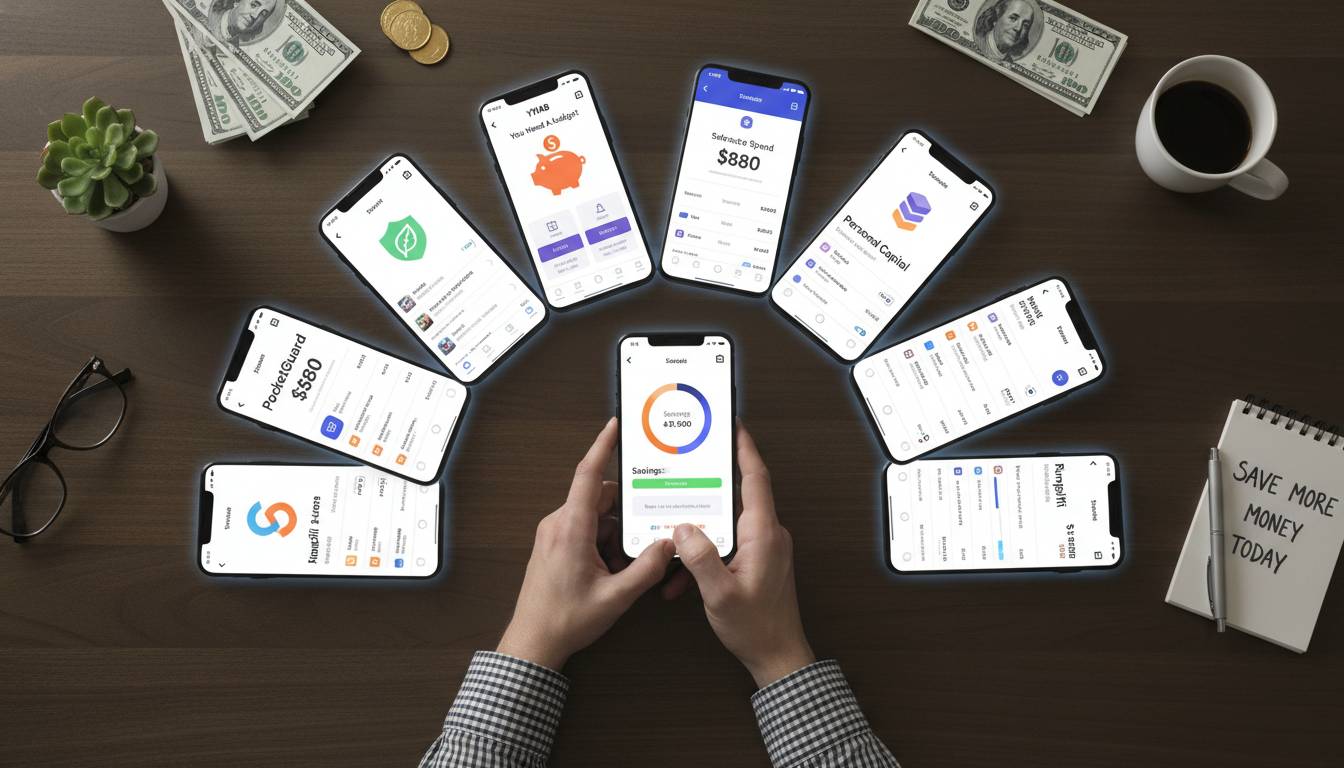
Best Fintech Apps for Budgeting – Save More Money Today
Managing personal finances has undergone a dramatic transformation in recent years, with fintech budgeting apps emerging as essential tools for millions of Americans seeking to take control of their money. These digital platforms offer sophisticated tracking, categorization, and planning features that were once available only through expensive financial advisors or complex spreadsheet systems. Whether you are drowning in debt, saving for a major purchase, or simply wanting to understand where every dollar goes, the right budgeting app can revolutionize your financial life. This comprehensive guide examines the best fintech apps for budgeting available in the United States, analyzing their features, pricing, pros, cons, and which types of users will benefit most from each solution.
Understanding Modern Budgeting Apps
The fintech revolution has fundamentally changed how Americans approach personal finance management. What began as simple expense trackers has evolved into comprehensive financial ecosystems that connect to your bank accounts, credit cards, investments, and even retirement accounts. Modern budgeting apps leverage artificial intelligence and machine learning to provide personalized insights, automatically categorize transactions, and predict future cash flow based on your spending patterns.
The best budgeting apps share several critical features that distinguish them from basic spreadsheet tracking. First, they offer automatic transaction syncing with financial institutions through secure connections, eliminating the need for manual data entry. Second, they provide robust categorization systems that learn your spending habits and can distinguish between a grocery store purchase and a restaurant expense. Third, they include goal-setting functionality that helps you allocate money toward specific objectives, whether that is building an emergency fund, paying off student loans, or saving for a vacation. Finally, the most effective apps deliver actionable insights that help you make better financial decisions in real-time.
When selecting a budgeting app, US consumers should consider factors such as security (look for bank-level encryption and two-factor authentication), pricing (many apps offer free tiers with premium options), device compatibility, and the specific features that align with their financial goals. The apps highlighted in this guide have been selected based on their popularity, feature completeness, user reviews, and overall value proposition for American users.
YNAB (You Need A Budget) – The Gold Standard for Zero-Based Budgeting
YNAB has earned its reputation as one of the most effective budgeting methodologies available, with a philosophy centered on giving every dollar a job before you spend it. Unlike apps that simply track where your money went after the fact, YNAB encourages proactive planning by helping users allocate their income to specific categories before the month begins. This zero-based budgeting approach has helped millions of Americans break the paycheck-to-paycheck cycle and build meaningful savings.
The YNAB app offers a clean, intuitive interface that makes budgeting feel manageable rather than overwhelming. The software connects seamlessly with over 16,000 financial institutions, automatically importing transactions and prompting users to categorize each one. The learning curve exists, but the app provides extensive educational resources including free workshops, video tutorials, and a supportive community forum. Users praise YNAB for changing their entire mindset toward money, transforming them from reactive spenders into intentional planners.
Pricing for YNAB is straightforward: the annual subscription costs approximately $109 per year, though new users can try it free for 34 days. While this represents a higher upfront cost than some competitors, YNAB users frequently report that the methodology pays for itself many times over through reduced unnecessary spending and increased savings. The app is available on iOS, Android, and desktop platforms, with all devices syncing in real-time. For US users committed to transforming their financial habits, YNAB remains the gold standard despite its premium price point.
Mint – The Free Powerhouse for Expense Tracking
Mint has long been the most popular budgeting app in the United States, and for good reason. This free platform offers an impressive array of features without charging users a single dollar, making it accessible to anyone with a smartphone and a bank account. Mint excels at what it does best: tracking your spending across all accounts and presenting that information in easy-to-understand visualizations that highlight your financial patterns.
The app automatically syncs with your bank accounts, credit cards, loans, and investments, providing a complete picture of your financial life in one place. Mint’s categorization system is particularly robust, automatically sorting transactions into categories like groceries, dining, transportation, and entertainment. Users can create custom categories, set budget limits for each category, and receive alerts when spending approaches or exceeds those limits. The app also offers free credit score monitoring, bill tracking, and investment portfolio views, adding significant value beyond basic budgeting.
One of Mint’s standout features is its bill reminder system, which helps users avoid late fees by alerting them when bills are due. The app also identifies subscriptions you may have forgotten about, a common source of hidden monthly expenses. While Mint displays advertisements (which can feel intrusive at times), the trade-off for free usage remains highly favorable for most users. The platform is owned by Intuit, a established financial software company, ensuring ongoing development and security improvements. For budget-conscious Americans who want comprehensive features without paying, Mint remains an excellent choice.
Personal Capital (Empower) – The All-in-One Financial Command Center
Personal Capital, recently rebranded as Empower, targets a more sophisticated audience seeking to integrate their budgeting with wealth management. While the app includes robust budgeting and expense tracking features, its true strength lies in providing a comprehensive view of your entire financial picture, including investments, retirement accounts, and net worth calculations. This makes it particularly valuable for high-income earners or those with complex financial situations involving multiple accounts.
The budgeting features in Personal Capital work similarly to other apps, automatically importing transactions and allowing users to categorize spending. However, the investment tracking capabilities set it apart, showing users their asset allocation, fee analysis, and portfolio performance in real-time. The app includes a useful retirement planner that projects whether you are on track to meet your retirement goals based on current savings and spending patterns. For users with significant investments, this analytical capability provides invaluable planning insights.
Personal Capital offers its basic budgeting features completely free, funded by its wealth management services. Users can upgrade to Personal Capital Advisory Services, which provides access to human financial advisors for a fee based on assets under management. This hybrid model allows the app to remain free for budgeting-only users while generating revenue from those seeking comprehensive wealth management. The app is available on iOS, Android, and desktop platforms.
Goodbudget – The Envelope System Goes Digital
Goodbudget brings the proven envelope budgeting system into the digital age, offering a simple but effective approach that works exceptionally well for those who struggle with more complex software. The methodology is straightforward: you allocate money into virtual envelopes representing different spending categories, and when an envelope is empty, you stop spending in that category until the next month. This tangible approach to budgeting resonates strongly with users who find abstract numbers overwhelming.
The app does not connect directly to bank accounts, which represents both an advantage and a limitation. On the positive side, Goodbudget never stores your banking credentials, eliminating security concerns about third-party data access. Users manually enter transactions, which some view as a feature rather than a bug because the act of recording each purchase increases awareness of spending. However, this manual entry requirement makes Goodbudget better suited to disciplined users rather than those seeking fully automated tracking.
Goodbudget offers a free tier with limited features (up to ten envelopes and one account) and a Plus subscription ($7 per month or $60 annually) that removes these restrictions. The app works across devices, allowing couples to share budgets and track spending together. For families or individuals who prefer hands-on engagement with their finances and appreciate the psychological benefits of the envelope system, Goodbudget delivers excellent results.
Rocket Money (formerly Truebill) – Automation and Negotiation
Rocket Money takes a different approach to budgeting by focusing on automation and bill negotiation services. The app analyzes your spending, identifies recurring subscriptions, and can even negotiate lower bills on your behalf, potentially saving users hundreds of dollars annually. This proactive approach to reducing expenses makes Rocket Money particularly attractive for those who struggle with manual budgeting or want professional help managing their bills.
The app automatically tracks subscriptions across all your accounts, presenting them in a clear list that shows how much you pay each month for each service. Users can mark subscriptions to cancel directly through the app, and Rocket Money will handle the cancellation process. The bill negotiation feature is particularly impressive—users report successful negotiations with cable companies, internet providers, and other service providers that resulted in immediate monthly savings. Rocket Money takes a percentage of the savings it negotiates, aligning its incentives with yours.
Rocket Money offers a free tier with basic budgeting features, while premium features including bill negotiation and subscription management require a subscription (typically $48-$144 annually depending on features). The app is available on iOS and Android, with automatic bank account syncing for transaction tracking. For users overwhelmed by subscriptions or bills, Rocket Money provides a hands-off solution that actively works to reduce expenses.
Quicken – The Comprehensive Desktop Solution
Quicken has been a staple of personal finance software for decades, and its modern cloud-based versions continue to offer comprehensive features that rival any competitor. Unlike many apps focused primarily on budgeting, Quicken provides a complete financial management suite that includes budgeting, bill management, investment tracking, debt payoff planning, and even small business financial management. This breadth makes Quicken ideal for users who want one solution for all their financial needs.
The app syncs with financial institutions to automatically import transactions, categorize spending, and track account balances across banks, credit cards, investments, and loans. Quicken’s budgeting tools are particularly robust, offering multiple methodologies including zero-based budgeting, pay-yourself-first approaches, and traditional category-based tracking. The debt payoff planner shows users exactly how much interest they will save by accelerating payments, providing powerful motivation to eliminate debt faster.
Quicken operates on a subscription model with three tiers: Starter ($35.99 annually), Deluxe ($54.99 annually), and Premier ($99.99 annually). Each tier adds features, with the Premier version including investment tracking and business management tools. While Quicken requires a paid subscription (no free version exists), the comprehensive feature set justifies the cost for users who need all-in-one functionality. The app is available on Windows, Mac, iOS, and Android platforms.
Mvelopes – Envelope Budgeting with Modern Features
Mvelopes combines the envelope budgeting methodology with modern technology, offering a streamlined experience for users who want the structure of envelope budgeting without the manual data entry required by Goodbudget. The app connects to financial institutions, automatically importing and categorizing transactions into your virtual envelopes. This hybrid approach captures the benefits of both automatic tracking and envelope methodology.
The app provides real-time visibility into spending across all categories, showing users exactly how much remains in each envelope at any moment. Users can set savings goals, track progress, and receive alerts when spending approaches envelope limits. Mvelopes also offers financial education resources including articles, calculators, and a podcast, adding value beyond the app itself. The platform is particularly popular among religious communities where envelope budgeting has traditional roots, though it serves users of all backgrounds.
Mvelopes offers a 30-day free trial, after which pricing begins at $7.99 per month or $74.99 annually. The subscription includes all features with no tiered pricing, simplifying the decision-making process. For users drawn to envelope budgeting but wanting automated transaction import, Mvelopes delivers an excellent middle ground.
EveryDollar – Simple Zero-Based Budgeting
EveryDollar, created by Ramsey Solutions (the company behind the popular Dave Ramsey financial philosophy), offers a straightforward zero-based budgeting approach that emphasizes simplicity and accessibility. The app was designed to reflect Ramsey’s budgeting methodology, which encourages users to give every dollar a job, build a $1,000 emergency fund, pay off debt using the debt snowball method, and invest for retirement. For followers of the Ramsey philosophy, EveryDollar provides a natural companion tool.
The free version of EveryDollar allows users to create a budget using the zero-based method but requires manual transaction entry. Upgrading to EveryDollar Plus ($129.99 annually) adds automatic bank syncing, paycheck planning, and premium support. The manual entry requirement in the free version mirrors the philosophy that actively engaging with money decisions builds stronger financial habits. However, users seeking fully automated tracking may prefer the premium version.
EveryDollar excels in simplicity, presenting budget categories in a clean, easy-to-navigate interface. The app includes drag-and-drop functionality for allocating income to categories, making the budgeting process feel almost game-like. For users who appreciate the Ramsey methodology or simply want the simplest possible approach to zero-based budgeting, EveryDollar delivers an effective solution.
Monarch Money – The Premium Modern Option
Monarch Money represents the newest generation of budgeting apps, offering a premium experience designed for users who want sophisticated features without complexity. Launched in 2022, Monarch Money has quickly gained recognition for its beautiful interface, powerful features, and excellent user experience. The app targets affluent users who want comprehensive financial tracking without the cluttered interfaces or advertisement-heavy business models of some competitors.
The app syncs with financial institutions to track spending, investments, and net worth in real-time. Monarch Money’s budgeting features include automatic categorization, custom categories, goal tracking, and detailed reporting that shows spending trends over time. The investment dashboard provides portfolio performance tracking, asset allocation visualization, and fee analysis. Perhaps most impressively, Monarch Money allows couples to share budgets and collaborate on financial goals, with robust permission controls.
Monarch Money costs $99 annually, positioning it as a premium option in the market. There is no free tier, though a 14-day free trial allows users to test the full feature set. For users willing to pay for a premium experience without advertisements, excellent customer support, and modern design, Monarch Money represents an outstanding choice.
Copilot – AI-Powered Financial Intelligence
Copilot brings artificial intelligence to personal finance, offering features that leverage machine learning to provide personalized insights and automation. The app automatically categorizes transactions with impressive accuracy, learns your spending patterns over time, and provides proactive suggestions for optimizing your finances. For users excited about AI applications in everyday life, Copilot offers a glimpse into the future of budgeting technology.
The app connects to financial accounts to provide a complete picture of spending, investments, and net worth. Copilot’s subscription tracking is particularly sophisticated, identifying recurring payments and alerting users to price increases or unused services. The goals feature helps users save for specific purchases or life events, with the app suggesting optimal contribution amounts based on income and spending patterns. The interface is sleek and modern, appealing to users who value aesthetics alongside functionality.
Copilot offers a free tier with basic features and a Premium tier ($95 annually) that adds advanced AI insights, unlimited goals, and priority support. The Premium pricing places Copilot in the mid-premium range, competitive with YNAB and Quicken while offering a different technological approach. For users interested in AI-powered financial management, Copilot delivers a compelling experience.
Choosing the Right Budgeting App for Your Needs
Selecting the best budgeting app ultimately depends on your specific financial situation, technical preferences, and personal goals. Free options like Mint remain excellent choices for users who want comprehensive features without spending money, while premium apps like YNAB and Monarch Money justify their costs through superior methodology and user experience. Users seeking envelope budgeting have strong options in both Goodbudget and Mvelopes, while those wanting AI-powered insights should explore Copilot and Rocket Money.
Consider what matters most to you in a budgeting app. If you want automatic transaction syncing and comprehensive tracking, Mint, YNAB, Personal Capital, or Copilot serve well. If you prefer manual engagement with your finances, Goodbudget or the free version of EveryDollar deliver that experience. If you need help with subscription management or bill negotiation, Rocket Money provides unique value. For integration with broader wealth management, Personal Capital and Quicken offer the most comprehensive features.
Remember that the best budgeting app is the one you will actually use consistently. Download a few options, test their free versions, and pay attention to which interface and methodology resonate with you. Financial improvement requires sustained effort, and choosing an app that fits your lifestyle increases the likelihood of long-term success.
Frequently Asked Questions
Are these budgeting apps secure to use?
Yes, the budgeting apps listed in this guide use bank-level encryption and security protocols to protect your financial data. They connect to financial institutions through secure APIs and never store your banking passwords in most cases. Look for apps that offer two-factor authentication for additional security. However, you should only download apps from official app stores, keep your device software updated, and regularly review your connected accounts for any suspicious activity.
Can I use multiple budgeting apps at the same time?
Technically, you can use multiple apps simultaneously, though this is generally unnecessary and may create confusion. Most users find it more effective to commit to one app and learn its features deeply. However, some users prefer using different apps for different purposes—for example, using Rocket Money specifically for subscription management while using YNAB for overall budgeting. If you do use multiple apps, ensure they do not conflict with each other and that you understand which app serves as your primary financial tracker.
Do budgeting apps work with all US banks?
Most budgeting apps support thousands of financial institutions in the United States, including major national banks, regional banks, credit unions, and online-only financial institutions. Popular apps like Mint, YNAB, and Personal Capital claim to support over 10,000 institutions. However, some smaller banks or credit unions may not be supported. Before committing to an app, verify that your specific financial institutions are compatible.
Do I need to pay for a budgeting app to be effective?
No, free apps like Mint offer comprehensive features that work effectively for most users. Paid apps typically justify their costs through more sophisticated methodologies, better user experiences, additional features, or premium support. If you are new to budgeting or have simple needs, starting with a free app makes sense. You can always upgrade to a premium app later if you find you need additional features or more sophisticated tools.
Can budgeting apps help me get out of debt?
Yes, many budgeting apps include specific features designed to help users pay off debt faster. Apps like YNAB and Quicken include debt payoff calculators that show how much interest you can save by accelerating payments. Rocket Money can negotiate lower interest rates on your behalf. Using any budgeting app consistently will increase your awareness of spending and help you allocate more money toward debt payoff.
What happens if my budgeting app shuts down?
This is a legitimate concern, as some budgeting apps have been discontinued over the years. To protect yourself, regularly export your financial data from any app you use. Most apps allow you to download your transaction history and budget information. Additionally, avoid becoming dependent on any single app’s unique features—stick to established apps with strong user bases and good financial backing, and maintain your own records of important financial information.