10Views 0Comments
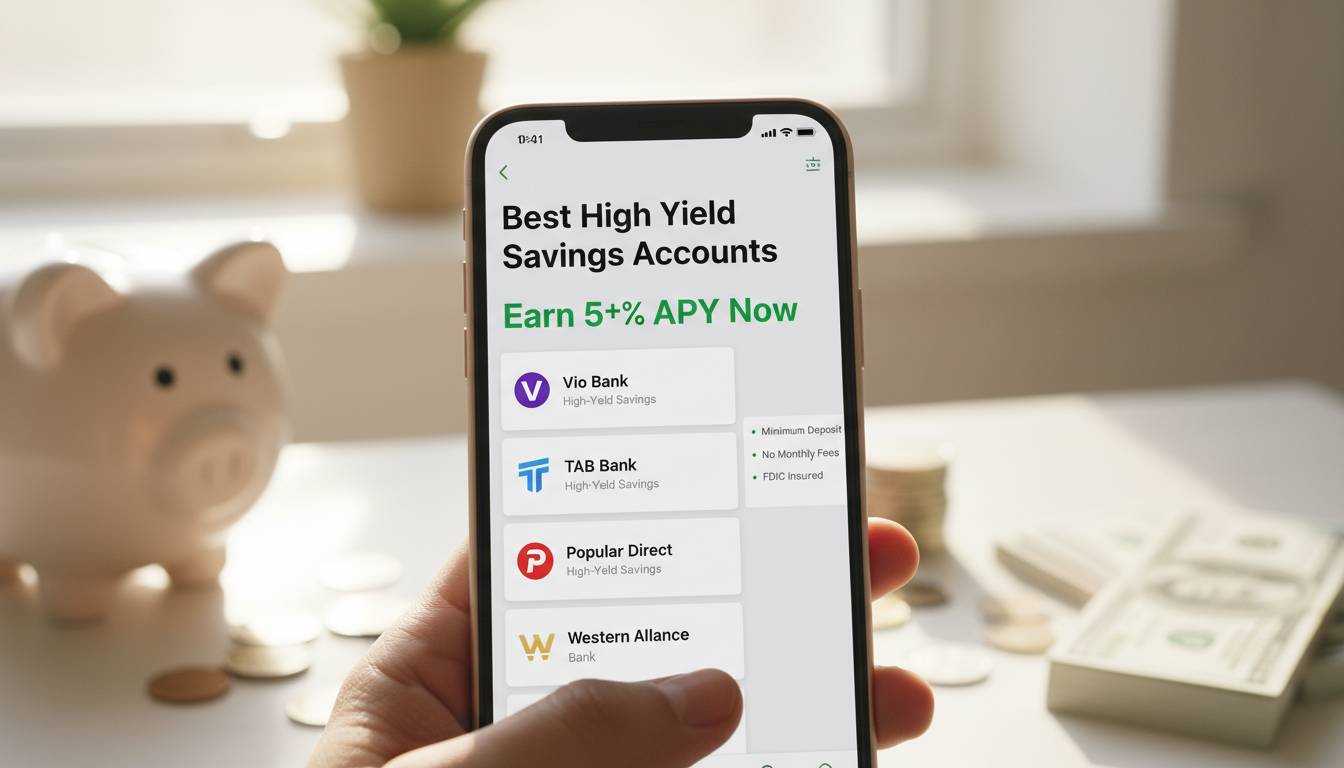
Best High Yield Savings Accounts – Earn 5%+ APY Now
Interest rates have finally done something interesting. After years of earning almost nothing on savings, Americans can now find accounts paying over 5% APY. Here’s how to actually benefit from that.
Understanding High Yield Savings Accounts
A high yield savings account is basically a regular savings account, except it actually pays you decent interest. Online banks and credit unions offer them because they don’t have the overhead costs of running physical branches. That savings gets passed to you in the form of higher rates.
These accounts are FDIC or NCUA insured up to $250,000, so your money is just as safe as it would be at your local bank. The difference is in what you earn.
Current Market Rates and Trends
The Fed raised interest rates repeatedly in 2023 and 2024, and banks responded by bumping up their savings rates. Some online banks now offer 4.5% to 5% APY, which is roughly ten times what traditional banks pay.
Here’s the thing, though: rates aren’t locked in. Unlike a certificate of deposit, a savings account rate can go up or down at any time. The account paying the best rate today might not hold that position next month.
Top Providers in the Current Market
A few names keep coming up:
- Ally Bank – Solid rates, good mobile app
- Marcus by Goldman Sachs – Known for straightforward pricing
- Discover Bank – No fees, decent rates
- Credit unions – Some offer rates that beat the online banks, though you’ll need to qualify for membership
Varo and Chime have also gotten popular, especially among younger users who prefer doing everything on their phone.
What Actually Matters (Besides the Rate)
The headline APY matters, but it’s not the only thing:
- Fees – Some accounts charge monthly fees that eat into your earnings. Many waive them if you keep a minimum balance.
- Minimum deposit – Some require $0 to open. Others want $1,000 or more to earn the advertised rate.
- Access – How fast can you get your money? Most transfers take 1-3 business days.
Read the fine print before committing.
Maximizing Your Returns
Don’t just chase the highest number. A few other strategies help:
- Check rates every few months. Set a calendar reminder. Rates change fast.
- Consider keeping accounts at more than one institution so you can move money if rates shift.
- Use high yield accounts for emergency funds and short-term goals. They’re safe and accessible.
For money you won’t touch for a year or more, a CD might make more sense—but that’s a different conversation.
How This Fits Into Your Financial Plan
Three to six months of expenses in an emergency fund is the standard advice. With rates where they are now, that money actually grows instead of just sitting there. It’s a nice bonus for doing what you should be doing anyway.
These accounts also work well for saving toward specific things—new car, vacation, home repair fund—where you want the money accessible but earning something while you wait.
Common Questions
Is my money safe?
Yes, if the institution is FDIC or NCUA insured. Up to $250,000 is protected.
How often do rates change?
Anytime, really. Watch for changes and be ready to move your money if needed.
What’s the minimum to open one?
Varies widely. Some accounts let you start with $0. Others require $100 or more.
Can I get to my money easily?
Yes. You can usually withdraw or transfer anytime, though federal rules limit certain transfers to six per month. Most transfers complete in 1-3 business days.
How do I pick the right one?
Look at the APY, fees, minimum balance, and whether the app works well for you. Don’t just grab the first one you see—shop around.