13Views 0Comments
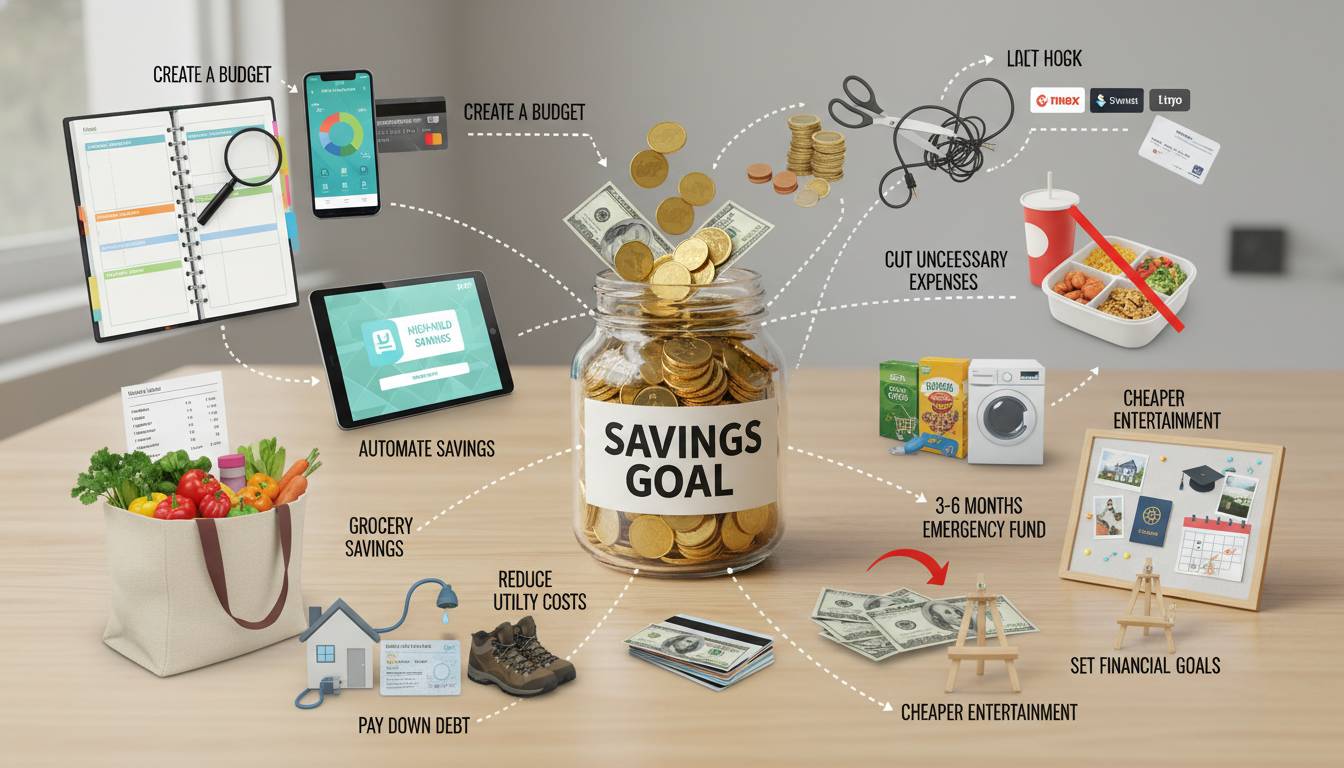
Best Way to Save Money Monthly: Proven Tips That Work
Saving money consistently each month is one of the most powerful financial habits you can develop, yet nearly 60% of Americans struggle to build meaningful savings according to the Federal Reserve. Whether you’re looking to build an emergency fund, save for a major purchase, or grow your wealth over time, establishing a reliable monthly savings strategy is the foundation of financial security. This guide breaks down the most effective approaches to saving money monthly, backed by research and practical implementation steps you can start using today.
Why Monthly Savings Matters More Than You Think
The distinction between saving sporadically and committing to monthly savings is substantial. When you save money consistently each month, you leverage the power of compound interest and create a psychological framework that makes wealth-building feel automatic rather than optional.
Financial experts consistently recommend aiming for 20% of your take-home pay toward savings, though the actual percentage depends on your income, expenses, and financial goals. The Federal Reserve’s Survey of Consumer Finances reveals that households with consistent monthly savings habits accumulate significantly more wealth over time than those who save irregularly larger amounts. This consistency matters because it transforms saving from an afterthought into a non-negotiable part of your financial routine.
Beyond the mathematical benefits, monthly savings provides emotional security. Having three to six months of expenses saved creates a safety net that protects you from unexpected financial shocks like medical emergencies, car repairs, or job loss. This financial cushion reduces stress and provides the freedom to make better decisions rather than reacting to crises.
Setting Up Your Monthly Savings Foundation
Before implementing specific saving strategies, you need to establish systems that make saving automatic. The most effective approach combines three elements: knowing exactly how much you can save, choosing the right accounts, and automating transfers so you never see the money in your spending account.
Calculate your true savings capacity by tracking all expenses for one month. This includes fixed costs like rent, utilities, and insurance, as well as variable spending on groceries, entertainment, and miscellaneous purchases. Once you have a clear picture, identify areas where you can reasonably reduce spending without sacrificing essentials. Many financial experts recommend the 50/30/20 budget framework: 50% for needs, 30% for wants, and 20% for savings and debt repayment.
Choose the right savings vehicle based on when you’ll need the money. High-yield savings accounts currently offer around 4-5% annual percentage yield (APY), making them significantly better than traditional savings accounts that might offer just 0.01% APY. For emergency funds, accessibility matters more than maximizing returns. For medium-term goals like buying a home in three to five years, consider certificates of deposit (CDs) or Treasury securities to earn higher rates while keeping money relatively accessible.
Automate everything. Set up automatic transfers from your checking account to your savings account on payday or the day after. When saving becomes automatic, you remove the decision fatigue that leads to skipping contributions. Studies from research firms consistently show that people who automate savings save more money over time than those who manually transfer funds.
The Most Effective Monthly Saving Strategies
Once your foundation is established, implementing specific strategies can accelerate your savings progress. These approaches work together, and combining several of them typically produces the best results.
The Pay Yourself First Method
Pay yourself first reverses the traditional approach to budgeting. Instead of spending what remains after bills, you save first and spend what Left afterward. This strategy works because it accounts for savings before other expenses, rather than hoping money remains at month’s end.
To implement this, calculate your target savings amount (start with 10-15% of income if 20% feels ambitious) and schedule an automatic transfer for that amount on each payday. Treat this transfer like any other bill payment that must be paid. If your income varies, base your savings on your minimum expected income and save any additional earnings.
The Envelope System for Variable Expenses
For discretionary spending categories like groceries, dining out, and entertainment, the envelope system provides a tangible way to control expenses. Divide cash into envelopes labeled with each category, and when an envelope empties, you stop spending in that category until the next month.
While digital alternatives exist, many people find the physical limitation of cash more effective than app-based tracking. The envelope system works because it creates a visual and psychological boundary around spending. When you see the money leaving the envelope, you’re more conscious of each purchase than when swiping a card.
Strategic Budget Adjustments
Review your recurring expenses and identify opportunities for monthly savings. Common areas where people overpay include:
- Insurance premiums: Bundle policies or shop around annually for better rates
- Subscription services: Cancel unused subscriptions; negotiate lower rates for services you keep
- Phone and internet plans: Many providers offer discounts for autopay or customer retention; call to ask about promotions
- Utility costs: Simple changes like adjusting thermostats by 2-3 degrees, unplugging devices, and using LED bulbs reduce monthly bills
A 2024 analysis from Consumer Reports found that the average household spends $273 monthly on subscription services alone, with many subscriptions going unused. Audit your recurring expenses quarterly to identify wasteful spending.
Debt Repayment as Savings
Prioritizing high-interest debt repayment effectively earns you a guaranteed return equal to the interest rate you’re paying. Credit card debt at 20-25% APR costs you more than any savings account can earn. By paying down debt, you “save” that interest expense.
Consider the snowball method (pay smallest debts first for psychological wins) or the avalanche method (pay highest-interest debts first for mathematical optimization). Both approaches work; choose based on what keeps you motivated. Any extra money beyond minimum payments accelerates your debt-free timeline and frees up more money for savings.
Common Mistakes That Derail Monthly Savings
Understanding what trips up most savers helps you avoid these pitfalls. The most common mistakes include setting unrealistic targets, failing to account for irregular expenses, and abandoning systems during difficult months.
Unrealistic targets lead to failure and frustration. If you’ve never saved consistently, committing to 20% of income immediately may backfire. Start with an achievable amount, even if it’s just $50 monthly, and increase gradually. The goal is building the habit first; optimizing amounts comes later.
Forgetting irregular expenses creates unexpected shortages. Annual subscriptions, holiday gifts, car maintenance, and medical copays don’t happen monthly but still require monthly preparation. Create sinking funds for these predictable irregular expenses by dividing the annual cost by 12 and saving that amount monthly.
All-or-nothing thinking destroys progress. When you miss a month of saving due to an emergency or unexpected expense, don’t abandon the entire system. Resume contributions as soon as possible. Consistency over years matters more than perfection in any single month.
Best Tools and Accounts for Monthly Savings
Selecting the right tools makes a measurable difference in your savings growth. The landscape of savings options has improved dramatically in recent years, with high-yield accounts and automated tools making it easier than ever to grow money safely.
| Account Type | Typical APY | Best For | Access Time |
|---|---|---|---|
| High-Yield Savings | 4.00-5.00% | Emergency funds, short-term goals | 1-3 days |
| Money Market Accounts | 4.00-5.00% | Higher balances, check-writing needs | 1-3 days |
| Certificates of Deposit | 4.50-5.50% | Fixed-term goals, higher rates | Locked until maturity |
| Treasury Securities | 4.25-5.00% | State tax-free interest | 1-3 days |
For automation, many banks offer automatic savings programs that round up purchases to the nearest dollar and deposit the difference into savings. Apps like Acorns, Digit, and Qapital provide similar features with varying fee structures. These micro-savings approaches add up; the average user accumulates hundreds of dollars annually without noticing the small transfers.
Building Long-Term Wealth Through Monthly Saving
Monthly savings serves as the foundation for broader wealth-building strategies. Once you’ve built an emergency fund and paid high-interest debt, consider allocating some monthly savings toward investments that offer higher long-term growth potential.
Employer-sponsored retirement accounts like 401(k)s often include matching contributions, effectively giving you free money. Contribute enough to capture the full employer match before prioritizing other savings goals. For 2024, you can contribute up to $23,000 to a 401(k) plus employer matches, andIRA contributions of up to $7,000 are available for those meeting income requirements.
Roth accounts offer tax-free growth and withdrawals in retirement, making them valuable for young earners expecting higher future income. The combination of tax-advantaged retirement accounts and taxable brokerage accounts creates a diversified savings portfolio that builds wealth over decades.
The key insight is that monthly saving compounds dramatically over time. Saving $500 monthly at a 5% average return grows to over $400,000 in 30 years. Doubling that contribution to $1,000 monthly reaches nearly $820,000. Starting early provides the most powerful advantage, but starting later with larger contributions can still achieve meaningful wealth.
Frequently Asked Questions
How much should I save each month?
Financial experts recommend saving 20% of your after-tax income, but this varies based on your circumstances. A minimum target of 10% works for those just starting, while those with high incomes or aggressive goals might save 30-50%. The most important factor is consistency rather than the exact percentage.
Should I pay off debt or save first?
Generally, prioritize building a small emergency fund ($1,000-2,000) while making minimum debt payments, then attack high-interest debt aggressively. Once high-interest debt is gone, fully fund your emergency fund and maximize retirement account contributions.
What’s the best account for monthly savings?
High-yield savings accounts currently offer the best combination of accessibility and returns for most savers. Look for accounts with competitive APYs (4%+), no monthly fees, and FDIC insurance. Compare rates online or through financial aggregator sites to find the best current offers.
How do I save money on a low income?
Start with whatever amount feels manageable, even $25 monthly. Focus on one expense category at a time to find savings. Prioritize building even a small emergency fund to avoid debt when unexpected expenses arise. Use the envelope system for discretionary spending and automate transfers to remove the temptation to spend.
Should I save for short-term or long-term goals first?
Establish a basic emergency fund (3-6 months of expenses) before pursuing other goals. This protects you from financial emergencies that could derail your plans. Once secured, allocate savings between short-term goals (1-3 years) and long-term goals (3+ years) based on your priorities.
How can I stay motivated to save monthly?
Track your progress visually, celebrate milestones, and automate contributions to reduce decision-making. Connect savings to specific goals like travel, a home, or retirement freedom. Remember that compound interest works in your favor—the earlier and more consistently you save, the easier wealth building becomes.
Conclusion
The best way to save money monthly is whatever system you can maintain consistently over time. Start by calculating your true savings capacity, automate transfers to a high-yield account, and implement strategies like paying yourself first and the envelope system for discretionary spending. Build the habit before optimizing the amounts, and remember that compound growth favors those who start early and stay consistent.
Your financial future gets built one month at a time. The small decisions you make today about saving versus spending compound into dramatically different outcomes over 10, 20, and 30 years. Begin with one change this month, add another next month, and watch your financial security grow.