2Views 0Comments
Bitcoin ETF Explained: Complete Guide for Investors in
The Securities and Exchange Commission approved the first spot Bitcoin ETFs in January 2024, allowing mainstream investors to get Bitcoin exposure through traditional brokerage accounts. This decision changed how Wall Street and everyday investors can access the world’s largest cryptocurrency.
What Is a Bitcoin ETF?
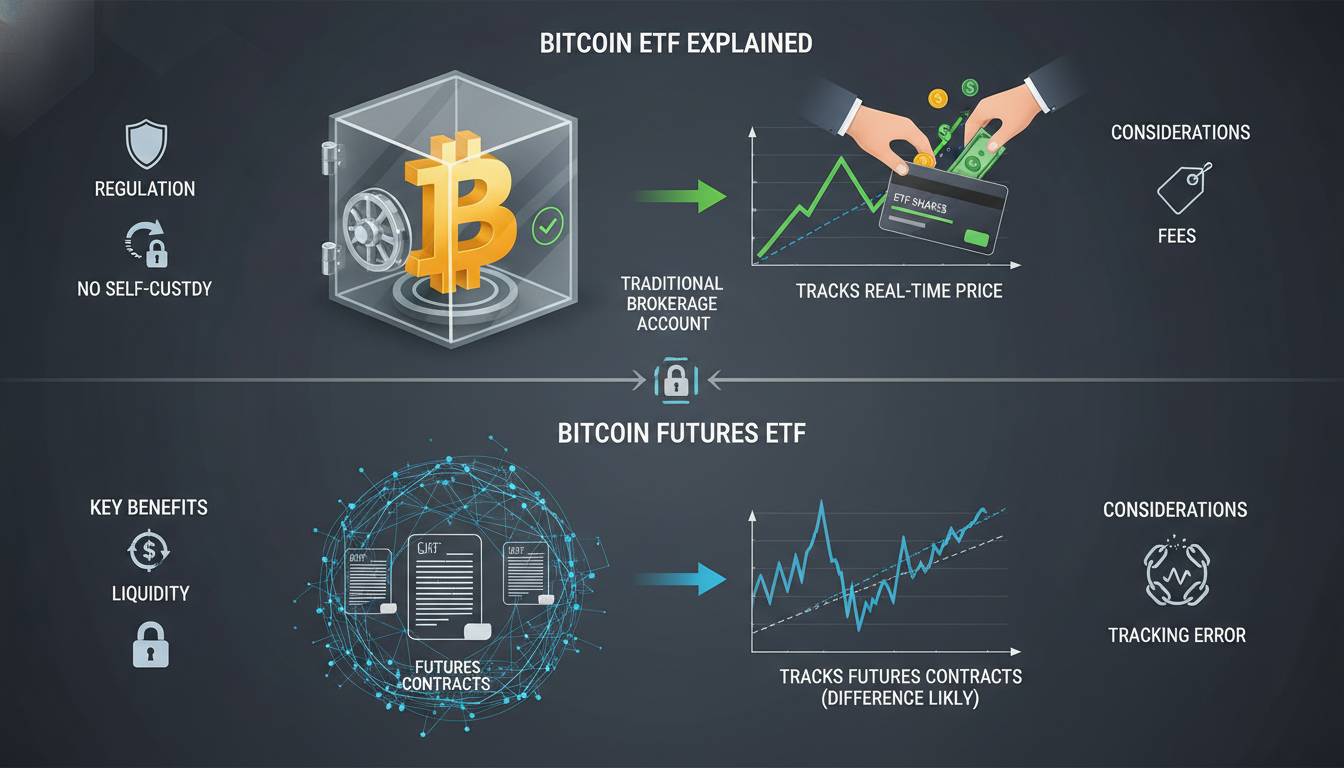
A Bitcoin exchange-traded fund (ETF) tracks Bitcoin’s price and trades on stock exchanges like the NYSE or Nasdaq. Unlike buying Bitcoin directly where you need to manage wallets and private keys, a Bitcoin ETF lets you buy and sell shares through your existing brokerage account, the same way you’d buy Apple or Microsoft shares.
The product holds actual Bitcoin as its underlying asset, with the ETF issuer handling secure storage and management. Each share represents fractional ownership in the fund’s Bitcoin holdings, giving you exposure to Bitcoin’s price movements without dealing with self-custody.
There are two main types: spot Bitcoin ETFs, which hold actual Bitcoin, and futures-based Bitcoin ETFs, which invest in Bitcoin futures contracts. The SEC approval in 2024 was for spot ETFs, which directly mirror Bitcoin’s spot price rather than derivative contracts.
How Does a Bitcoin ETF Work?
The ETF sponsor purchases and holds Bitcoin in secure cold storage, typically with multiple custodians and security measures including multi-signature wallets, insurance, and regular audits to verify holdings.
Authorized Participants (APs), usually large financial institutions, handle the creation and redemption process. When demand for ETF shares increases, APs create new shares by delivering Bitcoin to the fund. When investors sell shares, APs can redeem them for Bitcoin. This mechanism helps keep the ETF’s price in line with its net asset value.
The fund’s shares trade throughout the day on a national securities exchange, with market makers providing liquidity. Investors can use standard tools like limit orders, stop-loss orders, and margin trading through their brokerage platforms.
The SEC Approval of Spot Bitcoin ETFs
After more than a decade of rejection and regulatory uncertainty, the SEC approved spot Bitcoin ETFs on January 10, 2024. This approval followed heavy lobbying from major asset managers including BlackRock, Fidelity, and Grayscale, along with legal pressure from court rulings that criticized the SEC’s inconsistent treatment of Bitcoin products.
The approval led to billions of dollars flowing into these products within the first weeks of trading. BlackRock’s iShares Bitcoin Trust (IBIT) and Fidelity’s Wise Origin Bitcoin Fund (FBTC) became popular choices, accumulating tens of billions in assets.
“This approval gives mainstream investors a familiar, regulated vehicle to access Bitcoin,” said Bloomberg Intelligence analyst James Seyffart.
Benefits of Investing in Bitcoin ETFs
Bitcoin ETFs offer several advantages over direct cryptocurrency ownership, especially for institutional and mainstream retail investors. The biggest benefit is convenience—investors can purchase shares through their existing retirement accounts and brokerage platforms without setting up cryptocurrency exchanges or managing digital wallets.
Regulatory oversight is another advantage. Bitcoin ETFs operate under federal securities laws and must meet SEC disclosure requirements, offering investor protections that direct cryptocurrency ownership cannot match. The ETF structure also provides transparency, with daily holdings disclosures and regular reporting.
Professional custody eliminates security concerns associated with self-custody, including losing access through forgotten passwords or hardware failures. You can also hold Bitcoin ETFs in tax-advantaged accounts like 401(k)s and IRAs, providing tax benefits that direct Bitcoin ownership cannot offer.
The ETF structure enables fractional share investing, so you can get Bitcoin exposure without buying whole Bitcoin units, which currently trade at tens of thousands of dollars each.
Risks and Considerations
Bitcoin ETFs carry significant risks that investors must understand before investing. Bitcoin’s volatility remains the primary concern—the cryptocurrency has experienced multiple drawdowns exceeding 50% from its all-time highs. This volatility directly affects ETF share prices, and investors should be prepared for substantial short-term fluctuations.
The ETF does not eliminate Bitcoin’s underlying risks, including regulatory uncertainty, technological vulnerabilities, and market manipulation concerns. While the ETF structure provides certain investor protections, it cannot shield you from Bitcoin’s price movements or negative developments in the broader cryptocurrency ecosystem.
Expense ratios are higher than traditional equity ETFs. Investors should evaluate total costs including management fees, bid-ask spreads, and brokerage commissions.
Counterparty risk exists through the ETF sponsor and custodian, whose failure or negligence could impact holdings. Major sponsors implement robust security measures and carry insurance, but you should research the specific ETF’s custodians and oversight.
Bitcoin ETF vs. Direct Bitcoin Investment
Choosing between a Bitcoin ETF and direct Bitcoin ownership depends on your circumstances, technical comfort level, and investment objectives. Direct ownership gives you complete control and enables use cases like DeFi participation, but requires managing private keys, securing wallets, and understanding cold storage.
Bitcoin ETFs work well for investors prioritizing convenience, tax efficiency, and integration with traditional accounts. The ability to hold them in retirement accounts provides particular advantages for long-term investors.
Direct ownership may suit investors with technical expertise who prefer self-custody and value Bitcoin’s utility as a transfer mechanism. Some investors prefer direct ownership for philosophical reasons, valuing the decentralization and censorship resistance that self-custody provides.
How to Invest in Bitcoin ETFs
Investing in Bitcoin ETFs requires a brokerage account with access to the specific fund. Most major online brokers including Fidelity, Charles Schwab, Vanguard, and TD Ameritrade offer access to Bitcoin ETFs. Verify that your preferred brokerage offers the specific ETF you want to buy.
The process is identical to buying any other ETF: search for the fund’s ticker symbol, place a market or limit order, and specify the amount or number of shares. Many brokerages offer commission-free trading for ETFs, though you should confirm fee structures.
Consider your investment time horizon and risk tolerance when determining position size. Financial advisors commonly recommend limiting cryptocurrency exposure to a small percentage of a diversified portfolio—typically between 1% and 5%—due to the asset class’s volatility.
Conclusion
Spot Bitcoin ETFs represent an important development in cryptocurrency investing, bridging traditional finance and digital assets. These products give mainstream investors a regulated, accessible pathway to Bitcoin exposure while using traditional brokerage infrastructure.
For US investors considering cryptocurrency allocation, Bitcoin ETFs offer a useful option that balances accessibility with regulatory oversight. However, as with any investment, you should evaluate your risk tolerance, research specific products, and consider how Bitcoin exposure fits within your broader strategy.
Frequently Asked Questions
What is the difference between a spot Bitcoin ETF and a futures Bitcoin ETF?
A spot Bitcoin ETF holds actual Bitcoin, directly tracking the current price. A futures-based Bitcoin ETF invests in Bitcoin futures contracts—agreements to buy or sell Bitcoin at a future date. Spot ETFs generally provide more direct price tracking, while futures ETFs may incur additional costs from rolling contracts.
Are Bitcoin ETFs safe to invest in?
Bitcoin ETFs carry the same market risks as Bitcoin itself, including significant price volatility. While the ETF structure provides regulatory oversight and professional custody, it cannot protect you from Bitcoin’s price fluctuations. Only invest money you can afford to lose and consider your risk tolerance carefully.
How are Bitcoin ETFs taxed?
Bitcoin ETFs are treated as securities for tax purposes—capital gains and losses flow through to your tax return. Holding them in tax-advantaged accounts like IRAs or 401(k)s may provide tax benefits. Consult a tax professional for guidance on your specific situation.
Can I hold Bitcoin ETFs in my retirement account?
Yes, most Bitcoin ETFs are eligible for IRAs, 401(k) plans, and other tax-advantaged accounts, depending on your brokerage. This lets you get Bitcoin exposure while potentially benefiting from tax-advantaged growth.
What are the largest Bitcoin ETFs by assets under management?
As of early 2024, BlackRock’s iShares Bitcoin Trust (IBIT) and Fidelity’s Wise Origin Bitcoin Fund (FBTC) have the largest assets among spot Bitcoin ETFs. Grayscale’s Bitcoin Trust (GBTC) also holds significant assets after converting to an ETF structure.
Do Bitcoin ETFs pay dividends?
Bitcoin ETFs generally do not pay dividends since Bitcoin itself doesn’t generate income. Returns come solely from Bitcoin price appreciation, similar to other non-dividend-paying assets.