18Views 0Comments
Crypto Wallet Security Guide: Protect Your Digital Assets Now
Securing cryptocurrency requires understanding that you—and only you—are responsible for your digital assets. Unlike traditional bank accounts protected by federal insurance and fraud detection systems, cryptocurrency transactions are irreversible and wallets can be emptied in seconds if security measures fail. With over $3.8 billion stolen through crypto hacks and exploits in 2022 alone, and billions more lost to phishing scams and forgotten keys, wallet security isn’t optional—it’s essential for anyone holding digital currency.
This guide covers everything you need to know about protecting your crypto from threats ranging from sophisticated hacking operations to simple human error. Whether you’re storing Bitcoin, Ethereum, or altcoins, the security practices outlined here will help ensure your assets remain yours.
Understanding Crypto Wallet Security Fundamentals
A cryptocurrency wallet doesn’t actually store coins—it stores cryptographic keys that prove ownership of blockchain assets and authorize transactions. Your private key is essentially the master password to your funds, and anyone who obtains it can transfer your cryptocurrency anywhere in the world with no recourse.
Key Components of Wallet Security:
The private key is a randomly generated 256-bit number that allows you to sign transactions. This key should never be shared, stored digitally in an unsecured manner, or exposed to any network-connected device. The public key, derived from your private key, functions like an account number—you can share it freely to receive funds. Seed phrases, typically 12 or 24 words generated by wallet software, represent a human-readable backup of your private key. Anyone with access to your seed phrase controls your wallet entirely.
The Threat Landscape:
Cryptocurrency threats fall into several categories. Remote attacks include phishing emails, malicious websites, SIM swapping, malware keyloggers, and exchange breaches. Physical threats involve theft of devices containing wallet files or seed phrases. Social engineering attacks manipulate users into voluntarily revealing credentials or transferring funds. Human error causes significant losses through forgotten passwords, lost seed phrases, and sending funds to wrong addresses.
The most common attack vector remains phishing and social engineering. According to the FBI’s Internet Crime Report, cryptocurrency-related fraud losses exceeded $2.5 billion in 2022, with investment scams accounting for the majority of losses. These attacks are increasingly sophisticated, with scammers creating exact replicas of legitimate exchange websites, sending convincing emails appearing to be from trusted companies, and using deepfake technology for voice phishing.
Hot Wallets vs Cold Wallets: Which Is Safer?
Understanding the distinction between hot and cold wallets forms the foundation of crypto security strategy.
Hot Wallets:
Hot wallets remain connected to the internet, enabling convenient access for trading and frequent transactions. These include exchange-hosted wallets, mobile apps, browser extensions, and desktop software wallets. The primary advantage is accessibility—you can execute trades quickly and manage your portfolio from any device with internet access.
However, convenience creates significant risk. Every moment a wallet connects to the internet, it faces potential attack. Exchange hot wallets represent particular targets, as demonstrated by the $620 million Ronin Bridge hack and numerous exchange breaches. When you store funds in a hot wallet, you’re relying on the security practices of third parties—and their security may not match your own standards.
Cold Wallets:
Cold wallets remain entirely offline, storing private keys on devices never connected to the internet. Hardware wallets like Ledger and Trezor devices generate and store keys within specialized secure elements. Paper wallets, while outdated, represent another cold storage method involving printing keys on physical medium. The fundamental advantage is that hackers cannot access what they cannot reach.
Comparative Analysis:
| Factor | Hot Wallet | Cold Wallet |
|---|---|---|
| Accessibility | Immediate | Requires physical device |
| Security | Vulnerable to remote attack | Resistant to remote attack |
| Best For | Trading, small amounts | Long-term storage, large amounts |
| Recovery | Dependent on service | Independent (seed phrase) |
| Cost | Usually free | $50-250+ |
Recommended Strategy:
Most security experts recommend a分层 approach. Keep only trading amounts in hot wallets—typically no more than you’d comfortably carry as cash. Store the majority of holdings in cold storage. Many users maintain multiple cold wallets, distributing holdings across different devices and locations to mitigate single-point-of-failure risks.
Essential Security Practices for Every Crypto Holder
Regardless of wallet type, certain practices significantly reduce vulnerability to attacks.
Strong Passwords and Two-Factor Authentication:
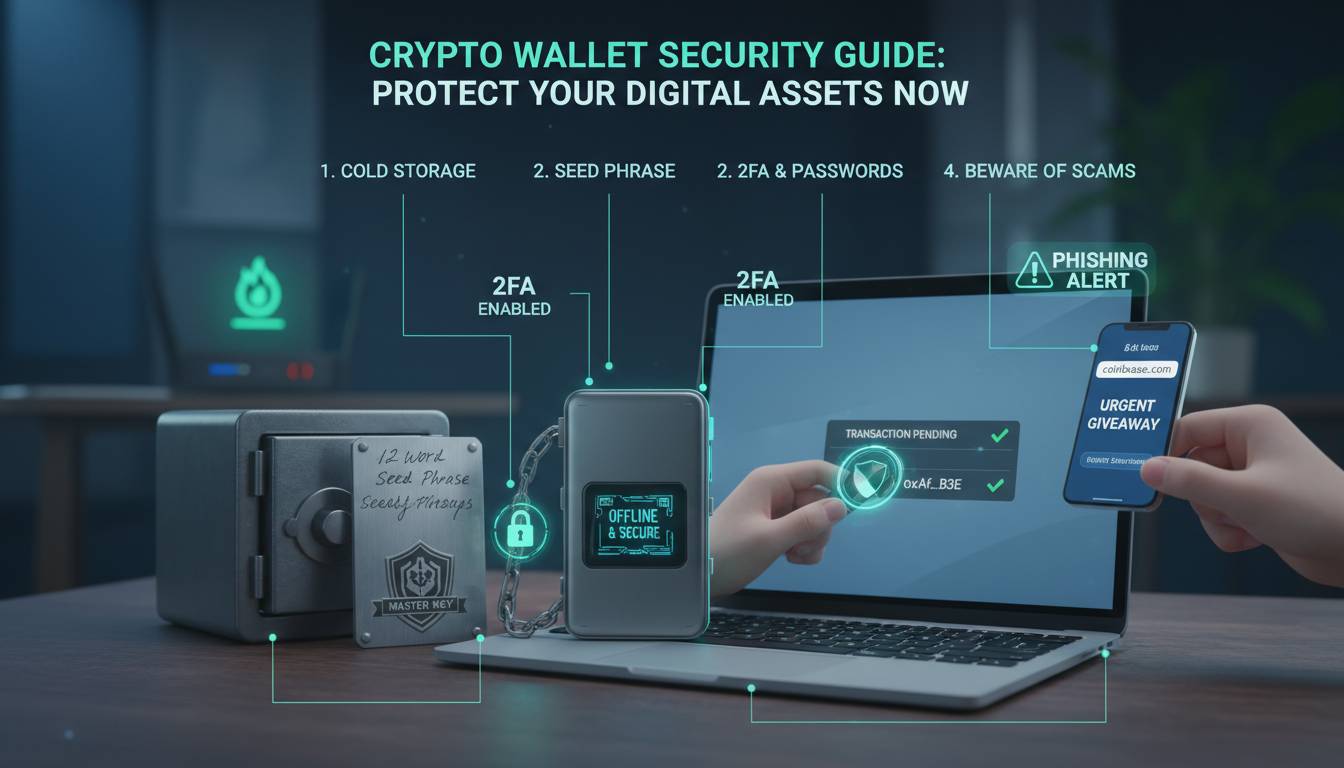
Every account associated with cryptocurrency—exchanges, wallet apps, email—requires unique, complex passwords. Password managers like 1Password or Bitwarden generate and store complex credentials without memorization. Two-factor authentication (2FA) adds critical protection, but not all 2FA methods are equal. SMS-based 2FA remains vulnerable to SIM swapping attacks. Authenticator apps like Google Authenticator or Authy provide stronger protection. Hardware security keys like YubiKey offer the highest authentication security, immune to phishing and remote attacks.
Seed Phrase Security:
Never store seed phrases digitally. Photos, cloud storage, computer files, and email drafts represent common breach vectors. Instead, write seed phrases on paper and store in secure locations. Metal seed phrase storage solutions protect against fire and water damage. Consider dividing seed phrases into parts stored in separate secure locations—requiring multiple locations to be compromised for complete key compromise. The concept of “Shamir Secret Sharing” allows splitting seed phrases into shards where only a subset is needed for recovery, adding geographic security.
Transaction Verification:
Before confirming any transaction, verify the recipient address character-by-character. Malware can modify copied addresses, redirecting funds to attacker-controlled wallets. Use hardware wallets that display addresses on physical screens, immune to computer malware. When sending to new addresses, always test with a small amount first.
Network Security:
Access wallets only through secure networks. Avoid public WiFi for any crypto transaction. Consider using a dedicated device for significant transactions, free from typical browsing and email risks. VPN services add encryption to network traffic, though they don’t substitute for other security measures.
Multi-Signature and Hardware Wallet Solutions
For significant holdings, additional layers of security provide peace of mind.
Hardware Wallets:
Hardware wallets store private keys in specialized hardware security modules (HSMs) with secure elements. These devices never expose private keys to connected computers—instead, transactions are signed within the device and only signed data transmits. Leading options include:
- Ledger: Offers multiple models with varying features, supporting over 5,500 cryptocurrencies. Their Secure Element chips meet CC EAL5+ certification.
- Trezor: Open-source devices with transparent security model. Trezor Model T includes touchscreen for added security verification.
- Coldcard: Bitcoin-only focus with extensive security features including duress PINs and anti-exfiltration measures.
When purchasing hardware wallets, buy directly from manufacturers—third-party sellers may tamper with devices. Verify package integrity and initialize devices yourself rather than accepting pre-configured units.
Multi-Signature Wallets:
Multi-signature (multisig) wallets require multiple private keys to authorize transactions. A 2-of-3 multisig, for example, needs any two of three designated keys. This provides several advantages:
Individual key compromise doesn’t drain funds. Loss of one key doesn’t result in permanent fund loss. Organizational funds can require approval from multiple stakeholders. You can distribute keys across different locations and devices.
Implementation options include native multisig with hardware wallets, smart contract-based solutions like Gnosis Safe, or multi-party computation systems that distribute key generation across multiple parties without any single party holding complete keys.
Common Mistakes That Compromise Wallet Security
Understanding common failures helps you avoid them.
Mistake #1: Storing Seeds Digitally
Saving seed phrases as screenshots, in password managers, or in Notes apps creates vulnerability. Malware can access these digital stores. Even encrypted files face risk if encryption is broken or devices compromised. The infamous case of Mt. Gox, which lost 850,000 BTC (worth billions at current prices), involved both exchange security failures and keys stored in ways attackers accessed.
Mistake #2: Ignoring Update Notifications
Wallet software updates frequently patch security vulnerabilities. Running outdated versions leaves known vulnerabilities exposed. Enable automatic updates where available, and regularly check for updates on devices holding wallet access.
Mistake #3: Insufficient Backup Verification
Creating a backup without verifying it works is like writing down a password you’ve never tested. Regularly verify backup accessibility—confirm you can recover access using seed phrases stored separately from primary wallets.
Mistake #4: Overconfidence in Exchange Security
Exchanges remain prime targets. Even major platforms with significant security budgets experience breaches. The FTX collapse demonstrated that exchange solvency cannot be assumed. withdrawing to personal wallets remains the only way to guarantee you control your keys.
Mistake #5: Neglecting Address Verification
Transaction reversibility doesn’t exist in cryptocurrency. A single character error in an address sends funds to an unreachable location. Always verify first and last several characters of any address before confirming.
How to Respond to a Compromised Wallet
If you suspect compromise, immediate action may save remaining assets.
Immediate Steps:
First, immediately transfer any remaining funds to a secure wallet—if you can access the compromised wallet, assume the attacker can too. Use a fresh wallet with new keys, not a backup of the potentially compromised setup. Disconnect affected devices from networks to prevent further malware spread. Document everything—screenshots, transaction IDs, communications—before attempting recovery.
Recovery Options:
If funds were stolen, report to the FBI Internet Crime Complaint Center (IC3) and local law enforcement. While recovery is rare, reports assist in tracking stolen funds and may aid broader enforcement efforts. Blockchain analysis firms like Chainalysis sometimes assist in tracking stolen cryptocurrency, particularly for large amounts.
Prevention Through Monitoring:
Set up alerts for wallet activity using block explorers or portfolio trackers. Many hardware wallets support watch-only addresses that notify you of any on-chain activity. Early detection of unauthorized access provides opportunity for rapid response.
Frequently Asked Questions
What’s the safest cryptocurrency wallet for beginners?
Hardware wallets like the Ledger Nano S Plus or Trezor Model One offer the best combination of security and usability for beginners. They cost $50-150 but provide significantly better protection than hot wallets. Both support most major cryptocurrencies and include clear interfaces for transaction verification.
Can cryptocurrency wallets be hacked?
Yes, primarily through phishing, malware, exchange breaches, and social engineering. Cold wallets (hardware or paper) cannot be remotely hacked since they never connect to the internet. Hot wallets are vulnerable to various attack vectors, which is why limiting hot wallet holdings is recommended.
What happens if I lose my hardware wallet?
If you have your seed phrase backed up securely, you can recover all funds by purchasing a new hardware wallet (or using compatible software) and entering your seed phrase. Without the seed phrase, lost hardware wallets result in permanent loss of funds—this is why secure seed phrase storage is critical.
Is it safe to keep crypto on exchanges?
Exchanges provide convenience but require trusting third-party security. Major exchanges implement significant security measures but remain attractive targets. For long-term storage, personal wallets (especially hardware wallets) provide superior security. Keep only trading amounts on exchanges.
How do I know if my wallet is compromised?
Signs include unauthorized transactions in your history, unexpected outbound transfers, inability to access your account, or notifications of access from unfamiliar locations/IPs. Set up blockchain monitoring alerts to detect any activity on your addresses.
Should I use a multi-signature wallet?
Multi-signature wallets are recommended for significant holdings (generally $10,000+), organizational funds, or situations where you want protection against single points of failure. They add complexity but provide substantial security improvements over single-key wallets.
Conclusion
Cryptocurrency security ultimately rests on understanding that you are your own bank—and your own security department. The responsibility for protecting digital assets falls entirely on holders, with none of the consumer protections traditional banking provides.
Start with the fundamentals: use hardware wallets for significant holdings, implement strong unique passwords with hardware 2FA, secure seed phrases physically rather than digitally, and verify every transaction detail before confirming. Layer these practices—defense in depth provides protection even if individual measures fail.
The threat landscape continues evolving, with new attack vectors emerging regularly. Stay informed about security best practices, update your setup as new options become available, and periodically audit your security measures. Your cryptocurrency is only as secure as your weakest practice—invest the time now to protect assets that may grow significantly in value.
The fundamental principle remains simple: if you don’t hold your keys, you don’t own your crypto. Take self-custody seriously, implement these practices consistently, and sleep better knowing your digital assets have the protection they deserve.