9Views 0Comments
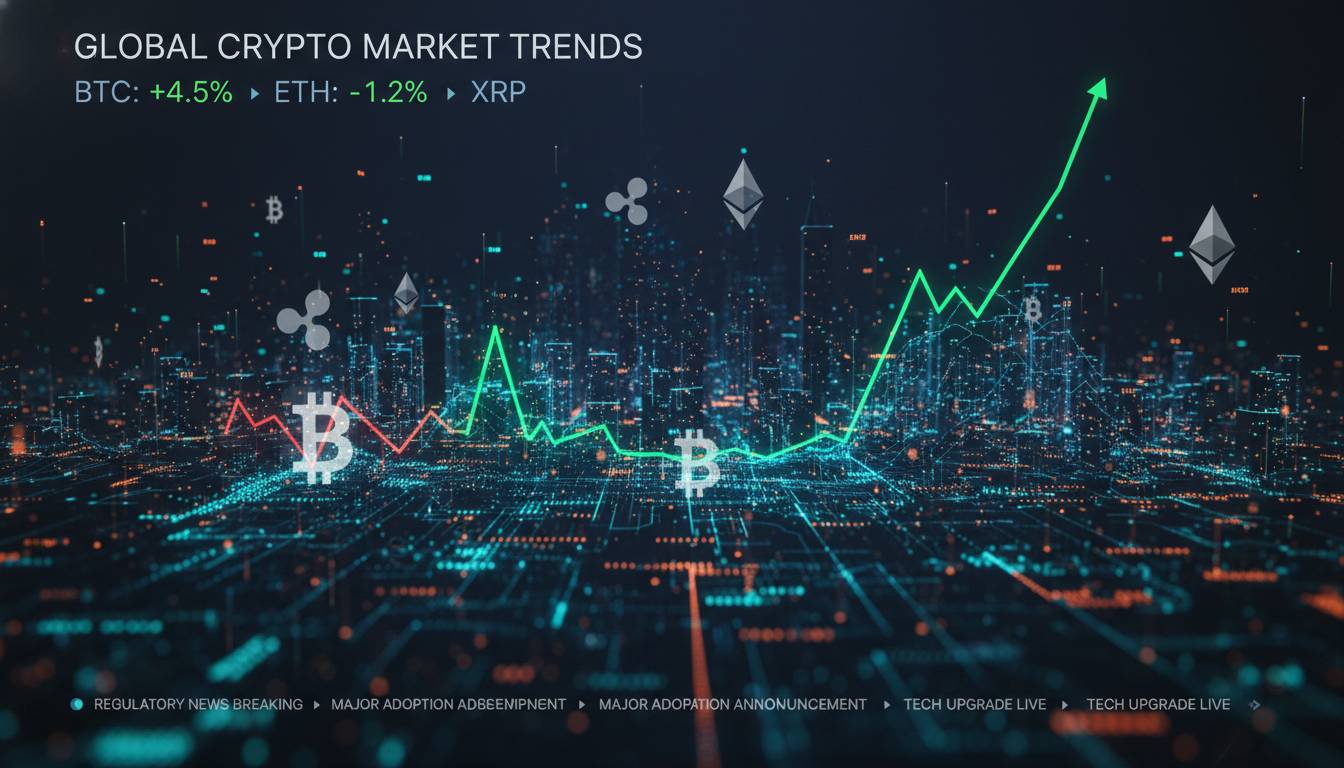
Cryptocurrency Prices Today: Live Market Rates & Trends
The cryptocurrency market continues to evolve rapidly, with daily price fluctuations reflecting a complex interplay of regulatory developments, institutional adoption, technological advancements, and macroeconomic factors. Understanding how to interpret cryptocurrency prices today requires more than simply checking current rates—it demands awareness of the underlying forces driving market movements and the tools available for effective monitoring.
This comprehensive guide provides actionable insights into live cryptocurrency pricing, explains the factors influencing market trends, and outlines practical strategies for staying informed in this volatile asset class.
Understanding Cryptocurrency Price Data
Cryptocurrency prices are determined by trading activity on exchanges worldwide. Unlike traditional financial markets with centralized closing times, crypto markets operate 24 hours a day, 7 days a week, resulting in continuous price discovery.
Key Metrics When Evaluating Crypto Prices:
| Metric | Description | Why It Matters |
|---|---|---|
| Current Price | Latest trading price at time of query | Immediate market valuation |
| 24h Change | Percentage change over 24-hour period | Short-term trend direction |
| 24h Volume | Total trading volume in 24 hours | Market liquidity and activity |
| Market Cap | Total value of all coins in circulation | Relative size and stability |
| All-Time High (ATH) | Highest price ever achieved | Historical performance context |
| Circulating Supply | Coins currently available | Scarcity consideration |
The relationship between circulating supply and market cap provides crucial context. Bitcoin’s capped supply of 21 million coins creates deflationary pressure potential, while tokens with unlimited or increasing supply face different economic dynamics.
Major Cryptocurrencies and Market Dynamics
Bitcoin (BTC)
Bitcoin remains the dominant cryptocurrency by market capitalization, often serving as a market indicator for the broader crypto ecosystem. Its price movements frequently influence altcoin performance, a phenomenon known as correlation.
Bitcoin’s price history demonstrates remarkable volatility. From near-zero in 2009 to peaks exceeding $60,000 in 2021, the cryptocurrency has experienced multiple boom-bust cycles. However, institutional adoption has increased significantly, with major financial institutions offering crypto custody services and investment products.
The network’s hash rate—the computational power securing the blockchain—provides insight into network health and miner confidence. Higher hash rates indicate greater security and investment in the network’s infrastructure.
Ethereum (ETH)
Ethereum functions as the foundation for decentralized applications (dApps) and smart contracts, making its utility fundamentally different from Bitcoin’s store-of-value proposition. The transition to Proof of Stake (The Merge) marked a significant technological shift, reducing energy consumption by approximately 99.95%.
Ethereum’s gas fees—transaction costs denominated in gwei—reflect network demand. During periods of high activity, fees can spike substantially, affecting usability for smaller transactions.
Alternative Cryptocurrencies (Altcoins)
The altcoin market encompasses thousands of cryptocurrencies with diverse use cases:
- Stablecoins (USDT, USDC): Pegged to fiat currencies, designed to maintain $1 value
- DeFi tokens (UNI, AAVE): Power decentralized finance protocols
- Layer-1 blockchains (SOL, AVAX, MATIC): Competing infrastructure platforms
- Meme coins (DOGE, SHIB): Community-driven tokens with speculative dynamics
Altcoin performance varies significantly from Bitcoin, often exhibiting higher volatility and correlation to specific sector developments rather than broad market sentiment.
Factors Influencing Cryptocurrency Prices Today
Regulatory Developments
Regulatory announcements create significant price movements. Key regulatory considerations include:
- Securities classification: Whether a token is classified as a security affects exchange availability
- Ban announcements: Countries restricting cryptocurrency usage typically cause price drops
- Approval decisions: SEC decisions on exchange-traded funds (ETFs) can trigger major movements
- Taxation rules: Clearer tax frameworks reduce uncertainty and may support adoption
The regulatory landscape varies significantly by jurisdiction, with the European Union’s MiCA framework representing one of the most comprehensive regulatory approaches, while the United States continues developing its regulatory framework through multiple agencies.
Macroeconomic Factors
Cryptocurrencies increasingly correlate with traditional risk assets:
- Interest rates: Higher rates generally pressure speculative assets as safe-haven returns improve
- Inflation: Historically, some investors view Bitcoin as inflation hedging
- Dollar strength: A stronger dollar often correlates with weaker crypto prices
- Geopolitical events: Uncertainty can drive both flight-to-safety and risk-on behavior
Network-Specific Developments
Technical and ecosystem developments significantly impact individual cryptocurrency prices:
- Protocol upgrades: Network improvements can increase utility and adoption
- Partnership announcements: Integration with major platforms drives adoption expectations
- Developer activity: Active development suggests long-term project viability
- Token unlocks: Scheduled releases of locked tokens can affect supply dynamics
Market Sentiment and Psychology
Crypto markets exhibit strong sentiment-driven movements:
- Fear and Greed Index: Composite metric measuring market emotion
- Social media trends: Twitter/X discussions and viral content influence retail trading
- Whale activity: Large wallet movements often predict price actions
- Funding rates: Derivatives market positioning indicates leverage distribution
How to Track Cryptocurrency Prices Today
Exchange Platforms
Major exchanges provide real-time pricing with varying features:
| Exchange Type | Examples | Best For |
|---|---|---|
| Centralized Exchanges | Coinbase, Binance, Kraken | Convenience, variety |
| Decentralized Exchanges | Uniswap, Curve | DeFi-native tracking |
| Brokerage Platforms | Robinhood, PayPal | Simplicity |
When comparing prices across exchanges, slight variations occur due to liquidity differences and geographic markets. “Spot price” typically refers to the current market rate, while “average price” may smooth out short-term fluctuations.
Aggregator Websites
Crypto price aggregators compile data from multiple sources:
- CoinMarketCap: Market data leader with extensive listing coverage
- CoinGecko: Similar coverage with different methodology
- TradingView: Advanced charting and technical analysis tools
Aggregators calculate metrics like weighted average price by volume, providing more robust price discovery than single-exchange data.
Mobile Applications
Real-time push notifications from portfolio apps help track significant movements. Most platforms offer customizable alerts for price thresholds, percentage changes, and volume spikes.
API Integration
For developers and advanced users, API access enables programmatic price tracking:
# Example: Fetching BTC price data
import requests

response = requests.get(
    "https://api.coingecko.com/api/v3/simple/price",
    params={"ids": "bitcoin", "vs_currencies": "usd"}
)
price_data = response.json()
current_btc_price = price_data["bitcoin"]["usd"]
Market Analysis Approaches
Fundamental Analysis
Fundamental analysis evaluates cryptocurrency value based on underlying factors:
Network Metrics:
– Active addresses and transaction counts
– Developer activity and code commits
– Ecosystem growth (TVL, dApp usage)
– Token distribution and inflation schedule
Adoption Indicators:
– Institutional investment flows
– Merchant adoption and payment integration
– Regulatory clarity and compliance
Technical Analysis
Price chart patterns help identify potential trading opportunities:
- Support and resistance levels: Price points where buying or selling pressure historically intensifies
- Moving averages: Trend indicators smoothing price data over specified periods
- Relative Strength Index (RSI): Momentum oscillator measuring speed of price changes
- Volume profile: Trading volume at different price levels
On-Chain Analysis
Blockchain data provides insights into network behavior:
- Exchange flows: Deposits and withdrawals indicating potential buying/selling
- HODLer behavior: Long-term holder accumulation patterns
- Miner metrics: Hash rate and miner revenue reflecting network health
- Whale alerts: Large transaction notifications
Risk Considerations
Cryptocurrency investing involves substantial risks that require careful consideration:
Volatility Risk
Daily price swings of 5-10% are common, with periods of extreme volatility occurring regularly. This volatility can result in significant losses, particularly for leveraged positions.
Liquidity Risk
Smaller cryptocurrencies may lack sufficient buyers, making it difficult to exit positions at desired prices. Exchange restrictions or delistings can compound this issue.
Regulatory Risk
Changing regulations can render specific tokens or trading strategies unviable. Portfolio diversification across jurisdictions and assets helps mitigate concentrated regulatory exposure.
Security Risk
Exchange hacks, smart contract vulnerabilities, and wallet compromise have resulted in billions in losses. Hardware wallets, strong passwords, and two-factor authentication represent minimum security requirements.
Information Risk
Market-moving information may be inaccurate, delayed, or deliberately manipulated. Cross-referencing sources and verifying claims before trading based on news is essential.
Frequently Asked Questions
How often do cryptocurrency prices update?
Cryptocurrency prices update continuously as long as markets are open—which is always. Prices change every second based on buy and sell orders across global exchanges. The displayed price typically represents the last traded price or a volume-weighted average across major exchanges.
Which cryptocurrency has the highest price?
Bitcoin (BTC) holds the highest individual coin price among major cryptocurrencies. However, some smaller tokens have higher prices per unit, though this doesn’t indicate greater value. Market capitalization (price × circulating supply) provides a more accurate measure of total network value.
Why do cryptocurrency prices differ between exchanges?
Prices vary between exchanges due to differences in trading volume, liquidity, regional demand, and user bases. Larger exchanges with higher liquidity typically have more accurate prices. Arbitrage opportunities exist when price differences exceed the cost of transferring funds between platforms.
Is cryptocurrency trading profitable?
Cryptocurrency trading profitability varies significantly based on strategy, risk management, market timing, and experience. While some traders achieve substantial returns, others experience significant losses. Statistics consistently show that most retail traders underperform buy-and-hold strategies, particularly in volatile markets.
How do I start tracking cryptocurrency prices?
Begin by creating accounts on reputable price aggregator websites like CoinMarketCap or CoinGecko, or download mobile apps from your preferred exchange. Set up price alerts for assets you’re interested in, and consider using portfolio tracking tools to monitor your holdings alongside market movements.
Conclusion
Understanding cryptocurrency prices today requires moving beyond simple price checks to develop a comprehensive market perspective. The factors driving crypto valuations—regulatory developments, macroeconomic conditions, network adoption, and market psychology—interact in complex ways that create both opportunities and risks.
Successful crypto market participation demands robust monitoring tools, disciplined risk management, and continuous education about an evolving landscape. Whether you’re a casual observer or active participant, staying informed through reliable sources and understanding the fundamental drivers of price movement provides the foundation for navigating this dynamic market.
Remember that cryptocurrency investments carry substantial risk, and past performance does not guarantee future results. Approach crypto market participation with careful consideration of your financial situation, risk tolerance, and investment objectives.