15Views 0Comments
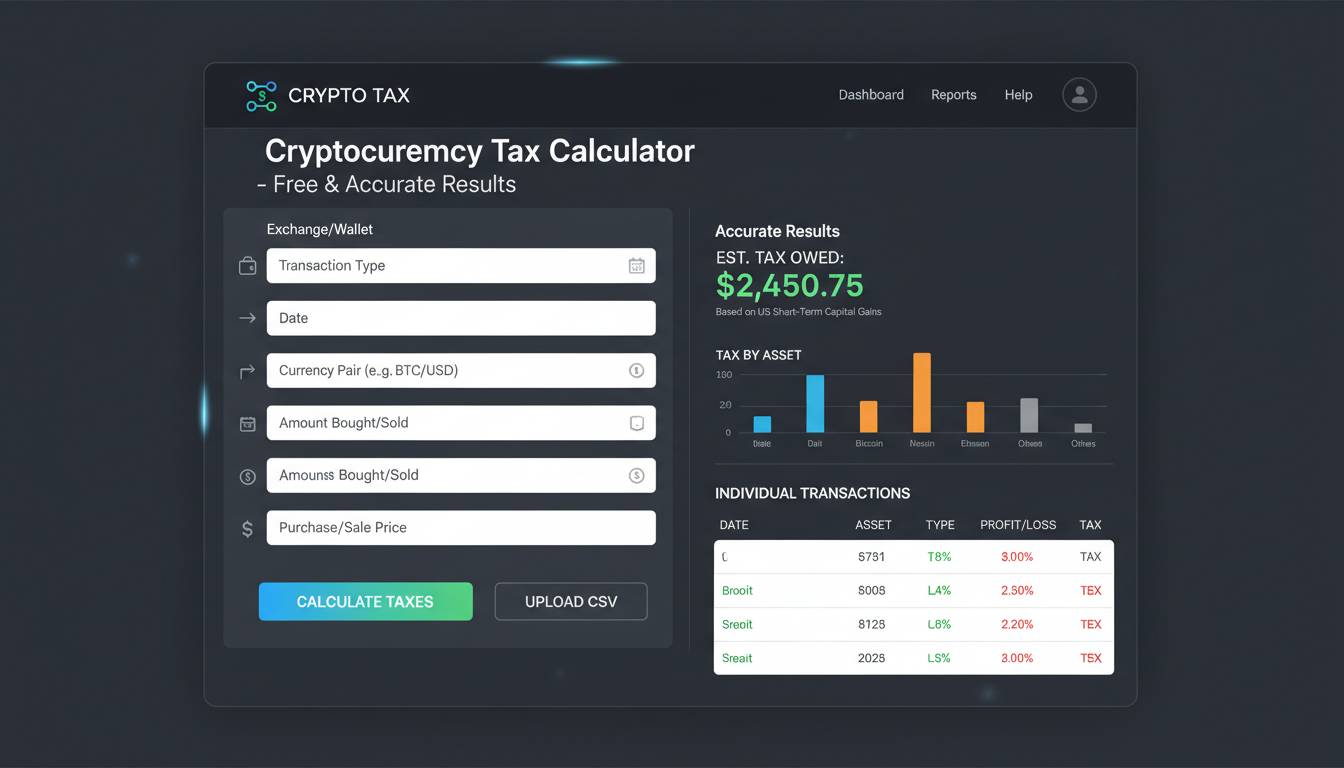
Cryptocurrency Tax Calculator – Free & Accurate Results
Cryptocurrency taxation remains one of the most confusing aspects of digital asset ownership for American investors. With over 400 million people globally owning cryptocurrency and the IRS treating virtual currencies as property rather than currency, understanding your tax obligations has become essential. A cryptocurrency tax calculator helps you determine capital gains, income from mining or staking, and your final tax liability in minutes rather than the hours manual calculation requires.
Key Insights
– The IRS received over 4,000 cryptocurrency-related audit identifiers in a recent fiscal year, marking a significant increase in enforcement
– Short-term capital gains on crypto held less than one year are taxed as ordinary income, reaching rates as high as 37% for high earners
– The average cryptocurrency portfolio contains 5-7 different transactions monthly, making manual tracking impractical for most investors
This guide explains how crypto tax calculators work, which features matter most, and how to choose the right tool for your situation.
Understanding Cryptocurrency Taxation in the United States
The Internal Revenue Service treats cryptocurrency as property, meaning each transaction—whether selling, trading, or using crypto to purchase goods—may trigger a taxable event. This distinction fundamentally shapes how investors must approach their tax obligations.
Capital Gains and Losses
When you sell cryptocurrency for more than you paid, you realize a capital gain. Conversely, selling for less creates a capital loss that can offset gains elsewhere in your portfolio. The IRS distinguishes between short-term gains (assets held less than one year) taxed at ordinary income rates up to 37%, and long-term gains (held longer than one year) taxed at preferential rates of 0%, 15%, or 20% depending on your income bracket.
Income Events
Certain cryptocurrency activities generate ordinary income rather than capital gains. These include mining rewards, staking yields, airdropped tokens, hard forks, and cryptocurrency earned as payment for goods or services. The fair market value of these assets at the time of receipt becomes your income basis, taxed at your ordinary income rate.
Wash Sale Rules
While wash sale rules traditionally applied to stocks and securities, the IRS has indicated it may apply certain loss disallowance principles to substantially identical cryptocurrency positions. Tax calculators that track wash sale implications help you avoid costly mistakes that could trigger audits.
How Cryptocurrency Tax Calculators Work
Modern crypto tax calculators integrate directly with cryptocurrency exchanges through application programming interfaces, automatically importing your transaction history and performing the necessary calculations.
Data Import Process
After creating an account with a tax calculator service, you connect your exchange accounts using read-only API keys. These keys allow the software to access your transaction history without granting withdrawal permissions. The calculator pulls every trade, purchase, sale, transfer, and withdrawal from supported exchanges including Coinbase, Binance, Kraken, Gemini, and dozens of others.
Calculation Methodology
Once imported, the software identifies the cost basis for each cryptocurrency unit using one of several accounting methods. First-in-first-out sells your oldest holdings first, while highest-in-first-out typically minimizes taxes by selling your most expensive units first. Some calculators automatically test multiple methods and select the most advantageous outcome.
Tax Loss Harvesting
Advanced calculators identify opportunities to harvest losses by selling positions at a loss to offset gains. They can also flag positions where holding for an additional few days or weeks would convert short-term gains to long-term gains, dramatically reducing your tax burden.
Features That Actually Matter in a Tax Calculator
With numerous cryptocurrency tax calculators available, understanding which features provide genuine value helps you make an informed decision.
Exchange Coverage
The most critical feature is exchange compatibility. A calculator that supports 300+ exchanges handles virtually any portfolio, while limited support means manually entering transactions from unsupported platforms. Check whether the calculator supports the specific exchanges you use before committing.
Supported Transactions
Beyond basic buying and selling, ensure the calculator handles staking rewards, DeFi transactions, NFT trades, decentralized exchange swaps, and cross-chain bridges. Each transaction type has different tax implications, and manually categorizing these events defeats the purpose of using software.
Tax Loss Harvesting Tools
Portfolio analysis tools that identify tax-loss harvesting opportunities and estimate potential savings distinguish premium calculators from basic options. Look for calculators that project your tax liability under different scenarios.
Integration with Tax Software
For complex returns, calculators that export directly to platforms like TurboTax, H&R Block, or connect with CPAs via compatible tax preparation software streamline filing. This integration eliminates double-entry errors and ensures your crypto tax documentation transfers cleanly to Form 8949.
Comparing Free vs Paid Cryptocurrency Tax Calculators
Understanding the distinction between free and paid options helps you select appropriate software without overspending.
Free Calculator Limitations
Free cryptocurrency tax calculators typically handle a limited number of transactions—often 20 to 100 transactions depending on the provider. They may exclude DeFi transactions, staking, or mining, leaving you to manually categorize these events. Many free versions restrict export capabilities or add watermarks to reports that make them unsuitable for professional filing.
When Free Works
Free calculators suit casual investors with simple portfolios: occasional buying and selling on a single major exchange with fewer than the transaction limit. If you started investing recently, made less than 20 total transactions, and only used platforms like Coinbase or Gemini, a free calculator may handle your needs adequately.
Paid Calculator Value
For active traders, DeFi participants, or anyone with more than 100 transactions annually, paid calculators provide essential functionality. Most pricing ranges from $49 to $299 annually depending on transaction volume and feature access. Considering that professional tax preparation for crypto can cost $500 or more, calculators that identify meaningful tax savings often pay for themselves.
Top Cryptocurrency Tax Calculators Available
Several established providers offer reliable tax calculation services for US investors.
CoinTracker
Founded by former Google engineers and now supporting over 300 exchanges, CoinTracker integrates with major exchanges and wallet protocols. It offers automatic cost basis calculation, tax-loss harvesting suggestions, and portfolio tracking. Pricing starts free for up to 25 transactions, with paid plans beginning at $59 annually for 100 transactions.
Koinly
Koinly supports over 300 platforms and provides both a web interface and mobile app for portfolio viewing. The platform offers multiple accounting methods, automatic tax report generation, and direct integration with popular tax filing software. Free accounts cover up to 10,000 EUR in transactions, with paid plans starting at $49.
TaxBit
TaxBit focuses on both individual investors and enterprise clients, offering sophisticated tax calculations combined with compliance guidance. The platform provides real-time tax lot matching and supports complex DeFi scenarios including yield farming and liquidity provision. Pricing varies based on transaction volume and begins around $99 annually.
Zen Ledger
Zen Ledger emphasizes comprehensive transaction support including DeFi, NFTs, and staking. The platform provides portfolio analytics alongside tax calculations and offers CPA consultation add-ons. Plans range from free basic versions to $299 annually for unlimited transactions.
Common Cryptocurrency Tax Mistakes to Avoid
Understanding frequent errors helps you use calculators more effectively and avoid triggering audits.
Forgetting Small Transactions
Many investors overlook tiny transactions, dust balances, or test transactions that moved fractions of cryptocurrency. These small movements accumulate over time and can trigger substantial tax bills if ignored. Using a calculator that captures even minute transactions ensures complete compliance.
Incorrect Cost Basis
Using the wrong purchase price when calculating gains creates inaccurate tax liability reports. This commonly occurs when investors forget to include transaction fees in their cost basis or misidentify which specific units were sold in partial position sales.
Missing Income Events
Receiving staking rewards or mining income without reporting it as ordinary income triggers underpayment penalties. Tax calculators designed to identify these events automatically help ensure income events appear on your return.
Failing to Report Foreign Accounts
If you use international exchanges, you may have reporting requirements beyond your tax return. Forms like FinCEN 114 (FBAR) require reporting foreign financial accounts exceeding $10,000 in aggregate value.
Expert Insights on Cryptocurrency Tax Planning
Professionals working in cryptocurrency taxation emphasize the importance of proactive planning rather than reactive calculation.
“Most crypto investors don’t realize that every single trade—even between different cryptocurrencies—is a taxable event. Converting Bitcoin to Ethereum triggers capital gains on the Bitcoin sold, and the Ethereum received establishes a new cost basis. Investors making weekly or daily trades can easily accumulate hundreds of taxable events annually.” — Jennifer Holds, CPA and cryptocurrency tax specialist at Summit CPA Group
“Tax-loss harvesting in cryptocurrency requires careful planning. The IRS scrutinizes losses claimed on digital assets, and documentation proving the holding period and original purchase price must withstand examination. Professional calculators that maintain detailed audit trails provide crucial protection.” — Mark Thompson, enrolled agent and founder of CryptoTaxCoach
Choosing the Right Calculator for Your Portfolio
Selecting a cryptocurrency tax calculator requires matching your specific situation to available features.
Portfolio Complexity Assessment
Evaluate the complexity of your crypto activities: number of exchanges used, transaction frequency, participation in staking or DeFi, and history of your holdings. More complex portfolios require calculators with advanced features and higher transaction limits.
Budget Considerations
Calculate whether the calculator cost makes sense given your tax situation. If you have significant gains, the savings from proper tax-loss harvesting or optimal accounting method selection likely exceed the software cost. For small portfolios with minimal gains, free or low-cost options may suffice.
Future-Proofing
Cryptocurrency tax regulations continue evolving, and calculators must adapt. Choose providers demonstrating active development and responsiveness to regulatory changes. Providers with large user bases and professional features typically maintain better compliance with current rules.
Conclusion
Cryptocurrency tax calculators transform a potentially overwhelming compliance requirement into a manageable process. By connecting directly to your exchange accounts, automatically identifying taxable events, and applying optimal accounting methods, these tools save hours of tedious work while potentially reducing your tax liability through proper loss harvesting and cost basis optimization.
Whether you choose a free calculator for simple tax situations or invest in comprehensive software for complex portfolios, the key is beginning the process before tax deadlines approach. The IRS has increased cryptocurrency enforcement actions, making accurate record-keeping more important than ever. Using reliable tax calculation software protects you from penalties and ensures you keep more of your cryptocurrency gains.
Frequently Asked Questions
How does a cryptocurrency tax calculator determine my capital gains?
Cryptocurrency tax calculators determine capital gains by comparing your selling price to your cost basis for each transaction. The cost basis includes the original purchase price plus any transaction fees. The calculator applies your chosen accounting method—whether FIFO, LIFO, or highest-in-first-out—to determine which specific units were sold and calculates gains or losses accordingly.
Do I need to pay taxes on cryptocurrency if I never sold it?
No, simply holding cryptocurrency does not trigger taxable events. You only realize capital gains or generate income when you sell, trade, or dispose of cryptocurrency. However, receiving cryptocurrency through mining, staking, airdrops, or as payment creates taxable income based on the fair market value at the time of receipt.
What happens if I can’t find all my transaction records?
If your exchange no longer exists or you cannot locate historical transactions, cryptocurrency tax calculators often allow manual entry of transactions. Some services also offer reconstruction services using blockchain analysis to identify past transactions. For missing records, maintaining any documentation available and working with a tax professional helps establish reasonable estimates.
Can I use a cryptocurrency tax calculator for free, or do I need to pay?
Many cryptocurrency tax calculators offer free tiers with limitations on transaction volume. Free versions typically handle 20 to 100 transactions and may exclude advanced features like DeFi support or tax-loss harvesting tools. If your portfolio exceeds these limits or you have complex transactions, paid plans starting around $49 annually provide comprehensive functionality.