12Views 0Comments
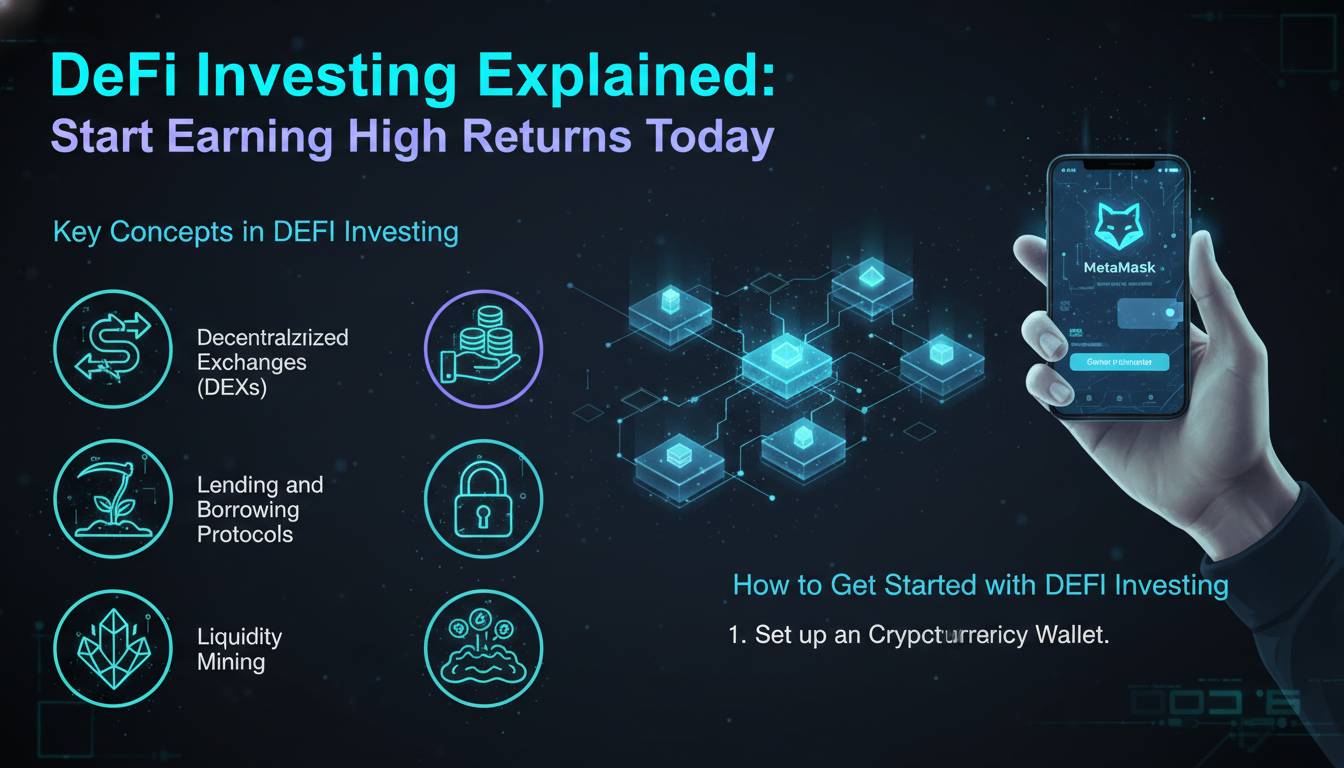
DeFi Investing Explained: Start Earning High Returns Today
The total value locked in decentralized finance protocols surpassed $50 billion in early 2024, representing a remarkable recovery from the market downturn of 2022. This surge reflects growing institutional and retail interest in blockchain-based financial instruments that operate without traditional intermediaries. For investors seeking alternatives to conventional savings accounts offering minimal returns, DeFi presents compelling opportunities—but understanding the mechanics, risks, and strategic approaches is essential before committing capital.
This guide provides a comprehensive framework for navigating DeFi investing, from foundational concepts to advanced strategies, while equipping you with the knowledge needed to make informed decisions in this rapidly evolving landscape.
What Is DeFi and Why It Matters in 2024
Decentralized Finance, commonly called DeFi, refers to a collection of financial applications built on blockchain networks—primarily Ethereum—that eliminate traditional intermediaries like banks, brokers, and custodians. These protocols enable peer-to-peer financial transactions, including lending, borrowing, trading, and earning interest, through smart contracts that automatically execute terms when predetermined conditions are met.
The significance of DeFi extends beyond technological novelty. Traditional financial systems restrict access based on geography, credit history, and wealth thresholds. DeFi inverts this model: anyone with an internet connection and a cryptocurrency wallet can access financial services previously available only to accredited investors or those with substantial net worth.
Key Statistics
– DeFi’s total value locked reached $49.6 billion in March 2024, up from approximately $30 billion in early 2023
– Ethereum maintains approximately 55-60% of DeFi TVL, remaining the dominant blockchain for financial applications
– Average stablecoin yields on major lending protocols range from 3-8% annually, significantly exceeding traditional savings account rates
The composability of DeFi represents perhaps its most powerful characteristic. Like building blocks, different protocols connect seamlessly—liquidity from one platform fuels lending on another, creating interconnected systems where value flows efficiently across the ecosystem. This interoperability distinguishes DeFi from fragmented traditional finance, where moving money between institutions often incurs significant friction and delays.
How DeFi Works: The Building Blocks
Understanding DeFi requires grasping several core concepts that form the infrastructure of this financial revolution.
Smart Contracts
Smart contracts are self-executing programs stored on the blockchain that automatically enforce agreement terms when conditions are met. Unlike traditional contracts requiring lawyers and courts for enforcement, smart contracts execute precisely as programmed. A lending protocol’s smart contract automatically liquidates collateral if a borrower’s position falls below the required threshold—no human intervention required, no delays.
Liquidity Pools
Rather than matching individual buyers and sellers like traditional exchanges, DeFi uses liquidity pools. Users deposit token pairs into pools that facilitate trading. In return for providing liquidity, participants earn a share of trading fees. This mechanism enables continuous market availability without the order book model central to traditional exchanges.
Liquidity provision carries impermanent loss risk—temporary value divergence between deposited tokens that can result in net losses compared to simply holding. Understanding this risk is crucial before providing liquidity to any protocol.
Yield Farming and Staking
Yield farming involves strategically moving assets across different DeFi protocols to maximize returns. An investor might lend stablecoins on one platform for 5% APY, then stake the received token on another platform for additional rewards, compounding yields across multiple sources.
Staking, particularly relevant for proof-of-stake blockchains, involves locking cryptocurrency to support network operations like transaction validation. In return, stakers receive rewards—Ethereum validators currently earn approximately 3-4% annual returns on staked ETH.
Decentralized Exchanges (DEXs)
DEXs like Uniswap, Curve, and SushiSwap enable token swaps directly from user wallets without depositing funds onto a centralized platform. These exchanges use automated market maker algorithms rather than traditional order books, pricing trades based on liquidity pool ratios rather than bid-ask spreads.
Top DeFi Investment Strategies That Work
With foundational knowledge established, examining specific strategies helps translate theory into actionable approaches.
Lending for Passive Income
Lending represents the most straightforward DeFi strategy for beginners. Platforms like Aave, Compound, and MakerDAO allow users to deposit cryptocurrencies and earn interest paid by borrowers. Stablecoin lending typically offers the most predictable returns, with rates fluctuating based on market demand for borrowing.
| Platform | Supported Assets | Base Lending Rate (2024) | Key Feature |
|---|---|---|---|
| Aave | 20+ assets | 3-8% (stablecoins) | Variable rates, liquidity mining |
| Compound | 10+ assets | 3-6% (stablecoins) | Governance token rewards |
| MakerDAO | ETH, stablecoins | 1-4% (stablecoins) | DAI stablecoin generation |
Strategy: Deposit stablecoins like USDC or USDT on lending protocols during periods of high borrowing demand to capture elevated yields. Withdraw during rate declines to seek better opportunities elsewhere.
Liquidity Provision
Providing liquidity to DEXs offers earning opportunities through trading fee shares. The strategy works best for investors comfortable with impermanent loss risk and who believe the token pair won’t experience extreme price divergence.
Strategy: Select trading pairs with correlated prices or stablecoin pairs where impermanent loss risk remains minimal. ETH-USDC pools, for example, see lower divergence than volatile asset pairs. Focus on pools with substantial TVL to ensure sufficient trading volume for meaningful fee earnings.
Yield Aggregators
Yield aggregator protocols like Yearn Finance, Convex Finance, and Beefy Finance automatically optimize yields by moving funds across strategies. These platforms employ sophisticated algorithms that would require significant expertise and time to replicate manually.
Strategy: For hands-off investors, depositing funds into established yield aggregators provides automated optimization without constant monitoring. Research platform track records, audit history, and fee structures before committing capital.
Staking Derivatives
Liquid staking derivatives solve a key problem in proof-of-stake ecosystems: locked staking eliminates liquidity. Protocols like Lido and Rocket Pool allow users to stake ETH while receiving liquid tokens (stETH, rETH) representing their staked position. These derivatives can then be used in other DeFi activities—lending, providing liquidity, or further yield farming—while earning staking rewards.
Strategy: Use liquid staking to maintain liquidity while earning staking yields. This approach suits investors who want exposure to staking rewards without sacrificing capital accessibility.
Risks, Challenges, and How to Mitigate Them
Transparent risk acknowledgment distinguishes responsible DeFi education from promotional content. Understanding these risks enables informed decision-making.
Smart Contract Risk
Despite extensive auditing, smart contracts contain vulnerabilities that hackers occasionally exploit. The DeFi ecosystem has experienced billions in losses from protocol hacks. Mitigate this risk by using protocols with established track records, multiple security audits, and active insurance coverage through protocols like Nexus Mutual.
Impermanent Loss
As previously noted, liquidity provision carries impermanent loss risk that can exceed earned fees during significant price movements. This risk is particularly acute for volatile token pairs. Using stablecoin pairs or concentrated liquidity pools on newer protocols can reduce exposure.
Regulatory Uncertainty
DeFi exists in a regulatory gray area that may resolve unpredictably. Securities regulations, tax reporting requirements, and consumer protection laws may evolve rapidly. Maintain records of all transactions, understand your tax obligations, and monitor regulatory developments in your jurisdiction.
Counterparty and Platform Risk
Even decentralized protocols carry platform-specific risks: team abandonment, governance attacks, or economic exploitation. Diversification across multiple protocols reduces exposure to any single point of failure.
Why Traditional Investors Hesitate
Institutional investors and mainstream finance professionals cite several barriers to DeFi adoption: technical complexity, uncertain regulatory status, smart contract vulnerabilities, and the irreversible nature of blockchain transactions. Addressing these concerns requires starting with small position sizes, using reputable platforms, and continuously educating oneself about evolving best practices.
Getting Started: Your First DeFi Investment
Transitioning from understanding to action requires practical steps and careful preparation.
Prerequisites
Before interacting with DeFi protocols, secure necessary tools:
- Self-custody wallet: MetaMask, Rabby, or hardware wallets like Ledger provide secure key management
- Cryptocurrency: Acquire tokens (typically ETH for transaction fees) from reputable exchanges
- Research: Study target protocols—audit reports, community discussions, historical performance
Step-by-Step Process
Step 1: Set Up Your Wallet
Download a browser extension or mobile wallet. Create a strong password and securely store your seed phrase—never share this with anyone, and never enter it on suspicious websites.
Step 2: Acquire Base Currency
Purchase ETH from exchanges like Coinbase, Kraken, or Binance US. Transfer to your personal wallet rather than leaving funds on exchanges to maintain true self-custody.
Step 3: Connect to a Protocol
Visit a DeFi platform’s official website. Click “Connect Wallet” and approve the connection in your wallet extension. Always verify you’re on the correct URL—phishing sites targeting DeFi users are increasingly sophisticated.
Step 4: Start Small
Begin with minimal capital to understand transaction mechanics. Test deposit and withdrawal processes with amounts you’re comfortable losing entirely.
Step 5: Monitor and Optimize
Track positions using portfolio trackers like Zapper or DeBank. Periodically evaluate whether yields have shifted and whether repositioning makes sense.
Common Beginner Mistakes to Avoid
Never connect your wallet to unverified platforms, no matter how attractive promised yields appear. Avoid “rug pull” tokens—meme coins and newly launched tokens with no real utility frequently disappear with investor funds. Never share your seed phrase, and always verify contract addresses before approving transactions.
The Future of DeFi: Trends to Watch
Several developments promise to shape DeFi’s evolution in coming years.
Institutional Integration
Major financial institutions increasingly explore DeFi infrastructure. BlackRock’s tokenized fund pilots and Franklin Templeton’s blockchain-based money market fund demonstrate growing institutional interest. This trend may bring increased liquidity, legitimacy, and regulatory clarity.
Cross-Chain Expansion
While Ethereum dominates current DeFi activity, competing blockchains like Solana, Avalanche, and Arbitrum capture increasing market share. Cross-chain protocols enabling asset movement between networks will likely gain importance as users seek opportunities across multiple ecosystems.
Regulatory Development
The SEC, CFTC, and international regulatory bodies continue debating appropriate frameworks for DeFi. Clearer regulations could attract institutional capital but may also impose compliance burdens that challenge DeFi’s decentralized ethos.
Real-World Asset Tokenization
Tokenizing real-world assets—real estate, treasury bills, commodities—represents a significant growth vector. Protocols like Centrifuge already enable borrowing against real assets, potentially bridging traditional finance with blockchain infrastructure.
Frequently Asked Questions
Is DeFi safe for beginners?
DeFi carries significant risks including smart contract vulnerabilities, impermanent loss, and fraud. Beginners should start with small amounts, use established protocols with audited code, and thoroughly research before committing capital. Never invest more than you can afford to lose entirely.
How much money do I need to start investing in DeFi?
You can begin with any amount, though transaction fees on networks like Ethereum make small positions (under $1,000) potentially impractical. Many users start with $500-$2,000 to comfortably absorb fees while meaningfully participating in protocols.
What’s the difference between DeFi and traditional finance?
Traditional finance relies on intermediaries (banks, brokers) that custody assets and facilitate transactions. DeFi eliminates these intermediaries through smart contracts, enabling direct peer-to-peer financial interactions. DeFi typically offers greater accessibility, transparency, and composability but less regulatory protection.
Can I lose money in DeFi?
Yes. DeFi investments can lose value through protocol hacks, rug pulls, impermanent loss, token price declines, and smart contract failures. Unlike bank accounts, DeFi deposits typically lack deposit insurance. Thorough research and diversification are essential.
How are DeFi returns taxed in the US?
The IRS treats cryptocurrency transactions as taxable events. Lending rewards, yield farming proceeds, and token swaps generally constitute taxable income. DeFi investors must report gains and losses on tax returns. Consult a cryptocurrency tax professional for personalized guidance.
What’s the best DeFi platform for beginners?
Aave and Compound offer relatively straightforward lending interfaces with established track records. Starting with stablecoin lending on these platforms provides exposure to DeFi yields with lower volatility risk than active trading strategies.
Conclusion
DeFi investing represents a fundamental shift in how individuals access and manage financial services. The opportunities—significantly higher yields than traditional banking, global accessibility, and composable financial building blocks—appeal to investors seeking alternatives to conventional finance.
However, these opportunities come with commensurate risks. Smart contract vulnerabilities, regulatory uncertainty, technical complexity, and the irreversible nature of blockchain transactions demand respect and careful navigation. Success in DeFi requires continuous learning, disciplined risk management, and realistic expectations.
Begin with lending stablecoins on established protocols, understand the mechanics before attempting more sophisticated strategies, and never invest capital you cannot afford to lose entirely. The DeFi landscape will continue evolving rapidly—staying informed and adaptable matters as much as any specific strategy.
Approach DeFi as a journey rather than a destination. The protocols, yields, and best practices of today will differ meaningfully from those of tomorrow. Your willingness to learn, adapt, and proceed cautiously will determine whether you capture DeFi’s benefits while managing its substantial risks.