15Views 0Comments
How to Buy Bitcoin: A Beginner’s Step-by-Step Guide
Bitcoin has transformed from a niche digital experiment into a mainstream financial asset worth over $1 trillion in market capitalization. If you’re wondering how to buy Bitcoin, the process is more straightforward than ever—but understanding the steps, risks, and best practices before diving in will save you money and frustration.
This guide walks you through purchasing your first Bitcoin in the United States, from selecting an exchange to securing your investment.
Understanding What You’re Buying
Before spending money, grasp what Bitcoin actually is. Bitcoin (BTC) is a decentralized digital currency operating on a blockchain—a distributed ledger technology that records transactions across thousands of computers worldwide. Unlike traditional currencies issued by governments (fiat), Bitcoin has a fixed supply of 21 million coins, making it inherently deflationary.
The price of Bitcoin fluctuates 24/7 based on market demand. As of recent data, Bitcoin remains the largest cryptocurrency by market cap, accounting for approximately 40-50% of the total crypto market. This liquidity and recognition make it the logical starting point for anyone entering the cryptocurrency space.
Key Insights
– Bitcoin operates on a peer-to-peer network without central authority
– Transactions are verified through cryptographic proof (mining)
– You can send Bitcoin to anyone with a wallet address globally
– Bitcoin is divisible to eight decimal places (satoshis)
Choosing a Cryptocurrency Exchange
The first major decision is selecting where to buy Bitcoin. US-based exchanges must comply with regulatory requirements, which provides certain consumer protections but also means you’ll need to verify your identity.
Top Exchanges for US Buyers
| Exchange | Best For | Fees | Payment Methods |
|---|---|---|---|
| Coinbase | Beginners, security | 1.49%-3.99% | Bank, debit card, wire |
| Kraken | Lower fees, advanced | 0%-0.26% | Bank, wire, crypto |
| Binance.US | Low fees, variety | 0.1%-0.6% | Bank, debit card |
| Cash App | Simplicity, mobile | 1.75%-2.3% | Debit card, bank |
Coinbase dominates the US market with approximately 30 million verified users. Its intuitive interface makes it the most popular choice for first-time buyers, though fees run higher than competitors. Binance.US offers significantly lower trading fees but has a more complex interface that may overwhelm complete beginners.
Consider these factors when choosing:
– Regulatory compliance: Ensure the exchange operates legally in your state
– Fee structure: Look beyond trading fees to deposit/withdrawal costs
– Security features: Two-factor authentication, cold storage, insurance
– Customer support: Response time and availability matter when issues arise
Setting Up Your Account
Once you’ve chosen an exchange, the account creation process typically takes 10-20 minutes. Here’s what to expect:
Step 1: Create Your Account
Visit your chosen exchange’s website or download their mobile app. You’ll need to provide an email address and create a strong password. Most exchanges now require password strength minimums (typically 12+ characters with mixed case, numbers, and symbols).
Step 2: Verify Your Identity
US exchanges must comply with Know Your Customer (KYC) regulations. You’ll need:
– Government-issued ID (driver’s license, passport, or state ID)
– Social Security Number (last 4 digits)
– Proof of address (sometimes required)
– Selfie or video verification
This process can take anywhere from minutes to several days, depending on the exchange and verification volume.
Step 3: Enable Two-Factor Authentication (2FA)
This is non-negotiable. Enable 2FA using an authenticator app (Google Authenticator or Authy) rather than SMS, as SIM-swapping attacks target text-message codes. Your exchange will guide you through setup during or after account creation.
Funding Your Account
With your account verified, you need to deposit US dollars. Several options exist, each with different processing times and fees.
Bank Transfer (ACH)
The most common method for US buyers. Deposits are typically free, though processing takes 1-5 business days. ACH transfers have higher daily limits than other methods, making them ideal for larger purchases.
Debit Card
Instant funding but with higher fees (typically 2-3%). Useful when you need to buy Bitcoin immediately, though the fees add up quickly on larger purchases.
Wire Transfer
Best for very large purchases ($10,000+). Wire transfers typically cost $10-25 but process same-day or next-day with higher limits.
Recommendation: Link your bank account for ACH transfers unless you need immediate access. The fee savings are substantial for buys over $500.
Executing Your First Bitcoin Purchase
With funds in your account, you’re ready to buy Bitcoin. Follow these steps:
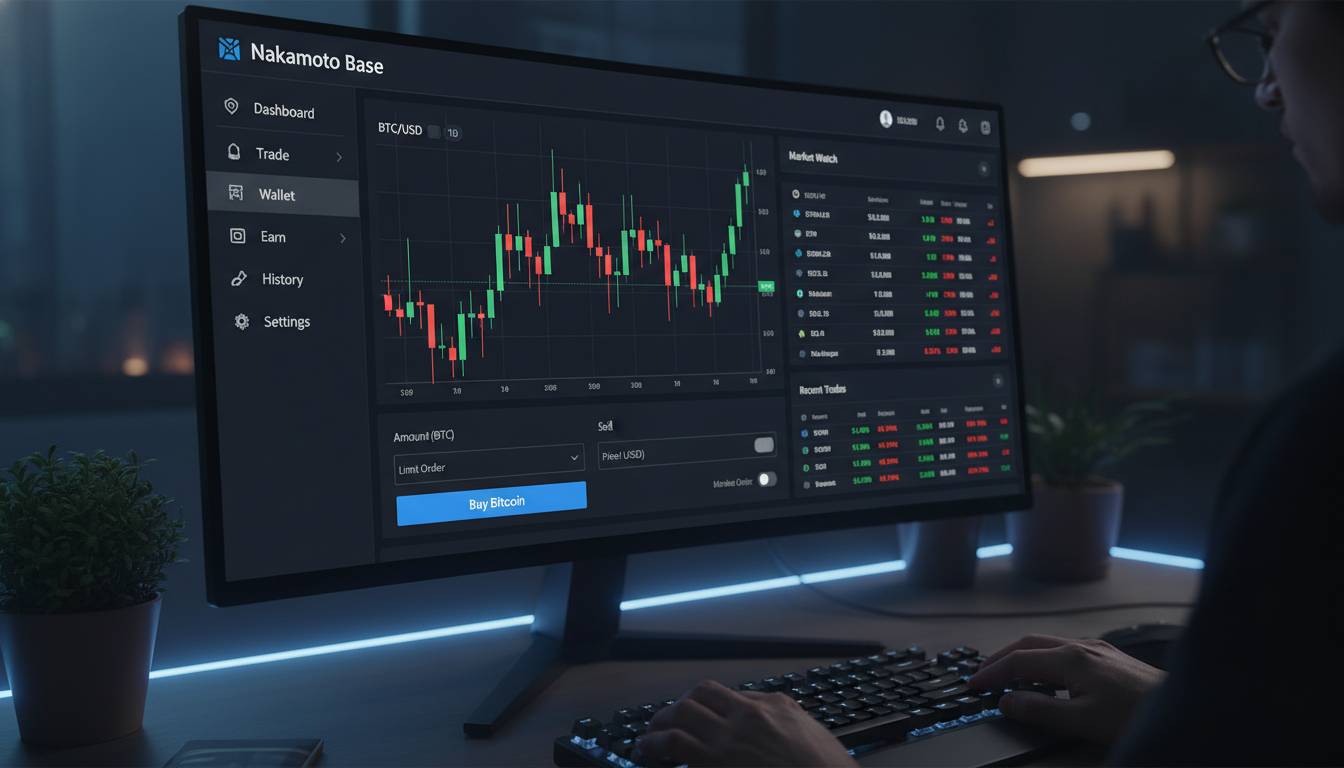
- Navigate to the trading interface: Look for “Buy Crypto” or “Trade” on your dashboard
- Select Bitcoin (BTC): It’s typically the first option listed
- Enter purchase amount: You can specify dollar amount or BTC quantity
- Review the order: Confirm the exchange rate, fees, and total cost
- Execute the purchase: Click “Buy Bitcoin” to complete the transaction
Important: Bitcoin prices fluctuate constantly. The rate shown during review is usually guaranteed for 30-60 seconds. If the price moves significantly during that window, your order may execute at a different rate.
Minimum Purchase Amounts
Most exchanges allow purchases as low as $1-10, making it easy to start small. Some platforms have higher minimums ($25-50) for ACH purchases to offset processing costs.
Storing Your Bitcoin: Wallets Explained
Where your Bitcoin lives matters enormously for security. Exchanges provide convenient custodial wallets, but they come with risks.
Exchange Wallets (Custodial)
Your Bitcoin stays on the exchange. Pros: Easy to use, built-in recovery options. Cons: Exchange could be hacked, go bankrupt, or freeze assets. The saying “not your keys, not your crypto” refers to this limitation.
Example: The Mt. Gox collapse in 2014 resulted in 850,000 Bitcoin (worth billions today) stolen from exchange wallets. More recently, FTX’s 2022 failure left customers unable to access funds for months.
Personal Wallets (Non-Custodial)
You control your private keys—a cryptographic password that proves ownership. Types include:
| Wallet Type | Security Level | Ease of Use | Best For |
|---|---|---|---|
| Hardware (Ledger, Trezor) | Highest | Medium | Long-term holders |
| Mobile (Exodus, Trust) | Medium | Easy | Small-medium amounts |
| Desktop | Medium-High | Medium | Power users |
| Paper | Highest | Difficult | Maximum security |
Recommendation: For beginners, keep a small amount (10-20% of holdings) on the exchange for easy trading, then transfer the rest to a personal wallet. As your holdings grow, gradually move toward hardware wallet storage.
Tax Implications Every US Buyer Must Know
The IRS treats Bitcoin as property, not currency. This has significant tax consequences:
- Capital gains tax: Selling Bitcoin at a profit triggers capital gains (15% or 20% depending on income, plus state taxes)
- Trading crypto-to-crypto: Exchanging Bitcoin for another cryptocurrency is a taxable event
- Mining income: Considered ordinary income at fair market value
- Reporting requirements: Form 8949 required if you sell, trade, or dispose of Bitcoin
Practical tip: Use crypto tax software (CoinTracker, Koinly) from day one to track cost basis and transactions. This prevents headaches during tax season and potential penalties for underreporting.
Common Mistakes to Avoid
New Bitcoin buyers consistently make these errors:
Mistake #1: Buying at the Top
Emotional trading leads to buying during price spikes after seeing media coverage. Bitcoin is volatile—prices can drop 50%+ in months. Dollar-cost averaging (buying fixed amounts monthly) removes emotion and averages your cost basis.
Mistake #2: Ignoring Fees
Exchange fees, network fees, and spread (the difference between buy and sell prices) add up. A $1,000 purchase with 3% fees costs $30. That fee percentage compounds negatively on subsequent trades.
Mistake #3: Insufficient Security
Not enabling 2FA, using the same password across platforms, or keeping large holdings on exchanges creates unnecessary risk. Hardware wallet costs ($50-200) are worthwhile insurance against loss.
Mistake #4: Falling for Scams
“Bitcoin doublers,” guaranteed returns, and DM/Telegram investment schemes are universally scams. Legitimate investments don’t promise guaranteed profits or contact you first.
Advanced Strategies for Your First Year
Once comfortable with basics, consider these approaches:
Dollar-Cost Averaging (DCA)
Invest a fixed dollar amount weekly or monthly regardless of price. This strategy historically smooths volatility and removes timing pressure. Research shows DCA outperforms lump-sum investing in volatile assets like Bitcoin about two-thirds of the time.
Bitcoin-only vs. Diversified
Some investors prefer holding only Bitcoin, arguing it’s the only cryptocurrency with proven store-of-value properties. Others diversify into Ethereum, DeFi tokens, or other assets. Neither approach is objectively correct—diversification reduces risk but also limits upside if Bitcoin outperforms.
Cold Storage for Long-Term Holds
If holding Bitcoin for years (believing in long-term appreciation), cold storage (hardware wallet disconnected from internet) is ideal. It protects against exchange failures and online theft.
Conclusion
Buying Bitcoin has moved from a technical challenge to a mainstream financial activity. The process—choose an exchange, verify identity, fund account, purchase, secure—takes less than a week for first-time buyers. Start with small amounts you’re comfortable losing while learning the ropes.
Remember these fundamentals: enable two-factor authentication, understand fee structures, use personal wallets for significant holdings, and track transactions for tax purposes. Bitcoin remains highly volatile and speculative—no investment advice guarantees profits. But for those willing to learn, buying Bitcoin is now as simple as ordering something online.
The best time to start was when Bitcoin cost less than a dollar. The second-best time is now—with the knowledge to do it safely.
Frequently Asked Questions
Is it legal to buy Bitcoin in the United States?
Yes, buying and selling Bitcoin is legal in the United States. Bitcoin is treated as property by the IRS, and exchanges operating in the US must comply with federal and state regulations, including KYC/AML requirements. Some states have additional licensing requirements, but major exchanges operate in all 50 states.
What is the minimum amount of Bitcoin I can buy?
Most exchanges allow purchases starting at $1-10, making Bitcoin accessible to virtually any budget. You can buy fractional Bitcoin—transactions can go down to 0.00000001 BTC (one satoshi). However, consider transaction fees when buying very small amounts, as fees may exceed the purchase value.
How long does it take to buy Bitcoin?
The purchase itself executes instantly on most exchanges. However, funding your account via bank transfer (ACH) typically takes 1-5 business days. Debit card purchases fund immediately but cost more in fees. Once purchased, Bitcoin transfers to your wallet instantly, though network confirmation can take 10-60 minutes.
Should I keep my Bitcoin on the exchange or move it to a wallet?
For small amounts you’re actively trading, keeping Bitcoin on the exchange is convenient. For holdings you plan to hold long-term (months to years), transferring to a personal wallet (preferably hardware wallet) provides significantly better security. The general guideline: only keep on exchanges what you’re actively trading.
How are Bitcoin purchases taxed in the US?
Bitcoin is treated as property by the IRS. Selling Bitcoin at a profit triggers capital gains tax (15% or 20% federal rate, plus applicable state taxes). Trading Bitcoin for another cryptocurrency is also a taxable event. Keeping Bitcoin without selling incurs no tax. You must report transactions on Form 8949 when filing your annual taxes.
What happens if the exchange goes bankrupt?
If an exchange holding your Bitcoin goes bankrupt, you become an unsecured creditor. Recovery processes are lengthy, and you may recover only a fraction (or none) of your assets—as seen in the FTX collapse. This is why withdrawing significant Bitcoin holdings to personal wallets is strongly recommended.