19Views 0Comments
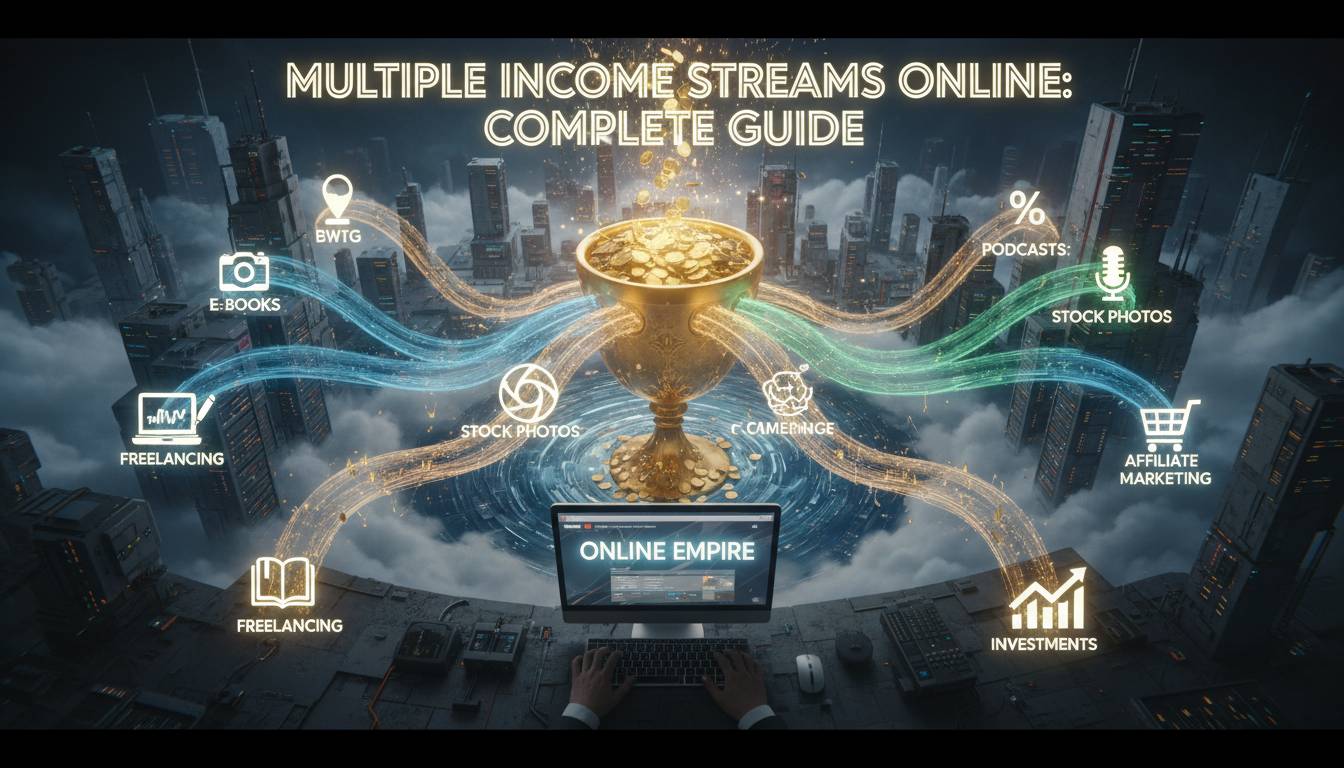
How to Create Multiple Income Streams Online | Complete Guide
Creating multiple income streams online has transformed from a side hustle curiosity into a financial necessity for many Americans. With economic uncertainty, inflation concerns, and the growing desire for financial independence, learning how to generate income through diverse online channels has become a critical skill. This comprehensive guide walks you through proven strategies, practical implementation steps, and expert-backed approaches to building a robust online income portfolio.
Understanding Multiple Income Streams
Multiple income streams refer to combining various sources of revenue rather than relying on a single paycheck. For online earners, this typically means developing 3-5 different income channels that work together to create financial stability and growth potential.
Financial experts often cite the “3-3-3 rule” as a starting framework: three income streams provide basic security, five offer significant flexibility, and ten create true financial independence. The U.S. Bureau of Labor Statistics reports that approximately 7.3% of American workers held multiple jobs as of 2023, with gig economy and online work contributing significantly to this number.
The fundamental principle behind multiple income streams is diversification—reducing risk by spreading earnings across different sources. When one stream experiences a downturn, others can compensate. This approach transforms your financial foundation from a single point of failure to a resilient network.
Understanding the distinction between active and passive income is crucial for effective planning. Active income requires your direct time and effort—trading hours for dollars. Passive income continues generating revenue with minimal ongoing involvement after initial setup. Most successful online entrepreneurs build portfolios containing both types, creating immediate cash flow while developing longer-term wealth generators.
Getting Started: Foundation Strategies
Before diving into specific income methods, establishing a solid foundation dramatically increases your chances of success. This involves clarifying your goals, assessing your skills, and creating a realistic timeline.
Define Your Objectives
Begin by asking what you hope to achieve. Are you seeking supplemental income to cover expenses, replacement income to replace a traditional job, or wealth-building vehicles for long-term financial freedom? Your answer shapes which strategies make sense for your situation. Someone wanting quick extra cash needs different approaches than someone building toward financial independence over five years.
Inventory Your Skills and Resources
Make an honest assessment of what you offer. Technical skills, creative abilities, industry knowledge, existing assets, and available time all represent potential income sources. A 2022 survey by Upwork found that 60% of freelancers monetized skills they already possessed professionally, while 40% developed new skills specifically for online work.
Create a Realistic Timeline
Most income streams require 3-12 months before generating significant revenue. Understanding this timeline prevents frustration and premature abandonment. Plan for a ramp-up period where your primary income continues while new streams develop.
Build Your Online Presence
Regardless of which income streams you pursue, establishing credibility online matters. This means creating professional profiles on relevant platforms, developing a personal brand if appropriate, and building networks within your chosen niches. LinkedIn reports that professionals with complete profiles receive 40% more inquiries and opportunities.
Active Income Streams: Trading Time for Money
Active income streams require ongoing time investment but typically offer faster initial returns and lower barrier to entry. These approaches suit those needing relatively quick income or preferring direct control over their earnings.
Freelance Work
Freelancing represents one of the most accessible online income sources. Platforms like Upwork, Fiverr, and Toptal connect skilled workers with clients needing services ranging from writing and graphic design to programming and consulting.
The freelance economy has grown substantially, with the platform Upwork’s research indicating 71% of freelancers reported better work-life balance compared to traditional employment. Entry typically requires creating profiles, demonstrating expertise through portfolios, and building reputation through initial projects.
Earning potential varies dramatically by field. Writers might earn $25-150 per article, while software developers command $50-300+ per hour depending on specialization and experience. Building toward higher rates involves niching down, accumulating positive reviews, and developing specialized expertise.
Online Consulting and Coaching
If you possess expertise in a particular field, consulting or coaching provides high hourly rates with significant flexibility. This approach works particularly well for professionals with backgrounds in business, finance, health, technology, or specialized industries.
Setting up consulting practice involves defining your offer, identifying your ideal client, establishing pricing, and creating systems for client acquisition. Many consultants start through networking, LinkedIn outreach, and content marketing before developing consistent lead flows.
The scalability limit for pure consulting is your available time, but hybrid models allow growth—you might eventually hire other consultants to serve clients under your brand, creating a business rather than self-employment.
Virtual Assistant Services
Virtual assistants provide administrative, technical, or creative support to businesses and entrepreneurs remotely. This category has expanded significantly as more companies embrace remote work arrangements.
Tasks range from email management and calendar coordination to social media management, customer service, and specialized project support. Rates typically range from $15-75 per hour depending on responsibilities and expertise level.
Building a virtual assistant business involves identifying a niche (general support vs. specialized functions), determining whether to work through agencies or independently, and establishing systems for finding and retaining clients.
Passive Income Streams: Making Money While You Sleep
Passive income streams require substantial upfront effort but generate revenue with minimal ongoing involvement after initial development. These approaches suit those willing to invest time now for financial freedom later.
Digital Products
Creating digital products allows you to sell the same item repeatedly without additional production costs. Options include e-books, online courses, templates, software tools, photography, and music.
The digital product market has exploded, with the e-learning industry alone projected to reach $400 billion globally by 2027 according to Statista. Creating a successful digital product involves identifying market demand, developing valuable content, and establishing effective sales systems.
Course creators on platforms like Teachable and Kajabi report that successful courses typically generate $1,000-10,000 monthly after initial development and marketing investment. The key is solving specific problems for defined audiences rather than creating generic content.
Affiliate Marketing
Affiliate marketing involves promoting products or services and earning commissions on resulting sales. This approach requires no product creation, inventory, or customer service—your role focuses purely on marketing.
Successful affiliate marketers typically specialize in specific niches, building audiences through content, email lists, or social media presence. Amazon Associates remains popular despite lower commission rates, while specialized programs in software (SaaS), finance, and health often offer higher payouts.
The affiliate marketing industry generates over $12 billion annually in the U.S. alone, according to the Performance Marketing Association. Building sustainable affiliate income requires genuinely recommending products you believe in—audiences quickly detect inauthenticity, damaging trust and conversions.
Content Creation and Monetization
Creating content on platforms like YouTube, podcasts, blogs, or social media can generate income through advertising, sponsorships, affiliate partnerships, and direct audience support. This approach requires patience and consistency but offers substantial long-term potential.
YouTube creators earn an average of $3-5 per 1,000 views through ad revenue, though this varies significantly by niche and audience. Successful content strategies involve identifying underserved audience needs, creating consistent quality, and optimizing for platform algorithms while building direct audience relationships.
The creator economy has grown to over 50 million people globally, with top creators earning millions annually. However, realistic expectations matter—the vast majority of creators earn modest incomes, with median earnings for YouTube partners reportedly under $500 annually.
Dividend Investing and Interest Income
While not exclusively “online,” managing investment portfolios through online brokerage platforms represents a legitimate passive income strategy. Dividend stocks, bonds, real estate investment trusts (REITs), and high-yield savings accounts generate ongoing returns.
Online brokerages like Fidelity, Schwab, and Robinhood have democratized investing, allowing anyone to start with minimal capital. Building meaningful passive income through investments typically requires substantial capital accumulation or long time horizons—few achieve financial independence through investing alone without significant initial capital or decades of compounding.
Building a Diversified Portfolio
Creating sustainable multiple income streams requires strategic portfolio construction rather than random pursuit of opportunities. Thoughtful diversification balances risk, growth potential, and your available time and resources.
The Income Ladder Strategy
Many successful online entrepreneurs structure income streams along a ladder:
Ground Floor (Immediate Income): Active methods like freelancing or consulting provide quick cash flow while developing other streams.
Middle Rung (Growth Streams): Affiliate marketing, content creation, and digital products require more time to develop but offer scalability.
Top Rung (Wealth Building): Investment income, royalty-generating assets, and automated businesses create long-term financial freedom.
Building this ladder typically takes 3-5 years, with active income funding the development of passive streams.
Balancing Risk and Reward
Diversification across income types, industries, and platforms reduces vulnerability to changes in any single market. A portfolio combining freelance income, YouTube ad revenue, affiliate commissions, and dividend investments faces lower risk than depending on any single source.
Geographic diversification also matters—serving international clients or audiences reduces dependence on any single economy’s performance.
Common Mistakes to Avoid
Understanding pitfalls saves time, money, and frustration. Several mistakes consistently trip up aspiring multi-income entrepreneurs.
Spreading Too Thin
Attempting too many streams simultaneously dilutes effort and prevents meaningful progress in any. Most successful entrepreneurs focus on 2-3 primary streams, adding more only after establishing solid foundations.
Chasing Shiny Objects
New “get rich quick” opportunities constantly appear online. Those who succeed resist distractions, focusing on proven strategies while remaining open to genuine improvements.
Underpricing Services
Many beginners price services too low, either undervaluing their work or underestimating time requirements. Research market rates, account for all time invested, and raise rates as experience grows.
Neglecting Legal and Tax Considerations
Income from multiple sources creates tax complexity. Consulting a tax professional ensures proper withholding, quarterly estimates, and business deductions. Structure choices (LLCs, S-corps) may offer tax advantages depending on income levels.
Ignoring Long-Term Sustainability
Building sustainable income streams requires systems, processes, and ongoing attention. Methods relying purely on platforms you don’t control face existential risk if those platforms change policies or fail.
Expert Insights and Real-World Approaches
Experienced online entrepreneurs emphasize several principles when building multiple income streams.
Start Before You’re Ready
Many wait for perfect conditions that never arrive. Taking action while learning—rather than preparing indefinitely—accelerates progress and reveals real-world challenges requiring adaptation.
Build Audience Before Monetization
Platforms, products, and services change, but audiences remain. Investing in building genuine relationships with audiences creates sustainable foundations regardless of specific monetization methods.
Reinvest in Your Business
Successful multi-income entrepreneurs consistently reinvest profits into developing new streams, improving existing ones, or acquiring assets. deferring immediate consumption in favor of growth typically accelerates long-term results.
Focus on Systems Over Hustle
Working more hours has natural limits. Building systems—whether automated marketing, delegating to contractors, or creating scalable products—multiplies effort rather than simply adding more effort.
Frequently Asked Questions
How long does it take to start earning from multiple income streams?
Most people see meaningful income within 3-6 months for active streams like freelancing, while passive streams typically take 6-18 months to generate significant revenue. Full diversification often takes 2-5 years.
Do I need technical skills to create online income streams?
No—while technical skills open certain opportunities, many income streams require no technical background. Virtual assistance, content creation, and affiliate marketing are accessible to anyone willing to learn.
How much money do I need to start?
Many online income streams require minimal upfront investment—often just a computer and internet connection. Digital products, courses, and content creation can start with under $500 for essential tools and platforms.
Can I replace my full-time job with online income?
Yes, many have done so, though it typically requires 2-5 years of building streams while maintaining primary employment. Having 6-12 months of expenses saved reduces pressure during the transition.
What’s the most reliable online income stream?
Freelancing and consulting offer the most reliable path to immediate income because you get paid for work performed. Passive streams offer greater long-term potential but require patience and upfront investment.
How do I avoid scams and worthless “make money online” schemes?
Legitimate opportunities rarely require upfront payments or promise guaranteed results. Research any opportunity thoroughly, seek reviews from real users, and remember that genuine income requires genuine value creation.
Conclusion
Creating multiple income streams online represents a proven path toward financial resilience and independence. The journey requires patience, strategic thinking, and consistent effort—but the flexibility, potential for growth, and freedom from single-income dependency make it worthwhile.
Start with methods matching your current skills and resources, build systematically rather than chasing every opportunity, and remember that sustainable success comes from providing genuine value. Whether your goal is supplemental income or complete financial independence, the online economy offers legitimate pathways for committed individuals willing to do the work.
Begin today by identifying your most marketable skills, selecting one or two income streams to develop initially, and committing to consistent action. Your future self will thank you for the financial security you’re building.