16Views 0Comments
How to Earn Passive Income with Crypto: 7 Proven Methods
The cryptocurrency landscape has evolved dramatically from its early days as a speculative asset class. In 2024, millions of investors are exploring ways to generate passive income through digital assets—earning returns on their holdings without actively trading or managing complex portfolios. With the global crypto market capitalization exceeding $2 trillion and institutional adoption accelerating, the opportunities for passive income have never been more accessible.
This guide explores seven proven methods for earning passive income with cryptocurrency, examining the risks, returns, and practical steps needed to get started. Whether you’re a seasoned investor or newcomer to digital assets, these strategies can help you put your crypto holdings to work.
1. Crypto Staking: Earn Rewards by Holding
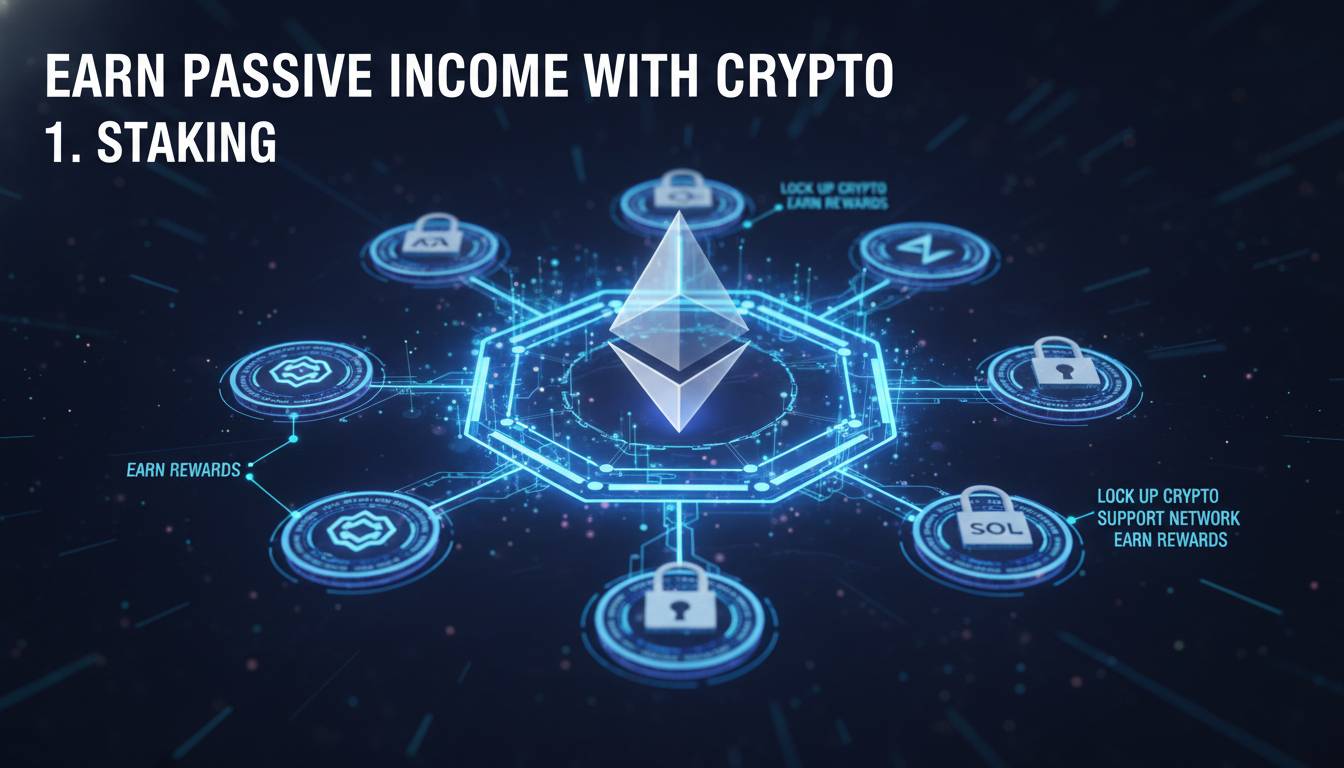
Staking represents one of the most accessible passive income strategies in cryptocurrency. Unlike traditional banking, where you earn minimal interest on savings, staking allows you to earn rewards by simply holding certain cryptocurrencies in a wallet and supporting the network’s operations.
How Staking Works
When you stake cryptocurrency, you lock your coins in a blockchain network to help validate transactions and maintain security. Proof-of-stake (PoS) blockchains—like Ethereum (ETH), Cardano (ADA), and Solana (SOL)—rely on stakers rather than miners to confirm transactions. In return for your contribution, you receive additional tokens as rewards.
Staking rewards vary significantly across networks. Ethereum validators currently earn approximately 3-5% annually, while smaller networks often offer higher rates to attract participants. For example, Polygon (MATIC) staking yields around 4-6%, and Algorand (ALGO) offers approximately 5-8% APY.
Getting Started with Staking
To begin staking, you need to acquire tokens that support PoS consensus and transfer them to a compatible wallet. Most exchanges—including Coinbase, Kraken, and Binance—offer staking services that handle the technical complexity for you. These platforms allow you to stake directly through your account, though they typically deduct a small commission from your rewards.
For those seeking maximum returns, self-custody staking through wallets like Ledger or Phantom provides higher yields but requires more technical knowledge. You’ll need to run validation software or delegate your tokens to a staking pool.
Key Considerations
Staking requires a lock-up period during which your tokens cannot be transferred. Ethereum’s minimum staking period is indefinite until the Shanghai upgrade allows withdrawals. Additionally, validators can face “slashing”—penalties for offline time or malicious behavior—which reduces your returns. Only stake amounts you’re comfortable holding long-term.
2. Crypto Lending: Earn Interest on Your Assets
Crypto lending platforms function similarly to traditional banks but typically offer significantly higher interest rates. By lending your cryptocurrency to borrowers—often institutional or retail traders seeking capital—you earn interest paid in the same or different tokens.
Understanding the Lending Market
Major platforms like Aave, Compound, and MakerDAO have created decentralized lending markets where interest rates adjust algorithmically based on supply and demand. As of 2024, stablecoin lending remains the most popular segment, with platforms offering 4-8% annual yield on USDC, USDT, and DAI deposits.
For example, depositing USDC on Aave currently generates approximately 5-6% APY, substantially higher than traditional savings accounts. Bitcoin and Ethereum lending yields are lower—typically 1-3%—reflecting their higher volatility and market depth.
Centralized vs. Decentralized Lending
Centralized platforms like BlockFi, Nexo, and Crypto.com provide user-friendly interfaces and FDIC insurance on USD deposits (for eligible stablecoins), though they carry counterparty risk. Decentralized protocols offer higher yields and greater transparency but require technical proficiency and carry smart contract risk.
Most investors benefit from using both: centralized platforms for stablecoin yields and security, decentralized protocols for maximum returns on riskier assets.
Risk Factors
Crypto lending carries several important risks. Platform failure—either from hacks or operational issues—could result in permanent loss of funds. During market volatility, borrowers may be liquidated, potentially affecting lender returns. Additionally, regulatory uncertainty surrounding lending platforms creates legal risk that varies by jurisdiction.
3. Yield Farming: Maximize Returns Through Strategy
Yield farming represents a more active approach to passive income, involving the movement of assets across multiple DeFi protocols to optimize returns. While technically requiring more management than staking, successful yield farms can generate substantially higher yields—sometimes exceeding 20-50% annually.
How Yield Farming Works
Yield farmers supply liquidity to decentralized exchanges and lending protocols, receiving token rewards in addition to standard interest. By continuously moving funds to the highest-yielding opportunities, farmers compound their returns over time.
Common yield farming strategies include:
- Liquidity provision: Supplying token pairs to DEXs like Uniswap or Curve, earning trading fees and platform tokens
- Leveraged farming: Using borrowed funds to increase position size and amplify yields
- Single-sided staking: Depositing single tokens that earn multiple reward tokens
Realistic Expectations
While dramatic APYs make headlines—some farms briefly offering 1,000%+—these typically represent promotional periods that quickly normalize. Sustainable yield farming returns generally range from 5-20% for relatively safe strategies, with higher yields requiring acceptance of greater risk.
Impermanent loss remains the primary risk for liquidity providers. When the price ratio between your deposited tokens changes significantly, you may lose money compared to simply holding the assets. This risk is particularly acute for volatile token pairs.
Tools and Platforms
Yield farming requires connecting wallets like MetaMask to DeFi protocols. Tracking tools like Apy.vision and DeFi Llama help identify current yields across platforms. Most serious yield farmers use multiple wallets and track positions through spreadsheets or portfolio managers.
4. Dividend-Paying Tokens: Earn While Holding
Several cryptocurrencies distribute dividends or profit-sharing rewards to holders, combining the simplicity of holding with regular income generation. These projects share revenue or token buyback programs with long-term holders.
How Crypto Dividends Work
Dividend-paying tokens operate through various mechanisms. Some projects—like VeChain (VET) and Neo (NEO)—distribute tokens from transaction fees to holders. Others, such as Hex (HEX), use stake-and-claim models where you must periodically claim rewards.
Stellar (XLM) and Ripple (XRP) don’t technically pay dividends but distribute tokens to validators, indirectly benefiting holders through inflation. More explicit dividend tokens include:
- VeChain (VET): Generates VTHO from staking, worth approximately 1-2% annual yield
- Neo (NEO): Distributes GAS tokens quarterly, yielding 2-5% annually
- Quant (QNT): Offers network fee distributions to long-term holders
Tax Considerations
Dividend-paying tokens create complex tax situations in the US. The IRS classifies crypto staking and dividend rewards as taxable income at their fair market value when received. This applies even if you don’t sell the tokens, requiring careful record-keeping throughout the year.
5. Running a Masternode: Earn for Network Operations
Masternodes represent a more advanced passive income strategy, requiring substantial technical expertise and significant capital investment. These nodes perform specialized functions beyond basic transaction validation, including instant transactions, privacy features, and governance voting.
Understanding Masternode Requirements
Unlike simple staking, masternodes typically require:
- Significant token holdings (often worth $1,000 to millions of dollars)
- Dedicated server infrastructure or specialized hardware
- Technical knowledge for setup and maintenance
- 24/7 uptime and reliable internet
Popular masternode cryptocurrencies include Dash (requires 1,000 DASH, approximately $100,000), Zcoin (requires 1,000 XZC), and PIVX (requires 10,000 PIVX). Returns vary but commonly range from 5-15% annually.
Is Masternode Hosting Right for You?
The high capital requirements and technical complexity make masternodes unsuitable for most retail investors. However, for those with substantial holdings and technical skills, masternodes provide reliable income with relatively predictable returns.
Cloud masternode services have emerged to lower barriers, allowing investors to purchase masternode shares rather than running nodes themselves. These platforms pool investor funds to meet requirements and distribute rewards proportionally, though they charge substantial management fees.
6. NFT Royalties and Rental Income
The NFT market has evolved beyond simple artwork speculation, creating legitimate passive income opportunities through royalties and rental agreements. While the 2021-2022 NFT boom has cooled, sustainable income mechanisms have emerged.
NFT Royalties
Many NFT collections build royalty structures into their smart contracts, automatically paying creators a percentage (typically 5-10%) of every secondary sale. By creating or curating successful NFT collections, artists and collectors earn ongoing passive income from marketplace transactions.
Launching a successful NFT collection requires significant creative investment upfront but generates income for as long as the collection trades on secondary markets. Notable collections like Bored Ape Yacht Club continue generating substantial royalties years after launch.
NFT Rental Systems
Emerging platforms enable NFT owners to rent their digital assets for specific periods. Gaming NFTs, virtual land, and access passes can generate rental income while owners retain ownership. Platforms like Rentality and DoubleUp are developing this market, though it’s still early-stage with limited adoption.
Market Considerations
The NFT market carries substantial risk, with the majority of collections failing to maintain value. Royalty income depends entirely on continued trading volume, which has declined significantly since 2021 peaks. Only invest in NFTs you genuinely believe in, not purely for potential income generation.
7. Crypto Index Funds and Automated Strategies
For investors seeking diversified passive income without managing individual strategies, crypto index funds and automated yield strategies offer hands-off approaches. These products aggregate multiple assets or execute complex strategies on your behalf.
Crypto Index Funds
Platforms like Bitwise, Grayscale, and Hashdex offer index products that track baskets of cryptocurrencies. While primarily designed for capital appreciation, some funds distribute dividends from staking rewards or lending income.
The Bitwise 10 Crypto Index Fund (BITW) tracks the ten largest cryptocurrencies, providing broad market exposure. These products trade on traditional exchanges, making them accessible through standard brokerage accounts.
Automated Yield Strategies
Services like Yearn Finance, Harvest Finance, and Babylon Finance automatically move funds between yield opportunities, optimizing returns without manual management. These DeFi aggregators charge management fees (typically 0.5-2%) in exchange for professional-grade strategy execution.
Robo-Advisor Alternatives
Crypto-focused robo-advisors like Coinrule and Cryptohopper allow users to create automated trading strategies without coding. By setting parameters like “buy when RSI indicates oversold” or “rebalance weekly,” you create passive strategies that execute automatically.
Understanding the Risks
Before pursuing any passive income strategy, understanding the inherent risks is essential. The cryptocurrency market remains highly volatile—values can decline 50% or more within weeks. Regulatory uncertainty creates additional risk, with governments worldwide considering restrictions on staking, lending, and DeFi activities.
Smart contract vulnerabilities have resulted in billions of dollars in losses across DeFi protocols. Even established platforms have suffered hacks, including Poly Network ($611 million), Wormhole ($320 million), and FTX ($477 million). Never invest more than you can afford to lose entirely.
Platform risk applies to centralized services—exchanges, lending platforms, and staking services can fail, become insolvent, or restrict withdrawals. Self-custody eliminates platform risk but introduces key management risks; losing your private keys means permanent loss of funds.
Frequently Asked Questions
How much money do I need to start earning passive income with crypto?
You can start with as little as $10-100 on most platforms. Staking requires a minimum of the specific token you want to stake—often $10-50 worth. Decentralized finance protocols generally have no minimums. However, transaction fees on networks like Ethereum can exceed $10, making small positions impractical for some strategies.
Is crypto passive income taxable in the United States?
Yes. The IRS treats staking rewards, lending interest, and yield farming income as taxable ordinary income at fair market value when received. Capital gains apply when you sell tokens at a profit. Keeping detailed records of all transactions is essential for accurate tax reporting.
Which method offers the highest passive income with the lowest risk?
No single method offers both maximum returns and minimum risk. Stablecoin lending (4-8% APY) offers relatively predictable returns with lower volatility than staking or yield farming, but platform risk remains. Higher yields from yield farming and staking come with increased smart contract risk, impermanent loss, and volatility exposure.
Can I lose money from crypto lending or staking?
Yes. Several scenarios can result in losses: platform failures from hacks or insolvency, sudden token price declines that outweigh earned rewards, smart contract bugs, and regulatory actions that freeze assets. During the 2022 market downturn, multiple lending platforms (Celsius, Three Arrows Capital, FTX) failed, resulting in significant user losses.
How do I choose between centralized and decentralized platforms?
Centralized platforms (Coinbase, Kraken, BlockFi) offer user-friendly interfaces, customer support, and often FDIC insurance for USD deposits, but you face counterparty risk and platform lock-ups. Decentralized protocols (Aave, Compound, Uniswap) provide higher yields, complete ownership control, and transparency, but require technical knowledge and carry smart contract risk.
What’s the most reliable passive income method for beginners?
Staking through reputable exchanges represents the best starting point for most beginners. It offers reasonable returns (3-8% APY), requires minimal technical knowledge, and allows you to learn about the ecosystem before exploring more complex strategies. Start with established proof-of-stake coins like Ethereum, Cardano, or Solana through trusted exchange platforms.
Conclusion
Earning passive income with cryptocurrency in 2024 offers genuine opportunities for portfolio growth beyond traditional investments. From accessible staking rewards to complex yield farming strategies, the ecosystem provides options matching various risk tolerances and technical capabilities.
The seven methods outlined—staking, lending, yield farming, dividend-paying tokens, masternodes, NFT royalties, and index funds—represent distinct approaches with different requirements. Beginners should start with staking through established exchanges, building knowledge before exploring higher-yield opportunities.
Regardless of strategy, never invest more than you can afford to lose entirely. The cryptocurrency market’s volatility means returns are never guaranteed, and even established platforms carry risk. Diversification across methods, continuous education, and realistic expectations form the foundation of sustainable passive income generation.
As the crypto ecosystem matures, new opportunities will emerge while some current strategies may become less profitable. Staying informed, remaining adaptable, and understanding that passive income still requires active oversight will position you for long-term success in this rapidly evolving space.