7Views 0Comments
How to Mine Cryptocurrency at Home: Complete Beginner’s Guide
Cryptocurrency mining has transformed from a niche technical activity into a viable home-based venture, but understanding the fundamentals before investing in equipment is essential. This guide walks you through everything from basic concepts to practical setup steps, helping you determine whether home mining aligns with your goals and resources.
What Is Cryptocurrency Mining
Cryptocurrency mining is the process by which transactions are verified and added to a blockchain ledger while simultaneously introducing new coins into circulation. Miners use computational power to solve complex mathematical puzzles, and the first to solve these equations receives cryptocurrency rewards. This mechanism, called Proof of Work (PoW), secures the network and maintains decentralization.
The process operates on competing miners worldwide attempting to solve the same cryptographic hash. When a miner finds a valid hash, they broadcast it to the network, and other miners verify the solution before accepting the new block. This competitive structure ensures no single entity controls the blockchain, though it demands substantial energy and hardware resources.
Key Insights
– Mining secures blockchain networks through distributed computational work
– Miners receive newly minted coins plus transaction fees as compensation
– Network difficulty adjusts automatically to maintain consistent block times
– The process creates permanent, transparent transaction records
Types of Cryptocurrency Mining
Several mining approaches exist, each with distinct requirements and profitability profiles. Understanding these options helps you select the method matching your budget, technical skills, and goals.
Proof of Work (PoW) Mining
PoW mining remains the most recognizable form, used by Bitcoin, Dogecoin, and Litecoin. This method requires specialized hardware that performs calculations repeatedly. The difficulty factor increases as more miners join the network, making solo mining increasingly challenging for beginners.
Proof of Stake (PoS) Mining
Ethereum completed its transition to Proof of Stake in 2022, eliminating traditional mining. With PoS, validators lock up existing cryptocurrency as collateral rather than solving computational puzzles. This method consumes approximately 99.9% less energy than PoW, though it requires holding substantial token amounts to participate.
Cloud Mining
Cloud mining lets you rent computational power from remote data centers, eliminating hardware purchases and maintenance. You pay a fee and receive mining rewards proportional to your rented hash rate. This option suits those wanting exposure to mining without managing equipment, though scams are prevalent in this space.
ASIC Mining
Application-Specific Integrated Circuit (ASIC) miners are devices built exclusively for cryptocurrency mining. They offer superior hash rates and efficiency compared to general-purpose hardware but serve single algorithms. Bitcoin ASIC miners start at several hundred dollars and reach price points exceeding $10,000 for high-performance units.
| Mining Type | Initial Cost | Energy Use | Profit Potential | Best For |
|---|---|---|---|---|
| GPU Mining | $500-$3,000 | Moderate | Variable | Altcoins |
| ASIC Mining | $200-$15,000 | High | Consistent | Bitcoin |
| Cloud Mining | $50-$5,000 | None | Low-Moderate | Beginners |
| Solo Mining | $2,000+ | High | Rare wins | Experienced |
Hardware Requirements
Selecting appropriate hardware fundamentally determines your mining success. The two primary options for home miners include graphics processing units (GPUs) and ASIC machines, each serving different cryptocurrency algorithms.
GPU Mining Rigs
Modern gaming graphics cards from NVIDIA and AMD dominate GPU mining. Cards like the RTX 3060, RTX 3070, and AMD RX 6700 XT offer balanced performance across multiple algorithms. Building a rig requires a motherboard supporting multiple cards, reliable power supply, adequate cooling, and a frame to mount components.
Recommended GPU Specifications:
– Minimum 8GB VRAM for Ethash and similar algorithms
– High hash rate to electricity cost ratio
– Durable cooling solution for continuous operation
– Reasonable availability at fair market prices
ASIC Miners
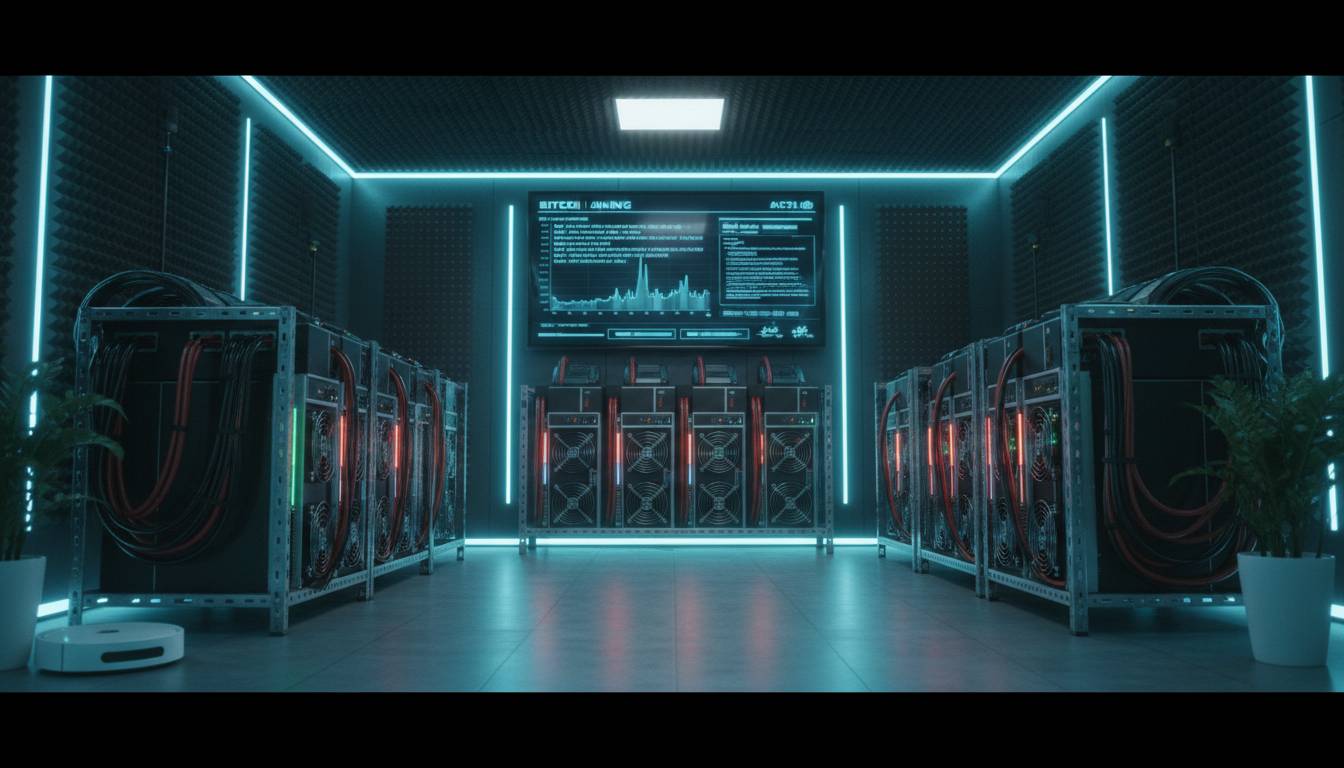
ASIC devices excel for Bitcoin and SHA-256 algorithm mining. Current generation machines like the Bitmain Antminer S19 series offer 90-110 TH/s hash rates. However, these units consume 3,000-3,500 watts and generate significant heat and noise, making residential placement challenging.
ASIC miners depreciate rapidly as newer models release, and Blake256 algorithm devices become obsolete when networks transition to new consensus mechanisms. Consider these factors when calculating potential returns.
Software and Wallet Setup
Mining software bridges your hardware with the blockchain network, configuring settings and managing worker connections. Several reputable options exist across different operating systems.
Mining Software Options
For GPU Mining:
– NiceHash offers user-friendly interface and automatic algorithm switching
– PhoenixMiner provides excellent Ethash performance and low fees
– GMiner supports multiple algorithms with stable operation
For ASIC Mining:
– Manufacturers typically provide proprietary firmware and pool connection interfaces
– CGminer remains popular for advanced users requiring custom configurations
Cryptocurrency Wallets
Before mining, secure a wallet to store your rewards. Hardware wallets like Ledger and Trezor provide superior security for significant holdings. Software wallets offer convenience for smaller amounts, though they remain vulnerable to malware and hacking.
Research wallet compatibility with your chosen cryptocurrency. Some coins require specific wallet software, while others work with multi-currency solutions. Never leave substantial funds on exchange wallets, as these remain vulnerable to platform failures.
Calculating Profitability
Mining profitability depends on multiple interconnected factors that shift continuously. Understanding these variables helps establish realistic expectations before investing.
Key Profitability Factors
Electricity costs typically constitute the largest ongoing expense. The U.S. average electricity rate stands at approximately $0.14 per kilowatt-hour, though rates vary significantly by region. Mining operations in areas with rates below $0.10 per kWh maintain substantial competitive advantages.
Network difficulty measures the computational challenge required to mine blocks. Bitcoin’s difficulty has increased exponentially since 2009, currently sitting at approximately 80 trillion. This rising difficulty progressively reduces individual miners’ chances of earning rewards without proportional equipment upgrades.
Profitability Calculation Formula:
Daily Revenue = (Hash Rate / Network Hash Rate) × Block Reward × Coin Price
Daily Costs = Power Consumption × Electricity Rate × 24 hours
Daily Profit = Daily Revenue - Daily Costs
Current Mining Economics
Bitcoin mining at home with consumer-grade equipment rarely proves profitable given current difficulty levels. GPU mining remains viable for newer coins with lower competition, though profit margins fluctuate wildly with market conditions. Research specific coin profitability using mining calculators before investing in hardware.
Historical data shows mining rewards decrease by 50% approximately every four years during Bitcoin halving events. The next halving occurred in April 2024, reducing block rewards from 6.25 to 3.125 BTC. This reduction impacts all miners’ revenue streams proportionally.
Step-by-Step Mining Setup
Following a systematic setup process prevents common mistakes that cost beginners time and money.
Phase 1: Preparation
Select your mining cryptocurrency based on profitability forecasts, hardware compatibility, and personal interest. Research network difficulty trends and upcoming protocol changes affecting mining dynamics.
Calculate total setup costs including hardware, power supplies, cooling solutions, and potential electrical upgrades. Ensure your residential electrical service handles additional loads safely. Consult electricians for installations exceeding standard circuit capacities.
Phase 2: Hardware Assembly
For GPU rigs, install the motherboard in your chosen frame, then seat processors, RAM, and storage drives. Connect power supplies, ensuring adequate wattage headroom. Install graphics cards last, securing them firmly to prevent damage during operation.
ASIC miners typically ship pre-assembled, requiring only network connection and initial configuration through web interfaces or mobile apps. Position ASIC units in well-ventilated areas, as heat dissipation significantly impacts longevity.
Phase 3: Software Configuration
Download mining software from official sources, verifying checksums to prevent malware. Configure your wallet address in the software settings, then enter pool connection details. Most miners join mining pools to receive consistent payouts rather than competing for rare block rewards.
Adjust clock speeds and power limits to balance performance with heat and electricity consumption. Initial testing at stock settings helps establish baseline performance before optimization. Monitor temperatures during the first 24 hours, ensuring cooling systems manage thermal loads effectively.
Phase 4: Pool Connection
Mining pools aggregate computational resources, distributing rewards proportionally to contributed hash power. Evaluate pools based on fee structures, payment frequency, minimum payouts, and reputation. Established pools like Slush Pool, F2Pool, and Antpool offer reliable service with transparent operations.
Configure worker names using your pool’s specified format, enabling tracking of individual rig performance within larger pool statistics. Monitor hashrate reports to verify your equipment performs as expected.
Common Mistakes to Avoid
New miners frequently encounter preventable issues that diminish profitability or damage equipment.
Underestimating Electricity Costs
Many beginners calculate profits using only hardware and coin prices, ignoring ongoing power expenses. High electricity rates transform potentially profitable operations into money-losing ventures. Always factor local utility rates into profitability calculations, and consider time-of-use pricing where applicable.
Poor Ventilation and Cooling
Mining hardware generates substantial heat requiring active cooling. Inadequate airflow causes thermal throttling, reducing hash rates while shortening component lifespans. Ambient temperatures above 80°F (27°C) significantly impact ASIC performance. Budget for fans, air conditioning, or dedicated mining spaces with proper ventilation.
Ignoring Hardware Depreciation
Equipment loses value rapidly as newer models launch and algorithms change. ASIC miners become worthless when networks transition away from their supported algorithms. GPU cards depreciate significantly but retain resale value for gaming markets. Factor depreciation into long-term profitability projections rather than assuming equipment retains value.
Legal and Tax Considerations
Cryptocurrency mining carries legal implications varying by jurisdiction. Most U.S. states permit home mining without special licensing, though local ordinances may restrict noise or electrical modifications.
The IRS treats mined cryptocurrency as taxable income at its fair market value upon receipt. Additionally, profits from selling mined coins trigger capital gains tax obligations. Maintain detailed records of all transactions, including electricity expenses potentially deductible as business costs. Consider consulting tax professionals experienced with cryptocurrency taxation.
Energy Consumption and Environmental Concerns
Mining operations consume substantial electricity, drawing criticism regarding environmental impact. Bitcoin’s annual energy consumption rivals some small countries, though proponents argue the network processes transactions more efficiently than traditional financial systems.
Home miners can pursue renewable energy options to reduce environmental footprint while lowering electricity costs. Solar panels and wind turbines offer increasingly viable returns for off-grid mining operations. Some miners schedule operations during peak renewable energy production, maximizing clean power utilization.
Frequently Asked Questions
Is cryptocurrency mining profitable at home in 2024?
Home mining profitability depends heavily on electricity costs and chosen cryptocurrency. Bitcoin mining with consumer equipment is rarely profitable due to massive industrial operations. GPU mining of altcoins like Kaspa or RavenCoin offers better small-scale opportunities, though margins remain tight. Calculate your specific numbers using mining profitability calculators before investing.
How much does it cost to start mining cryptocurrency?
Entry-level GPU mining setups begin around $500-$1,000 for basic equipment. ASIC miners suitable for home use start at approximately $500-$1,500, though high-performance units exceed $5,000. Remember to budget for electricity, cooling, and potential infrastructure upgrades when calculating total investment.
Do I need technical expertise to mine cryptocurrency at home?
Basic mining requires moderate technical comfort with computer hardware and software configuration. GPU mining rigs demand assembly and troubleshooting skills. ASIC miners offer simpler setup but require understanding network fundamentals. Numerous tutorials and community resources support beginners learning the process.
How long does it take to mine one Bitcoin?
At current network difficulty, consumer ASIC miners cannot realistically mine one Bitcoin alone. Joining a pool provides consistent small payments rather than rare large rewards. Depending on hash rate contribution, accumulating one full Bitcoin through pool mining takes months to years.
Is mining harmful to my computer or hardware?
GPU mining stresses components but modern cards handle continuous operation when properly cooled. ASIC miners generate significant heat and noise, requiring dedicated spaces. All mining equipment experiences wear accelerated by high temperatures and constant load cycles. Budget for component replacement within 2-3 years of heavy mining use.
Is cryptocurrency mining legal in the United States?
Cryptocurrency mining is legal throughout most of the United States. Some local jurisdictions have restrictions regarding noise, electrical modifications, or business licensing. Check local regulations before establishing significant mining operations. The IRS treats mining income as taxable, requiring proper reporting.
Conclusion
Home cryptocurrency mining presents both opportunities and challenges for beginners entering this space. The potential for passive income exists, but realistic expectations regarding profitability, technical requirements, and ongoing costs prove essential for success.
Careful research before purchasing equipment prevents common pitfalls that enthusiasm alone cannot overcome. Starting with smaller investments allows learning curves without devastating financial losses. Consider your electricity costs, available space, and genuine interest in maintaining mining operations before committing substantial resources.
The cryptocurrency landscape continues evolving, with proof-of-stake transitions and regulatory changes potentially reshaping mining economics. Approach home mining as a learning experience first and income source second, and you’ll develop skills valuable regardless of short-term profitability outcomes.