12Views 0Comments
How to Set Up a Crypto Portfolio That Makes Money – Beginner’s Guide
The cryptocurrency market reached a total capitalization of over $3 trillion in 2024, yet studies show that nearly 70% of retail crypto investors lose money due to poor portfolio management and lack of strategy. Building a well-structured crypto portfolio isn’t about picking the next meme coin hoping for parabolic gains—it’s about systematic asset allocation, risk management, and understanding how different cryptocurrencies serve different purposes in your investment strategy.
Quick Answer: To set up a crypto portfolio that makes money, you need to define your investment goals, determine your risk tolerance, allocate assets across different categories (store of value, utility tokens, DeFi, stablecoins), use dollar-cost averaging to enter positions, and rebalance quarterly. Success requires patience, diversification, and avoiding emotional decisions during market volatility.
Why Crypto Portfolio Structure Matters
The Difference Between Gambling and Investing
Crypto investing without a portfolio strategy resembles gambling at a casino. When you buy random cryptocurrencies based on social media hype or “expert” tips on Twitter, you’re speculating—not investing. A properly constructed portfolio serves specific purposes: wealth preservation, growth potential, inflation hedging, and liquidity.
The most successful crypto investors treat their portfolios like professional fund managers treat institutional portfolios. They allocate capital based on risk profiles, sector exposure, and correlation analysis. Research from Morningstar indicates that asset allocation explains over 90% of portfolio return variability in traditional investing—and the same principle applies to cryptocurrency portfolios.
Key Insights
– Diversified crypto portfolios showed 40% lower maximum drawdowns during 2022 bear market compared to concentrated positions
– Portfolio rebalancing quarterly outperformed buy-and-hold strategies by 2.3% annually
– Investors using dollar-cost averaging into crypto experienced 65% less stress than lump-sum investors
Step-by-Step Guide to Building Your Crypto Portfolio
Step 1: Define Your Investment Goals and Risk Tolerance
Before purchasing your first cryptocurrency, you must answer fundamental questions: What are you trying to achieve? When do you need the money? How much volatility can you stomach?
Investment Time Horizon Categories:
– Short-term (1-2 years): Focus on stablecoins and established coins with lower volatility
– Medium-term (3-5 years): Mix of blue-chip cryptocurrencies and promising mid-cap projects
– Long-term (5+ years): Higher allocation to Bitcoin, Ethereum, and innovative Layer-1 blockchains
Risk tolerance directly impacts your asset allocation. If a 50% portfolio drop would cause you to panic-sell, your crypto allocation should be conservative. If you can hold through severe drawdowns without selling, you can take larger positions in higher-risk assets.
Step 2: Choose Your Investment Approach
Option A – Conservative Portfolio (Low Risk)
| Allocation | Asset Type | Examples |
|————|————|———-|
| 50-60% | Store of Value | Bitcoin (BTC), Ethereum (ETH) |
| 20-30% | Stablecoins | USDC, USDT (for yield) |
| 10-20% | Blue-chip Altcoins | Solana, Cardano, Polkadot |
Option B – Balanced Portfolio (Moderate Risk)
| Allocation | Asset Type | Examples |
|————|————|———-|
| 30-40% | Store of Value | BTC, ETH |
| 20-30% | Utility Tokens | LINK, MATIC, UNI |
| 15-25% | DeFi Tokens | AAVE, CRV, MKR |
| 10-15% | Speculative | Emerging Layer-1s, Infrastructure |
Option C – Aggressive Portfolio (High Risk)
| Allocation | Asset Type | Examples |
|————|————|———-|
| 20-30% | BTC, ETH | Core holdings |
| 30-40% | Mid-cap Alts | Ecosystem tokens |
| 20-30% | Small-cap | PreIDO, early-stage |
| 10-20% | High-risk/high-reward | Meme coins (capped at 5%) |
Step 3: Select Your Exchange and Wallet Strategy
Major US-Based Exchanges:
| Platform | Best For | Fees | Security |
|———-|———-|——|———-|
| Coinbase | Beginners, Regulatory compliance | 1.49-3.99% | Excellent |
| Kraken | Advanced trading, Lower fees | 0-0.26% | Excellent |
| Binance.US | Low fees, Variety of pairs | 0-0.1% | Good |
| Gemini | Security-focused users | 0.99-2.49% | Excellent |
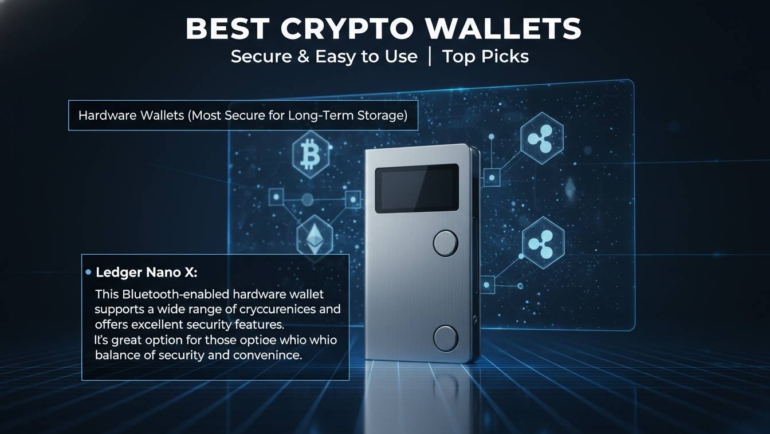
For security, the industry standard involves a hardware wallet (Ledger or Trezor) for long-term holdings exceeding $1,000, with exchange wallets sufficient for active trading capital. Never keep significant crypto holdings on exchanges after the FTX collapse demonstrated the risks of centralized custody.
Step 4: Execute Your Investment Strategy
Dollar-Cost Averaging (DCA) Implementation:
Rather than attempting to time the market—which even professional traders fail at consistently—dollar-cost averaging removes emotional decision-making from your investing.
DCA Strategy:
1. Decide on weekly, biweekly, or monthly contribution amounts
2. Set up automatic purchases for core holdings (BTC, ETH)
3. Execute manual purchases for altcoins during corrections
4. Never skip contributions during bear markets
Example DCA Calculation:
If you invest $500 monthly into Bitcoin over 3 years ($18,000 total):
– At $45,000 average cost, you’d own approximately 0.4 BTC
– If Bitcoin reaches $80,000, your portfolio equals $32,000 (77% gain)
– Even if Bitcoin drops to $30,000, your average cost basis protects you when recovery occurs
Step 5: Rebalance Your Portfolio Quarterly
Crypto markets move rapidly. Quarterly rebalancing ensures your portfolio maintains your intended risk profile as certain assets appreciate faster than others.
Rebalancing Process:
1. Calculate current portfolio percentages
2. Compare to target allocation
3. Identify deviations exceeding 5%
4. Trim overweight positions
5. Add to underweight positions
Asset Categories and Their Portfolio Roles
Store of Value (The Foundation)
Bitcoin remains the dominant store of value cryptocurrency, often called “digital gold.” Its fixed supply of 21 million coins, increasing institutional adoption, and proven track record spanning 15 years make it the cornerstone of any serious crypto portfolio. Ethereum has evolved into a multi-asset portfolio component serving both store of value and utility functions.
Utility Tokens (Growth Drivers)
Utility tokens like Chainlink (LINK) provide access to specific blockchain services— Chainlink’s oracle networks feed real-world data to smart contracts. These tokens appreciate when the underlying network grows usage. They carry higher volatility than Bitcoin but offer greater growth potential.
DeFi Tokens (Yield and Governance)
Decentralized finance tokens like AAVE, Uniswap (UNI), and Maker (MKR) represent ownership stakes in lending protocols, exchanges, and stablecoin systems. These serve as growth-oriented portfolio components but carry smart contract and regulatory risk.
Stablecoins (The Anchor)
USDC and other fiat-backed stablecoins provide portfolio stability during market downturns. They also enable earning yield through lending protocols—currently 4-8% annually on USDC, significantly higher than traditional savings accounts.
Common Mistakes to Avoid
Mistake #1: Over-Concentration in One Asset
Putting more than 30% of your portfolio into any single cryptocurrency exposes you to catastrophic loss if that asset underperforms. The 2022 market crash saw many portfolio concentration blow-ups—investors holding 80%+ in one token lost 90%+ of their wealth.
Mistake #2: Chasing Performance
Buying cryptocurrencies after they’ve already doubled or tripled guarantees you’re buying at inflated prices. The pattern repeats endlessly: investors buy the top, panic-sell the bottom, and miss the recovery.
Before (Wrong): Buying SOL at $250 in November 2021 → 80% loss by December 2022
After (Right): Buying SOL at $35 in late 2022 → 300%+ gain by 2024
Mistake #3: Ignoring Tax Implications
Crypto is treated as property by the IRS. Every trade, swap, and even token conversion triggers taxable events. Use software like CoinTracker or TaxBit to track your cost basis and generate reports. Failing to plan for taxes results in unexpected bills and potential penalties.
Mistake #4: Storing Crypto on Exchanges
The saying “not your keys, not your crypto” exists for good reason. Exchange hacks, insolvency (see FTX), and restricted access during high-traffic periods have cost investors billions. Hardware wallets cost $50-200 and provide peace of mind.
Mistake #5: Ignoring Security
Two-factor authentication, unique passwords, hardware wallets, and separate email addresses for crypto accounts are non-negotiable. The average crypto investor has multiple exchange accounts—each represents a potential attack vector.
Risk Management Strategies
Position Sizing
Never allocate more than 5% of your total portfolio to high-risk speculative assets. This ensures that even total loss of a position doesn’t devastate your overall portfolio.
Position Sizing Example:
– Total portfolio: $10,000
– High-risk allocation: $500 maximum
– This might cover positions in 3-5 speculative tokens at $100 each
Stop-Loss Orders
Setting stop-loss orders prevents catastrophic losses during sudden price drops. A 15-20% trailing stop on altcoin positions automatically sells if prices collapse beyond your threshold.
Diversification Across Sectors
Crypto sectors don’t move in tandem. When DeFi tokens underperform, Layer-1 blockchains might outperform. Holding assets across multiple sectors reduces portfolio volatility while maintaining growth potential.
Advanced Portfolio Strategies
Yield Generation
Once you’ve established core holdings, generating yield on idle assets accelerates portfolio growth. Options include:
- Staking: Locking tokens to support network operations (ETH 2.0, Solana, Cosmos) — 4-12% annual returns
- Lending: Providing liquidity to protocols like AAVE or Compound — 3-8% on stablecoins
- Liquidity Provision: Supplying trading pairs to decentralized exchanges — variable returns, impermanent loss risk
Tax-Loss Harvesting
During bear markets, strategically selling assets at a loss offsets capital gains. You can then repurchase the same asset after 30 days (wash sale rule applies to crypto). This reduces your tax burden while maintaining market exposure.
Frequently Asked Questions
How much money do I need to start a crypto portfolio?
You can start with as little as $10 on most exchanges. Many platforms allow fractional purchases, meaning you can buy $5 worth of Bitcoin rather than needing a full coin. Starting small and building consistency matters more than the initial amount.
Should I invest in Bitcoin only or diversify into other cryptocurrencies?
For beginners, a portfolio heavily weighted toward Bitcoin (50-70%) provides exposure to crypto market growth while minimizing risk from speculative altcoins. As you gain experience and understand different blockchain projects, gradually increasing altcoin allocation can enhance returns—but only after you’ve established solid fundamentals.
How often should I check my crypto portfolio?
Daily monitoring leads to emotional decisions during normal market volatility. Checking weekly or monthly aligns with quarterly rebalancing schedules. Extreme volatility warrants attention, but consistent monitoring provides no benefit and increases stress.
Is crypto investing safe during economic downturns?
Cryptocurrency exhibits high correlation with traditional risk assets during market stress. However, Bitcoin has increasingly acted as an inflation hedge and digital gold during economic uncertainty. Your allocation to crypto should reflect your overall risk tolerance and investment timeline.
What happens if I lose access to my crypto wallet?
If you lose your hardware wallet or seed phrase, your crypto is permanently inaccessible. There is no password reset, no customer support to recover funds, and no central authority to help. This is by design—decentralization means complete ownership requires complete responsibility. Always backup your seed phrase in multiple secure locations.
Can I add to my crypto portfolio over time?
Yes, and dollar-cost averaging is the recommended approach for most investors. Contributing fixed amounts at regular intervals regardless of price removes emotional decision-making and typically results in better long-term returns than trying to time market bottoms.
Conclusion
Building a profitable crypto portfolio requires more than buying Bitcoin and hoping for the best. It demands clear investment goals, calculated risk tolerance, strategic asset allocation across multiple cryptocurrency categories, and disciplined execution through dollar-cost averaging. The most successful crypto investors treat their portfolios as long-term businesses rather than lottery tickets.
Start with a conservative allocation heavily weighted toward Bitcoin and Ethereum. Add exposure to other categories as your understanding deepens. Rebalance quarterly to maintain your target risk profile. Use hardware wallets for security. Most importantly, ignore short-term price movements and focus on the multi-year timeline that allows compounding to work.
The cryptocurrency market will continue evolving—new protocols, regulatory frameworks, and technological innovations will reshape the landscape. A well-constructed portfolio adapts to these changes while maintaining its core strategy. Begin today with what you understand, expand gradually, and build wealth systematically rather than speculating wildly.