9Views 0Comments
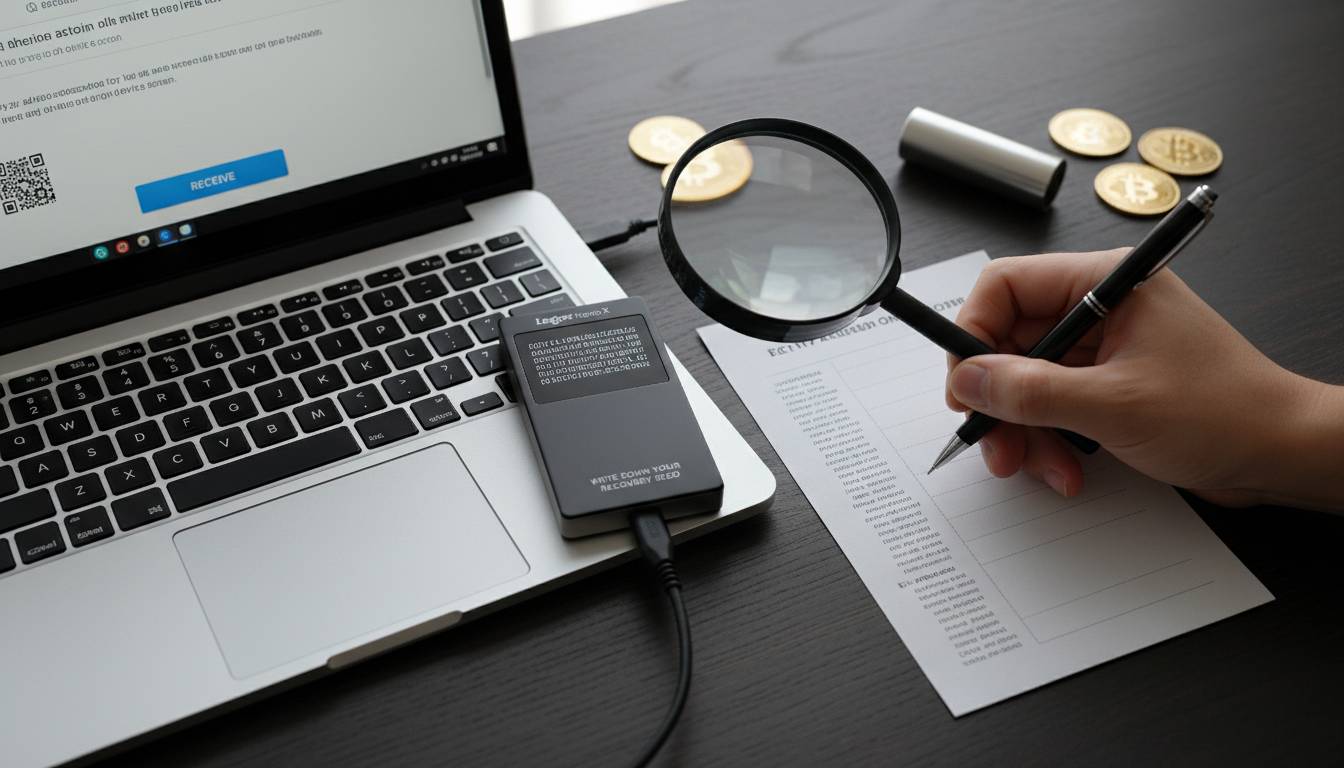
How to Transfer Bitcoin from Coinbase to Hardware Wallet Safely
Transferring your Bitcoin from Coinbase to a hardware wallet represents one of the most critical steps in securing your cryptocurrency holdings. While Coinbase provides robust security for its platform, keeping your Bitcoin on any exchange exposes you to risks that include exchange hacks, account compromises, and regulatory seizures. Hardware wallets store your private keys offline, making them virtually immune to remote hacking attempts. This comprehensive guide walks you through the entire process, from selecting the right hardware wallet to completing your first transfer with confidence.
Why Transfer Bitcoin from Coinbase to a Hardware Wallet
The security architecture of hardware wallets differs fundamentally from exchange wallets. When you hold Bitcoin on Coinbase, you don’t actually control the private keys—Coinbase does. This means your Bitcoin can be frozen if Coinbase suspends your account, seized through legal action, or lost if Coinbase experiences a catastrophic breach. The Mt. Gox collapse in 2014 resulted in 850,000 Bitcoin being stolen, and more recently, the FTX collapse left countless users unable to access their funds. These incidents demonstrate why self-custody through hardware wallets has become the gold standard for serious Bitcoin holders.
Private keys stored on a hardware wallet never leave the device itself. When you initiate a transaction, your computer or phone creates the transaction details and sends them to the hardware wallet, which then signs the transaction using your private key—all without exposing that key to the connected device. This air-gapped signing process protects your funds even if your computer is compromised with malware. According to Chainalysis research, over $3 billion in Bitcoin has been stolen through exchange hacks since 2011, with the majority targeting hot wallets connected to the internet.
Hardware wallets also give you complete control over your funds regardless of external circumstances. Unlike exchange accounts, which can be restricted by geographic regulations or platform policies, your hardware wallet works anywhere in the world. For holders with significant Bitcoin wealth—commonly referred to as “Bitcoin whales” with holdings exceeding $100,000—hardware wallet storage is considered non-negotiable. The small upfront investment of $50 to $250 for a quality hardware wallet provides insurance against losses that could represent life-changing amounts of money.
Choosing the Right Hardware Wallet for Your Needs
The hardware wallet market is dominated by two primary manufacturers: Ledger and Trezor. Both companies have established track records spanning over a decade, with Ledger having sold over 6 million devices and Trezor serving as the original hardware wallet pioneer. Your choice between them depends on specific security preferences, budget considerations, and desired features.
The Ledger Nano X represents the flagship option, featuring Bluetooth connectivity for mobile device compatibility, a 100mAh battery, and support for over 5,500 cryptocurrencies including Bitcoin, Ethereum, and countless altcoins. The device costs approximately $149 and includes Ledger’s proprietary Secure Element chip, which stores private keys in a dedicated hardware component separate from the main processor. This chip-level security provides protection against physical attacks including side-channel analysis and glitching. The Ledger Nano X supports the Ledger Live application, which provides a complete portfolio management interface with built-in exchange integration.
The Ledger Nano S Plus offers a more budget-friendly alternative at $79, removing Bluetooth functionality but maintaining the Secure Element chip and supporting the same cryptocurrency range through its USB-C connection. This model suits users who primarily manage their portfolio from a single computer and don’t require mobile access. The trade-off between the Nano X and Nano S Plus essentially comes down to whether you value mobile convenience at the $70 price difference.
Trezor’s Model T and Model One serve as the primary alternatives. The Model T, priced at $219, features a full-color touchscreen for improved transaction verification—a significant security advantage since you can confirm payment details directly on the device rather than relying solely on your computer screen. Trezor devices differ from Ledger by not using Secure Element chips, instead relying on open-source firmware that allows independent security audits. This transparency appeals to users who prefer verifiable security over proprietary implementations.
For most Bitcoin-only holders, the Ledger Nano S Plus provides the optimal balance of security, cost, and functionality. However, users concerned about the closed-source nature of Ledger’s firmware may prefer Trezor’s fully transparent approach. Both devices support Bitcoin’s BIP39 standard for seed phrase backup, ensuring compatibility across wallet implementations if you ever need to recover your funds using a different wallet application.
Preparing Your Hardware Wallet and Coinbase Account
Before initiating any transfer, proper preparation significantly reduces the risk of errors that could result in permanent fund loss. This preparation involves three distinct phases: hardware wallet initialization, recording your recovery seed, and verifying your Coinbase account security.
Begin by purchasing your hardware wallet directly from the manufacturer or an authorized reseller. Avoid purchasing used devices or those sold through third-party marketplaces like eBay or Amazon, as compromised devices have been reported in secondary markets. When your device arrives, inspect the packaging for signs of tampering—both Ledger and Trezor include holographic seals that must be intact. Upon first connection, the device will guide you through initialization, which includes setting a PIN code. Choose a PIN between 4 and 8 digits that you can remember but wouldn’t be easily guessed if someone found your device.
The recovery seed phrase represents the most critical backup of your cryptocurrency holdings. During setup, your device will generate a 24-word mnemonic phrase (or 12 words on older or specific models). Write each word down in exact order on paper—never type them into a computer or photograph them digitally. Store this paper in a secure location, ideally a physical safe or safe deposit box. The recovery seed allows complete restoration of your funds if your device is lost, stolen, or damaged. Anyone who obtains your seed can access your Bitcoin, making its physical security paramount.
Coinbase account preparation requires ensuring your identity verification is complete and your withdrawal settings are properly configured. Navigate to your Coinbase security settings and enable two-factor authentication using an authenticator app rather than SMS, as SIM-swapping attacks have compromised numerous cryptocurrency holders. Verify your withdrawal limits by accessing your account limits page—if you plan to transfer significant amounts, you may need to complete additional verification levels. Finally, confirm that your withdrawal destination address is whitelisted if Coinbase offers this feature, which prevents withdrawals to unauthorized addresses even if your account is compromised.
Step-by-Step Transfer Process from Coinbase to Hardware Wallet
With preparation complete, you’re ready to execute the transfer. This process requires careful attention to detail, as cryptocurrency transactions are irreversible. We’ll walk through obtaining your receiving address from the hardware wallet, initiating the withdrawal on Coinbase, and verifying the transaction completes successfully.
First, connect your hardware wallet to your computer or mobile device and open the corresponding wallet application (Ledger Live or Trezor Suite). Select your Bitcoin wallet and choose the receive option. The application will display your Bitcoin receiving address—this is a long string beginning with “1,” “3,” or “bc1” depending on address type. Crucially, always verify the address shown on your device matches what’s displayed on your computer screen. Malware can intercept the address during transmission, redirecting your funds to an attacker. The hardware wallet display provides a trusted source that malware cannot compromise.
Copy the receiving address and navigate to Coinbase. Click the “Send” button on your Coinbase dashboard and select Bitcoin as the asset to send. Paste your hardware wallet address into the recipient field—always paste rather than type to avoid transcription errors. Double-check the first four and last four characters of the address match what appears on your hardware wallet. Coinbase will ask you to select the network fee priority: standard, fast, or priority. For most transfers, standard processing suffices and typically costs between $1 and $5 depending on network congestion.
Before confirming, review all transaction details including the recipient address, amount, and fee. Cryptocurrency transactions cannot be reversed once broadcast, and sending to an incorrect address means permanent loss. When ready, complete the two-factor authentication prompt and confirm your transaction. Coinbase will display a transaction ID (TXID) that allows you to track the transfer on the Bitcoin blockchain.
Bitcoin transactions require confirmations before they’re considered final. Each confirmation represents a new block added to the blockchain containing your transaction. Most exchanges consider Bitcoin deposits complete after 3 confirmations, though some require 6. Your transaction will initially show as “unconfirmed” and typically receives its first confirmation within 10 to 30 minutes during normal network conditions. You can monitor progress using any blockchain explorer by entering your TXID.
Common Mistakes to Avoid When Transferring Bitcoin
Even experienced cryptocurrency users make errors during transfers, some of which result in permanent losses. Understanding these common mistakes helps you avoid joining their ranks. The most frequent error involves sending Bitcoin to an incompatible address—sending to an Ethereum address, for example, results in permanent loss because Bitcoin sent to an Ethereum address cannot be recovered by any means.
Sending the wrong amount due to decimal point confusion represents another common error. Bitcoin can be divided to eight decimal places, meaning 0.001 Bitcoin equals 100,000 satoshis. Always verify you’re sending the intended amount by checking both the Bitcoin amount and its dollar equivalent using current prices. Many users accidentally send their entire balance while forgetting to account for network fees, leaving insufficient funds for the transaction and causing it to fail—or worse, sending a minimal amount while intending to send everything.
Failing to test with a small amount first ranks among the most costly mistakes. Before transferring your entire holdings, always send a small test transaction of $10 to $50 first. Wait for that transaction to confirm completely and verify it appears correctly in your hardware wallet before proceeding with larger transfers. This approach catches any address compatibility issues or account configuration problems before they affect significant funds.
Ignoring network congestion creates unnecessary costs. Bitcoin transaction fees fluctuate based on demand for block space. During periods of high activity—typically during market volatility or when significant news impacts the crypto space—fees can spike to $20 or more for timely confirmation. Using fee estimation tools before initiating transfers helps you choose appropriate fee levels. If your transfer isn’t time-sensitive, waiting for lower network congestion can save substantial amounts in fees.
Troubleshooting Failed or Stuck Transactions
Despite careful preparation, transactions sometimes encounter issues requiring troubleshooting. Understanding common problems and their solutions prevents panic when complications arise. The most frequent issue involves unconfirmed transactions that seem stuck, which typically results from setting fees too low during congested network periods.
If your transaction remains unconfirmed after several hours, you may have the option to replace it with a higher-fee transaction using Replace-By-Fee (RBF) if you enabled this option when sending. Not all wallets and exchanges support RBF, so checking this capability before sending is essential. For transactions without RBF enabled, your only option is waiting—eventually, either the transaction will confirm as the network clears, or the unconfirmed transaction will “expire” from the mempool after typically 72 hours, returning the funds to your Coinbase wallet.
Transaction failures after sending from Coinbase usually result from insufficient wallet reserves or network issues on Coinbase’s end. If your transaction shows as failed but your balance hasn’t returned, wait 24 to 48 hours as the reversal process isn’t instantaneous. Contact Coinbase support with your TXID if funds haven’t returned after this period. Avoid resubmitting identical transactions, as this creates the risk of double-sending if the original transaction was actually pending.
Address errors require different handling. If you sent Bitcoin to an incorrect but valid address, recovery is impossible unless you know the address’s owner and they agree to return funds. If you sent to an address generated by your hardware wallet but it isn’t appearing, ensure your wallet application is synchronized with the correct derivation path. Ledger and Trezor use specific derivation paths (m/84’/0’/0’/0/0 for native SegWit), and some wallet applications may need manual configuration to display these correctly.
Frequently Asked Questions
How long does it take to transfer Bitcoin from Coinbase to a hardware wallet?
Bitcoin transfers typically complete within 10 to 60 minutes for the first confirmation, with full processing usually requiring 3 to 6 confirmations over one to several hours. During periods of extremely high network congestion, this timeline can extend significantly, sometimes taking 24 hours or more for all confirmations.
What happens if I send Bitcoin to the wrong address?
Bitcoin sent to an incorrect address is generally lost permanently. Unlike bank transfers, cryptocurrency transactions cannot be reversed through any central authority. The only recovery possibility exists if you accidentally sent to an address you control (wrong derivation path) or if you know and can contact the recipient who received your funds by mistake.
Do I need to pay fees to transfer Bitcoin from Coinbase to my hardware wallet?
Yes, Coinbase charges a network fee for sending Bitcoin, which varies based on blockchain congestion. Additionally, the Bitcoin network itself charges a transaction fee that goes to miners. Combined fees typically range from $1 to $10 for standard transfers but can exceed $20 during periods of high demand.
Can I transfer other cryptocurrencies from Coinbase to my hardware wallet?
Yes, most hardware wallets support multiple cryptocurrencies. However, you must ensure your specific hardware wallet supports the particular cryptocurrency you’re transferring, and you must use the correct address format for that specific blockchain—never send one cryptocurrency to an address meant for another.
Is it safe to transfer large amounts of Bitcoin at once?
While the process itself is secure, best practice involves breaking large transfers into multiple smaller transactions when moving significant amounts. Test with a small amount first, wait for successful confirmation, then proceed with larger transfers. This approach limits exposure to potential technical errors.
What should I do if my hardware wallet is lost or stolen?
Your recovery seed phrase allows complete restoration of your funds. Purchase a new hardware wallet, enter your 24-word seed during setup, and your Bitcoin balance will restore automatically. This is why storing your seed securely and separately from your device is absolutely essential.
Conclusion
Transferring Bitcoin from Coinbase to a hardware wallet provides essential security for your cryptocurrency holdings by moving control of your private keys from a third-party exchange to a device you own and control. The process, while straightforward, demands careful attention to detail—specifically regarding address accuracy and testing with small amounts before committing larger transfers. Your hardware wallet represents your personal bank, and unlike traditional banking, there are no customer service representatives who can reverse mistaken transactions or recover lost funds.
The investment of $79 to $219 in a quality hardware wallet provides protection against exchange failures, hacking incidents, and account restrictions that have collectively cost cryptocurrency holders billions of dollars. By following the preparation steps outlined in this guide, executing the transfer methodically, and avoiding the common mistakes discussed, you can complete this process with confidence. Remember: not your keys, not your Bitcoin. Taking self-custody of your holdings through a hardware wallet is one of the most important decisions you can make as a Bitcoin holder.