9Views 0Comments
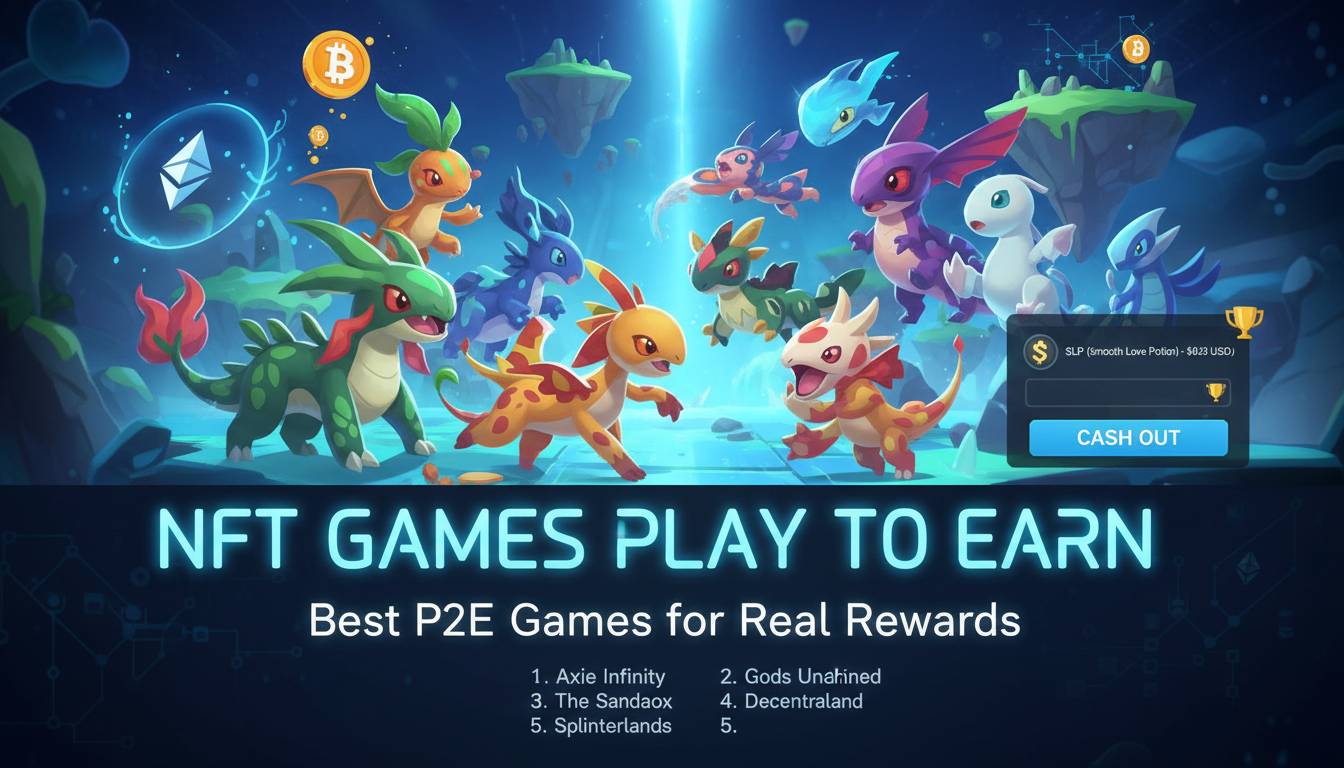
NFT Games Play to Earn – Best P2E Games for Real Rewards
Play-to-earn (P2E) NFT games have transformed the gaming landscape, allowing players to earn real value through blockchain-based gameplay. Unlike traditional games where in-game items exist only within closed ecosystems, NFT games enable true ownership of digital assets that can be traded, sold, or transferred outside the game’s environment. This fundamental shift has created a new economic paradigm where gaming time translates directly to cryptocurrency rewards.
The global P2E gaming market has experienced remarkable growth, with blockchain gaming investments exceeding $4 billion in 2022 alone. While the market has matured and evolved since the initial hype cycle, legitimate opportunities remain for players who understand how these ecosystems function. This comprehensive guide explores the mechanics behind NFT gaming, identifies reputable platforms offering real rewards, and provides essential strategies for maximizing your P2E experience while managing inherent risks.
What Are NFT Play-to-Earn Games and How Do They Work
NFT play-to-earn games represent a fusion of blockchain technology, gaming mechanics, and cryptocurrency economics. At their core, these games issue non-fungible tokens (NFTs) representing in-game assets such as characters, weapons, land, or collectibles. Unlike traditional gaming items that remain locked within publisher servers, NFTs exist on blockchain networks where ownership is cryptographically verified and transferable.
Key Mechanics Driving P2E Economies:
The typical P2E game operates on a dual-token system. The first token functions as the primary in-game currency, used for everyday transactions, upgrades, and basic transactions. The second token often represents governance rights or higher-value assets, sometimes offering revenue sharing or staking privileges. Players earn these tokens through various activities including completing quests, winning battles, breeding characters, or simply logging in daily.
The play-to-earn model fundamentally differs from traditional gaming’s pay-to-win structures. In legitimate P2E games, skill investment and time commitment drive earnings rather than financial investment alone. However, initial capital is often required to acquire necessary game assets—typically NFTs representing characters or equipment needed to participate in reward-generating activities.
Understanding True Ownership:
True ownership means players can list their NFTs on external marketplaces, set their own prices, and transfer assets to other wallets or players without developer intervention. This represents a dramatic departure from conventional gaming where accounts and items remain property of the game developer. Axie Infinity, The Sandbox, and Illuvium have pioneered this model, though each approaches ownership and reward structures differently.
Top NFT Games for Real Rewards in 2024-2025
The P2E landscape has evolved significantly, with many projects failing while stronger contenders consolidated their positions. The following games represent established platforms with functioning economies where players can potentially earn real value.
Comparative Overview of Leading P2E Platforms
| Game | Blockchain | Token | Play Style | Entry Cost | Active Players |
|---|---|---|---|---|---|
| Axie Infinity | Ronin/Ethereum | AXS, SLP | Turn-based battles | Low-Moderate | 2M+ historically |
| The Sandbox | Ethereum/Voxels | SAND | Sandbox creation | Moderate | 2M+ registered |
| Illuvium | Immutable X | ILV | Auto-battler RPG | Moderate | Growing |
| Gods Unchained | Immutable X | GODS | Trading card battles | Low | 500K+ |
| Star Atlas | Solana/Polkadot | ATLAS | Space exploration | High | Emerging |
Axie Infinity remains the most recognized P2E phenomenon, having popularized the model globally. Players collect and battle creatures called Axies, earning Smooth Love Potion (SLP) tokens through victory and daily quests. The game requires three Axies to begin playing, with starter Axies typically costing $30-100 depending on attributes. Axie Infinity’sRonin sidechain significantly reduces transaction fees compared to mainnet Ethereum, making frequent gameplay economically viable.
The Sandbox offers a different approach through user-generated content creation. Players acquire LAND parcels where they build experiences, games, or social spaces. The ecosystem supports creators while enabling LAND owners to monetize their virtual real estate through hosting events or renting space to other builders. SAND tokens facilitate all transactions and can be earned through participating in the creator economy.
Illuvium has distinguished itself through high-quality graphics and an auto-battler format that reduces the skill ceiling required for competitive play. Players capture creatures called Illuvials through gameplay, building teams to battle other players. The ILV token powers the ecosystem, with stakers receiving revenue share from game transactions.
Gods Unchained provides one of the lowest barriers to entry among competitive P2E games. As a trading card game similar to Hearthstone but with blockchain ownership, players can earn GODS tokens through competitive play. Cards themselves hold value and can be traded on secondary markets, making skill-based players potentially profitable without significant initial investment.
Star Atlas represents the ambitious end of the P2E spectrum—a space exploration MMO with player-driven economies. The learning curve is steep and the game remains in development, but early participants have accumulated assets that could appreciate as the project matures.
How to Get Started with NFT Gaming Safely
Entering the P2E space requires careful preparation to avoid scams, financial loss, and frustration. The following framework provides a structured approach to beginning your NFT gaming journey.
Essential Setup Requirements
Wallet Security: Creating a dedicated gaming wallet separates your P2E activities from your primary cryptocurrency holdings. Use hardware wallets when possible, and never import wallets holding significant value into unfamiliar game interfaces. MetaMask remains the most widely supported option, with browser extensions and mobile apps compatible with most P2E platforms.
Network Management: Most P2E games operate on specific blockchain networks—Ethereum, Polygon, Ronin, Solana, or Immutable X. Each network requires native tokens for transaction fees (gas). Ensure you understand which network your chosen game uses and acquire sufficient tokens for initial transactions. Polygon and Immutable X offer near-zero gas fees, making them accessible for casual players, while Ethereum mainnet transactions can exceed $10 during high congestion periods.
Reputation Research: Before investing time or money, investigate each game’s community health, development team transparency, and tokenomics sustainability. Red flags include anonymous developers, token distributions heavily skewed toward insiders, and whitepapers lacking clear utility explanations. Check Discord communities, Reddit discussions, and independent reviews to gauge player satisfaction and longevity expectations.
Starting Your First P2E Game
Step 1: Choose Your Platform
Select a game matching your interests, budget, and risk tolerance. Casual players might prefer Gods Unchained or Axie Infinity’s lighter gameplay, while those interested in creation may enjoy The Sandbox. Research current entry costs—starter assets fluctuate based on market conditions.
Step 2: Acquire Necessary Assets
Most P2E games require initial purchases before earning begins. This might include characters (Axies), land (The Sandbox), or starter decks (Gods Unchained). Purchase only through official marketplaces to avoid counterfeit assets. Compare prices across marketplaces as same-item pricing varies significantly.
Step 3: Learn Before Earning
Spend time understanding game mechanics before attempting optimization. Many players lose money rushing to earn without understanding token value decay, optimal gameplay strategies, or market timing. Watch tutorial videos, join community Discord channels, and participate in beginner forums.
Step 4: Start Small
Begin with minimal investment to test your enjoyment and earning potential. The P2E space carries significant volatility—token values can drop 90% or more. Never invest more than you can afford to lose entirely.
Understanding Tokenomics and In-Game Economies
Successful P2E participation requires understanding how game tokens derive value and maintain sustainability. Tokenomics—the economic design of cryptocurrency tokens—determines whether earnings potential is realistic or artificially inflated.
Token Value Fundamentals
Utility vs. Security Classification:
Utility tokens like SAND or AXS provide in-game functionality—accessing features, voting on development, or purchasing items. Security tokens represent investment instruments with profit-sharing characteristics. Regulatory uncertainty surrounds security classifications, and games emphasizing revenue sharing face increased legal scrutiny.
Supply Dynamics:
Tokens with fixed maximum supplies tend toward deflationary pressure as demand grows. However, many P2E tokens implement inflationary mechanisms to reward early participants while gradually reducing earning rates. Understanding emission schedules—how many tokens enter circulation over time—is crucial for predicting potential value.
Earn-Rate Sustainability:
The fundamental challenge facing P2E games involves maintaining token value while paying players. If earning rates exceed new player acquisition or external investment, token oversupply collapses prices. Sustainable games balance player rewards with token burn mechanisms, staking requirements, or gameplay sinks that remove tokens from circulation.
Case Study: Axie Infinity’s Economy Evolution
Axie Infinity experienced dramatic economic challenges in 2022 as SLP inflation outpaced demand. Daily earnings that once exceeded $50 dropped to single dollars as token supply overwhelmed utility. The team implemented several corrections including reducing SLP earning rates, introducing Axie upgrades requiring SLP burning, and transitioning toward smoother long-term economics. This evolution demonstrates that P2E economies require active management and that early earning rates rarely persist.
Risks and Considerations Before Playing
The P2E space carries substantial risks that traditional gaming does not present. Understanding these factors prevents common mistakes that result in financial loss.
Financial Risks
Volatility Exposure: Cryptocurrency prices fluctuate dramatically. Game tokens can lose 90% of their value within weeks, transforming profitable gameplay into investment loss. Consider converting earnings to stablecoins or fiat immediately after earning rather than holding speculative tokens.
Scam Prevalence: The P2E space attracts numerous scams including fake games, phishing sites mimicking legitimate platforms, and rug-pull projects that collect investment before abandoning development. Always verify URLs, never share seed phrases, and approach unsolicited investment opportunities with skepticism.
Platform Longevity: Many P2E games fail within months of launch, leaving players with worthless assets. Prioritize established games with track records over newer launches promising revolutionary returns.
Gaming-Specific Concerns
Time Investment vs. Return: Advertised earnings often assume optimal conditions—maximum efficiency, favorable market timing, and continuous play. Realistic returns typically fall significantly below promotional figures. Calculate your effective hourly rate considering required time investments.
Geographic Restrictions: Some P2E platforms restrict participation based on jurisdiction due to regulatory uncertainty. Verify your region is supported before investing time or money.
Addiction Potential: The earning mechanic creates psychological loops similar to gambling. Set strict time limits and monitor for unhealthy behavior patterns. P2E gaming should enhance your life, not consume it.
Future of P2E Gaming and Blockchain Integration
The play-to-earn model continues evolving beyond initial implementations, with several trends shaping future development.
Emerging Trends
Mobile-First Development: Early P2E games targeted desktop users with browser or client-based interfaces. Growing mobile adoption—particularly in Southeast Asian markets where P2E gaming first gained mass adoption—drives mobile app development. This shift expands accessibility while creating new monetization opportunities.
AAA Integration: Major game studios experiment with blockchain integration without full P2E models. Ubisoft’s Quartz platform, Square Enix’s blockchain initiatives, and Electronic Arts’ patent filings indicate traditional publishers recognize blockchain’s potential while approaching cautiously. These implementations may offer optional NFT integration rather than full tokenized economies.
Interoperability Advances: Cross-chain functionality improves as protocols develop bridges between previously siloed blockchains. Players may eventually transfer assets between games or platforms, though standardization challenges remain significant.
Regulatory Clarity: Governments worldwide develop cryptocurrency regulations that will determine P2E gaming’s legal status in various markets. Clearer rules may enable institutional investment while potentially restricting certain earning models.
Frequently Asked Questions
Are NFT games actually free to play?
Some NFT games offer free-to-play paths through limited starter assets or community programs, but most require initial investment. Games like Gods Unchained provide free decks for gameplay, while others like Axie Infinity require purchasing characters before participating. The “free-to-earn” narrative often obscures that someone—whether the player or an investor—must cover initial costs.
How much money can you realistically make playing P2E games?
Realistic earnings vary dramatically based on game choice, skill level, time investment, and market conditions. Most players earn modest amounts—if anything—after accounting for token volatility and asset depreciation. Those claiming consistent high returns often have significant capital invested or exceptional skills in emerging games. Treat P2E gaming as entertainment with potential side income rather than reliable revenue.
Do you need to know about cryptocurrency to play NFT games?
Basic cryptocurrency understanding is necessary. Players must understand wallet management, gas fees, token transfers, and marketplace transactions. Several platforms now offer simplified onboarding with fiat payment options, reducing technical barriers. However, understanding underlying mechanics prevents costly mistakes.
Are P2E games legal in the United States?
The legal status remains uncertain and evolves with cryptocurrency regulation. The SEC has indicated some P2E tokens may constitute securities, creating compliance challenges. Players should consult current regulations and understand tax implications—crypto earnings typically require reporting. The Spaceport USA platform and similar regulated initiatives demonstrate growing compliance efforts.
What happens if a P2E game shuts down?
If games close, NFTs typically become worthless unless transferred to another network. Unlike traditional games where server shutdowns eliminate everything, blockchain assets persist even if gameplay becomes impossible. However, without functional games, assets have no utility. Diversifying across multiple games reduces single-point-of-failure risk.
Is NFT gaming the same as regular gaming?
Fundamental differences exist. NFT games require cryptocurrency transactions, wallet management, and understanding blockchain concepts. Transaction times and fees affect gameplay pacing. Additionally, P2E economics add financial considerations absent from traditional gaming. Many players find the earning mechanic enhances engagement; others prefer traditional gaming’s纯粹 entertainment focus.