8Views 0Comments
Simple Tax Loss Harvesting Strategies That Actually Work
Tax loss harvesting is one of the most underutilized strategies available to individual investors in the United States. By strategically selling investments at a loss, you can offset capital gains taxes and potentially reduce your overall tax burden. While the concept is straightforward, executing it effectively requires understanding the rules, timing, and documentation requirements that the Internal Revenue Service enforces. This guide breaks down practical tax loss harvesting strategies that real investors can implement without needing a advanced degree in finance.
What Is Tax Loss Harvesting and How Does It Work?
Tax loss harvesting is the practice of selling investments that have decreased in value to generate capital losses that offset capital gains. The Internal Revenue Service allows you to deduct capital losses against capital gains, and if your losses exceed your gains, you can deduct up to $3,000 against ordinary income annually, with any remaining losses carried forward to future years.
The strategy works because the tax code treats capital gains and capital losses differently. Short-term capital gains (from assets held for one year or less) are taxed at your ordinary income tax rate, which ranges from 10% to 37% for 2024. Long-term capital gains (from assets held longer than one year) are taxed at preferential rates of 0%, 15%, or 20%. By harvesting losses, you can reduce the taxes owed on any gains you realize during the year.
For example, if you sold stock for a $5,000 short-term capital gain and another position for a $5,000 short-term capital loss, your net capital gain would be $0, and you would owe no taxes on those transactions. The IRS requires that you report all capital gains and losses on Schedule D of your Form 1040.
The Wash Sale Rule: Your Biggest Obstacle
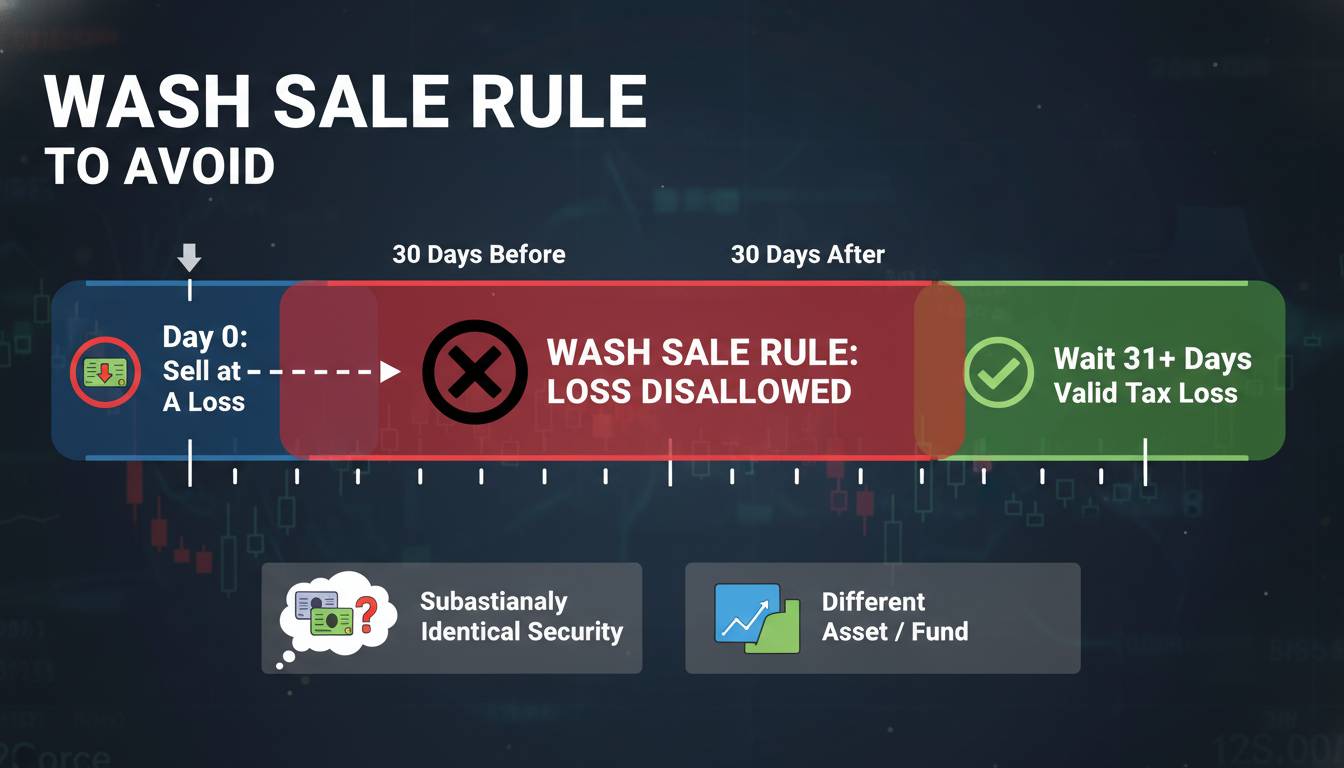
The wash sale rule is the most critical constraint on tax loss harvesting strategies. According to IRS Publication 550, you cannot claim a loss if you purchase substantially identical securities within 30 days before or after the sale. This 61-day window creates the prohibition that trips up many investors attempting tax loss harvesting.
The rule applies across all your accounts, including IRAs, 401(k) plans, and taxable brokerage accounts. If you sell shares of Apple at a loss in your taxable account and then buy Apple shares in your IRA within 30 days, the IRS will disallow the loss deduction.
The practical implication is that you cannot immediately repurchase the same investment after selling it for a loss. Instead, you must either wait 31 days or purchase a similar but not substantially identical investment. This means tax loss harvesting requires planning and often involves holding cash temporarily while waiting for the wash sale window to close.
Many investors mistakenly believe they can simply sell and repurchase the same security after 30 days. However, if you execute multiple trades in the same security within a short period, the IRS may still disallow losses under the substantially identical test, particularly if you demonstrate a pattern of buying and selling the same security repeatedly.
Simple Strategy #1: Offsetting Short-Term Gains First
Prioritizing the offset of short-term capital gains provides the most immediate tax benefit because these gains are taxed at your marginal income tax rate, which is typically higher than long-term capital gains rates. If you have short-term gains from trades made within the past year, selling losing positions first allows you to eliminate taxes at rates potentially as high as 37%.
To implement this strategy, review your portfolio quarterly to identify positions with unrealized losses. Focus on holdings where the loss is significant enough to matter after accounting for transaction costs and the effort required to execute the trade. Many brokerage platforms now offer tax-loss harvesting tools that automatically identify opportunities and can even execute trades according to parameters you set.
The key is acting before year-end, since wash sale rule calculations depend on the calendar year. Transactions must settle by December 31 to count for the current tax year. Settlement dates can differ from trade dates, so plan accordingly—most equity trades settle two business days after execution.
Simple Strategy #2: Harvest Losses Against Long-Term Gains
Long-term capital gains, while taxed at lower rates than ordinary income, can still create a substantial tax liability for investors with significant portfolio appreciation. Tax loss harvesting becomes valuable even when you have no short-term gains to offset because you can use losses to reduce long-term gains, which are taxed at 0%, 15%, or 20% depending on your income level.
This strategy works particularly well for investors who hold appreciated positions in tax-advantaged accounts where they cannot currently harvest losses. By selling losing positions in your taxable account, you create losses that can offset gains from any source, including the appreciation in your retirement accounts that would eventually be taxed upon withdrawal.
The IRS allows you to carry forward unused losses indefinitely. If you harvest more than $3,000 in losses beyond your gains in a given year, you can deduct $3,000 against ordinary income and carry forward the remainder to future years. This makes tax loss harvesting valuable even in years when your capital gains are minimal or nonexistent.
Simple Strategy #3: Building a Tax-Efficient Asset Location Strategy
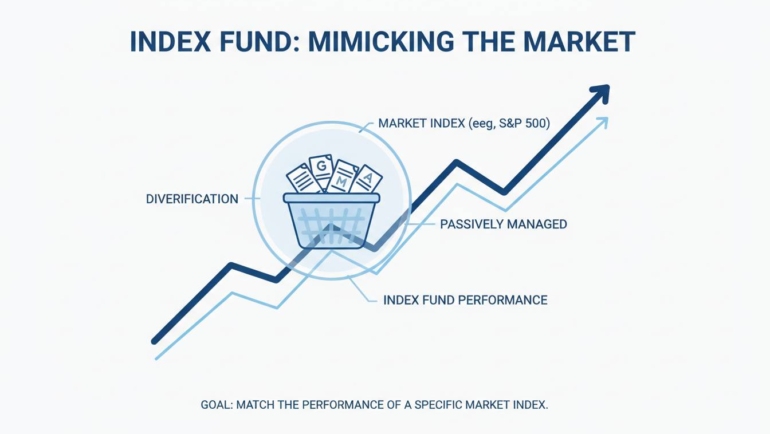
Rather than waiting until year-end to harvest losses, proactive investors can incorporate tax loss harvesting into their asset location strategy from the start. This involves holding tax-inefficient assets (such as bonds, REITs, or actively managed funds with high turnover) in tax-advantaged accounts while keeping tax-efficient investments (such as broad-market index funds) in taxable accounts.
When unexpected market downturns occur, having tax-efficient holdings in taxable accounts gives you flexibility to harvest losses without significantly impacting your overall portfolio strategy. Index funds tracking the S&P 500 or total market funds tend to be particularly suitable for this approach because they rarely distribute capital gains and maintain consistent tax efficiency.
This strategy requires initial planning but reduces the need for reactive tax loss harvesting. By anticipating which holdings might generate losses during market downturns, you can position those assets where they will be most useful for tax purposes without forcing changes to your investment strategy.
Common Mistakes to Avoid
The most frequent error investors make is harvesting losses too small to justify the transaction costs and administrative effort. Transaction fees, bid-ask spreads, and the time required to research and execute trades can quickly erode the tax benefits if you’re harvesting losses of a few hundred dollars. Focus on positions with meaningful losses that will produce a tangible tax benefit after accounting for all costs.
Another mistake involves holding losing positions simply to harvest the loss, which can lead to holding an underperforming investment longer than warranted. The tax tail should not wag the investment dog—if an investment no longer meets your objectives or has poor fundamentals, selling it at a loss may be appropriate, but not solely for tax reasons.
Some investors attempt to harvest losses by selling positions and immediately repurchasing “similar but not identical” funds, creating unnecessary turnover and potential style drift. This approach can backfire if the replacement fund performs differently than expected, creating unintended risk exposure in pursuit of a tax benefit.
Documentation and Record-Keeping Requirements
The burden of proof for capital losses falls on the taxpayer. You must maintain records that establish the original purchase price (your cost basis) and the sale price to calculate your loss. Your brokerage sends Form 1099-B in January showing your transactions, but you should verify this matches your own records.
Keep purchase confirmations, annual statements, and any corporate action notices that affect your cost basis. When a stock splits, spins off, or undergoes a merger, your cost basis adjusts, and failing to account for these changes can result in incorrect loss calculations that trigger IRS scrutiny.
If the IRS questions your losses, you will need to demonstrate that you actually sold the securities, the amount received, and your original purchase price. Electronic records from your brokerage are generally sufficient, but maintaining backups provides additional protection in case of broker failures or disputes.
When to Consider Professional Help
Tax loss harvesting becomes significantly more complex when you have large portfolios, multiple accounts, or involvement in complicated investments such as options, limited partnerships, or foreign securities. A certified public accountant or enrolled agent can help you navigate the wash sale rules and ensure your harvesting strategy complies with all applicable regulations.
Professional guidance is particularly valuable when implementing strategies that involve substantially identical securities or when your tax situation includes other complications such as business income, rental real estate, or significant itemized deductions. The cost of professional advice is often justified by the tax savings and peace of mind it provides.
Frequently Asked Questions
Can I harvest losses in my IRA or 401(k)?
No, tax loss harvesting does not work in tax-advantaged accounts like IRAs or 401(k) plans because these accounts are already tax-deferred or tax-exempt. You cannot claim a deduction for losses within these accounts. Tax loss harvesting must be done in taxable brokerage accounts where you will eventually pay taxes on gains.
How long do I have to wait before repurchasing the same stock after selling at a loss?
You must wait 31 days before purchasing substantially identical securities to avoid the wash sale rule. This means waiting 31 days after the sale to repurchase the same stock, or 31 days before the sale if you bought the stock within the previous 30 days.
What happens if my losses exceed my gains?
If your capital losses exceed your capital gains, you can deduct up to $3,000 against your ordinary income. Any remaining losses are carried forward to future years where they can offset capital gains or, if needed, up to $3,000 in ordinary income annually.
Can I harvest losses from cryptocurrency investments?
Yes, the IRS treats cryptocurrency as property, so you can harvest losses from crypto positions just like stocks or bonds. However, cryptocurrency markets operate 24/7, and wash sale rules still apply. Be especially careful about timing if you trade frequently, as the IRS has increased scrutiny on crypto tax reporting.
What is the deadline for tax loss harvesting for the current tax year?
To harvest losses for the current tax year, your sale must settle by December 31. Trade dates are not enough—ensure your transactions settle before year-end, which typically means trading by December 27 or earlier, depending on market holidays.
Does tax loss harvesting work for bonds and fixed-income investments?
Yes, tax loss harvesting works with any capital asset, including bonds, mutual funds, ETFs, and real estate investment trusts. However, note that the wash sale rule applies to substantially identical securities, so selling one bond fund and purchasing another that invests in similar securities may trigger wash sale disallowance.
Conclusion
Tax loss harvesting remains one of the most effective legitimate strategies for reducing your tax burden as an investor. The strategies outlined here—offsetting short-term gains first, harvesting losses against long-term gains, and building tax-efficient asset location—provide a foundation that works for most individual investors. The key is staying mindful of wash sale rule constraints, maintaining accurate records, and ensuring that tax considerations complement rather than dictate your investment decisions. Review your portfolio regularly, act before year-end deadlines, and consider professional guidance for complex situations.