8Views 0Comments
What Is the Safest Crypto Wallet for Long-Term Holding? | Expert Ranked
Choosing the right crypto wallet for long-term holding ranks among the most consequential decisions any cryptocurrency investor will make. Unlike trading wallets that prioritize accessibility, long-term storage demands unwavering focus on security, offline protection, and self-custody principles. With billions lost to hacks, exchange collapses, and phishing attacks over the past decade, the stakes could not be higher. This guide examines the wallet landscape through a security-first lens, providing actionable analysis to help you protect your digital assets for years—or even decades—to come.
Understanding Crypto Wallet Security Fundamentals
Before examining specific wallets, grasping the underlying security architecture separating adequate protection from genuine long-term safety proves essential. A cryptocurrency wallet does not actually store coins; instead, it holds private keys that authorize transactions on the blockchain. Whoever controls the private keys controls the associated assets. This fundamental distinction explains why exchange wallets, despite offering convenient access, never qualify as the safest option for long-term holding.
Cold storage refers to wallets that remain disconnected from the internet, eliminating the primary attack vector exploited by hackers. Hardware wallets represent the most practical cold storage solution, combining secure element chips with offline key generation. Hot wallets, by contrast, maintain internet connectivity and suit only small amounts for active trading. Self-custody wallets give you direct control of your keys, while custodial solutions involve third parties holding keys on your behalf—a arrangement that introduced catastrophic losses during events like the FTX collapse in 2022.
The security hierarchy places hardware wallets at the top for long-term holding, followed by air-gapped paper wallets, software wallets with robust security features, and finally exchange-based wallets, which should be avoided for holdings you intend to preserve.
Hardware Wallets: The Gold Standard for Long-Term Storage
Hardware wallets dominate recommendations for securing significant cryptocurrency holdings over extended periods. These devices store private keys within dedicated secure element chips physically isolated from internet-connected computers and smartphones. Even when plugged into a compromised device, the hardware wallet never exposes its private keys, instead signing transactions internally and transmitting only the signed result.
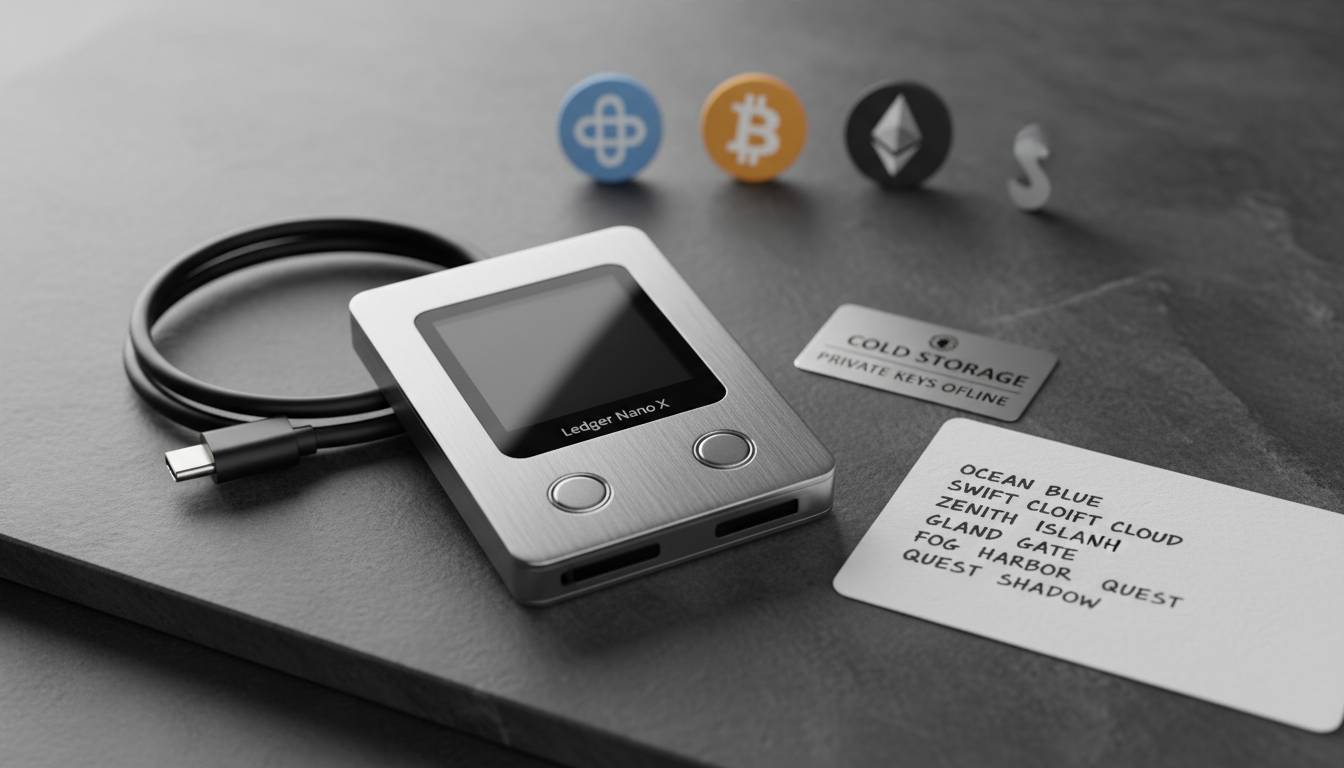
Ledger maintains the largest market share in the hardware wallet space, with the Ledger Nano X and Ledger Nano Stax serving different user needs. The company’s security architecture includes a custom operating system (BOLOS), certified secure elements meeting CC EAL5+ standards, and a proprietary derivation path system. Ledger Live software enables portfolio management without exposing keys to the computer’s operating system. The primary criticism involves Ledger’s 2020 data breach, which exposed customer information including names and addresses, though no funds were stolen since the breach affected only marketing databases, not hardware security.
Trezor, produced by SatoshiLabs in the Czech Republic, offers the Model T and Model One devices with open-source firmware allowing independent security audits. This transparency represents a significant advantage—security researchers worldwide can examine the code for vulnerabilities. Trezor devices utilize a different security architecture than Ledger, relying on a single chip rather than a separate secure element, which has drawn some debate among security experts about relative protection levels.
Coldcard targets Bitcoin maximalists and security purists, offering devices designed exclusively for Bitcoin with air-gapped transaction signing via SD cards. The device includes anti-tamper mechanisms and supports fully offline key generation through its built-in camera for QR-code based transactions. While limited to Bitcoin, this specialization appeals to users prioritizing maximum Bitcoin security above all other considerations.
| Wallet | Secure Element | Open Source | Cryptocurrency Support | Price Range |
|---|---|---|---|---|
| Ledger Nano X | CC EAL5+ | Partial | 5,500+ | $149-279 |
| Trezor Model T | Yes | Full | 1,000+ | $219-299 |
| Coldcard Mk4 | Yes | Full | Bitcoin only | $159 |
Software Wallets: When Convenience Meets Reasonable Security
Software wallets cannot match hardware wallet security but represent viable options for smaller long-term holdings or users who need periodic access. The key distinction lies in understanding their limitations and adjusting holding sizes accordingly.
Electrum stands as the oldest continuously operated Bitcoin wallet, with its open-source codebase undergoing scrutiny from security researchers for over a decade. The wallet supports hardware wallet integration, allowing you to use a Ledger or Trezor while benefiting from Electrum’s advanced features. For software-only usage, Electrum offers deterministic key derivation and two-factor authentication through third-party services.
Exodus provides a user-friendly interface across desktop and mobile platforms, though its closed-source nature prevents independent security verification. The wallet includes built-in exchange integration and supports numerous cryptocurrencies, making it attractive to users managing diverse portfolios who can accept the trade-off between convenience and maximum security.
BlueWallet focuses specifically on Bitcoin with a polished mobile experience, offering both hot wallet functionality and the ability to connect to your own Bitcoin full node. For users running their own node, BlueWallet provides excellent security through the self-hosted infrastructure connection.
Mobile wallets present unique attack surfaces through smartphone operating systems, which face constant vulnerability discovery. Keeping devices updated, avoiding jailbroken or rooted phones, and using dedicated devices for crypto transactions significantly reduces risk.
Multi-Signature and Institutional-Grade Solutions
For substantial holdings, multi-signature (multi-sig) arrangements require multiple private keys to authorize transactions, eliminating single points of failure. This approach suits corporate holdings, family accounts, or individuals seeking maximum protection against device loss or theft.
Gnosis Safe (now simply Safe) emerged from the Ethereum ecosystem as the leading multi-sig wallet platform, securing billions in institutional assets. The platform supports various threshold configurations (2-of-3, 3-of-5, etc.) and integrates with hardware wallets for key storage. Recovery mechanisms prevent permanent loss even when some signers become unavailable.
Casa offers managed multi-sig solutions specifically designed for high-net-worth individuals, providing key recovery services and security infrastructure typically available only to institutional players. Their Key Recovery service stores encrypted key shards, protecting against both loss and theft.
The philosophical foundation of multi-sig extends beyond simple security—it embraces the principle that no single device or person should have complete control over significant wealth. This aligns with the original cryptocurrency ethos of decentralization and personal sovereignty.
Common Security Mistakes to Avoid
Even the most secure wallet becomes vulnerable through user error. Understanding these pitfalls proves as important as selecting the right hardware.
Seed phrase storage presents the most frequent failure point. Writing seed phrases on digital devices, taking photos, or storing them in cloud services creates obvious vulnerabilities. The recommended approach involves writing seed phrases on metal plates designed for fire and water resistance, storing copies in physically separate secure locations. Never store all copies in the same building.
Phishing attacks continue devastating crypto holders, with attackers creating convincing fake websites, emails, and social media profiles. Always verify URLs carefully, especially for wallet software downloads. Bookmarking legitimate download pages eliminates the risk of mistyping addresses.
Firmware updates on hardware wallets occasionally generate confusion—some users mistakenly believe updating firmware could compromise their keys. Updating firmware actually patches security vulnerabilities, and legitimate updates never require entering your seed phrase into connected software. The device itself handles all sensitive operations.
Exchange storage remains the most dangerous common practice. While convenient for trading, exchange-held assets face counterparty risk—the exchange itself becomes your weakest link. The collapse of Mt. Gox in 2014, QuadrigaCX in 2019, and FTX in 2022 collectively cost users billions in losses.
Making Your Decision: Security Prioritization Framework
Selecting the safest crypto wallet for your situation requires honest assessment of your technical comfort level, holding size, and access needs.
For holdings exceeding $10,000, hardware wallets become strongly recommended. The one-time cost of $100-300 represents negligible insurance against catastrophic loss. For six-figure holdings, adding multi-signature arrangements provides meaningful additional protection.
Technical sophistication matters less than often assumed. Modern hardware wallets include streamlined interfaces guiding first-time users through setup. The real requirement involves commitment to proper seed phrase handling and avoiding convenience-driven security compromises.
Consider your access patterns honestly. If you plan regular trading or need quick access, a hardware wallet with smaller hot wallet spending money for daily transactions balances security with practicality. True long-term holding, however, benefits from the discipline of deliberate, infrequent access.
Future-Proofing Your Crypto Security
Cryptocurrency security continues evolving alongside the threat landscape. Staying informed about emerging best practices protects your holdings as both technology and attack methods advance.
Firmware updates from reputable wallet manufacturers address newly discovered vulnerabilities. Register your device for update notifications and check manufacturer websites periodically for new releases. Running outdated firmware leaves known vulnerabilities unpatched.
Blockchain education compounds in value over time. Understanding how transactions work, recognizing common attack vectors, and staying current on industry developments empowers better security decisions. The cryptocurrency space moves quickly, and yesterday’s safe practices may not address tomorrow’s threats.
Succession planning represents an often-overlooked aspect of long-term holding. What happens to your crypto if you become incapacitated? Hardware wallet inheritance requires careful planning—discuss your setup with trusted family members, document your security procedures, and consider professional estate planning with cryptocurrency experience.
Conclusion
The safest crypto wallet for long-term holding is a hardware wallet—specifically one with a secure element, transparent codebase where possible, and strong track record of security updates. Ledger and Trezor dominate consumer recommendations, with Coldcard serving Bitcoin purists seeking maximum specialization. Regardless of which device you choose, the security of your holdings ultimately depends on proper seed phrase handling, vigilance against phishing, and disciplined avoidance of exchange storage for long-term assets.
For significant holdings exceeding a few thousand dollars, the incremental security of hardware wallets far outweighs their modest cost. The $150-300 investment provides insurance against losses that could total your entire portfolio. No convenience justifies risking assets you intend to hold for years.
The cryptocurrency ecosystem rewards self-custody philosophy. By controlling your keys, you become your own bank—enjoying complete sovereignty but accepting full responsibility for protection. This trade-off defines the difference between adequate holding and genuinely secure long-term storage.
Frequently Asked Questions
What is the safest crypto wallet for holding Bitcoin long-term?
The safest hardware wallet for Bitcoin long-term holding is the Coldcard Mk4, designed specifically for Bitcoin with air-gapped transaction signing and anti-tamper mechanisms. For multi-crypto support, Ledger Nano X and Trezor Model T provide equivalent security with broader asset coverage.
Are hardware wallets worth it for small crypto holdings?
Hardware wallets become worthwhile when holdings exceed approximately $1,000-2,000, as the security benefit outweighs the $100-300 cost. For smaller amounts, a reputable software wallet with proper device security may suffice while you build your portfolio.
Can hardware wallets be hacked?
While no security is absolute, hardware wallets have never been compromised through remote attacks when used correctly. The secure element architecture prevents private key extraction even when the device connects to a compromised computer. Physical attacks require specialized equipment and access to the device.
Should I keep my crypto on an exchange for convenience?
Never store significant crypto holdings on exchanges for long-term holding. Exchange collapses have cost users billions. Use exchanges only for active trading, withdrawing funds to your own wallet immediately after completing transactions.
How do I recover my crypto if I lose my hardware wallet?
Hardware wallets generate a 12-24 word seed phrase during setup. This phrase can recover all associated wallets on any compatible device. Store seed phrases securely across multiple locations using fire-resistant metal plates—never store them digitally.
What’s the difference between hot and cold wallets?
Hot wallets maintain internet connectivity, offering convenience but exposing private keys to online attacks. Cold wallets remain offline, storing keys in secure hardware or paper. For long-term holding exceeding a few thousand dollars, cold storage through hardware wallets provides dramatically superior security.